Wedding Ribbon Handle Paper Bags Unit cost review starts with one question: what are you paying for, and which detail actually lifts the bag in the buyer’s hand? In most cases, it is the handle. A ribbon handle can make a plain paper bag feel tailored and giftable without pushing the whole order into premium territory.
Why Ribbon Handles Change the Perceived Value Fast
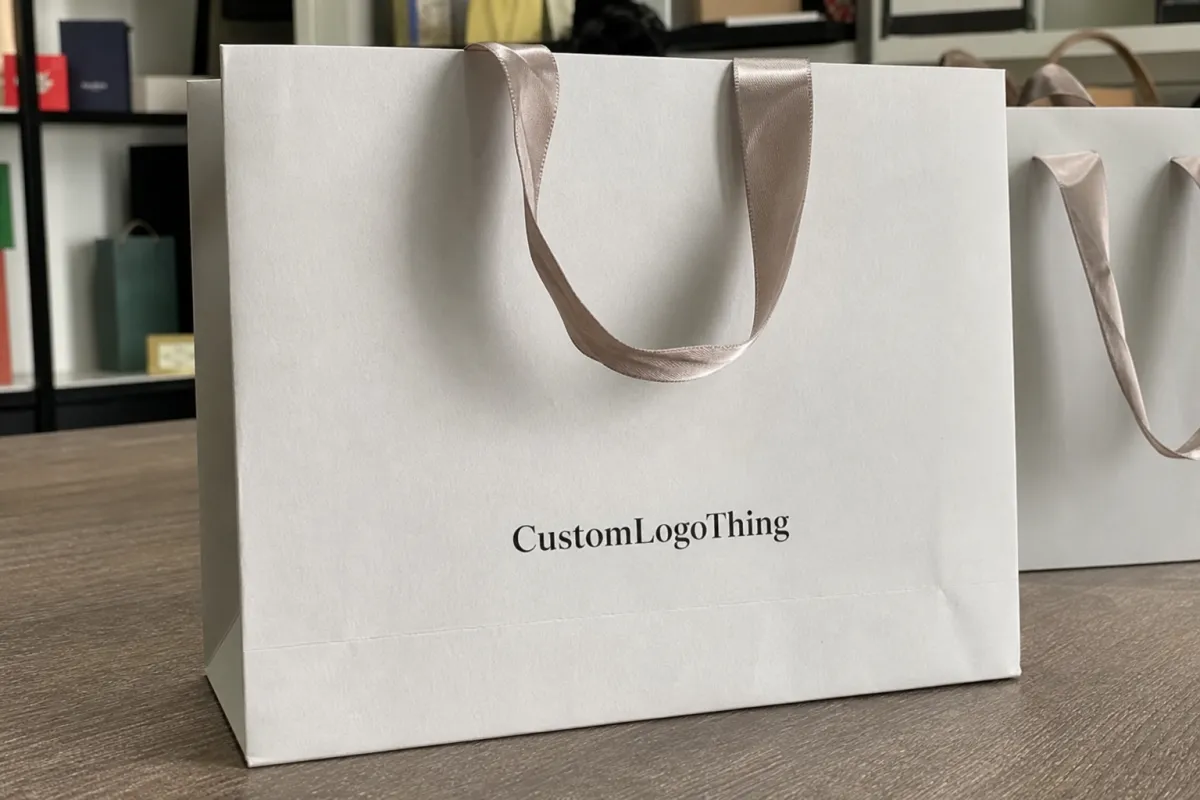
Wedding buyers notice the handle first because it is what people touch, carry, and photograph. A simple paper bag with a satin loop reads softer and more intentional than one with a basic twisted cord. For welcome kits, favor bags, bridesmaid gifts, and boutique packaging, that visual shift matters more than extreme load capacity.
The handle changes the silhouette, improves the photo finish, and makes the bag feel designed instead of assembled. That is the point of a serious review: not how premium the spec sheet sounds, but how much visible upgrade you can buy per dollar.
A 10 mm or 15 mm satin ribbon usually adds only a modest amount at volume, yet it can lift the whole presentation. Grosgrain gives a more textured look, while organza feels lighter and more delicate. Buyers who understand that tradeoff spend money where it shows.
A ribbon handle does not rescue a weak bag. It just makes weak structure easier to spot if the board, glue, or base support is poor.
- Best use cases: welcome bags, bridal party gifts, dessert packaging, wedding favors, and event merch.
- Best visual payoff: bags shown on tables, in flat-lay photos, or handed out at the venue.
- Best buying mindset: pay for the combination that looks expensive in hand, not the one that sounds expensive on paper.
Paper, Ribbon, and Print Choices That Shape the Finished Look
The final result depends on four parts: paper stock, ribbon style, print method, and finishing. If one of them is underbuilt, the bag starts looking cheap even when the others are fine. That is where buyers tend to waste budget.
Paper choices: white kraft is practical and easy to position as recyclable. Coated art paper gives a smoother print surface and sharper color, which helps when the bag carries floral artwork, monograms, or photo-style graphics. Specialty textured board feels more upscale in hand, but it narrows print flexibility and pushes the unit cost up. If a supplier claims an eco-friendly angle, ask for actual documentation instead of a vague line in the quotation.
Ribbon choices: satin gives the softest, most formal look and photographs well. Grosgrain has a visible rib and holds shape better. Organza feels airy and light, but it can look fragile if the rest of the bag is substantial. Width matters more than people expect: 10 mm suits smaller favor bags, while 15 mm or 20 mm usually looks better on medium gift bags.
Print choices: one-color logo print is still the cheapest custom route. Full-color artwork increases setup complexity and usually raises cost per piece. Hot stamping, embossing, and debossing add a premium cue, but they work best with restraint. Matte lamination feels calm and refined; gloss lamination gives brighter color and better wipeability, though it can look less suited to soft wedding styling.
A common mistake is adding too much decoration and not enough discipline. A clean bag with one clear logo and a good ribbon often looks more expensive than a bag loaded with three finishes and no visual hierarchy.
For buyers who need help reading paper and finishing terms, packaging industry references can help interpret board, coating, and testing language. Useful, not glamorous, which is usually a good sign.
Size, GSM, Reinforcement, and Load Capacity Specs
Size sounds obvious until the contents go in and the handles start pulling unevenly. For wedding orders, the most common formats are small favor bags, medium gift bags, and larger boutique-style bags. A small favor bag might sit around 5 x 3 x 8 inches. A medium gift bag often lands near 8 x 4 x 10 inches. Larger bags can move toward 10 x 5 x 13 inches depending on the contents.
GSM matters. So does how the board behaves after folding and gluing. A 250gsm kraft board can work for light favors and tissue-wrapped items. A 300gsm to 350gsm artboard gives better stiffness for candles, cosmetics, and mixed gifts. But GSM is only part of the picture. Coating, fiber blend, caliper, and fold memory all affect how a bag feels once it is assembled.
Reinforcement is where cheap bags get exposed. Ask whether the bag includes a folded top edge, a bottom insert board, side gusset shaping, and proper handle anchoring. Those details are what keep the handle from tearing out when someone adds a candle, jar, or boxed gift.
Load capacity should match the contents, not the mood board. Light fabric or one favor item can sit in a lighter build. Gift sets, candle pairings, and mixed bridal welcome kits need stronger boards and better glue area. If a supplier cannot tell you the realistic load range, treat that as a warning sign.
Practical spec checklist before you quote:
- Finished bag dimensions.
- Paper weight and material type.
- Handle ribbon width and color.
- Print method and coverage.
- Base and top reinforcement details.
- Target contents and estimated weight.
That checklist forces the buyer to think like a production line, not like a mood board. Much better for your budget and far less likely to produce a bag that only works in the sample photo.
Wedding Ribbon Handle Paper Bags Unit Cost Review: What Drives the Quote
The main drivers are size, paper type, ribbon choice, print coverage, finish, and quantity. If the order includes inserts, reinforcement, or special packing, those costs move too.
Quantity matters because setup charges get spread across the run. A small order can look expensive on paper even when the factory is not inflating it. Once the order passes a certain threshold, the unit cost can drop sharply because the fixed costs are shared across more pieces.
Clean quotes should separate unit cost from extras. If one supplier quotes a low base price but hides tooling, sample revisions, or color matching charges, the final invoice climbs fast. Ask for the cost per piece at the exact quantity you want, plus any setup charges, plate charges, or handle-specific labor.
| Build | Typical MOQ | Unit Cost at 500 | Unit Cost at 3,000 | Notes |
|---|---|---|---|---|
| White kraft, one-color logo, satin ribbon | 300-500 pcs | $0.85-$1.40 | $0.38-$0.62 | Good for lean wedding favors and simple branding. |
| Coated artboard, full-color print, satin or grosgrain handle | 500-1,000 pcs | $1.10-$1.90 | $0.55-$0.90 | Better photo quality; more print setup complexity. |
| Textured board, hot stamp, reinforced base, custom ribbon color | 800-1,500 pcs | $1.60-$2.80 | $0.78-$1.25 | Premium look, but tooling fees and revisions cost more. |
Those ranges are realistic when the spec is clear and the order is not tiny. If you are testing a design, ask for the lowest viable MOQ rather than the cheapest-looking quote. A low number that ignores the real minimum is not useful if you cannot place the order.
Also ask whether the ribbon handle is priced as part of the bag or as a separate attachment step. That detail affects labor, and labor affects unit cost. Some suppliers bury that inside a polished PDF and hope no one notices until the revised invoice arrives.
Common hidden costs: custom color matching, extra proofs, special carton packing, rush production fees, and repeat sample changes. If the quote does not mention them, ask directly. Silence is not savings.
Metallic foil usually costs more than a single-color logo because it needs a different tool and tighter alignment. Very small text is risky on textured paper because the edges can fill in or break apart. A die cut window adds complexity without always improving the buyer experience.
Production Steps, Sample Approval, and Turnaround Timing
Good suppliers do not just say “fast.” They say how fast, from which step, and under what assumptions. That matters because wedding buyers usually have one fixed date and very little patience for surprises.
The basic flow should look like this:
- Inquiry and brief.
- Artwork review and dieline confirmation.
- Quotation and spec lock.
- Sample or digital proof.
- Final approval.
- Production.
- Inspection and packing.
- Shipping.
Where do delays happen? Usually in the first half. Unclear artwork, missing logo files, late feedback on ribbon color, or a last-minute size change can eat days. If the event date is fixed, build in buffer. A simple order might move in 10 to 15 business days after approval. More customized work, especially with special print effects or ribbon matching, often lands closer to 15 to 25 business days before shipping.
If the bags will travel far or sit in storage before the event, ask how cartons are packed and whether the supplier uses transit testing standards such as those from ISTA. Crushed cartons and bent handles still create real losses.
Sample approval deserves more attention than it usually gets. A flat proof may be enough for text placement, but it does not tell you how the ribbon sits, whether the gusset folds cleanly, or whether the logo is too close to a crease. Finished samples cost more than digital proofs, and they should.
Simple rule: if the supplier cannot give you a date for sample approval, production start, and dispatch, they are not giving you a schedule. They are giving you a wish.
Timing belongs in any wedding ribbon handle paper bags Unit Cost Review because late delivery is expensive even when the unit price looks fine. Missed timelines can force rushed replacements, which is a bad place to save a few cents.
What a Dependable Supplier Must Show Before You Pay
A dependable supplier should show evidence before asking for money. That means material photos, finished sample images, a confirmed spec sheet, and a realistic lead-time estimate. If they cannot provide those, the quote is not ready.
Quality control matters. Handle pull testing should confirm that the attachment can survive normal carrying stress. Print alignment needs to be checked against the fold and gusset line. Glue strength matters at the side seams and base. Carton packing matters if the shipment will move far or sit in storage before the event.
There is also a real difference between a manufacturer and a middleman. A manufacturer usually controls paper sourcing, handle attachment, printing, and final packing. A middleman may only control the conversation. That can work, but when something changes, the person in the middle is not always the person who can solve it quickly.
Good buyers ask for specifics, then compare the answers, not the sales pitch.
- Who prints the bag and who attaches the ribbon?
- What is the paper weight in gsm or caliper?
- How is the handle anchored and tested?
- What is included in the quoted price, exactly?
If the answers are specific, the supplier is probably real. If the answers are fluffy, the invoice will probably be fluffy later too. That pattern is old, and it keeps repeating because it works on rushed buyers.
One more thing: dye lot variation matters. Ribbon color can shift slightly between batches, and that becomes visible if the order is split across production runs. Paper shade can also vary, especially on natural kraft. If color consistency is critical, ask whether the supplier can reserve material from the same lot or flag expected variation before approval.
What to Send for a Fast Quote and Clean Approval
Fast quotes are not magic. They come from complete inputs. Send the bag size, paper type, ribbon style, print artwork, quantity, delivery date, and destination in one message. If you split the details across five emails, you will pay for it with delays and bad assumptions.
Use this order of decisions: confirm size first, then paper, then ribbon, then print, then quantity. That sequence prevents redesign loops. It also keeps the budget honest, because a change in size can alter paper usage, handle length, and packing method all at once.
If you want a useful sample or mockup, ask for the finished dimensions, not just a flat artwork proof. A flat proof does not tell you how the ribbon sits, how the gusset folds, or whether the logo will be too close to a crease. That is how buyers end up approving a file that looks great on screen and awkward in hand.
Send this in one packet:
- Artwork file in AI, PDF, or editable vector format.
- Target bag dimensions.
- Material preference and paper weight.
- Ribbon color and width.
- Quantity and target arrival date.
- Shipping destination and packing preference.
One complete spec set is the quickest route to a clean quotation. It is also the quickest route to a quote that actually holds up when production starts.
If the goal is a premium wedding presentation, keep the build disciplined. Do not ask the bag to carry every visual idea at once. Pick one clear paper texture, one ribbon color, and one print treatment, then let the rest of the package do its job.
What affects wedding ribbon handle paper bags unit cost the most?
Size, paper weight, ribbon type, print coverage, and quantity are the biggest drivers. Small orders usually carry a higher cost per piece because setup charges are spread across fewer bags. Special finishes and custom color matching can push the quote up quickly.
What is a normal MOQ for custom ribbon handle paper bags?
MOQ depends on the paper build and print method, but custom runs often start at a few hundred pieces. One-color work is usually easier to lower than full-color or premium finish jobs. If you are testing a wedding package, ask for the lowest viable quantity first.
How long does production usually take after approval?
Simple orders can move in about 10 to 15 business days after artwork and specs are locked. More customized wedding bags, especially those with special ribbon matching or finishing, often need 15 to 25 business days before shipment. Rush orders are possible, but they usually cost more and leave less room for corrections.
Which paper thickness is best for wedding ribbon handle bags?
Choose thickness based on what goes inside. Heavier board works better for gift sets, candles, and mixed favors that need stronger support. Lighter board can work for small treats or folded inserts and usually keeps the budget lower.
Can I mix ribbon colors or bag sizes in one order?
Sometimes yes, but mixed specs usually increase complexity and can raise unit cost. A color change or size change may require separate setup steps. Confirm the supplier's policy before you build the quote, or the simple order stops being simple very fast.

