Cosmetics Ribbon Handle Paper Bags Unit Cost Review
A cosmetics ribbon Handle Paper Bags unit cost review usually starts the same way: a buyer gets a quote that looks harmless, then notices the total jumps once the details are filled in. The bag seems simple enough from a distance. Add ribbon handles, a heavier board, color matching, and finishing, and the math changes fast.
That is the part a lot of teams miss. A ribbon-handle paper bag is not just a carrier. It is part of the product presentation, the unboxing sequence, and the first photo opportunity. If it looks cheap, the whole package looks rushed. If the structure is weak, the premium finish does not save it.
Beauty packaging has a short fuse. Customers and store staff handle these bags hard and usually with no mercy. They get filled awkwardly, set on counters, stacked in carts, and carried home in bad weather. The bag has to look polished and still survive real use. That means the spec sheet matters more than the mockup.
For launches, PR kits, gift sets, and counter sales, ribbon-handle bags often do more brand work than the carton inside them. The ribbon signals gift value. The paper quality signals price point. The finish tells people whether the brand spent money in the right places. None of that is subtle, and that is the point.
Cosmetics Ribbon Handle Paper Bags: Why Buyers Notice Them
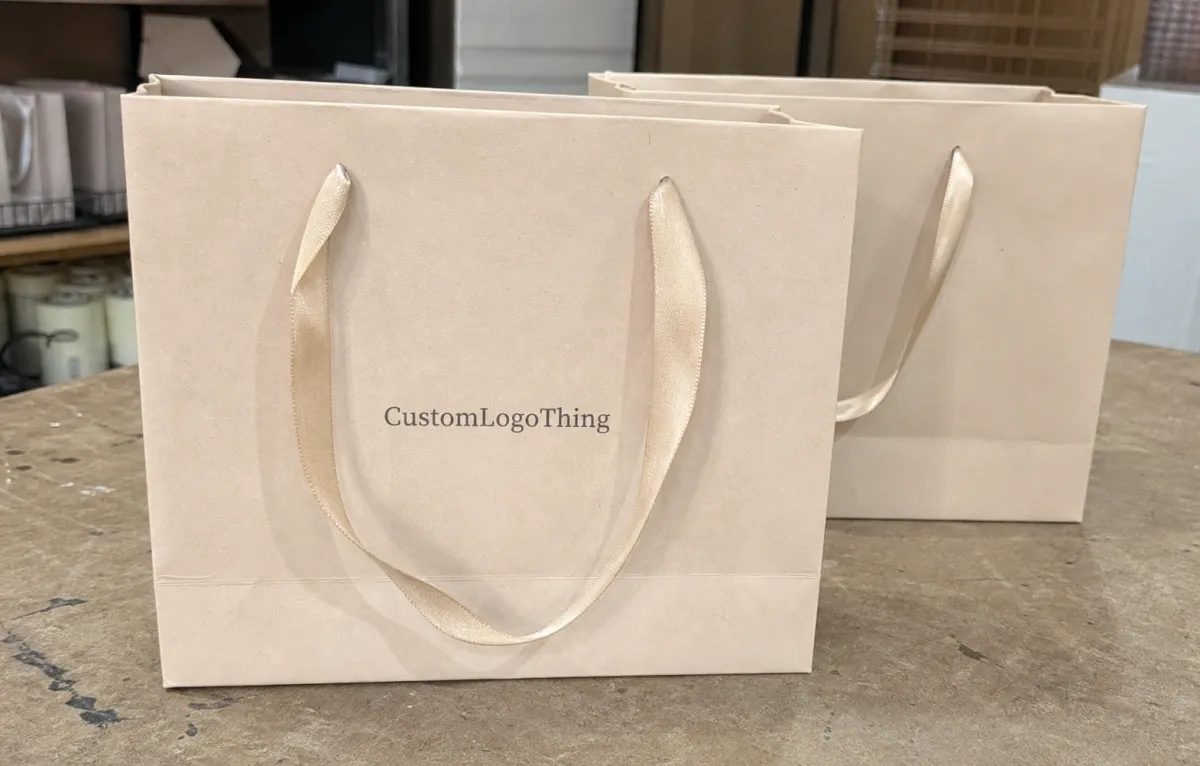
Ribbon handles change the reading of the whole bag. A twisted paper handle says utility. A ribbon handle says occasion. That small shift matters in cosmetics, where presentation helps justify the purchase before the product is even opened.
Satin ribbon usually feels softer and more formal. Grosgrain has a tighter weave and a slightly firmer look, which some brands prefer because it reads cleaner under bright retail lighting. Neither is universally better. Satin wins on elegance. Grosgrain tends to hold shape better and can feel a little more grounded. If the brand wants a delicate, high-gloss finish, satin fits. If the brief calls for controlled, modern luxury, grosgrain often behaves better.
There is no free upgrade here. Better perceived value usually means tighter control over ribbon color, attachment method, paper stock, and finish. That adds steps during sampling and more chances for a quote to creep upward. Small orders feel that pain immediately. Bigger runs spread it out, but only after the setup charges stop weighing everything down.
The bag also has to work as a physical object. Cosmetic products are not always light. A single compact is one thing. A boxed skincare set with jars or bottles is another. The bag needs enough stiffness at the top edge, enough depth in the gusset, and enough grip in the handle to hold the load without twisting or tearing. That is not branding. That is basic engineering dressed in prettier paper.
A ribbon-handle bag only feels premium if the build underneath matches the promise. Pretty ribbon on a weak body just makes the flaws easier to see.
For buyers, the practical decision is simple: choose the structure that fits the brand position, then test whether the bag actually survives the products it will carry. Pretty comes second. Fit comes first.
Bag Structure, Materials, and Finish Choices
Most cost differences begin with the board. Art paper wrapped over gray board gives a clean print surface and a neat retail look. Coated board handles rich color and full-bleed artwork better, especially for darker palettes or high-contrast graphics. Kraft paper lowers the gloss and can support a natural or eco-coded brand story, but it does not always suit cosmetics packaging that needs to feel refined. Specialty paper adds texture and distinction, though it often pushes the price upward because it is less standard and harder to source consistently.
Handle choice matters just as much. Satin ribbon gives a smooth, dressy line. Grosgrain feels slightly firmer and usually performs better visually on bags that need a more structured look. Width changes the price and the visual balance. Thin ribbon can look elegant on small bags and flimsy on larger ones. Wider ribbon reads stronger and more premium, but it also uses more material and can be more expensive to match accurately. For heavier kits, sewn attachment is safer than a quick knot-based method. The difference is not cosmetic. It affects pull strength.
Finishing options can make a bag feel expensive or merely busy. Matte lamination softens reflections and suits clean, modern branding. Soft-touch adds a velvet-like surface, but it marks more easily and costs more. Foil stamping, embossing, and spot UV each have their place, but stacking too many effects is a common mistake. The result often looks less luxury and more restless. One strong finish usually does more than three fighting for attention.
Construction details decide whether the bag feels intentional or fragile. Reinforced top edges help the opening keep its shape. A base board lets the bag sit flatter and carry weight more evenly. Side gusset depth affects how well a boxed set fits without forcing the panels outward. Color consistency across the ribbon, print, and board is another issue buyers tend to underestimate until the sample arrives and the components all look slightly off from one another under store lighting.
If the project is a prestige launch, coated board with satin ribbon and a restrained finish usually makes sense. If the order is seasonal retail stock, durability and stable pricing matter more than fancy surface treatment. If the bags are for PR kits, a higher finish level can pay off because the bag gets photographed and shared. For high-volume selling bags, keep the build disciplined and spend where the customer actually notices it.
Buyers who care about material traceability should ask how the paper was sourced and whether certification can be verified through organizations such as FSC. For transport and packing durability, suppliers who can speak clearly about common test methods, including ISTA and ASTM references, are usually more credible than those who only say the bags have "good quality." That phrase means very little until someone explains how they measured it.
Specs That Control Strength, Feel, and Fit
Size is the first thing to lock. Width, height, gusset, and handle drop all affect the bag’s look and usability. A bag that is too narrow fights the product. A bag that is too deep wastes board and freight space. Handle drop matters more than many teams expect. If it is too short, the customer’s hand crowds the top edge and the ribbon twists under load. Too long, and the bag can feel loose and awkward in the hand.
Board weight is the next major lever. A light board can work for one small cosmetic item, but it starts to bow as soon as the load becomes mixed or the box gets tall. Heavier board improves stiffness and reduces rippling on the side panels. For many cosmetic gift bags, the practical range lands somewhere around 210gsm to 350gsm, depending on size, finish, and what is being carried. A large skincare set needs a different build from a slim lipstick gift bag. That sounds obvious until someone tries to use the same spec for both.
Print specifications also change the feel and the cost. CMYK works for many designs. Spot colors are better if the logo needs exact matching across cartons, inserts, and bags. PMS matching is worth asking for if color consistency matters across a full product line. One-panel print can keep the quote under control. Full-wrap printing looks richer, but only if the artwork actually needs it. More coverage does not automatically create more value. Sometimes it just creates more waste.
Structural details should be approved before the run starts. Reinforced tops reduce tearing around the handle insert. A cardboard base insert helps larger bags keep their shape and carry weight more evenly. Pull strength testing is worth requesting if the bag will hold bottles, jars, or a mixed set. Customers overpack. They always do. Production should account for that, not for ideal behavior that never happens in stores.
One of the most expensive mistakes is approving a bag that looks right but fits wrong. The opening may be too tight. The gusset may be too shallow. The box may scrape the side walls during packing. Then the bag wrinkles, the handle strains, and the premium feel collapses before the customer even leaves the counter. That is not a minor issue. It is the difference between a polished handoff and a bag that feels like a compromise.
For retail shipments or inner-pack redistribution, it is sensible to ask whether the bag should survive basic drop or vibration expectations based on ISTA test methods. Packaging groups like ISTA publish useful guidance for shipping performance. Cosmetic packaging does not need lab theatrics. It does need enough structure to survive the trip and still look right at the end of it.
Cosmetics Ribbon Handle Paper Bags Unit Cost Review
The unit cost of a ribbon-handle cosmetic bag comes from a handful of major inputs: board grade, ribbon style, print coverage, finish, reinforcement, packing method, and order quantity. Miss one of those and the quote can drift after the fact. Sometimes the drift is small. Sometimes the final invoice tells a very different story from the first estimate.
For straightforward builds, buyers may see pricing around $0.18 to $0.32 per piece at mid-volume levels. That assumes standard dimensions, moderate board weight, basic print, and a clean ribbon handle. Add wider ribbon, higher board weight, more color, or a stronger finish and the price rises. Premium versions with soft-touch lamination, foil, embossing, or custom ribbon color often land in the $0.42 to $0.85 per piece range, and larger formats or smaller runs can go higher. None of that is unusual.
MOQ changes the economics fast. A 3,000-piece order carries more setup cost per bag than a 10,000-piece order because the die-cutting, plate work, proofing, and color matching are spread across fewer units. That is why two quotes can look similar on paper and still land very far apart in total spend. Packaging rewards standardization. It does not reward last-minute indecision or oversized expectations.
| Build Type | Typical Materials | Common Unit Cost Range | Best For |
|---|---|---|---|
| Basic ribbon bag | Art paper or coated board, satin ribbon, simple print | $0.18-$0.32 | Retail carry bag, basic cosmetic set |
| Mid-tier premium | Heavier board, wider ribbon, matte lamination, spot color | $0.30-$0.55 | Gift set, launch campaign, seasonal packaging |
| Luxury build | Specialty paper, soft-touch, foil or embossing, custom ribbon color | $0.48-$0.85+ | PR kit, prestige line, high-visibility retail |
The main cost levers are predictable. Fewer print colors reduce setup time. Standard dimensions are cheaper than a custom size that forces a new cutting layout. A flat finish costs less than layered effects. Reusing a bag family across SKUs can reduce tooling waste. Even packing efficiency matters. If the supplier nests bags well, freight improves. If cartons are oversized or overwrapped, shipping starts to eat the margin. Packaging is full of tiny decisions that add up.
Buyers should ask how the bags are packed before they approve the quote. A supplier who can explain carton count, nesting method, and shipping dimensions is usually thinking like a manufacturer, not just a salesperson. That matters because a cheap per-piece price can get erased by bad pack-out. The lowest quote is not always the lowest landed cost.
To get a real quote instead of a rough guess, send the following details upfront:
- Bag dimensions: width, height, gusset, and handle drop
- Quantity target and acceptable MOQ range
- Paper grade or board weight preference
- Ribbon type, width, and color
- Print colors, logo placement, and finish choices
- Shipping destination and needed delivery window
Production Steps, Sample Approval, and Lead Time
Good production starts with a precise brief, not a loose conversation. A supplier should confirm size, structure, handle style, print method, and finish before drawing the dieline. After that comes artwork review, sample or proof approval, bulk production, inspection, and shipping. If the order is simple and the spec is stable, the process stays manageable. If the brief keeps shifting, the schedule slips.
The delays are usually boring and avoidable. Vague dimensions force a new dieline. Late artwork edits delay plate work. Finish changes after sampling can reset production because foil, embossing, and soft-touch often need separate setup. Freight timing creates its own problems. Some teams promise a delivery date before they even know the true production date. That is optimism, not planning.
Typical lead time depends on complexity, but standard ribbon-handle bags often take 12 to 20 business days after final approval. Premium finishes, custom ribbon colors, or special paper sourcing can push that out by several days. Sampling also takes time. A digital proof is enough to check layout and text placement. A physical sample is better when handle feel, ribbon width, finish quality, or color accuracy matters. For launch packaging, I would rather lose a few days in sampling than discover a mistake in bulk.
Before bulk production begins, these points should be fixed and written down clearly:
- Final dimensions and gusset depth
- Artwork placement and color references
- Ribbon color, width, and attachment method
- Finish selection and surface feel
- Carton pack count and labeling plan
If the bag is part of a broader packaging system, the supplier should be able to match the carton, insert, or sleeve without color drift or finish mismatch. Beauty packaging gets judged as a set, not as isolated pieces. A bag that looks slightly off next to the box does not feel premium. It feels like the project ran out of control halfway through.
For teams trying to understand packaging terms without drowning in marketing language, the Packaging Alliance is a useful reference point. A capable supplier should be able to speak in the same practical language about board, finish, print, and handling. Vague words do not help anyone sign off a purchase order.
What a Reliable Packaging Supplier Should Prove
Do not buy promises. Buy evidence. A reliable supplier should show consistent finishing, repeatable colors, and a quality-control process that catches handle attachment issues before shipment. Ribbon-handle bags are unforgiving that way. Uneven ribbon lengths, crooked logos, weak glue lines, or a crushed top edge show immediately.
Experience in beauty packaging matters because cosmetic bags behave differently from generic shopping bags. A generalist can make something usable, but not always something that feels right. Board stiffness, ribbon type, and print tone all affect how the bag reads in a retail setting. A technically acceptable result can still look slightly off. That kind of almost-right packaging is expensive in a different way.
Communication speed matters too. Buyers on launch schedules need clean answers on MOQ, lead time, material options, and sample timing. If a supplier takes days to answer a simple spec question, the bulk order is unlikely to become more organized later. The early response pattern usually tells the truth.
Strong suppliers also reduce handoff risk by keeping design support, sampling, and production under one process. That prevents the all-too-common mismatch between a clean mockup and a messy final run. Handle color, paper tone, and finish can drift if too many people are touching the file without a fixed approval trail. Nobody wants to spend a week figuring out why the physical bag does not match the approved image.
Ask for inspection evidence. Not a broad assurance. Evidence. That can mean in-line checks, finished-carton sampling, pull tests on handles, or documented color checks against a master reference. If the bag has to survive store use and still look premium, the supplier should be able to explain how they verify that before it ships.
The best suppliers do more than make the bags. They reduce uncertainty. That is what buyers are actually paying for, even if the purchase order only says paper bags.
What to Send for an Accurate Quote and Fast Start
The fastest quote comes from a complete brief. Send the exact bag dimensions, quantity, paper preference, ribbon style, print colors, finish choices, and delivery location. If the bag needs to hold boxed cosmetics, bottles, or a mixed set, say so. Product weight changes the build. So does shape. A tall box and a wide compact do not load the same way, and a supplier cannot guess that accurately from a logo file.
Attach artwork if you have it. A reference photo helps. A physical sample is better if you want the quote to line up with a real target instead of a loose description. If you are comparing options, ask for two versions: one cost-focused build and one premium build. That makes the Unit Cost Review easier because the tradeoffs become visible instead of hidden inside the quote.
Do not bury the difficult parts. If the order is tied to a launch date, say it. If the bag has to match a carton or sleeve color, say that too. If FSC paper is required, say that upfront. Every missing detail adds another round of questions, and every round burns time. Most delays are created before production even starts.
A clean buying process usually follows a simple path:
- Confirm MOQ before approving artwork
- Approve the sample path before bulk production
- Lock the packing plan before freight is booked
- Avoid finish changes near the end of the schedule
That is how ribbon-handle cosmetic bags stay under control instead of turning into a moving target. Give the supplier the actual spec the first time and the quote gets closer to reality right away. That is the whole value of a proper cosmetics Ribbon Handle Paper Bags Unit cost review: fewer surprises, fewer revisions, and a bag that looks like it belongs beside the product instead of holding it by accident.
What affects the unit cost of cosmetics ribbon handle paper bags the most?
Board grade, ribbon style, print coverage, and finishing drive most of the price. Larger sizes and heavier structures raise material use and packing cost. Foil, embossing, and soft-touch lamination usually add setup time and labor.
What MOQ should I expect for ribbon handle cosmetic paper bags?
MOQ depends on size, print method, and finish complexity. Simple builds can start lower, while special ribbon colors or premium finishes push the minimum up. Ask for MOQ by exact spec, because one change can shift it quickly.
How long does production usually take after artwork approval?
Standard builds often take 12 to 20 business days after final approval. Custom finishes, new ribbon colors, or special paper sourcing can extend that timeline. Sampling adds more time, but it is cheaper than correcting a bad bulk run.
Which specs should I confirm before asking for a quote?
Confirm dimensions, paper type, handle style, print colors, finish, and quantity. Include product weight and whether the bag holds boxed items, bottles, or mixed sets. A complete brief keeps the quote closer to the final cost.
Are cosmetics ribbon handle paper bags better than twisted-handle bags?
Ribbon handles usually look more premium and fit luxury beauty branding better. Twisted handles are often cheaper and more utilitarian. The right choice depends on brand position, retail experience, and target price.

