A wedding Trucker Caps Material Sample guide looks procedural until you put two caps on the same head and one holds its shape while the other starts to slump before the second photo. On a screen, they can appear nearly identical. In person, the differences show up fast: crown height, mesh density, sweatband finish, and how the visor sits under real light.
That gap between render and reality is why samples matter so much for wedding merch. A cap can look balanced in a mockup and still feel scratchy, sit too tall, or distort a logo across a seam. For weddings, those misses are expensive in a different way than they are for standard promotional orders. A guest may forgive a rough giveaway at a trade show. They notice it immediately in group photos.
What a wedding trucker caps material sample guide should include
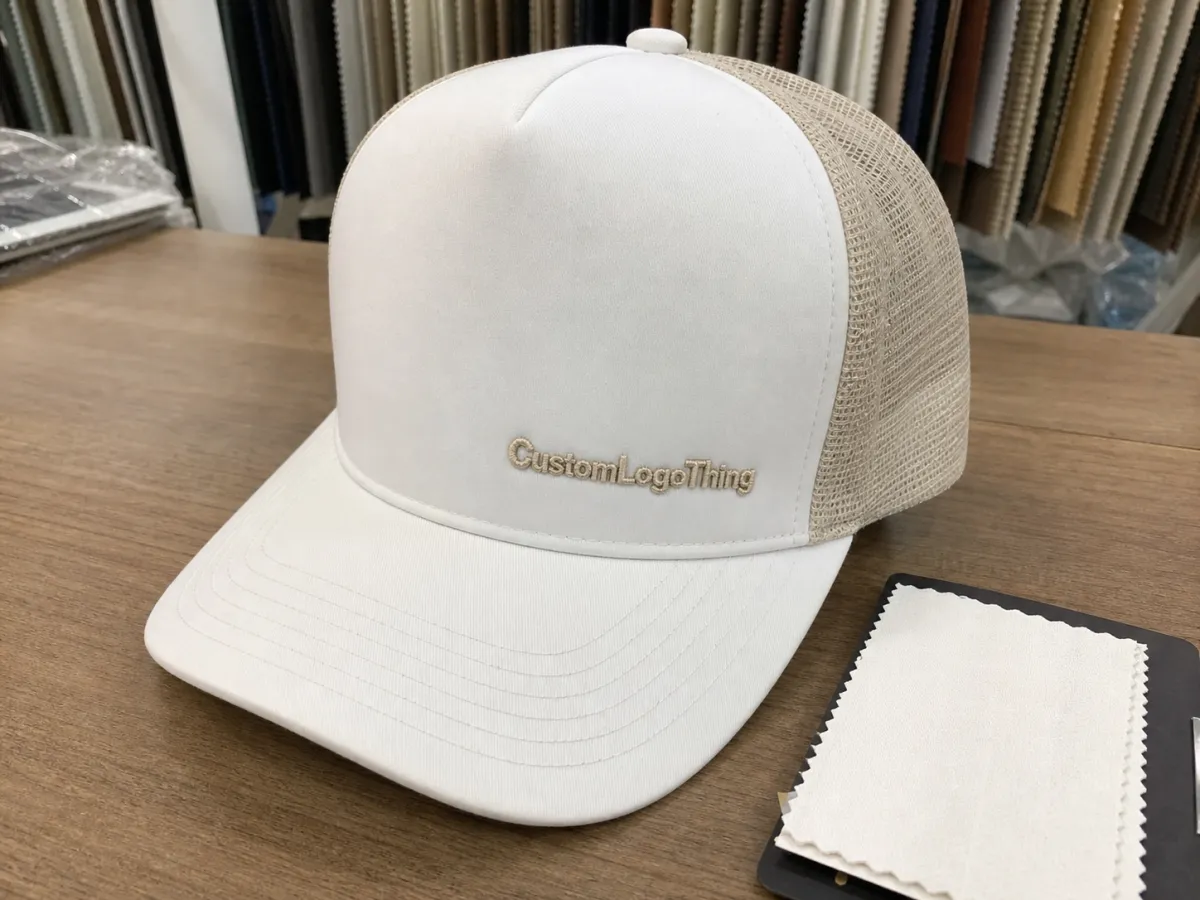
A strong sample guide should show how the cap behaves as a finished product, not just how the fabric looks in isolation. The useful details are practical: front panel material, mesh quality, sweatband feel, visor shape, closure type, stitch density, and the decoration method the cap can actually support without looking crowded.
In a real buyer review, that means you need more than a loose swatch. A swatch tells you about color and hand feel. It does not tell you whether the crown sits too high, whether the brim stays rigid, or whether a patch can sit flat across curved panels. A finished blank sample answers those questions. A decorated sample answers the harder one: does the artwork still look clean after production tolerances, seam placement, and thread tension enter the picture?
For weddings, the sample brief is stricter than it is for normal branded apparel. These caps have to match a palette, photograph well, and stay comfortable through an entire event. Ceremony light, outdoor heat, reception lighting, and late-night photos all expose different flaws. A cap that survives one setting can fail in another.
At minimum, the sample package should cover:
- Front build: foam front, cotton twill, polyester, or a blended structure.
- Mesh backing: standard open mesh, tighter mesh, or a finer weave for a cleaner read.
- Visor: flat, lightly curved, or pre-curved, with enough stiffness to hold shape.
- Closure: snapback, Velcro, or strap, depending on how many guests will share sizing.
- Decoration zone: enough flat space for initials, a date, or a compact logo without crowding seams.
The most useful sample guides also explain what the supplier cannot control. That sounds less polished, but it is the kind of honesty that prevents avoidable problems later. A structured front panel can support embroidery cleanly, yet a soft panel may show puckering around dense stitch work. A finer mesh may photograph better, but a looser mesh may breathe better at an outdoor summer ceremony. Those tradeoffs should be visible before anyone approves a bulk order.
The real value of the sample stage is not confidence for its own sake. It is catching small defects before they scale up. A slightly mismatched ivory, a crown that runs too tall, a patch that curls at the edge, or a sweatband that feels rough after ten minutes are all minor individually. Multiply that by 80 or 150 units and the problem becomes the order.
How sample caps reveal fit, texture, and decoration limits
Sample caps do what spec sheets cannot: they expose fit and finish. Two caps can share the same stated materials and still feel different once they are worn. Foam fronts behave like a signboard. They hold structure and take decoration well, but they can feel stiffer and hotter. Cotton twill fronts usually feel more relaxed and familiar, yet they may wrinkle or collapse if the build is too light. Polyester sits somewhere in between, depending on weight and coating.
Texture is one of the first details people register, even if they do not name it. A structured front gives embroidery a cleaner canvas, which matters for monograms, dates, and line-art symbols. A softer front can look more relaxed and current, especially for outdoor or casual weddings, but the artwork has less support. If a logo crosses a seam, the design can break in ways that mockups do not show.
Decoration testing is where a sample earns its keep. A front logo that uses roughly 7,000 to 10,000 stitches may look crisp on paper, yet still fail if the thread tension is off or the placement sits too close to a panel join. Woven patches can produce a sharp, polished result, but their edges may lift if the curved crown is too tight. Screen print and direct print can be clean on a flat area and less convincing on a curved one. The cap surface decides a lot of the outcome.
Color behaves the same way. Under daylight, a cream cap may look warm and soft. Under warm venue lighting, it can drift yellow. Black can feel safer, but black foam, black mesh, and black thread reflect light differently, so the final photo may not read as evenly as expected. For wedding orders, that matters. The cap has to coordinate with dresses, suits, florals, and venue materials, not just the brand palette.
Comfort is not a side issue. Weddings are long. Outdoor ceremonies, dance floors, and travel between locations all reward a cap that breathes, stays balanced, and does not press hard at the forehead. Mesh openness, sweatband softness, and visor stiffness all matter more than they would in a short promotional use case.
"Approve samples under the same light guests will see them in. A cap that looks clean in a workroom can read differently outdoors, in shade, or under warm reception bulbs."
Cost, MOQ, and quote variables that change the budget
Sampling is not expensive in absolute terms, but it can change a quote more than buyers expect. Material choice, structure, decoration method, packaging, and whether the sample is blank or fully decorated all affect cost. A swatch set is one thing. A fully assembled decorated sample is another product entirely.
For smaller wedding runs, a blank swatch set may only cost a modest amount. A blank assembled cap usually costs more because it requires full cap construction, not just fabric prep. A decorated sample costs more again because it adds setup time, thread or print work, and inspection. A pre-production sample sits at the top end because it is intended to mirror the bulk order as closely as possible. That extra spend is often justified on event-critical orders where there is little room for error.
| Sample type | Typical use | Common price range | Best for |
|---|---|---|---|
| Swatch set | Fabric, mesh, and color review | $10-$30 | Early color decisions |
| Blank assembled cap | Fit, structure, and comfort check | $18-$40 | Shape and wearability review |
| Decorated sample | Logo, patch, or print approval | $35-$85 | Final visual sign-off |
| Pre-production sample | Final spec before bulk production | $45-$120 | Event-critical orders |
MOQ changes the math too. Some suppliers credit sample fees back into the production invoice once the bulk order is placed. Others do not. Never assume a credit exists unless it is written into the quote. That one assumption causes more budget frustration than almost any other part of the process.
Shipping and timing can shift the quote as much as the cap itself. A custom Pantone match adds lead time because the supplier has to source or tint materials to the target. A rush prototype can trigger faster labor, more expensive freight, and less room for revision if the first sample misses the mark. That is especially true if the cap uses mixed materials or a decoration method that needs careful setup.
Packaging is worth asking about early. A sample tossed into a thin mailer is more likely to arrive crushed than one packed in corrugated cardboard with kraft paper cushioning. If the packaging has to reflect a sustainability brief, ask about FSC-certified cartons and ISTA-style transit protection. If lighter footprint matters for the sample stage, recycled materials and biodegradable packaging can be practical, not decorative. They reduce waste and make the pre-production experience closer to the brand standard you want for final delivery.
Process and timeline: from sample request to final approval
The sample process should be simple enough to track and strict enough to catch mistakes. The basic sequence is straightforward: request spec details, confirm artwork, receive swatches or a sample cap, review the build, then approve or revise. Where projects slip is not the order of the steps. It is the number of details people leave vague between them.
Timing depends on what is being sampled. Swatches are usually the fastest because they involve less assembly. A blank cap takes longer because the factory has to build the item. A decorated prototype takes longer still if the design needs embroidery, a woven patch, or a special print effect. Shipping adds another layer. Even a good sample can become a bad schedule fit if it arrives after the approval window.
The best sampling window is before the wedding plan is locked down. Once the guest count is finalized, print materials are moving, and event photos are being scheduled, any delay starts forcing shortcuts. That is when teams approve close-enough samples and hope the rest will be fine. Usually, it is not.
Most delays come from ordinary problems: a logo file sent as a low-resolution image instead of a vector file, a color target described only as "ivory" or "champagne," or no decision on whether the cap should feel polished or casual. Each issue seems small. Together, they add days.
A practical timeline usually benefits from three checkpoints:
- Spec sign-off before the sample is built.
- Visual approval after the sample is reviewed in person.
- Final production approval once artwork, quantity, and shipping terms are locked.
That structure does one thing very well: it turns feedback into a recorded decision, not a memory. For event-sensitive orders, that paper trail matters.
Step-by-step: reviewing and comparing sample caps
Start with the physical basics. Measure crown height. Count the panels. Check whether the mesh is open enough to breathe without looking flimsy. Press the sweatband between your fingers. If it feels rough in the hand, it will probably feel rough on a forehead after an hour or two in warm weather.
Next, test the sample in the same lighting the wedding will use. Daylight, shade, venue lighting, and evening string lights each change color perception. A white cap can look bright outside and flat under warm bulbs. A cream cap can shift warmer. Black can hide dirt better but show sheen more clearly. The sample only tells the truth if it is judged in context.
Decoration deserves the same discipline. Inspect the logo edges. Check stitch clarity. Look for puckering around the design and watch whether a patch starts to curl at the corners. Run a fingertip over the front panels to feel for thread ridges or uneven adhesive. A cap that looks acceptable from three feet away may show obvious distortion at arm's length, which is closer to how guests actually see it.
Do not rely on one reviewer. Head shape changes fit perception. A crown can feel tall to one person and balanced to another. A snug closure can feel secure to one wearer and too tight to another. Two or three opinions are more useful than one because they expose the range of reactions that will show up at the event.
A simple scorecard keeps the decision honest. Rate each sample on comfort, color match, structure, decoration quality, and price using a 1-to-5 scale. Photograph the front, side, inside sweatband, and logo close-up. Save the files with the sample name and date. That record matters later if the bulk order deviates from the approved sample.
One detail that often gets overlooked is the outfit context. A cap that works with a blazer can look too formal with linen. A looser mesh build may feel perfect for a summer wedding and slightly underdressed for a black-tie reception. The sample should be judged against the clothing and atmosphere it will actually live in.
"The best sample review leaves a trail: what changed, why it changed, and who signed off."
Common mistakes when approving wedding cap samples
The biggest mistake is approving by color alone. A cap can match the palette and still fail in structure, comfort, or decoration quality. Buyers often focus on the shade because it is the easiest thing to compare against mood boards. That is understandable. It is also incomplete.
Skipping decoration tests is another common error. A blank sample tells you little about stitch pull, patch alignment, or how a print sits near a seam. The decorated sample is the one that answers the real question: will the artwork survive close inspection, movement, and photos from multiple angles?
Digital mockups help, but they are not proof. Mesh texture, sheen, and stitch depth all change the final read. Mockups also hide scale issues. A logo that feels perfectly balanced in a file may look too small once it is placed on a curved front panel. The reverse happens too. A design that feels elegant on screen can crowd the cap in real life.
Another trap is ordering too many sample variations. Decision fatigue sets in fast. People start comparing differences that do not matter while missing the ones that do. On the other hand, ordering too few samples leaves no basis for comparison. For most wedding orders, two to four samples is enough to compare fit, finish, and color without turning the process into a referendum.
Late shipping is a final problem with a very practical consequence: a perfect sample that arrives after the approval deadline is useless. I would also keep an eye on the interior finish. A rough tape seam or scratchy sweatband can spoil comfort even if the outside looks polished. Guests notice that immediately, often before they notice the logo.
The pattern is simple. The sample is not only about aesthetics. It is about trust. If it cannot survive inspection, wear, and photography, the order is still risky.
Expert tips and next steps before you place the order
A good sample guide should help you narrow decisions, not multiply them. Two or three sample variants are usually enough. Once the list gets longer, the discussion shifts from meaningful differences to preference noise. That is rarely useful on a deadline.
Use a compact scorecard that compares color, comfort, structure, decoration quality, and cost. Keep the scale simple. A 1-to-5 rating is enough. The point is to compare evidence, not build bureaucracy.
If the cap uses custom artwork, mixed materials, or a date that leaves little margin for correction, ask for a pre-production proof before the full run starts. That extra check can catch placement errors, a missed color note, or a label problem while it is still cheap to fix. The delay is small. The upside is large.
Before production starts, lock four items in writing:
- Measurements: crown height, visor shape, and closure style.
- Decoration method: embroidery, patch, or print.
- Quote structure: sample cost, freight, and any refundable fees.
- Approval deadline: the last date to confirm production without delaying delivery.
If sustainability matters to the brief, ask whether the supplier can pair the order with recycled materials for shipper boxes, FSC certified corrugated cardboard, or lighter biodegradable packaging for the sample stage. Those choices do not just improve the paperwork. They reduce waste, simplify disposal, and make the final delivery feel aligned with the rest of the event planning.
The short version is simple: treat the sample as the dress rehearsal, not the headline act. That is how the wedding Trucker Caps Material Sample guide does its best work. It keeps the focus on fit, texture, decoration, and transit protection, which is where most order failures actually begin. Get those right, and the cap does what it is supposed to do: look good in photographs and still feel worth wearing once the photos are over.
How many samples should I request in a wedding trucker caps material sample guide?
Request enough to compare at least two material options and one decoration method side by side. For most wedding orders, 2 to 4 samples is enough to judge fit, finish, and color without slowing the decision. If the artwork matters most, ask for both a blank sample and a decorated sample so you can separate construction issues from decoration issues.
What materials should I compare in a wedding trucker cap sample kit?
Compare foam front, cotton twill, polyester, and mesh combinations because each one changes structure, breathability, and print behavior. Check the sweatband, visor stiffness, and closure type too. If the event is outdoors, breathable mesh and a softer interior often matter more than a perfectly rigid crown.
How long does a wedding trucker cap sample usually take?
Swatches usually move faster than fully assembled or decorated sample caps. Artwork approval, custom colors, and shipping speed can add time quickly. Build the request early enough that you still have room to revise the final order before production begins, especially if the wedding date is close.
Do sample costs get credited back on wedding trucker cap orders?
Some suppliers credit sample fees toward the bulk order, but not all do. Ask whether the sample is blank, decorated, or pre-production, because each one is priced differently. A line-item quote is the safest way to see what is refundable and what is separate freight.
What should I do if the sample color is close but not perfect?
Compare the sample under the same lighting your wedding venue will have. Ask for a revised Pantone match, an alternate fabric color, or a second sample if the difference is visible in photos. Do not approve on instinct if the color is central to the palette or the guest photography.