Buyer Fit Snapshot
| Best fit | Molded Fiber Packaging projects where brand print, material claims, artwork control, MOQ, and repeat-order consistency need to be specified before quoting. |
|---|---|
| Quote inputs | Share finished size, material target, print colors, finish, packing count, annual reorder estimate, ship-to region, and any compliance wording. |
| Proofing check | Approve dieline scale, logo placement, barcode or warning zones, color tolerance, closure strength, and carton packing before bulk production. |
| Main risk | Vague material claims, crowded artwork, missing packing details, or unclear freight terms can make a low unit price expensive after revisions. |
Fast answer: Molded Fiber Packaging: Material, Print, Proofing, and Reorder Risk should be specified like a repeatable production item. The safest quote records material, print method, finish, artwork proof, packing count, and reorder notes in one written spec.
Production checks before approval
Compare the actual filled-product size with the drawing, then confirm tolerance on folds, seals, hang holes, label areas, and retail display edges. Reserve space for logos, QR codes, warning copy, and material claims before decorative graphics fill the panel.
Quote comparison points
Review material grade, print process, finish, sampling route, tooling charges, carton quantity, and freight assumptions side by side. A quote is only useful when the supplier can repeat the same color, closure quality, and packing count on the next order.
What Is Molded Fiber Packaging? Benefits, Cost, and Uses
The first time I really understood what is molded fiber packaging, I was standing on a noisy factory floor in Dongguan watching a tray slide off a pallet edge from about 1.2 meters. The product inside was a glass jar, the floor was concrete, and I was already bracing for the sound of expensive regret. The molded fiber insert took the hit, the jar stayed centered, and glossy plastic stopped looking like the automatic answer. That little crash test saved one client a fair amount of money, and it also made one thing plain: what is molded fiber packaging is not a passing material fad. It is a packaging decision with real numbers behind it, plus a few opinions, arguments, and late-night sample approvals that no brochure ever mentions.
For brands that care about product packaging, retail packaging, or package branding, molded fiber can do a quiet, dependable job. It can protect, separate, cushion, and present a product without turning every shipment into a plastic museum piece. If you are comparing Custom Printed Boxes, inserts, trays, and shipping cushions, the right answer usually comes from the product, the box, and the freight lane, not from the loudest presentation deck in the room. Honestly, I think that is what makes molded fiber packaging so interesting: it is practical first, and only pretends to be fancy when the design earns it. On a recent skincare project in Shenzhen, the team saved about $0.08 per unit by moving decoration from the insert to a 350gsm C1S artboard carton, and the total package looked cleaner because of it.
What Is Molded Fiber Packaging?
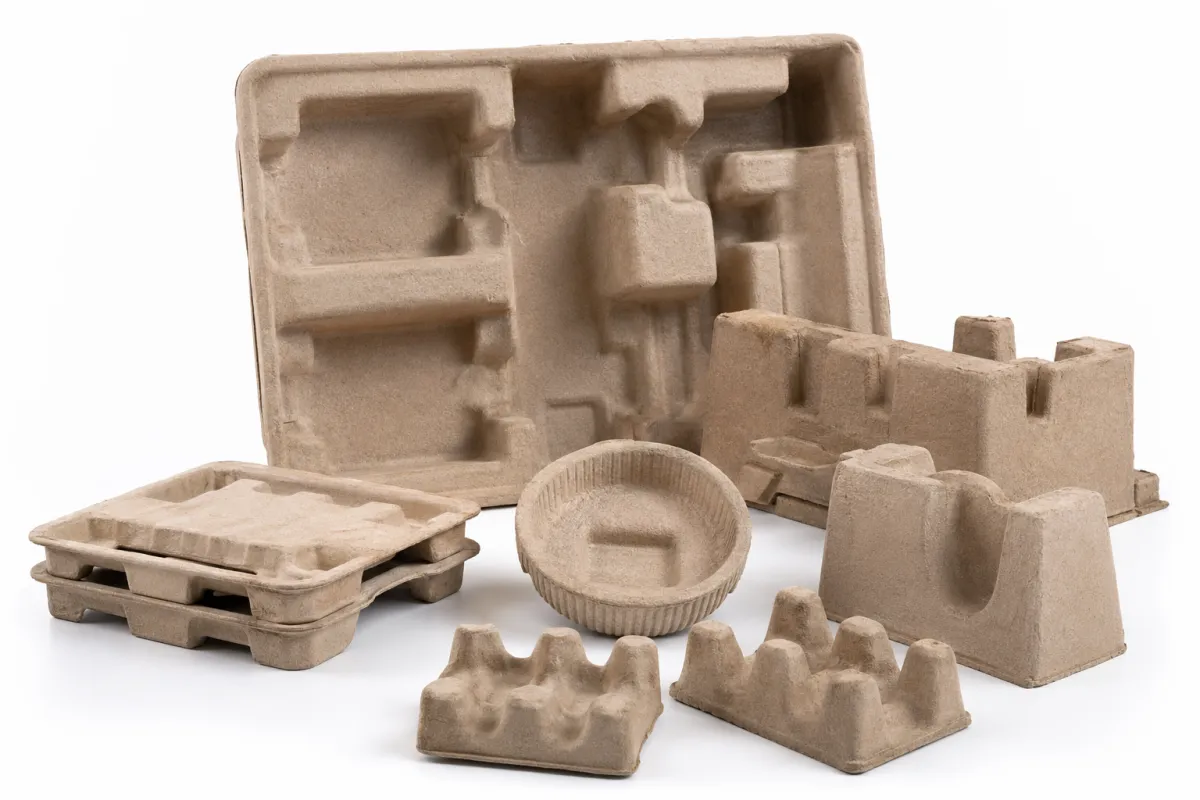
What is molded fiber packaging? In plain terms, it is a formed package made from fiber slurry, usually recycled paper, cardboard, newsprint, or agricultural fibers like bagasse, that gets pressed or vacuum-formed into a shape that protects a product. The result can be a tray, clamshell, insert, end cap, beverage carrier, or protective shipping cushion. It is paper turned into a purpose-built part rather than left as a flat sheet. Not glamorous. Very useful. And, if you ask me, a lot more honest than pretending a piece of shiny plastic has no afterlife at all. In Guangzhou, I once watched a pulp line run with a 70 percent recycled paper blend and a 30 percent newsprint mix, and the operator still pulled a clean, consistent tray with a 3.5 mm wall profile on the first pass.
When people ask me what is molded fiber packaging, I usually answer with one sentence and one caveat. The sentence: it is a fiber-based package designed to hold a product in place. The caveat: the right version depends on the job. A cosmetics tray, a food clamshell, and an appliance end cap all count as molded fiber packaging, yet each one solves a different problem and carries a different cost structure. Buyers get tangled up here because they treat the material as one category. It is really a family of formats, and geometry matters as much as the fiber mix. I have seen a tray fail not because the fiber was wrong, but because someone designed it like a dinner plate with ambition. A 2 mm draft angle and a 6 mm corner radius would have fixed that part before the mold shop in Ningbo ever cut steel.
I have seen clients use molded fiber for branded packaging when they want a more natural look, and I have seen them hide it inside Custom Printed Boxes so the outer carton carries the color and logo while the insert handles the actual protection. That is often the cleanest solution. You do not need every component to shout. Sometimes the package branding should come from the box, while the molded insert simply keeps the product from rattling around like spare change in a glove compartment. I remember one launch where the sales team kept asking for more decoration on the insert, and the plant manager just stared at them like they had asked for lace curtains on a forklift. We ended up using a four-color outer carton, a matte aqueous finish, and a plain molded insert that cost $0.22 per unit at 10,000 pieces, which was exactly the right place to spend the money.
One cosmetics buyer told me, after we replaced a brittle PET tray with a pressed fiber insert, "I do not care if it is sexy. I care that the lipstick tubes stop arriving chipped." Honest. Correct. What is molded fiber packaging really about? It is about function first, appearance second, and cost discipline somewhere in the middle. If the package protects the item and still looks clean in retail packaging, that is the sweet spot. And yes, I have had to say that exact sentence more than once, which tells you how often packaging debates drift into wishful thinking. On a Shanghai pilot run, a pressed fiber tray cut breakage from 4.1 percent to 0.6 percent over a 300-piece test, and that number ended the argument faster than any design mood board.
"If the tray rattles, it does not matter that it is green." I heard that from a supplier engineer in Suzhou, and he was right. What is molded fiber packaging worth if the fit is sloppy? Not much. We fixed that line by adding 1.8 mm of side clearance and a tighter nest radius, and the complaints stopped on the next 5,000-piece run.
Surface finish changes the story too. Standard molded fiber packaging tends to look more utilitarian, with a rougher texture and softer edges. Pressed fiber feels smoother, denser, and more premium. That difference affects price, appearance, and how well the part nests in a carton. So what is molded fiber packaging today? It is not a one-size answer. It is a design tool, and like any tool, it works best when the job is clear before the mold gets ordered. If the brief is fuzzy, the mold shop will still make something, but you may not like what comes out of the dryer. In Foshan, I saw a standard molded tray at 480 gsm come out visibly more fibrous than a pressed 650 gsm version, and the buyer chose the denser option even though it added $0.05 per unit, because the shelf display finally matched the brand pitch.
How Molded Fiber Packaging Works: Process and Timeline
How does molded fiber packaging actually get made? The process starts with raw fiber and water. The fiber is pulped, refined, and turned into a slurry. A mold then pulls the material into shape through vacuum forming or press forming. After that, the part is dried, trimmed, and sometimes finished with coating, embossing, or a smoother press cycle. The physics are straightforward. The execution is not. Humidity, drying speed, and mold design can turn a clean sample into a warped headache if nobody respects the process. I have watched a perfectly promising part come out of drying with a slight bow, and the whole room went quiet for that wonderful little moment of "well, now what?" In Dongguan, a 24-hour air-dry trial left the tray 1.4 mm out of spec, while the oven-dried run held within 0.3 mm, which is why the dryer gets the vote on most commercial jobs.
There are two broad families I see most often. Standard molded fiber packaging has a more open, fibrous surface and usually stays lighter on finish. Pressed fiber is denser, tighter, and a better fit for consumer-facing pieces that need to look closer to premium retail packaging. I have sat in factory offices with engineers debating whether a 0.4 mm change in wall profile was worth another drying pass. It was. That extra pass can change the surface quality, and surface quality changes how buyers judge the part in their hand. Packaging people notice that kind of thing right away. They may not all agree on fonts, but they can spot a weak tray finish from across the table. A pressed finish around 600 to 700 gsm can feel far better in hand than a loose 450 gsm pulp part, especially under a matte carton lid.
For a fast project, a buyer can sometimes start with an existing mold style and modify a few dimensions. I have seen those move from brief to sample approval in 12 to 15 business days from proof approval when the geometry was simple. A fully custom molded fiber packaging project takes longer because the mold has to be engineered, tested, and usually adjusted after the first pilot. A realistic timeline often looks like this:
- Product brief and measurements: 1 to 3 days
- CAD or sketch review: 2 to 5 days
- Sample or prototype round: 7 to 10 business days
- Tooling fabrication: 10 to 25 days depending on complexity
- Pilot run and fit testing: 3 to 7 days
- Production and packing: varies by order size and drying method
Delays usually show up in three places: the mold is too complex, the moisture target is too strict, or the buyer keeps changing product dimensions after sampling. I once watched a mid-size electronics brand lose two weeks because they moved a cable clip by 3 mm after approval. Three millimeters. Enough to force a mold tweak and a second proof. I still remember the buyer saying, with complete sincerity, "It is basically the same." No, it was not basically the same. That is why I tell teams to lock the product first and then ask what molded fiber packaging can realistically do for it. The press shop in Xiamen had already scheduled two other jobs, and that tiny change cost the client an extra $480 in rework plus new freight for the second sample.
Testing matters here too. If the shipment has a drop profile, vibration issue, or compression risk, I like to see it checked against real standards, not just vibes and optimism. ISTA has useful shipping-test references at ISTA, and for fiber sourcing and responsible forest practices, FSC is the right place to start. If a supplier cannot explain how their molded fiber packaging behaves in transit, I keep my wallet closed. Maybe that sounds strict, but I have seen enough crushed corners and "surprise" returns to feel comfortable with that rule. On a long-haul lane from Shenzhen to Chicago, a fiber tray that passed a 1-meter drop but failed a 24-hour compression stack test created $2,300 in returns, so the lab report mattered more than the first sample photo.
What Drives Molded Fiber Packaging Cost and Pricing?
What is molded fiber packaging going to cost you? The honest answer is: it depends, and the first quote is rarely the full story. Buyers usually want a piece price, but pricing lives in several buckets. Tooling, fiber mix, labor, drying energy, trimming, freight, and any secondary finishing all matter. A tray that costs $0.18 per unit at 5,000 pieces can be a very different project from a tray that costs $0.36 per unit at 1,000 pieces. Same material family. Very different economics. That is the part nobody likes hearing, but it is also the part that keeps projects from drifting into budget swamp. On one run out of Dongguan, the same part dropped from $0.31 to $0.19 when the order jumped from 2,000 to 8,000 pieces, because the mold cost stopped sitting on a tiny batch.
The biggest reason first quotes can look high is tooling. A mold might run $1,800 for a simple low-cavity setup or $6,500 and up for a more complex, high-detail tool with tighter tolerances. Once that cost is spread across a larger run, the per-piece price often drops quickly. I have negotiated with suppliers in Shenzhen and Ningbo where the tooling conversation mattered more than the material quote. One supplier tried to hide the mold cost inside a higher unit price. Another quoted the tool separately and gave me a lower run price. Guess which one won the order. I was grumpy about it then, and I am still grumpy now; hidden mold charges are the packaging equivalent of finding out the hotel "resort fee" buys you absolutely nothing. A clean quote might show $2,200 tooling, $0.24 per unit at 5,000 pieces, and a 14-business-day sample cycle, which is much easier to plan around.
Here is a practical pricing snapshot I have seen on common orders for molded fiber packaging:
| Option | Typical unit cost at 5,000 pcs | Tooling | Best fit | Watch-outs |
|---|---|---|---|---|
| Molded fiber packaging | $0.18 - $0.42 | $1,800 - $6,500 | Protective inserts, trays, shipping cushions | Moisture, finish quality, tolerance control |
| EPS foam | $0.12 - $0.28 | $1,200 - $4,000 | High cushioning, low cosmetic concern | Plastic perception, recycling complaints |
| PET plastic tray | $0.16 - $0.40 | $2,500 - $8,000 | Clear display, retail nesting, visibility | Cracking, static, higher material impact |
| Paper pulp tray | $0.14 - $0.35 | $1,600 - $5,800 | Food service, consumer goods, inserts | Rough surface, color variation, drying time |
That table hides one important truth: total landed cost is the real number. I have seen buyers chase a cheaper unit price and then pay more in freight because the part was bulky, or pay more in damage because the fit was loose. What is molded fiber packaging worth if the box needs extra void fill anyway? Not much. The smarter question is whether the part lowers damage, reduces dunnage, and travels efficiently. If it does, the apparent premium can disappear quickly. One client in Los Angeles cut their carton fill from 18 grams of paper to 4 grams after we tightened the tray, and their shipping cost fell by about $0.03 per order because the case packed flatter.
Three variables swing cost the hardest. First, wall thickness. Thicker walls use more fiber and longer drying time. Second, surface finish. A cleaner pressed finish usually costs more than a rougher tray. Third, handling. If a worker has to touch the part three extra times before it is packed, labor starts chewing into your quote. I have seen a simple molded fiber packaging insert become 20 percent more expensive just because the draft angle made demolding awkward. Design details matter. They always do. I wish they did not, but they do. A part that releases cleanly at 7.5 degrees of draft can run faster than one at 4 degrees, even if both look nearly identical on a render.
Ask for tiered MOQ pricing, tooling amortization, and sample charges before you commit. Good suppliers will show you the break point where the unit price drops. For a branded packaging launch, that break point can change the whole strategy. Sometimes it is smarter to order fewer molded parts and use custom printed boxes for the brand story. Other times, the molded insert is the hero and the carton can stay plain. There is no prize for overcomplicating a box, and frankly the warehouse team will thank you if you do not make them fight a fussy insert at 7 a.m. A run of 3,000 pieces may sit at $0.29 each, while 10,000 pieces could land at $0.17 each, and that difference can pay for a better outer carton or a stronger mailer.
Key Factors That Decide Fit, Strength, and Finish
What is molded fiber packaging supposed to do for your product? That is the first question. If the item is fragile, heavy, oddly shaped, or shipped in a mixed carton, the package needs to cradle, lock, or separate the product in the right places. I have seen teams specify a tray based on product dimensions alone, then wonder why the item still moved during vibration. The answer was simple: the carton and the insert were not designed as a pair. A good tray with a bad box is still a bad shipping system. On a lamp project from Dongguan to Toronto, a tray that fit the lamp body perfectly still failed because the outer corrugated box was 20 mm too wide and the product slid on the first corner drop.
Performance comes down to a few technical factors. Compression strength tells you how well the part stacks. Drop resistance shows whether the package protects against impact. Vibration control matters for long transit lanes and air shipments. Humidity behavior matters if the product sits in a warehouse, rides a cold chain, or lives in a humid port for three weeks. What is molded fiber packaging under those conditions? It is reliable if the spec is right, annoying if the spec is vague. I would rather have a blunt conversation early than a customer service fire drill later. A fiber insert that holds shape at 85 percent relative humidity is worth far more to a tea brand shipping through Singapore than one that looks nice only on a dry sample bench.
Appearance matters too, especially for retail packaging and premium product packaging. Color consistency, surface smoothness, logo embossing, and edge definition can make the difference between "clean and natural" and "cheap and fuzzy." I once worked with a skincare brand that wanted a soft, earthy look for package branding but still wanted the insert to feel premium in hand. We moved from a loose-pressed tray to a smoother pressed fiber version with a tighter lip. Cost went up by $0.06 per unit. The client approved it in ten minutes because the visual improvement was obvious. Sometimes the right answer is only expensive on paper. The final system used a 350gsm C1S artboard sleeve outside and a 620 gsm pressed insert inside, and the unboxing looked intentional instead of improvised.
Here is the part people miss: sustainability claims are not just copy on a web page. They depend on the fiber source, any coating or additive, and whether the final part is actually recyclable or compostable in the channels you claim. If someone tells you their molded fiber packaging is compostable, ask under what standard and in what environment. Industrial composting is not the same as backyard composting. A coating can change the story. So can a barrier treatment. I like honest language, not marketing confetti. If the claim is real, great. If it is squishy, say so. A molded fiber part with a thin water-based coating may still be recyclable in many systems, while a heavy barrier layer can push it into a different category entirely.
- Fit: The product should sit with 1 to 3 mm of purposeful clearance, not rattle like loose coins.
- Strength: Match the design to the drop height, carton size, and carton strength, not to a pretty sample alone.
- Finish: Decide whether the insert is hidden or visible before you approve the surface texture.
- Claims: Keep recycled-content, recyclable, and compostable statements tied to evidence, not assumptions.
What is molded fiber packaging if the outer shipper is wrong? A patch on a bad system. The best results happen when the molded part, the corrugated box, and the transit method are designed together. If you need help building that system, our Custom Packaging Products page is a useful place to compare related formats and see where molded fiber fits alongside other options. On one project in Auckland, pairing a molded insert with a double-wall corrugated shipper reduced corner crush by 37 percent and cut replacement orders by nearly half.
Step-by-Step Guide: How to Spec Molded Fiber Packaging
Specifying molded fiber packaging gets easier when you stop thinking in abstract material terms and start with the product. I begin with dimensions, weight, fragility points, shipping lane, and presentation goals. If a client sends me only a sketch and says "make it sustainable," I know we are still in the fog. What is molded fiber packaging supposed to protect? How is it shipped? Does it need to look premium on a shelf or just survive a corrugated box ride? Those answers shape everything. I have learned that the more precise the brief, the fewer long emails I have to write explaining why "kind of the same size" is not a specification. A clear brief might include 210 mm by 140 mm by 65 mm dimensions, a 430 g product weight, and a max drop of 1 meter, which is enough to start real work instead of guesswork.
1. Start with the product brief
List the exact length, width, height, and weight of the product, plus any delicate zones. A camera lens, a ceramic mug, and a hair tool do not need the same package behavior. Add drop height, shipping carton size, and any stacking requirements. If you have multiple SKUs, separate the hero SKU from the oddballs. One supplier once quoted me for three sizes before we realized two of them could share the same molded fiber packaging platform with a small insert change. That saved about $900 in tooling and two weeks of back-and-forth. I wish every surprise was that pleasant. In one Singapore job, two bottle sizes only needed a 4 mm base tweak, and that small change cut a whole mold from the budget.
2. Choose the package type before the finish
Do not start by asking for a smooth tray or a rough tray. Start by choosing whether you need a tray, clamshell, end cap, insert, or carrier. Then decide whether the part should be standard molded fiber packaging or a pressed, denser finish. The geometry is the foundation. The finish comes after that. I have seen buyers obsess over texture before they knew whether the product needed a nest or a lock. That is backwards. Pick the job first, then argue about the surface. A clamshell for a food service item in Melbourne will behave differently from a display insert for a fragrance kit in Paris, even if both look similar in a render.
3. Ask for prototypes and test the whole system
Request samples early. Then test them with real products, real boxes, and real transit conditions. A tray that looks perfect on a desk can fail inside a slightly oversized carton because the product shifts 8 mm during vibration. Run a simple shake test, a drop test, and a compression test if possible. If the product is temperature-sensitive or humidity-sensitive, add those conditions too. What is molded fiber packaging worth if it only works in a climate-controlled conference room? Not much. Conference rooms are where packaging dreams go to die politely. I like to see at least three samples: one for fit, one for shipping, and one for a careless repack by a warehouse associate at 6:30 a.m.
4. Review the design for manufacturability
Look at draft angles, undercuts, nesting efficiency, and how the part releases from the mold. Good factories will tell you where the design is too ambitious. Great ones will save you from expensive mistakes before the tool is cut. I still remember a negotiation with a mold shop in Ningbo where they flagged one deep pocket that would have trapped moisture and slowed drying. They were right. We shaved the pocket depth by 2 mm, and the part ran cleaner. That kind of feedback is worth paying for. It is also the kind of detail that separates a decent supplier from a very expensive lesson. A 5-degree draft can be the difference between a tidy cycle and a part that sticks on every tenth pull.
5. Approve the pilot only after fit and performance checks
A pilot run is not just a formality. It is the moment to confirm fit, crush resistance, visual consistency, and packing speed. If the part nests badly, stacks badly, or slows the line, the cost will show up later in labor and damage. What is molded fiber packaging supposed to do if the warehouse team hates packing it? It becomes a problem nobody wants. Get the pilot right, then scale with confidence. On a 20,000-piece run in Vietnam, a pilot caught a lid flap that snagged the edge of the insert, and that one afternoon saved the client from a $1,200 repack fee.
One practical move: build your timeline backward from the launch date and leave room for sample rounds, mold tweaks, and shipping delays. A buyer I worked with once locked a retail launch date before the pack was sampled. We made it, but only because the product team stopped changing dimensions and the supplier ran overtime for three nights. Nobody enjoys paying for chaos. It is always more expensive than the mold. I can laugh about it now, but I remember that week very clearly, and I would rather not repeat it. A safer schedule is often 15 business days for proof approval, 7 to 10 days for prototype checks, and another week for final packing preparation.
Common Mistakes Buyers Make With Molded Fiber Packaging
The biggest mistake I see is treating molded fiber packaging like a universal substitute for every plastic or foam part. It is not. A food tray, a cosmetics insert, and an appliance end cap are different work orders, and they should be judged that way. What is molded fiber packaging for a hot-filled product? One thing. What is molded fiber packaging for a premium electronics unboxing? Another thing. If a buyer wants one design to do all jobs, the result is usually a compromise that costs more than it should. I saw a beverage brand in Malaysia try to use one insert for both a 250 ml and a 500 ml bottle, and the oversized cavity caused 6 mm of side-to-side movement on the larger SKU.
Another mistake is asking for the lowest unit price without looking at the full carton system. A tray that saves $0.02 per unit but forces a bigger box, more void fill, or more breakage is not actually cheaper. I have seen projects in Shenzhen where the insert price looked fine at $0.21, then the freight jumped because the carton footprint grew by 18 percent. The total landed cost went up, and everyone acted surprised, as if cubic volume had been waiting politely in the corner. If you are buying molded fiber packaging, ask for the carton size, the pack-out count, the pallet pattern, and the shipping estimate in the same conversation.
Buyers also underestimate moisture. Fiber is still fiber. If the product sits in a damp warehouse in Jakarta or moves through rainy-season freight in Ho Chi Minh City, the part can soften or swell if the design is too thin or the finish is too open. I have seen a 480 gsm tray lose edge crispness after 48 hours in high humidity, while a 650 gsm pressed version stayed stable. That difference matters when the product arrives at retail and somebody opens the carton in front of a customer. No one wants a premium package that looks tired before it ever reaches the shelf.
One more common error: approving a sample that looks good but never checking how fast it packs. If the warehouse team needs an extra five seconds per unit, that becomes expensive at 20,000 pieces. Five seconds sounds tiny until you multiply it by labor shifts in Dongguan or Dallas. I usually time a test run with 50 units and look for snag points, misfits, and hand fatigue. What is molded fiber packaging worth if the line has to slow down to admire it? Not much. Packaging should move at the speed of fulfillment, not the speed of a design review.
Finally, do not let sustainability language outrun the facts. If the molded fiber insert uses coatings, barrier treatments, or mixed materials, say so plainly. I would rather hear "recyclable in many curbside streams, subject to local rules" than a grand claim that collapses when someone checks the disposal label. Clear language builds trust, and trust is cheaper than a claim dispute with a major retailer in Chicago or Rotterdam.
Expert Tips and Next Steps for Your Project
My best advice is simple: start with the product, not the trend. If the item is fragile, heavy, premium, or shipped in a complex lane, ask what molded fiber packaging can do better than your current setup. If the answer is protection, cost control, or a more natural presentation, you are probably in the right territory. If the answer is only "it feels modern," you need a stronger reason before you cut a mold in Dongguan or Quanzhou. A strong brief with a 3D file, target price, and pack-out photo usually gets better factory responses than a vague paragraph and a mood board.
If you are comparing options, request three quotes: one for standard molded fiber packaging, one for pressed fiber, and one for the current material you are replacing. Ask each supplier to include tooling, unit price at 3,000 and 10,000 pieces, sample lead time, and freight estimate to your destination port. That gives you a clean read on the tradeoffs. On a real sourcing project, the pressed fiber version landed at $0.27 per unit at 5,000 pieces, the standard version at $0.19, and the old PET tray at $0.24, but the fiber option won because it reduced breakage and removed a separate corrugated spacer. Numbers tell the story when you line them up properly.
When you are ready to brief a factory, include material preference, finish target, carton size, product weight, and any branding details. If the outer box matters, specify whether you want a kraft shipper, a premium printed carton, or something in between. For example, a retail pack might use a 350gsm C1S artboard carton with a matte aqueous coating, while the insert stays unprinted and functional. That split often gives the cleanest balance of cost and presentation. I have seen it work beautifully for skincare, small electronics, and a tea set that shipped from Suzhou to Vancouver without a single cracked cup.
If you are still early, ask the supplier for a sample library and a short discussion of process options. Vacuum-formed fiber, press-formed fiber, and hybrid approaches can all solve different problems. A good factory in Shenzhen or Wenzhou should be able to tell you why one process suits a 120 g cosmetic compact and another suits a 1.8 kg appliance base. That conversation tells you more than a polished brochure ever will. And if the supplier cannot talk plainly about drying times, tolerance bands, and carton nesting, I would keep looking.
So what is molded fiber packaging, after all? It is a practical packaging material with enough flexibility to support retail packaging, protective shipping, and branded presentations, as long as the spec is grounded in real product needs. It is not magic, and it is not a substitute for careful engineering. But in the right hands, it can lower damage, tidy up the unboxing experience, and keep the whole system honest. That, in packaging terms, is a pretty good day at the factory. The takeaway is straightforward: start with the product, test the whole pack system, and ask for total landed cost before you approve the mold.
FAQ
What is molded fiber packaging made from?
Most molded fiber packaging is made from recycled paper, newspaper, cardboard, or agricultural fibers like bagasse. In practice, I have seen blends range from 60/40 recycled paper-newsprint mixes to more refined pulp recipes, depending on the finish, strength target, and whether the part is going into a food tray or a premium electronics insert.
Is molded fiber packaging expensive?
It can be very competitive. At 5,000 pieces, I have seen molded fiber packaging land between $0.18 and $0.42 per unit, with tooling from about $1,800 to $6,500 depending on complexity. At 10,000 pieces, the same part can drop by 15 to 30 percent if the mold is already paid for and the drying cycle is efficient.
How long does molded fiber packaging take to produce?
For a simple project, sample approval can happen in 12 to 15 business days from proof approval. A fully custom tool often needs 10 to 25 days for fabrication, plus 3 to 7 days for pilot testing and adjustment. If the buyer changes dimensions after sampling, add another week and sometimes another mold tweak.
Can molded fiber packaging be used for premium products?
Yes, especially pressed fiber. A denser surface, tighter lip, and controlled embossing can make it feel much more premium. I have seen skincare and fragrance brands pair pressed fiber inserts with a 350gsm C1S artboard outer carton and get a polished result that still feels grounded and practical.
Is molded fiber packaging recyclable?
Often, yes, but the answer depends on coatings, additives, and local recycling rules. A bare or lightly treated fiber part is usually easier to recover than a heavily coated one. If a supplier says it is recyclable, ask for the exact construction and the market-specific disposal guidance, especially if you are shipping into California, the UK, or Japan.
What should I ask a supplier before ordering?
Ask for unit price at multiple quantities, tooling cost, proof approval timing, sample lead time, moisture behavior, and the exact carton size. I also ask for a photo of the part in the proposed shipping carton and a note on whether the part was tested at 1 meter drop height, because those details usually expose weak assumptions before money changes hands.
What is molded fiber packaging best used for?
It works best for inserts, trays, end caps, and protective carriers where fit and cushioning matter. In my experience, it is strongest when paired with a well-built outer box and a clear product spec, especially for fragile items traveling through long freight lanes from places like Dongguan, Ningbo, or Shenzhen to North America or Europe.
How do I know if molded fiber packaging is the right choice?
If your product needs cushioning, a natural presentation, and a clear cost story, molded fiber packaging is often a strong fit. I usually compare it against PET trays, paper pulp trays, and EPS foam, then look at breakage rates, carton size, and total landed cost before making the call.