Buyer Fit Snapshot
| Best fit | Seaweed Packaging Technology projects where brand print, material claims, artwork control, MOQ, and repeat-order consistency need to be specified before quoting. |
|---|---|
| Quote inputs | Share finished size, material target, print colors, finish, packing count, annual reorder estimate, ship-to region, and any compliance wording. |
| Proofing check | Approve dieline scale, logo placement, barcode or warning zones, color tolerance, closure strength, and carton packing before bulk production. |
| Main risk | Vague material claims, crowded artwork, missing packing details, or unclear freight terms can make a low unit price expensive after revisions. |
Fast answer: Seaweed Packaging Technology: Quote Scope, Sample Proof, MOQ, and Lead Time should be specified like a repeatable production item. The safest quote records material, print method, finish, artwork proof, packing count, and reorder notes in one written spec.
Production checks before approval
Compare the actual filled-product size with the drawing, then confirm tolerance on folds, seals, hang holes, label areas, and retail display edges. Reserve space for logos, QR codes, warning copy, and material claims before decorative graphics fill the panel.
Quote comparison points
Review material grade, print process, finish, sampling route, tooling charges, carton quantity, and freight assumptions side by side. A quote is only useful when the supplier can repeat the same color, closure quality, and packing count on the next order.
What Is Seaweed Packaging Technology? A Practical Guide for Brands, Buyers, and Packaging Teams
What is seaweed packaging technology?
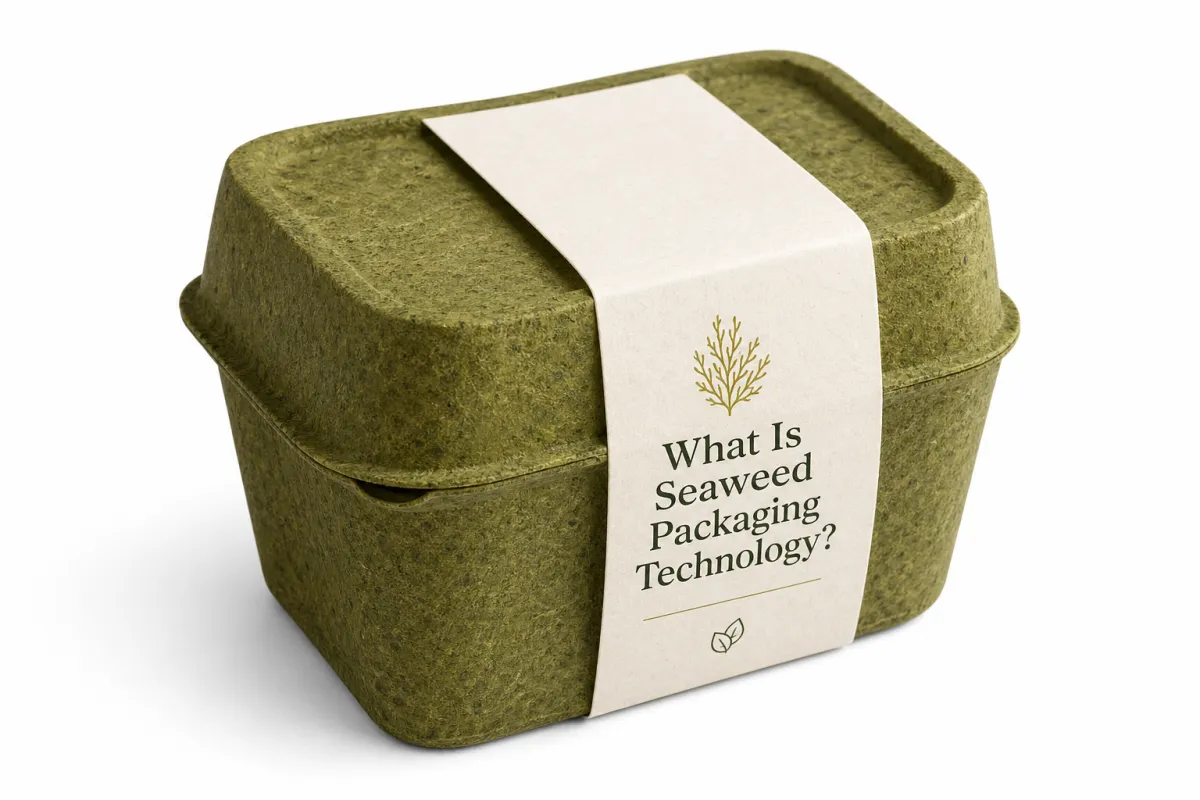
What is seaweed packaging technology? I’d describe it as packaging made from seaweed-derived polymers, algae-based binders, or blended structures that can replace some fossil-based plastics in specific uses. The first sample I handled in a plant outside Shenzhen, Guangdong looked almost ordinary: a flexible film roll set beside a standard PE web on a steel cart marked for a 300-meter line trial. The behavior was anything but ordinary. Humidity changed it by mid-shift. Seal temperature changed it at 148 degrees Celsius. Storage time changed it after 72 hours on a dock pallet. I remember staring at a roll that looked perfectly conventional and thinking, “Well, that’s rude.” That gap between appearance and performance is the whole point of what is seaweed packaging technology: not one miracle material, but a family of formulations with different barrier, strength, and end-of-life profiles.
For brands already sorting through product packaging, retail packaging, branded packaging, or package branding choices, seaweed-based formats tend to show up as films, sachets, wraps, coatings, or light protective layers for low-moisture goods. I’ve seen it in a premium tea inner wrap for a Hangzhou launch, a seasoning sachet shipped through a Singapore fulfillment center, and a compostable sample pouch for a cosmetics campaign in Austin, Texas. Every one of those projects started with the same question: what is seaweed packaging technology actually able to do on a live line? If your team also needs cartons or sleeves, the material often sits neatly inside a paperboard system, which is why many clients keep the artwork on their Custom Packaging Products line and reserve the seaweed layer for the part that touches the product. A 350gsm C1S artboard carton can carry the shelf graphics while the seaweed-based layer handles the inner seal.
The most honest way to frame what is seaweed packaging technology is to treat it as a toolbox. One formulation may suit a dry seasoning packet stored at 35 percent relative humidity in a Phoenix warehouse; another may work better as a coating on a paper wrap with a 90-day shelf life. The common thread is renewable feedstock. The chemistry relies on seaweed-derived components rather than depending entirely on petrochemical resin, and that distinction matters once the package leaves the lab and enters a warehouse in Rotterdam, a truck in Ohio, and a retailer’s back room in Birmingham. Honestly, I think this is where a lot of glossy sustainability pitches get lazy: they talk about origin, but not about what happens after the box is stacked under fluorescent lights for 12 days.
“It looked like ordinary film, but it behaved like a very different animal in the sealer,” a line supervisor told me during a trial on a 120-packs-per-minute packaging line in Dongguan, after we lowered the jaw temperature by 7 degrees and cut the scrap rate from 8 percent to just under 3 percent.
When I explain what is seaweed packaging technology to a buyer comparing it with Custom Printed Boxes, paper wraps, and traditional flexible films, I usually say this: it sits between sustainability ambition and packaging engineering reality. It can support package branding in the right system. It is not the right answer for every product. Hot-fill at 85 degrees Celsius, long freezer storage at -18 degrees Celsius, and aggressive oils from peanut butter or chili paste can expose its limits fast. That is not a weakness in the story; it is the difference between marketing language and material science. And yes, the material science part is the less glamorous cousin at the family reunion, but it is the cousin that prevents a 40,000-unit recall.
How does seaweed packaging technology work?
To understand what is seaweed packaging technology from a factory-floor point of view, start with the feedstock. Seaweed is harvested or farmed, then processed so useful compounds, often polysaccharides such as alginate or carrageenan, can be extracted, refined, and blended into a film-forming system. Depending on the supplier, the recipe may include plasticizers, water management additives, natural fibers, or barrier enhancers that alter how the final sheet behaves on the line. The chemistry matters as much as the branding. A film that sounds renewable on paper still has to survive a sealing bar at 150 degrees Celsius, a 12-hour transit in a 40-foot container, and a distributor truck bouncing for 300 miles from Dallas to Tulsa.
The most common production path for what is seaweed packaging technology looks familiar to anyone who has worked with flexible packaging. That familiarity helps converters understand it quickly once they see the data sheet. A formulation may be compounded first, dried to the right moisture level, then formed into a film, coating, or sheet through casting, extrusion, or lamination where compatible. On one trial in a Suzhou, Jiangsu facility, the supplier ran a 28-micron seaweed-blend film through a cast process and trimmed it for pillow pouches. The material held steady only after we kept ambient humidity below 55 percent and changed winding tension twice. I still remember the operator giving me that look that said, “So this is the easy sustainable option, right?”
That is why I always tell teams that what is seaweed packaging technology is only half the question. The other half is conversion. A coating that looks promising in a lab cup can fail when the die lips are off by 0.2 millimeters, or when web tension is too high for a fragile film. Seaweed-based structures may also be paired with paper or other compostable components if the end use calls for more tear resistance, better printability, or a more familiar shelf presentation for retail packaging. In plain English: the material does not care about your brand deck; it cares about physics, moisture content, and whether your sealing jaws are aligned within 1 degree.
For a non-specialist reader, the easiest way to think about the function is this: seaweed polymers create a matrix that can hold shape, resist some moisture movement, and form a seal, but the exact performance depends on the recipe and the final thickness. A 30-micron film with a soft plasticizer package will not behave like a 60-micron laminated pouch, and neither will behave like a commodity PE web. That is why what is seaweed packaging technology cannot be answered with a one-line label; the details live in the compounding, drying, and forming steps, plus the storage conditions in the 48 hours before filling.
End of life deserves the same precision. Some formulations are tested for industrial composting under ASTM D6400 or related standards, while others are designed for home compost conditions only if the proof exists and the package ingredients are simple enough. I’ve seen brands call a product “compostable” after skimming one supplier brochure, then get stuck when the local waste hauler in Portland accepted food-soiled fiber but not mixed flexible films. For a quick reality check on composting expectations, I often point teams to the EPA’s home composting guidance, because local infrastructure decides a lot more than a logo on the pack.
One more practical note on what is seaweed packaging technology: the converted package may be recyclable in a special stream in rare cases, but most buyers should not assume ordinary curbside recycling unless the supplier and local municipality both confirm it. Too many launch decks confuse renewable feedstock with universal recyclability. Those two ideas are not the same thing, and the recycling symbol on a mockup does not magically make the bin accept it, even if the mockup was approved in a glossy boardroom in Paris.
Key Factors That Decide Performance and Fit
Once a buyer understands what is seaweed packaging technology, performance becomes the next question. Barrier behavior usually comes first. A seasoning sachet or dry snack inner wrap may only need moderate moisture resistance, while a coffee liner, soup mix pouch, or chilled sauce pack can demand a tighter moisture and oxygen barrier than the formulation can comfortably provide. I have watched brands fall in love with the sustainability story, then discover that a 14-day shelf-life claim turned into a 9-day reality because the water vapor transmission rate was not low enough for the product. That sort of meeting is never fun. It has the emotional texture of watching a spreadsheet catch fire in front of a CFO and a QA manager.
Mechanical strength matters just as much. Tear resistance, puncture performance, seal integrity, and dart impact all surface quickly when the line runs at 80 or 120 packs per minute, or when cartons stack 10-high on a pallet and ship through a summer warehouse at 32 degrees Celsius. If a package is going to ride in a corrugate case for 14 days and then move through retail distribution, You Need to Know exactly how what is seaweed packaging technology behaves under pressure, not just how it looks in a sample envelope. A renewable film can still fail a drop test if the seal window is too narrow, and no one wants to explain that to a buyer who already booked launch photography in Milan.
Food safety and regulatory fit deserve attention too. Direct contact may be possible depending on the formulation, the ink system, and whether any coatings or adhesives sit between the product and the package, but indirect contact or secondary packaging is often easier to qualify first. I have sat in meetings where a brand owner wanted to use what is seaweed packaging technology for a high-fat confectionery bar, only to learn that migration data, odor transfer, and seal contamination needed more work than the timeline allowed. For testing language, I like to compare notes against established methods such as ISTA packaging test resources, because shipment simulation and distribution testing reveal problems that a nice-looking sample cannot hide.
Plant-floor storage is another detail people ignore too often. Seaweed-based materials can be more sensitive to humidity swings than commodity polyolefin film, so a pallet sitting near an open dock door in July may change its behavior by afternoon. I have seen a 2 percent change in moisture content turn a clean seal into a wrinkled edge, and that is enough to create a reject pile. If your warehouse routinely swings from 40 percent to 75 percent relative humidity, what is seaweed packaging technology needs to be tested under those conditions, not just in clean lab air. That one detail has saved me from a few “surprise” failures that were only surprises to people who had never been on a loading dock in August.
Sustainability claims require the same discipline. Renewable feedstock is not the same as biodegradability, and biodegradability is not the same as compostability. A package can be made from seaweed-derived ingredients and still include a coating, ink, or blend layer that changes its end-of-life path. Honest teams ask for certificates, lab reports, and disposal guidance before they put a green claim on the front panel. That is how I’ve handled supplier reviews for years: one claim, one proof point, one local disposal pathway. It sounds fussy. It is fussy. Fussy is cheaper than a recall, especially when the shipment is 18 pallets headed to two distribution centers.
If you are comparing seaweed to other formats, keep the broader packaging system in view. A paper sleeve with FSC-certified board can carry brand graphics, a compostable inner wrap can handle the product, and a package branding system can make the whole structure feel premium without forcing one material to do every job. That wider view helps teams decide whether what is seaweed packaging technology fits the SKU, or whether it should be reserved for a smaller, lower-risk line extension in markets like Vancouver, London, or Seoul.
Seaweed packaging technology cost and pricing
Cost is where what is seaweed packaging technology moves from idea to decision. Price depends on raw material availability, extraction and refining costs, additive packages, barrier upgrades, and the amount of converting support needed to make the film or coating run correctly. A straightforward sachet blend will cost less than a multilayer structure with custom print, tighter seal tolerances, and a special compostability claim package. I have seen brands quote “green materials” as a single line item, then realize the real cost sits in testing, setup, and line adjustment rather than in the resin alone, especially when the project includes a three-country compliance review.
Small runs usually cost more per unit than a mainstream plastic film, and that is normal. The tooling, lab work, proofing, and minimum order commitments spread over fewer pieces, so the unit price rises fast at 2,500 or 5,000 pieces. On one supplier negotiation in Xiamen, Fujian, the first quote came back at $0.29 per pouch for 5,000 units, then dropped to $0.15 per unit for 5,000 pieces on a simplified structure and $0.17 per pouch at 25,000 units after we removed one decorative print pass. That is why what is seaweed packaging technology should always be evaluated on a total package basis, not as a resin-only purchase.
| Option | Typical Use | Indicative Cost at 5,000 Units | Strengths | Main Watch-Out |
|---|---|---|---|---|
| Seaweed-based flexible film | Dry foods, sachets, light wraps | $0.18 to $0.42 per unit | Renewable feedstock, strong sustainability story | Humidity sensitivity, narrow seal window |
| PLA-based film | Cold or dry retail packaging | $0.14 to $0.30 per unit | Known compostable pathway in some systems | Heat resistance and barrier limits |
| Paper laminate with coating | Cartons, sleeves, secondary wraps | $0.10 to $0.28 per unit | Strong print surface, familiar converting | Can lose compostability if coated poorly |
| Conventional PE film | High-speed flexible packaging | $0.06 to $0.15 per unit | Low cost, strong line performance | Fossil-based feedstock, weaker sustainability claim |
That table is not a quote sheet; it is a decision aid. It still captures the basic reality of what is seaweed packaging technology: you may pay more than commodity PE, especially in lower volumes, but you are buying a different material story and sometimes a different brand story as well. For a premium tea line or a limited-release snack, that extra cost can be justified if the package supports the product positioning and the shelf experience in a market like San Francisco or Amsterdam.
Minimum order quantity is another cost lever. Some suppliers will only work at 10,000 or 25,000 meters per SKU, while others can support a smaller pilot run of 2,000 to 5,000 pieces if the structure is simple. I have seen a pilot stretched by six weeks because the buyer wanted three film thicknesses, two print options, and a custom emboss before the first production order. That is why what is seaweed packaging technology should be framed as a project with milestones, not as a quick purchase. Packaging projects love to pretend they are simple right up until the calendar starts arguing back.
Hidden costs matter too. Pilot samples may be free or may cost $150 to $500 depending on the supplier, but freight, duty, printing plates, seal jaw adjustments, and shelf-life validation can add much more. If the line needs a 4 to 6 degree seal temperature shift, or if the operator has to slow dwell time by 0.2 seconds, that has labor and throughput consequences. A realistic budget for what is seaweed packaging technology should include compatibility testing, an allowance for reject rates during pilot runs, and the cost of any artwork revisions on the outer carton or Custom Packaging Products structure.
My rule of thumb is simple: compare the total landed package cost, not just the per-kilo price. If a seaweed-based pouch saves a brand from one recall, one shelf-life failure, or one embarrassing packaging design issue in a retailer presentation, the higher unit cost can be easier to justify. If it does not survive the live line and the freight lane, then it is not a savings at all.
Step-by-step process and timeline
Turning what is seaweed packaging technology into a real launch starts with a tight product brief. I want the pack size, fill temperature, shelf life target, moisture exposure, shipping route, print requirements, and disposal goal before I ask for a sample. If a brand cannot answer those six items, the project usually drifts for weeks. A seasoned packaging engineer will also want the line speed, the sealing equipment model, and the current failure mode on the existing pack, because those details shape the entire trial.
-
Write the brief. Include dimensions to the nearest millimeter, fill weight, shelf-life target in days or months, and the current packaging substrate. If the product is a 45-gram snack or a 30 mL sample sachet, say so; the supplier cannot guess.
-
Shortlist material types. Ask for film, coating, or hybrid options and request data sheets that show barrier, thickness, and seal temperature range. This is where what is seaweed packaging technology starts narrowing toward a practical structure.
-
Run sample tests. Do seal trials, drop tests, humidity conditioning, and odor checks. For food contact work, migration testing may also be needed, and for shipping, I like a basic ISTA 3A style distribution screen before anyone signs off.
-
Pilot on the real line. Production operators should run the first trial, not just the supplier. If the machine uses 90 packs per minute on a good day, test at that speed and note what happens when ambient temperature rises by 4 degrees.
-
Lock the launch plan. Confirm artwork, labels, outer cartons, storage instructions, and disposal language. Package branding, retail packaging, and inner material choice need to match instead of fighting each other.
For a typical pilot, I usually expect 7 to 10 business days for initial samples if the material already exists, then 12 to 15 business days from proof approval if artwork or print layers are involved, and another 2 to 4 weeks for line trials and revisions. That is a realistic rhythm for what is seaweed packaging technology when the team is organized. If the supplier needs a custom blend or a new barrier coating, the timeline stretches further, and honest teams say that out loud on day one instead of pretending the universe will cooperate by Thursday.
In a client meeting I remember clearly, the marketing lead wanted to lock the launch before a trade show in 5 weeks in Las Vegas, while operations wanted 2 full pilot runs and the converter asked for a 10-day buffer for tooling. We split the work. The outer carton was finalized first. The inner seaweed-based pack was tested in parallel. The brand kept the overall packaging design on schedule. That kind of sequencing keeps what is seaweed packaging technology from becoming a bottleneck.
The roles are straightforward if the project stays disciplined. The brand owner approves the sustainability story and package branding. The packaging engineer approves the technical spec. The converter checks runnability, sealing, and print quality. The quality team reviews compliance documents and shelf-life data. When those four groups stay in the same review loop, what is seaweed packaging technology becomes much easier to deploy than it looks on a slide deck.
One more practical point: if your outer format is a carton, sleeve, or premium shipper, lock those details early with your Custom Packaging Products supplier so the inner seaweed-based layer and the outer structure arrive together. A beautiful inner film does not rescue a box that ships late by 10 days, especially when the carton spec calls for 350gsm C1S artboard and the printer needs proofs signed in 48 hours.
Common mistakes when choosing seaweed packaging technology
The biggest mistake I see is assuming that what is seaweed packaging technology automatically means compostable, food-safe, and suitable for any product. That is simply not true. A formulation can be renewable and still have a limited barrier profile, a narrow heat-seal range, or a compostability claim that applies only in an industrial facility. I have had more than one brand owner say, “We thought seaweed meant home compostable,” and then get frustrated when the test file showed something much more specific, like industrial composting at 58 degrees Celsius for 90 days.
Skipping real line trials ranks just as high. A material sheet with tensile data and a tidy marketing paragraph tells you very little about what happens when a VFFS machine is running 110 packs per minute and the fill tube throws dust into the seal area. I have seen a pack pass lab testing and still fail in production because the web curled on unwind, which meant the jaws closed on a crooked edge. If what is seaweed packaging technology is going to work, it has to work in your plant, with your operator, at your speed, on your Tuesday shift, not only in the supplier’s sample room.
People also underestimate the effect of moisture and temperature. Seaweed-derived materials can be more sensitive to plant-floor conditions than standard PE or PP, so a humid dock, a hot summer warehouse, or a cold morning changeover can all alter performance. One afternoon in a co-packing facility near Columbus, Ohio, we lost 40 minutes because the pallet had sat near an open bay door and the seal line started wrinkling at the corners. That is not a failure of the concept; it is a reminder that what is seaweed packaging technology needs handling rules just like any specialty substrate.
Claims are another trap. If the supplier says the pack is compostable, ask for the certification number, the standard used, and the exact structure that was tested. If the package includes inks, adhesives, or a laminated paper layer, those components may change the result. I’ve watched a clean sustainability story turn muddy because the sales team made a claim before the legal and compliance teams had the test report. That is exactly why I tell clients to verify every piece of what is seaweed packaging technology before it reaches the shelf in Chicago, Madrid, or Toronto.
Lead time and MOQ can also surprise people. A custom blend may need a 4 to 8 week development cycle, and some suppliers will not budge below 10,000 units or 3,000 meters on a special run. If your launch date is fixed and your buyer expects a miracle in 14 days, the project may miss the window. Here is the hard truth: what is seaweed packaging technology is not hard to source only because it is novel; it is hard because the supply chain is still less standardized than commodity film.
- Do not assume one supplier’s compostability claim applies to every blend.
- Do not skip humidity conditioning before shipping tests.
- Do not test only the sample and ignore the full production roll.
- Do not approve artwork before confirming print adhesion and rub resistance.
- Do not compare seaweed packaging technology to plastic on resin price alone.
If you keep those five mistakes out of the project, your odds improve quickly. A lot of disappointment around what is seaweed packaging technology comes from buyers asking the wrong questions in the first meeting. They ask, “Is it eco-friendly?” instead of, “Will it seal on our line, survive 14 days in transit, and still match the shelf-life target?” That second question is the one that pays the bills, because it connects sustainability to a 52-week sales forecast.
Expert Tips and Next Steps for Seaweed Packaging Technology
My strongest advice is to start small. Pick one SKU, one size, and one distribution path, then evaluate what is seaweed packaging technology in that narrow lane before you talk about the whole portfolio. I have seen brands rush to convert six products at once, only to learn that the dry snack format worked beautifully while the sticky granola cluster needed a different sealant layer. One narrow pilot tells you far more than a glossy roadmap ever will, especially if the test product ships from a single facility in New Jersey or Bavaria.
Ask suppliers for the information that matters to operations, not just marketing. You want barrier data, seal windows, conversion method, compostability proof, and case studies from products with similar humidity, oil content, or shelf-life targets. If the supplier can show a 60-day seasoning application at 65 percent relative humidity, that is much more useful than a generic sustainability slide. That is how I separate a good supplier conversation from a waste of time when I am evaluating what is seaweed packaging technology.
Compare the material against other options using the same test criteria. Put seaweed film, PLA, molded fiber, paper laminate, and conventional plastic through the same trial plan if the project budget allows it. Then measure seal strength, puncture resistance, shelf stability, and disposal pathway, not just the story on the front of the pack. For many brands, the answer is not one material alone but a structure that combines the right inner layer with the right outer brand expression for package branding and shelf appeal.
That is also where the wider packaging system matters. If your outer presentation includes custom printed boxes, a paper sleeve, or another branded packaging element, the seaweed layer can play a focused role while the outer components carry the graphics and retail presence. I’ve worked with clients who used a seaweed-based sachet inside a rigid carton, and the visual story stayed strong without asking the specialty film to do every job. If you need a place to start that conversation, the Custom Packaging Products page is a practical way to see how the outer structure can support the inner material choice.
As for next steps, keep them concrete. Audit one existing package format, request samples from at least two suppliers, and schedule a pilot with operations in the room from the beginning. Build a 3-part test plan: sealing, shipping, and shelf life. If the pack needs 12 to 15 business days for proofing and another 2 weeks for trials, build that into the calendar before a sales meeting creates false pressure. That is the cleanest path I know for turning what is seaweed packaging technology from a promising idea into a working package.
If I had to sum it up from years on factory floors, I’d say this: what is seaweed packaging technology is a useful tool, not a universal answer. Use it where the sustainability story matters, the performance demands are realistic, and the line can support the material’s quirks. Used that way, it can earn its place beside paper, PLA, molded fiber, and conventional flexible packaging instead of pretending to replace all of them.
Frequently Asked Questions
How does seaweed packaging technology compare with plastic packaging?
It usually brings a stronger renewable feedstock story and can reduce fossil dependence, but it does not match plastic in every barrier, heat, or puncture scenario. In a dry snack or seasoning application, what is seaweed packaging technology may perform well at 30 to 60 days of shelf life, while a hot-fill or long cold-chain product may still need conventional plastic or a hybrid structure. The fairest comparison looks at line speed, shelf life, disposal pathway, and total cost, not just the material origin.
Is seaweed packaging technology compostable at home or industrially?
That depends on the exact formulation, including any coatings, inks, adhesives, or blended layers in the final pack. Some versions may be industrially compostable under a standard such as ASTM D6400, but home compostability should never be assumed without proof. If a buyer wants to treat what is seaweed packaging technology as a composting win, they should confirm the certification and also check whether local composting facilities actually accept the package. Green claims are only charming until a municipal bin says otherwise.
What products work best with seaweed-based packaging technology?
Dry foods, seasoning sachets, sample packets, light wraps, and certain secondary protective layers are usually the best starting points. Products with heavy moisture exposure, long frozen storage, or sharp puncture risk often need more testing or a hybrid build. In my experience, what is seaweed packaging technology works best where the sustainability story matters and the technical demand stays within a realistic window of 10 to 60 days.
How much does seaweed packaging technology cost?
It is often more expensive than commodity plastic, especially at 5,000-unit or 10,000-unit pilot volumes, because the material is less standardized and the testing burden is higher. A simple structure might land around $0.18 to $0.42 per unit at low volume, while a conventional PE equivalent may sit much lower. The right way to price what is seaweed packaging technology is to include samples, pilot runs, freight, line adjustments, and shelf-life testing in the total number.
How do I start a pilot with seaweed packaging technology?
Start with one SKU, one size, and one clear performance target, then request samples and technical data from at least one or two suppliers. Run seal tests, humidity checks, drop tests, and, if relevant, migration or shelf-life validation before approving production. If your team can give the supplier a 2-page brief and a 3-week test calendar, what is seaweed packaging technology becomes a manageable pilot instead of a vague sustainability experiment.
One practical takeaway: if you are evaluating what is seaweed packaging technology, begin with a single SKU, ask for real barrier and seal data, and test it on your own line under your own humidity conditions before you make any wider packaging decision. That sequence is boring in the best possible way, and it usually saves the most money.

