Buyer Fit Snapshot
| Best fit | Secondary Packaging Solutions projects where brand print, material claims, artwork control, MOQ, and repeat-order consistency need to be specified before quoting. |
|---|---|
| Quote inputs | Share finished size, material target, print colors, finish, packing count, annual reorder estimate, ship-to region, and any compliance wording. |
| Proofing check | Approve dieline scale, logo placement, barcode or warning zones, color tolerance, closure strength, and carton packing before bulk production. |
| Main risk | Vague material claims, crowded artwork, missing packing details, or unclear freight terms can make a low unit price expensive after revisions. |
Fast answer: Secondary Packaging Solutions: Quote Scope should be specified like a repeatable production item. The safest quote records material, print method, finish, artwork proof, packing count, and reorder notes in one written spec.
Production checks before approval
Compare the actual filled-product size with the drawing, then confirm tolerance on folds, seals, hang holes, label areas, and retail display edges. Reserve space for logos, QR codes, warning copy, and material claims before decorative graphics fill the panel.
Quote comparison points
Review material grade, print process, finish, sampling route, tooling charges, carton quantity, and freight assumptions side by side. A quote is only useful when the supplier can repeat the same color, closure quality, and packing count on the next order.
What Is Secondary Packaging Solutions? Explained Simply
A product can leave the filling line looking perfect and still fail the moment it gets grouped, boxed, sleeved, or stacked for shipment. That is the practical answer to what is secondary packaging solutions: the layer that protects, organizes, and presents primary packs after the product itself is already sealed.
I still remember a cosmetics line where the inner bottles were immaculate, but the retail trays bowed in transit and the whole display looked tired by the time it reached store shelves. The product was fine. The packaging system was the weak link. That is the part people miss when they ask what is secondary packaging solutions and expect a simple dictionary definition.
Primary, secondary, and tertiary packaging get blurred together all the time, so the distinction is worth laying out cleanly. Primary packaging sits in direct contact with the product. Secondary packaging groups one or more primary packs together. Tertiary packaging is the bulk transport layer that moves units through the supply chain, usually on pallets, inside stretch wrap, or in larger corrugated shipper formats. Once those layers are separated, the answer to what is secondary packaging solutions gets a lot easier to see.
In plain language, secondary packaging solutions are the cartons, trays, wraps, inserts, display-ready cases, and bundled formats that make handling easier and safer. They support e-commerce, wholesale, club store, and retail shelf delivery, and they often shape the first real impression buyers get from a brand. For teams balancing damage claims, labor, and package branding, what is secondary packaging solutions is really a supply chain decision wearing a packaging label.
One more thing: secondary packaging is not the glamorous part of the system, but it is where a lot of money is either saved or quietly burned. A 1% damage rate on a 100,000-unit run is 1,000 units gone. That number lands differently once it is tied to actual orders, returns, and customer service calls.
What Is Secondary Packaging Solutions, and What Shipping Reality Does It Solve?
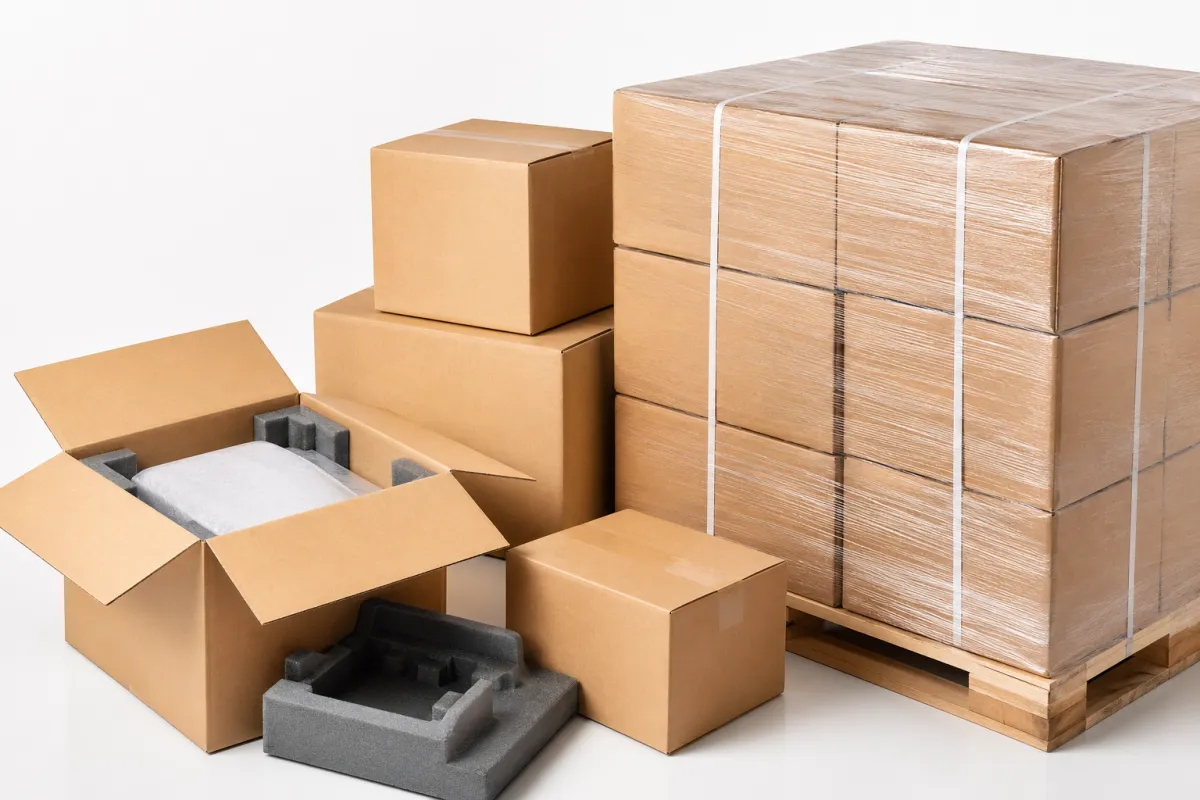
The quickest way to understand what is secondary packaging solutions is to picture a bottle, jar, candle, cosmetic kit, or food item that looks flawless on the line. The product is sealed, labeled, and maybe even shrink-wrapped, but that is only the starting point. The real test begins when it has to be grouped, counted, stacked, and shipped through a warehouse that may see forklifts, conveyor drops, humidity swings, and repeated handling. A pallet can look fine in a photo and then get kinda ugly after one humid cross-dock.
Secondary packaging exists to bridge that gap. It brings structure to product packaging, whether the goal is a simple shipper carton, a retail tray, a multipack sleeve, or a branded packaging format that can go straight to shelf. If someone asks what is secondary packaging solutions, the shortest answer is this: it is the layer that turns individual units into a practical shipping, display, or replenishment package without leaving the product exposed.
That definition matters because the same item may need different approaches depending on the channel. A subscription box may prioritize presentation and unboxing. A club store pack may need bulk efficiency and easy grabbing. A shelf-ready case may need a tear-off front panel and clean print registration so it can function as retail packaging. A wholesale bundle may need stable stacking and low labor. In each case, what is secondary packaging solutions shifts according to the route the product will travel.
A practical version for buyers: primary packaging touches the product, secondary packaging groups it, and tertiary packaging moves it in bulk. A folding carton, tray, wrap, or display case is not decoration; it is a working part of the distribution system. Once teams see it that way, they stop asking whether what is secondary packaging solutions is "worth it" and start asking what job it must perform.
A few common examples make the concept concrete:
- Cartons that group one or more units for shipping or retail presentation.
- Trays that hold jars, bottles, pouches, or small boxes in a stable footprint.
- Wraps and sleeves that hold multipacks together while keeping the face panel visible.
- Shelf-ready cases that arrive in distribution and convert quickly into display packaging.
- Protective inserts that prevent movement, scuffing, or breakage inside a carton.
That list is simple, but it covers most real-world choices. If you are comparing Custom Printed Boxes for a product line, the secondary layer often decides whether the pack feels refined or rushed. It also affects how much labor the line needs, how easily a retailer can replenish shelves, and how often a shipper has to absorb damage claims. For that reason, what is secondary packaging solutions should always be tied to an actual handling reality, not just a design concept floating in a pitch deck.
From a buyer's point of view, the better question is not, "What is secondary packaging solutions in theory?" The better question is, "What does this structure need to survive?" If the answer includes conveyor vibration, mixed-SKU pallets, long transits, or rough club-store handling, the structure has to be chosen accordingly. Packaging design becomes practical there. It stops being a mood-board exercise and becomes an operational tool.
What Is Secondary Packaging Solutions Doing Inside the Supply Chain?
Inside the supply chain, what is secondary packaging solutions is doing one clear job: making individual product units easier to move, count, protect, and sell. The value shows up in small operational details. A picker can grab one case instead of sixteen loose items. A warehouse team can stack cases predictably. A retail associate can restock faster because the carton opens cleanly and presents the product front-facing.
That is why secondary packaging is tied so closely to efficiency. A well-built structure reduces the chance of crushed corners, damaged labels, and awkward repacking. It also helps with tamper resistance, because a sealed carton or overwrap makes it obvious when a pack has been opened. So when someone asks what what is secondary packaging solutions does day to day, the answer is that it reduces friction at every handoff point.
Design changes depending on the route. E-commerce cases often prioritize product immobilization and carton strength because the package may pass through multiple sortation points. Retail shelf-ready packaging needs clear front graphics and an easy-open feature, because the case itself becomes part of the store experience. Display trays must hold shape while showing the product and survive being lifted, moved, and opened without collapsing. Promotional bundles may need a tighter visual read so the customer understands the offer quickly. All of that lives inside what is secondary packaging solutions.
There is also a big difference between hand-packed, semi-automated, and automated systems. Hand packing makes sense for short runs, highly variable SKUs, or products that need careful placement. Semi-automated lines are common when volume is high enough to justify equipment but not so high that a fully dedicated machine makes sense. Automated systems can save real labor, but only if the structure, fold pattern, and tolerances were designed with the machine in mind. If they were not, what is secondary packaging solutions can become a bottleneck instead of an advantage.
Downstream handling matters more than most teams expect. A pack that saves half a cent in material but adds ten seconds of labor on the line is usually a bad trade. A sharp package in a sales deck can become a problem if it slows picking or creates unstable pallets. In practice, the best secondary packaging systems are the ones that behave well under pressure, not just in the render queue. If you want a practical starting point for building that kind of system, our Custom Packaging Products page is a useful reference for formats and structures.
For teams that need a framework, think of secondary packaging as answering five supply chain questions at once:
- How does the product stay protected?
- How is it counted and handled?
- How does it look at shelf or on arrival?
- How quickly can it be packed?
- How well does it stack and ship?
Once those five questions are answered, what is secondary packaging solutions stops being a vague phrase and becomes a concrete operating choice. That clarity matters whether the product is a cosmetics kit, a food bundle, a small appliance accessory, or a retail promotional pack.
Key Factors That Shape the Right Secondary Pack
The right answer to what is secondary packaging solutions starts with the product itself. Weight, shape, fragility, stackability, and surface finish all matter. A rigid glass jar behaves differently from a flexible pouch. A glossy carton scuffs differently than a matte one. A narrow bottle may shift inside a loose case, while a wider container may need only a simple divider. Those details look small, yet they decide whether the pack is stable or frustrating.
Channel requirements come next. Retail packaging often needs print quality, clean tearing, and a visible face panel. E-commerce packaging needs surviving power, because the box may see impacts and compression that never happen on a retail shelf. Wholesale and club store packs tend to prioritize unit count, pallet efficiency, and speed. If a brand is asking what is secondary packaging solutions for a new launch, the answer should always include the channel, not just the SKU.
Branding is part of the decision too. Secondary packs are often the first place a buyer sees the brand in a physical environment, so package branding cannot be an afterthought. Print density, die-line placement, finish, and color consistency all affect how polished the product feels. A plain corrugated case may be functional, but a well-designed printed carton can do more for perceived value than a large marketing campaign. That is especially true for custom printed boxes used in subscription, gift, and premium retail programs.
Sustainability now shapes more decisions than it used to, but there is a catch: lighter is not always better. Right-sizing can reduce waste, and recycled-content corrugated often makes sense, but a box that saves a few grams and then increases breakage is not a win. FSC-certified fiber can be a useful sourcing marker for some programs, and teams that care about chain-of-custody claims should study the standard rather than guessing. For a broader industry reference, Packaging.org and the FSC site are both useful starting points. what is secondary packaging solutions without a sustainability lens is only half the conversation.
Production reality matters as much as design ambition. If the case has to fold on a certain line, the caliper, board score, adhesive amount, and tuck geometry all need to match the equipment. If the secondary package will be hand-assembled, the team should think about fold count, glue set time, and whether the operator needs instructions or fixtures. If the line runs at 45 units per minute, a design that needs a delicate manual step is gonna slow the whole room down. In practice, what is secondary packaging solutions means balancing ideal structure with the actual line.
A useful mental checklist looks like this:
- Product behavior: Does the item move, flex, leak, scratch, or crush easily?
- Distribution route: Does it ship direct to consumer, through retail, or through bulk freight?
- Brand goals: Must the pack sell on shelf or just survive transport?
- Material targets: Is recycled content, FSC sourcing, or right-sizing part of the brief?
- Line fit: Can the current equipment assemble the design without slowing output?
That checklist is the difference between a packaging concept and a production-ready pack. Many teams ask what is secondary packaging solutions because they want a one-line definition, but the real work happens in these details. The more specific the brief, the better the outcome, and the less expensive the late-stage corrections.
If you need a practical packaging design comparison, it often helps to evaluate fit, protection, appearance, and labor together. A strong package is not always the cheapest structure on paper. Sometimes it is the one that lowers repacks, reduces returns, and holds up across a rougher route. That is a smarter use of budget than chasing the lowest board price.
Secondary Packaging Solutions Cost, Pricing, and Timeline
Cost is where what is secondary packaging solutions becomes real. Material choice is usually the biggest driver, followed by print coverage, structural complexity, inserts, and assembly labor. A simple corrugated shipper can be inexpensive at scale, while a premium folding carton with a custom insert and specialty finish can cost several times more. Minimum order quantities matter too, because shorter runs spread setup cost across fewer units.
Here is a useful way to think about it: unit cost is only one part of the equation. A slightly higher-cost pack may reduce freight cube, protect against breakage, or cut repacking labor. It may also improve shelf presentation enough to support a higher perceived value. That is why experienced buyers do not ask only, what is secondary packaging solutions; they ask what the whole system costs after damage, labor, and freight are counted.
For planning, these ranges are common in the market, although every product line is different: simple corrugated secondary packs may land around $0.18-$0.35 per unit at 5,000 pieces; printed folding cartons with basic inserts may sit closer to $0.30-$0.75; more elaborate shelf-ready or display-ready packaging can move beyond that once printing, finishing, and assembly are included. If you need custom printed boxes for a promotional or premium launch, the structure and artwork can push cost up quickly. That is normal, not a red flag.
Automation changes the economics as volume rises. A machine-friendly design can cost more to develop up front, but the long-term labor savings are often real. If a line saves eight seconds per unit and runs 50,000 units a month, the savings add up fast. On the other hand, if the pack is only used for a short promotion or a handful of SKUs, the engineering and setup costs may outweigh the labor benefit. So when teams discuss what is secondary packaging solutions in a cost conversation, the answer should include volume and runtime, not just a material quote.
The timeline usually moves through a predictable sequence: discovery, specification, sample or prototype, testing, revisions, final approval, and production. A simple change can sometimes move in 10-15 business days after proof approval, but custom structures often take longer because the first sample may not be the final one. Realistic projects can stretch from three to eight weeks, and that is before freight or fulfillment timing is added. If a project depends on several approvals, add more buffer.
The biggest delays tend to happen in the same places again and again:
- Artwork approval when brand teams and operations teams want different things.
- Dieline revision when the structure needs to fit real product dimensions more tightly.
- Material lead time when a specific board grade or finish is not sitting in stock.
- Line testing when the pack must be verified with actual products and real operators.
- Sampling changes when the first prototype reveals a fold, clearance, or crush issue.
| Option | Typical Use | Approx. Unit Cost at 5,000 | Main Strength | Main Watch-Out |
|---|---|---|---|---|
| Corrugated shipper | Direct shipping, bulk handling, warehousing | $0.18-$0.35 | Low cost, strong protection, easy stacking | Less shelf appeal and limited branding surface |
| Printed folding carton with insert | Retail packaging, premium consumer goods, kits | $0.30-$0.75 | Strong branding, better presentation, good fit | More setup work and tighter print tolerances |
| Shelf-ready tray or display case | Club store, retail replenishment, multipacks | $0.40-$0.95 | Fast shelf conversion, better merchandising | Needs careful structural design and tearing behavior |
Those numbers are not a promise, but they are a practical planning frame. They also show why what is secondary packaging solutions is not just a packaging question; it is a budgeting question, a logistics question, and a labor question. If you want better accuracy, ask for prototype pricing, projected production pricing, and a line-test estimate in the same conversation.
For brands working through transport validation, it helps to reference industry tests such as ISTA 3A for parcel systems or ASTM D4169 for distribution testing. Those standards do not replace judgment, but they create a repeatable way to compare packaging options. A package that passes a real test is usually a better investment than one that only looks good in a rendering.
Step-by-Step Guide to Choosing Secondary Packaging Solutions
If your team is still asking what is secondary packaging solutions, the cleanest path is to work backward from the distribution environment. That means starting with the abuse the pack will face, then designing for fit, protection, and presentation. It is much easier to build a structure around real conditions than to hope a generic pack survives by luck.
Step one is a packaging audit. Gather product dimensions, weights, fragile points, current pack-outs, average damage rates, and the specific pain points you want to solve. Are cases failing in transit, or are operators wasting time packing them? Is the issue shelf appeal, or simple product movement inside the box? Once those facts are on the table, what is secondary packaging solutions becomes a measurable project instead of a vague request.
Step two is mapping the route. A direct-to-consumer parcel journey is not the same as a pallet going to a regional distributor, and neither is the same as a shelf-ready case going into a club store. Temperature swings, humidity, vibration, drop height, and compression all affect design. If the pack has to survive a mixed freight environment, the structure needs more margin. If it is a retail display pack, the opening feature and front presentation matter more.
Step three is turning those realities into a packaging brief. The brief should define protection goals, branding requirements, material preferences, budget limits, and any machine compatibility needs. A good brief also states what success looks like. Maybe the goal is to cut damage by 30 percent. Maybe it is to reduce pack time by 6 seconds per unit. Maybe it is to move from generic product packaging to stronger branded packaging without increasing freight cube. Specific targets make everyone better aligned.
Step four is prototyping. This is where a concept proves itself or fails quickly, which is exactly what you want. Samples should be checked for fit, crush resistance, vibration, closure strength, shelf presentation, and handling speed. If the product shifts too much, the insert changes. If the top flap tears badly, score direction may need adjustment. If the design is too slow on the line, the process has to be simplified. That testing stage is the most honest answer to what is secondary packaging solutions because it shows how the pack behaves, not how it looks on a screen.
Step five is refining and signing off. At that point, artwork, die-lines, glue points, load orientation, and carton dimensions should all be locked. It is a good time to run one more operator review and confirm that the final pack matches the real product, not the ideal CAD file. Many issues disappear once a production sample is handled by the people who actually pack and ship the goods.
- Audit the product: dimensions, weight, fragility, finish, and current damage issues.
- Map the route: parcel, wholesale, retail, club, pallet, or mixed distribution.
- Write the brief: protection goals, budget, materials, branding, and line fit.
- Prototype and test: fit, compression, vibration, opening, and packing speed.
- Approve and launch: final artwork, inspection plan, and feedback loop.
That sequence works because it mirrors how secondary packaging behaves in the real world. It also keeps the team from solving the wrong problem. If the real pain point is labor, an expensive print finish will not fix it. If the real issue is breakage, a prettier carton will not save the line. what is secondary packaging solutions should always be treated as a functional system first and a visual system second.
If you need a place to compare formats, our Custom Packaging Products can help you see how different structures support different channels. That makes internal conversations easier, especially when purchasing, operations, and marketing all want slightly different outcomes from the same pack.
Common Mistakes in Secondary Packaging Solutions
One of the most common mistakes is overengineering. Teams add thick board, extra inserts, specialty coatings, and complex folds because they want to be safe, but the result is a pack that costs too much and still does not solve the actual problem. If the product only needs immobilization and a solid outer case, extra layers may only add labor and freight weight. That is not what a smart answer to what is secondary packaging solutions should look like.
The opposite mistake is underengineering. A design can look clean and inexpensive on paper while quietly creating more breakage, more retailer complaints, and more repacking at the distribution center. Savings vanish quickly once returns climb. A few cents removed from the pack are not worth much if the product ends up damaged or the pallet becomes unstable.
Another frequent miss is ignoring line speed. A visually refined structure can fail if it slows packing or requires too many manual steps. I have seen teams approve a secondary pack because it looked elegant in a sample room, only to discover that operators had to fight with tabs, inserts, or misaligned flaps during production. That is why what is secondary packaging solutions should be measured against labor time, not just appearance.
Skipping real-world testing is a major risk too. Products that will face vibration, humidity, or temperature swings should be checked under conditions that mimic the route. A carton that survives a clean bench test may collapse after a long transit or separate under compression. If the program is important, use a testing plan and reference standards such as ISTA and ASTM rather than trusting the sample alone.
A pack that looks inexpensive on a spreadsheet can become expensive the first time a retailer rejects it, a customer returns it, or a pallet load has to be repacked by hand.
Teams also forget the end user. Retail staff need packs that open cleanly and restock quickly. E-commerce customers need packaging that is easy to open without wrestling with it. Sustainability teams need materials that can be recycled or sourced responsibly, but the end user still has to live with the package. If the design is awkward to open or impossible to flatten, people notice. That is a core part of what is secondary packaging solutions in practice: it has to work for everyone who touches it.
There is a final mistake that shows up far too often: choosing the same structure for every SKU. One size rarely fits all. A fragile glass item, a pump bottle, and a lightweight pouch may need different inserts, board strength, and branding levels. Smart secondary packaging systems are built by family or channel, not by habit. That is how teams control cost while still protecting the product.
For brands developing custom printed boxes or display cases, this is where a lot of value is won or lost. The right structural change may reduce damage more than a costly finish ever could. The wrong structural choice can undo even the best-looking graphic design. That is why the question what is secondary packaging solutions should always be answered with handling data, not just creative preference.
Expert Tips and Next Steps for Better Results
If you want better outcomes, design from the distribution environment backward. That sounds obvious, but it is the habit most teams skip. Start with the roughest handling condition, then work toward the shelf or the doorstep. That way what is secondary packaging solutions becomes a route-specific answer instead of a generic one.
Compare at least two structural options before you commit. One option may be cheaper in board cost, while another may reduce labor. One may look better on shelf, while another may survive freight abuse more reliably. A good comparison should include protection, appearance, speed, and total cost. If the team only reviews one sample, it is often choosing by habit rather than by evidence.
Bring operations, procurement, marketing, and logistics into the room early. Operations will care about line speed and foldability. Procurement will care about unit cost and minimums. Marketing will care about package branding and shelf impact. Logistics will care about palletization, cube, and damage rates. When those groups see the same sample set, they usually reach a better compromise. That is one of the practical reasons what is secondary packaging solutions deserves cross-functional attention.
Use a simple checklist for the next meeting:
- Gather current samples and take measurements from the actual product.
- Record damage points, labor pain points, and handling complaints.
- Define the target route and the worst-case abuse conditions.
- Ask for prototype pricing, production pricing, and lead times.
- Request a test plan that covers fit, compression, and transit behavior.
That checklist keeps the conversation grounded. It also helps vendors give better answers, because they are working from facts instead of assumptions. If you are evaluating secondary packaging solutions for a launch or a redesign, you should expect clear specs, realistic cost ranges, and a timeline that includes proofing and testing. Anything less usually means the project is not ready yet.
One last point: do not let the search for perfection delay the project forever. A good tested pack is better than a perfect concept that never ships. If the product is already moving through a live supply chain, small improvements can pay off quickly. Better fit, cleaner opening, stronger graphics, and lower damage all add up. That is the practical heart of what is secondary packaging solutions for most brands.
Start with the roughest route, test the actual pack, and sign off only when the structure, graphics, and line behavior all agree. That is the simplest path to a secondary packaging system that survives the warehouse, looks right on shelf, and does not keep coming back as a problem later.
Frequently Asked Questions
What are secondary packaging solutions used for in shipping?
They group and protect primary packs so products move safely through warehousing, transport, and retail handling. They can also improve shelf presentation, reduce labor, and make counting or replenishment easier. Common uses include cartons, trays, wraps, display-ready cases, and multipacks.
How do I choose the right secondary packaging for fragile products?
Start with the product's weight, shape, breakage risk, and the roughest handling it will face in transit. Then build prototypes and test fit before approving production. The goal is to balance cushioning, immobilization, and pack size so the product is protected without adding unnecessary bulk.
What affects the cost of secondary packaging solutions the most?
Material choice, print complexity, tooling, labor, and order volume are usually the biggest cost drivers. Freight cube and damage reduction also matter because a better design can lower hidden supply chain costs. Automation compatibility can reduce long-term labor cost even if the upfront design work is higher, which is why total operating cost should be included alongside material price.
How long does it take to develop a custom secondary packaging system?
Simple changes may move quickly, but custom structures often need discovery, samples, testing, and revisions. Lead time depends on artwork approval, material availability, and how many rounds of prototypes are needed. A realistic timeline should also include time for line trials and final sign-off before launch, because production performance is only as good as the testing behind it.
Can secondary packaging solutions improve sustainability?
Yes, especially when the design is right-sized, uses recyclable or recycled-content materials, and reduces damage or waste. The biggest sustainability gains come from using only as much material as needed for the route and product. A lighter pack is not always greener if it increases returns, rework, or product loss, so this decision should be judged by total impact, not just board weight.

