Buyer Fit Snapshot
| Best fit | Tactile Packaging Storytelling projects where brand print, material claims, artwork control, MOQ, and repeat-order consistency need to be specified before quoting. |
|---|---|
| Quote inputs | Share finished size, material target, print colors, finish, packing count, annual reorder estimate, ship-to region, and any compliance wording. |
| Proofing check | Approve dieline scale, logo placement, barcode or warning zones, color tolerance, closure strength, and carton packing before bulk production. |
| Main risk | Vague material claims, crowded artwork, missing packing details, or unclear freight terms can make a low unit price expensive after revisions. |
Fast answer: Tactile Packaging Storytelling: Quote Scope, Sample Proof, MOQ, and Lead Time should be specified like a repeatable production item. The safest quote records material, print method, finish, artwork proof, packing count, and reorder notes in one written spec.
Production checks before approval
Compare the actual filled-product size with the drawing, then confirm tolerance on folds, seals, hang holes, label areas, and retail display edges. Reserve space for logos, QR codes, warning copy, and material claims before decorative graphics fill the panel.
Quote comparison points
Review material grade, print process, finish, sampling route, tooling charges, carton quantity, and freight assumptions side by side. A quote is only useful when the supplier can repeat the same color, closure quality, and packing count on the next order.
What is tactile packaging storytelling? It is the part of Packaging Design That speaks before the box opens, using texture, weight, finish, and structure to shape a buyer's first physical impression. A soft-touch carton can feel calm and premium in the hand. An uncoated rigid board can feel earthy, honest, or handcrafted. The funny part is that people notice all of this faster than they notice the logo.
For Custom Logo Things, this subject matters because branded packaging is never only about graphics. The surface, the fold, the closure, and even the drag of a lid tell the shopper something about the product inside. In retail packaging, gifting, and e-commerce unboxing, the package often becomes the first real conversation with the brand, and that conversation starts in the fingers. If the box feels cheap, the brand gets that bill.
I have sat through enough sample reviews to know the same thing keeps happening: teams fall in love with a render, then go quiet when the sample lands on the table and feels wrong. That is the whole problem in miniature. What is tactile packaging storytelling is not a garnish on top of the design. It is the part that makes the design believable.
The smartest way to think about what is tactile packaging storytelling is not as decoration, but as a decision tree. Does the package need to feel premium, playful, sustainable, technical, or handcrafted? Once that question is clear, the rest becomes a matter of choosing the right substrate, finish, and construction so the feel matches the message instead of fighting it. Pretty boxes are easy. Meaningful ones take more discipline.
What Is Tactile Packaging Storytelling? A Quick, Surprising Overview
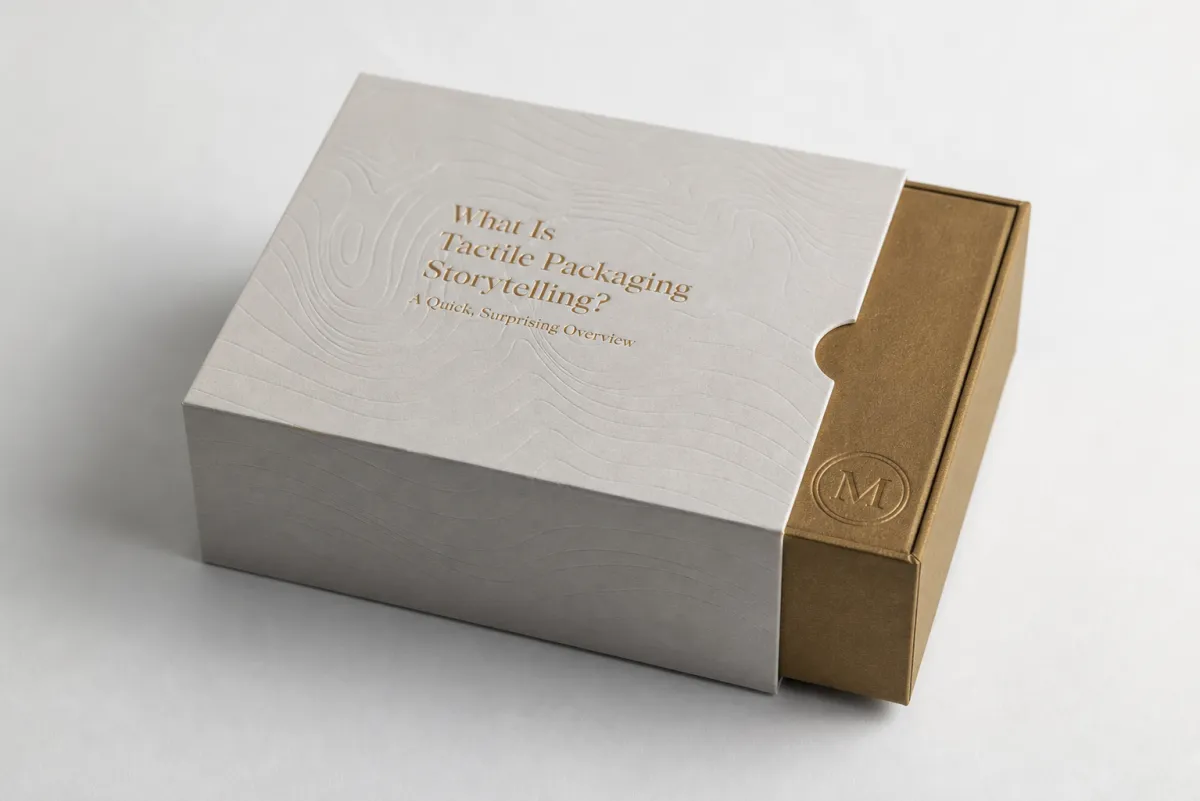
What is tactile packaging storytelling in practical terms? It is the use of touch-based cues, such as coating, board choice, edge quality, and opening behavior, to communicate brand meaning before the customer reads a single line of copy. I have seen simple product packaging outperform more elaborate graphics because the box felt more considered in the hand, and that first impression carried real weight. People do not always admit it, but their hands vote before their eyes do.
A smooth, soft-touch carton may suggest quiet luxury, cosmetics, technology, or a high-value gift. A rougher uncoated stock can point toward craft, sustainability, or natural ingredients. Neither is automatically better. What is tactile packaging storytelling really asks whether the texture supports the promise on the label. If the brand talks about precision but the box folds loosely and the corners crush easily, the tactile signal and the visual signal collide. Customers notice that mismatch even if they cannot name it.
That is why people often remember the feel of a package longer than the print details. Weight, stiffness, grip, and the sound of a closure all register in a split second. In many cases, what is tactile packaging storytelling does its job before the shopper fully notices it. The package quietly says, "This was made on purpose." No speech required.
Retail shelves, gift boxes, and subscription mailers each reward different tactile cues. In retail packaging, the customer may handle the carton for only a few seconds, so the surface and edge quality must speak fast. In e-commerce, the first touch may happen after a shipper has already done the rough work of transportation, which means the inner carton, insert, or sleeve has to carry the story forward. What is tactile packaging storytelling works best when the entire system feels consistent from shipper to reveal. A fancy outer box and a flimsy inside tray is just packaging having an identity crisis.
One useful way to judge the idea is to ask what emotional response the packaging should trigger. Calm? Energy? Precision? Handmade warmth? What is tactile packaging storytelling gives you a way to turn those words into materials and structures that a customer can feel immediately. That is more useful than vague design language, because it pushes the decision toward something measurable: texture, opening resistance, stiffness, gloss level, and surface durability.
From a packaging buyer's point of view, this is where branding becomes physical. Good package branding does not depend on one dramatic finish alone; it depends on whether every touchpoint reinforces the same message. A matte carton with crisp folds, clean glue lines, and a controlled reveal can feel more premium than a louder box loaded with foils and multiple laminations. What is tactile packaging storytelling rewards restraint when the product already has a clear personality. Extra effects are not a substitute for a good idea. They just cost more.
And yes, a package can still be memorable without trying too hard. Sometimes the best move is a quiet one: a paper stock with a little tooth, a lid that lifts with just enough resistance, and a finish that does not smother the material underneath. That kind of restraint feels honest, which is kinda rare in packaging.
How Tactile Packaging Storytelling Works in the Hand
What is tactile packaging storytelling at the mechanical level? It is a stack of layered cues. The substrate gives the first impression, the print and coating shape the surface, the structural design guides the hand, and the opening sequence finishes the message. If any one of those layers feels out of step, the whole experience can feel less convincing. The package starts sounding like a compromise, which is never flattering.
The hand notices several things very quickly: weight, grip, surface drag, edge sharpness, and resistance. A 350gsm artboard wrapped in a soft-touch laminate will feel different from a 24pt uncoated folding carton, even if both carry similar graphics. A rigid box with a tight wrap and square corners can feel engineered and controlled; a corrugated mailer with visible kraft fibers can feel practical and approachable. What is tactile packaging storytelling turns those physical facts into brand cues. The trick is making the facts support the story instead of chasing novelty.
There is also a tempo to touch. A tuck flap opens one way, a magnetic closure another, and a lift-off lid creates a small pause before the reveal. That pause matters. It creates anticipation, which is one of the most powerful tools in what is tactile packaging storytelling. If the package opens too abruptly, or if an insert rattles around, the story loses tension. If the reveal is paced well, the product feels more valuable before it is even used. Humans like anticipation. They just do not like thinking about it.
The strongest tactile packages usually do not compete with the visual design. They support it. A clean monochrome carton with embossed lettering feels intentional because the eye and the fingers are reading the same message. A busy, multi-effect design can still work, but only if the surface effects are organized and not fighting each other for attention. That is a common mistake in what is tactile packaging storytelling: piling on texture because it looks premium in a sample room, even though the final experience feels crowded. The result is often expensive clutter.
Consistency matters too. A great outer shipper that opens to a flimsy inner tray breaks the illusion quickly. A branded packaging system should carry the same sensory logic through the shipper, insert, label, and product carton so the customer never feels a dip in quality midway through unboxing. What is tactile packaging storytelling is strongest when the whole system feels like one thought, not three separate ones. Cohesion beats showmanship every time.
For shipping performance, it helps to think about standard test methods as well. If a package needs to survive distribution, it is sensible to evaluate it against common reference points such as ISTA procedures or ASTM-style transit testing. That does not guarantee every lane or carrier condition, but it gives the project a more grounded foundation. Pretty boxes are nice. Boxes that survive freight are better.
Key Factors That Shape Tactile Packaging Storytelling
What is tactile packaging storytelling made of? In practice, it comes down to substrate, finish, structure, and production discipline. Paperboard, rigid board, corrugate, molded fiber, and specialty laminates all tell different stories before the graphic design even enters the picture. Paperboard usually offers better print fidelity and lower cost at medium volumes. Rigid board feels heavier and more gift-like. Corrugate gives you strength and a utility-forward feel. Molded fiber often supports a natural or sustainable message, though the texture is less controlled. Each choice changes the mood before the product even shows up.
Finishes are where many teams start, and for good reason. Soft-touch coating adds a velvety grip and works well for beauty, lifestyle, and premium retail packaging. Aqueous coating is lighter and more economical, with better production flow for many custom printed boxes. Varnish can control gloss and scuff resistance. Foil stamping adds shine and contrast. Embossing and debossing create depth that the fingers notice immediately. Uncoated stock gives the most honest, paper-forward feeling. Each option changes what is tactile packaging storytelling communicates, and each one comes with tradeoffs in cost, recyclability, and manufacturing ease. There is no magic coating that fixes bad strategy.
Structural choices matter just as much. Magnetic closures slow the reveal. Tuck flaps are practical and efficient. Sleeve-and-tray builds a sense of layered discovery. Inserts hold the product steady and can add a refined pause when the customer lifts them out. Even the tolerance on the folds matters. If a lid floats too loosely, the experience feels cheap. If it binds or tears at the corners, the package feels overworked. That is why what is tactile packaging storytelling cannot be separated from print production and finishing quality. The best idea still fails if the box arrives sloppy.
Sustainability also shapes the story, and not always in the way people expect. A recycled kraft board can support a credible environmental message, but only if the coatings and adhesives do not undermine the claim. If a brand wants a recyclable path, it should understand whether the chosen laminate, foil, or liner creates barriers in local recycling streams. FSC-certified paper can help support responsible sourcing claims, and you can review the framework at FSC. Still, certification is only one part of the picture. What is tactile packaging storytelling should stay honest about what can and cannot be recovered after use. Green messaging gets awkward fast when the box is impossible to recycle.
Then there is production tolerance, which is where beautiful ideas either survive or fall apart. Glue squeeze-out, register drift on foil, fuzzy edge cuts, and crushed corners all reduce confidence in the package. A luxury concept wrapped in sloppy finishing tells the buyer the brand is more interested in appearance than execution. Honestly, I think that is one reason what is tactile packaging storytelling works best when the design team and the production team review the sample together, not in separate silos. Packaging is not a place for wishful thinking.
| Approach | Typical Unit Cost at 5,000 Pieces | Setup / Tooling | Best Use | Notes |
|---|---|---|---|---|
| Uncoated folding carton with one-color print | $0.18-$0.32 | $350-$900 | Natural, simple, eco-forward branding | Good for clean package branding and lower-cost launches |
| Soft-touch laminated carton with embossing | $0.42-$0.78 | $700-$1,800 | Premium retail packaging and gift boxes | Strong hand-feel, but finishes can add scuff and recycle complexity |
| Rigid box with wrap, foil, and insert | $2.40-$6.00 | $1,500-$5,000+ | High-value product packaging and presentation sets | Best for elevated unboxing; shipping and storage need planning |
Those figures are broad, and they move with order size, board grade, coverage, and regional labor rates. Still, they show how what is tactile packaging storytelling can range from a modest surface change to a structural investment. In a lot of real projects, the smartest move is not a huge redesign; it is one careful tactile choice that aligns with the brand voice and the retail price. Small decisions can do a lot of heavy lifting.
Step-by-Step Process and Timeline for Tactile Packaging Storytelling
What is tactile packaging storytelling without a process? Usually a pretty sample that never makes it to production. The right workflow starts with the brand message, not the finish list. Before anyone chooses soft-touch, embossing, or foil, the team should define the emotions and product cues the packaging needs to communicate. Rank them. If "premium" matters more than "playful," that decision guides every later choice. If the message is fuzzy, the box will be too.
From there, translate the message into materials. A 24pt board with aqueous coating may be enough for a durable retail carton. A rigid setup with 2mm chipboard and a wrapped paper exterior may better suit a presentation box. A molded fiber insert may reinforce an earthier, technical, or lower-waste message. In the strongest projects, what is tactile packaging storytelling is tested through rough mockups first, because a quick hand sample can reveal problems that a render will never show. Screens do not tell you if a lid squeaks.
Prototype early and use real hands. That sounds obvious, but it is where many teams save themselves from expensive surprises. Open the carton. Close it. Drop it into a shipper. Shake it gently. Slide the product in and out. Ask whether the package feels too stiff, too loose, too slippery, or too precious for the product category. What is tactile packaging storytelling improves when someone checks the feel in motion, not just the look on a screen. A box that photographs well but handles badly still fails.
Here is a practical timeline for many custom packaging projects:
- Concept development: 3-7 business days to define story, structure, and tactile direction.
- Sampling: 5-10 business days for rough comps or digital prototypes, longer for specialty finishes.
- Revision and approval: 2-5 business days, depending on how many stakeholders sign off.
- Production: often 12-20 business days after final approval for standard custom printed boxes.
- Freight and receiving: 3-10 business days, sometimes more for palletized shipments or overseas sourcing.
Special finishes extend the clock. Hot foil stamping, deep embossing, Custom Die Cuts, multi-layer inserts, and unusual laminates often require more setup and more inspection. If the order is complex, I usually advise leaving a buffer of one to two weeks beyond the first estimate. That buffer is not pessimism; it is respect for how packaging actually moves through print, die cutting, gluing, and finishing. The schedule rarely cares about your launch date.
It also helps to compare real product paths instead of guessing. If you want to see how different packaging systems are positioned in practice, the Custom Packaging Products page is a useful place to start, and the Case Studies page can show how choices translate into finished results. That is one of the best ways to understand what is tactile packaging storytelling because you can compare structure, finish, and brand intent side by side.
A package does not need every premium effect at once. It needs one or two tactile decisions that feel deliberate, then clean execution that lets those decisions breathe.
What Is Tactile Packaging Storytelling? Cost and Pricing Factors
What is tactile packaging storytelling going to cost? The honest answer is that it depends on the board, the print method, the finish stack, the quantity, and the amount of handwork involved. Surface-only choices tend to be the most economical. Structural changes and multi-step finishing increase cost much faster than most first-time buyers expect. A soft-touch varnish on a folding carton may only nudge the price modestly, while a rigid box with foil, magnet closure, and multiple inserts can move into a much higher bracket very quickly. The quote can climb before anyone realizes they have added three more "small" details.
The biggest cost drivers are straightforward: board grade, print coverage, coating type, emboss or deboss tooling, foil, inserts, and labor intensity. If a design uses heavy ink coverage plus special lamination plus several embellishment passes, each station adds time and waste. That is why what is tactile packaging storytelling should be planned with the actual manufacturing path in mind, not as a wish list of effects. Design fantasies are cheap. Press time is not.
Setup charges matter as much as unit cost, especially on lower volumes. A custom die can run from a few hundred dollars to well over a thousand, depending on size and complexity. Plates, emboss tooling, and specialty finishing plates add more. Minimum order quantities also influence the price curve, because many factories need enough volume to justify setup. For 1,000 pieces, the per-unit cost can look high. At 5,000 or 10,000 pieces, the same tactile choices can become much more manageable. What is tactile packaging storytelling often looks expensive at the sample stage and reasonable at scale, but only if the run size supports the investment.
Here is a simple way to think about cost bands:
- Low-touch approach: a clean folding carton with a single coating or limited print coverage, often suited to launch runs and price-sensitive retail packaging.
- Mid-range approach: soft-touch, spot varnish, emboss, or a sleeve-and-tray format that adds perceived value without jumping to rigid construction.
- Premium approach: rigid setup, specialty wraps, foil, magnetic closure, and custom inserts for products where unboxing is part of the brand promise.
That middle band is where a lot of smart product packaging lives. It gives the brand a more intentional hand-feel without overbuilding the carton. A small change in surface can go a long way: an uncoated stock with a subtle blind emboss may feel more honest and refined than a louder, more expensive box that tries to do too much. In practice, what is tactile packaging storytelling is often about choosing one detail that feels right rather than three details that look impressive in isolation. The best package usually has a point of view.
If you want to anchor the project in realistic expectations, ask suppliers for quotes based on final specifications, not just artwork. Include substrate, finish, fold type, insert count, and shipping format. Ask whether the quote assumes flat-packed delivery or assembled boxes, because that can change labor costs in a hurry. A quote for what is tactile packaging storytelling should reflect the actual build, not a simplified version that only exists on paper. Anything else is just a guess with letterhead.
There is also a business side to the tactile choice. The right package can support a higher shelf price, reduce returns caused by poor presentation, and improve unboxing satisfaction in a way that helps repeat purchase. That said, it is not magic. If the product itself does not justify the experience, the package will feel like overcompensation. The best results happen when packaging design and product quality are aligned from the start. Brand theater only works when the product earns the ticket.
Common Mistakes That Weaken Tactile Packaging Storytelling
What is tactile packaging storytelling supposed to do? It should clarify the brand in the hand. The most common mistake is trying to make the package feel "premium" by adding every premium effect available. Extra foil, extra gloss, extra embossing, extra coatings, and extra structure can create noise instead of meaning. A package that tries to shout from every surface usually feels less disciplined than one with a single strong tactile idea. Too many signals and the brain checks out.
Another common problem is mismatched signals. A luxury visual with flimsy stock feels weak. A natural, earth-forward graphic on a slippery, high-gloss laminate feels confused. A high-tech product in a box with soft, cloudy edges and messy glue lines loses credibility fast. What is tactile packaging storytelling works best when the tactile language matches the visual language and the price point. A customer can forgive simple packaging; they are less forgiving of packaging that feels false. Authenticity is not a garnish.
People also overpromise on sustainability. Using recycled content is good, but the story gets messy if the finish stack prevents practical recycling or if the claim is vague. If you plan to talk about recycled content, compostability, or recoverability, be precise and verify the substrate and coating. The U.S. Environmental Protection Agency has helpful recycling references at EPA, though local rules still matter because recovery systems vary by region. In the real world, what is tactile packaging storytelling should support sustainable messaging without stretching the claim beyond what the package can actually do.
Skipping user testing is another expensive habit. A mockup that looks beautiful on a desk can feel awkward in a shipping workflow, a retail counter, or a bathroom shelf. Try the package with real users or at least a realistic proxy group. Ask them what the materials make them expect from the product. If the answers drift away from the brand intent, the tactile strategy needs work. What is tactile packaging storytelling should never rely on assumptions about how people will touch, hold, or open the box. People do surprising things with packaging, and not always in a flattering way.
Finally, do not let the tactile effect distract from the product itself. Some categories need quick access, clear labeling, and efficient storage more than dramatic reveal moments. That is especially true for refill systems, consumables, and technical goods. The package still matters, but the tactile story should help the product function in the customer's life, not add friction where none is needed. A beautiful box that slows someone down is not doing the job.
If the box is beautiful but frustrating, the brand still loses. Touch should make the product feel more trustworthy, not more difficult to live with.
Expert Tips and Next Steps for Tactile Packaging Storytelling
What is tactile packaging storytelling does not need to be complicated to work well. Start with one tactile cue that matches the strongest brand trait. If the brand is calm and premium, soft-touch or a muted matte finish may be enough. If the brand is honest and natural, an uncoated stock with a clean emboss can carry the message. If the brand is precise and engineered, crisp structural lines and a controlled opening sequence may matter more than a glossy effect. The point is clarity, not noise.
Use side-by-side prototypes whenever possible. Touch is easier to judge than abstract renderings, and a 2- or 3-option comparison can reveal the right direction faster than a dozen meetings. One sample may feel too slick, another too dry, and a third just right. That sort of comparison is especially useful for custom printed boxes, because the tactile result often changes more from finish and board selection than from graphics alone. What is tactile packaging storytelling becomes far easier to approve once the team can physically compare the options. A table sample tells the truth faster than a deck ever will.
Document everything. Keep a spec sheet that records the substrate, coating, insert material, fold tolerances, closure type, print coverage, and any handling instructions. If the package needs a 1.5mm emboss depth, say so. If a matte laminate must resist scuffing during fulfillment, note that. Good documentation protects the feel of the package from run to run, and that consistency is part of strong package branding. In practice, what is tactile packaging storytelling only stays effective when the details are repeatable. Memory is not a production spec.
A simple approval checklist can save time and money:
- Does the tactile cue match the brand message?
- Does it fit the product price and audience expectations?
- Can it be produced reliably at the target quantity?
- Does it hold up in shipping, storage, and retail handling?
- Does it support sustainability claims without confusion?
That checklist sounds basic, but it prevents a lot of expensive rework. It also keeps the team honest about what the packaging is supposed to do. A tactile idea can be clever, but if it slows fulfillment, increases damage, or muddies the story, it is not doing its job. What is tactile packaging storytelling should always serve the product and the buyer, not just the design portfolio. Good packaging earns its place by working.
For buyers who are narrowing choices, I would suggest starting with one quote and one sample set. Ask for a low-touch, mid-range, and premium option so you can compare feel, cost, and production complexity without guessing. That approach makes the tradeoffs visible early and keeps the project grounded in the real manufacturing path. After that, the next step is simple: choose the tactile direction that feels the most truthful for the brand, then build the rest of the system around it. That is the practical answer to what is tactile packaging storytelling, and it is usually the one that lasts.
When the package lands in a customer's hand, there is no explanation box, no slide deck, and no room for vague ideas. There is only texture, structure, and the brief moment before opening. If those cues are aligned, what is tactile packaging storytelling becomes a quiet but powerful part of the sale, the unboxing, and the memory that follows. That is why the best projects feel intentional from the first touch to the last fold.
FAQ
What is tactile packaging storytelling in simple terms?
It is the practice of using touch-based packaging cues to reinforce a brand's message before the product is even used. Texture, weight, finish, and opening style all shape the first impression, and the effect is strongest when the tactile choice fits the audience and product category. A strong tactile story feels obvious once you hold the box.
Which finishes are most common in tactile packaging storytelling?
Soft-touch coating, embossing, debossing, foil stamping, and uncoated premium stocks are common starting points. Each one sends a different signal, so the best choice depends on whether the brand wants luxury, craft, minimalism, or technical precision. There is no universal winner. The product decides.
How does tactile packaging storytelling affect cost?
Simple surface changes are often affordable, while custom structures, tooling, and multi-step finishing increase cost quickly. Setup charges, minimum order quantities, and special materials can matter as much as unit price, so quotes should be based on finished specs rather than artwork alone. The pretty sample is not the final invoice.
How long does a tactile packaging storytelling project usually take?
Timing depends on how many samples, revisions, and approvals are needed before production starts. Specialty coatings, embossing, and custom tooling usually add lead time compared with standard print-and-fold packaging, and testing the feel in real shipping conditions can add another layer of review. A tight schedule is possible, but only if the scope stays realistic.
How do I know if tactile packaging storytelling is working?
Test the package with real users and ask what the materials, weight, and opening experience made them expect from the brand. If people can describe the feeling clearly and remember the brand more easily, the tactile story is doing real work. If they shrug, the box is being polite, not persuasive.
Actionable takeaway: pick one tactile cue that fits the brand, build two or three physical samples, and test them in hand before approving artwork. That one move answers what is tactile packaging storytelling in a way a render never will, and it usually keeps the final box honest.


