Buyer Fit Snapshot
| Best fit | White Poly Mailers for Luxury Brands projects where brand print, material claims, artwork control, MOQ, and repeat-order consistency need to be specified before quoting. |
|---|---|
| Quote inputs | Share finished size, material target, print colors, finish, packing count, annual reorder estimate, ship-to region, and any compliance wording. |
| Proofing check | Approve dieline scale, logo placement, barcode or warning zones, color tolerance, closure strength, and carton packing before bulk production. |
| Main risk | Vague material claims, crowded artwork, missing packing details, or unclear freight terms can make a low unit price expensive after revisions. |
Fast answer: White Poly Mailers for Luxury Brands: Quote Scope, Sample Proof, MOQ, and Lead Time should be specified like a repeatable production item. The safest quote records material, print method, finish, artwork proof, packing count, and reorder notes in one written spec.
Production checks before approval
Compare the actual filled-product size with the drawing, then confirm tolerance on folds, seals, hang holes, label areas, and retail display edges. Reserve space for logos, QR codes, warning copy, and material claims before decorative graphics fill the panel.
Quote comparison points
Review material grade, print process, finish, sampling route, tooling charges, carton quantity, and freight assumptions side by side. A quote is only useful when the supplier can repeat the same color, closure quality, and packing count on the next order.
White Poly Mailers for luxury brands can feel more refined than a cardboard box when the details are handled with discipline and the whole presentation stays clean. That may sound counterintuitive to anyone who assumes luxury always means heavier materials and more layers, yet packaging buyers know the opposite can be true: restraint often carries more confidence than excess. For Custom Logo Things, the real question is not whether white poly mailers for luxury brands can look elevated. It is whether the film, print, sizing, and closure are precise enough to avoid reading as a budget shortcut.
In practice, White Poly Mailers for luxury brands succeed because they create a bright, neutral surface where typography, labels, and minimal branding look sharp. Treated well, they support apparel, accessories, and soft goods without competing with the product itself. Treated poorly, they wrinkle, feel flimsy, and fall apart visually in seconds. The aim is straightforward: make white poly mailers for luxury brands feel deliberate instead of generic, while keeping the cost from drifting into nonsense.
I have seen plenty of packaging samples that looked fine on a design proof and then fell apart the moment somebody packed a real garment into them. That is usually where the difference between a “nice idea” and a usable mailer shows up, and it is kinda hard to fake. White Poly Mailers for luxury brands only work if the material, the closure, and the print all hold up under actual warehouse handling, not just under bright studio lighting.
White Poly Mailers for Luxury Brands: Why They Feel More Premium Than Cardboard
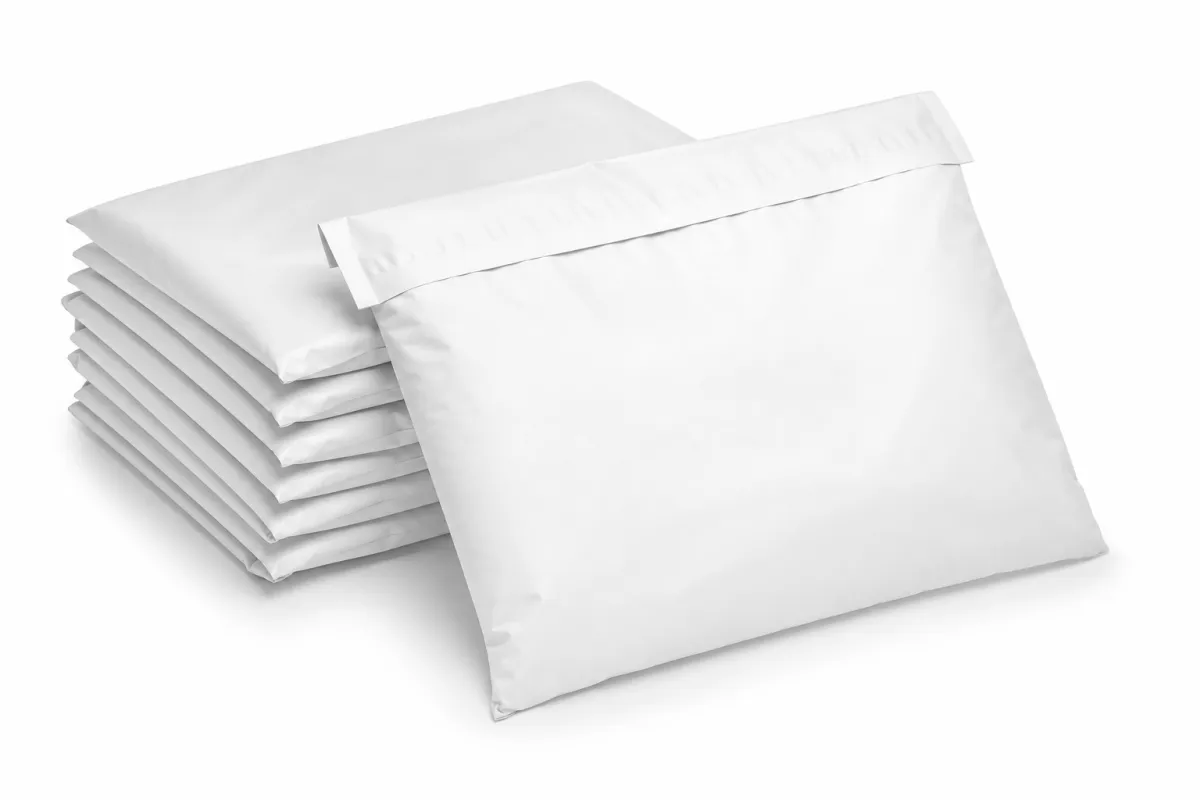
A plain white mailer can look more upscale than a bulky printed carton when the presentation is controlled. That is especially true for white poly mailers for luxury brands, where the brand language is often quiet rather than loud. A clean white surface, a sharp logo, and a mailer that fits properly can signal control, and control is something luxury buyers notice almost immediately.
Restraint reads as confidence. Too many colors, too many icons, and too much copy can make a shipment feel noisy and overworked. White poly mailers for luxury brands do the opposite when the typography stays restrained and the material has enough body to remain flat. A good bag should not look like it came from the cheapest line in the warehouse. It should look like someone specified the right film thickness, the right adhesive, and the right placement because those choices mattered.
White poly mailers are lightweight shipping mailers made from polyethylene film. They are common for apparel, lingerie, swimwear, scarves, accessories, and other soft goods that do not need rigid crush protection. They are a shipping format first and a branding surface second, and that distinction matters. Even the best white poly mailers for luxury brands still have to survive handling, conveyor sorting, and delivery truck abuse. Pretty is not enough if the seam splits.
The perception issue is simple. White looks clean, but it turns cheap quickly if the film is too thin, the seal is crooked, or the print comes out muddy. Luxury packaging is unforgiving that way. One weak corner, one smear of ink, one oversized mailer that swallows a small item, and the whole thing shifts from polished to awkward. White poly mailers for luxury brands only work when the execution is precise enough that customers stop thinking about the packaging and start thinking about the product.
A luxury shipment does not need to shout. It needs to arrive aligned, clean, and intact.
That is why restraint works. A sharp white mailer can frame the product experience instead of competing with it. If you want a broader packaging system around that approach, it helps to keep the rest of the presentation equally disciplined with Custom Packaging Products that match the same tone. Otherwise the mailer looks premium and everything else looks random, which is a strange brand decision but a common one.
For reference, packaging quality is not treated as a vibe in the industry. Testing and material standards matter. Parcel durability and distribution testing are often discussed through organizations like the International Safe Transit Association, and material claims need careful handling, especially when sustainability enters the conversation. White poly mailers for luxury brands can be excellent, but they should still be evaluated like shipping packaging, not decorative stationery.
How White Poly Mailers for Luxury Brands Work
At the simplest level, a mailer is a protective sleeve with a seal. A typical white poly mailer has an outer polyethylene film, an adhesive strip, and sometimes a co-ex layer or bubble layer if the product needs extra cushioning. White poly mailers for luxury brands are usually chosen for soft goods because the structure is light, flexible, and cost-efficient. They are not trying to replace a box. They are trying to do one job well.
That job starts with the film. The outer layer needs enough thickness to resist tears and wrinkles, because a wrinkled mailer does not look premium. White also gives you a neutral canvas for branding. Logos print more cleanly, labels stand out, and minimal typography looks deliberate rather than lost. White poly mailers for luxury brands are especially useful when the brand identity is understated. Think small logo, centered mark, maybe a subtle tone-on-tone pattern. Not a billboard. Nobody needs a billboard on a shipping bag.
They work best in categories where the item itself already carries most of the perceived value. Apparel, lingerie, swimwear, scarves, beauty accessories, and curated gift sets are obvious fits. White poly mailers for luxury brands are also useful for direct-to-consumer drops where the unboxing moment is fast and the outer package has to look neat on a doorstep or in a concierge lobby. The package may be temporary, but the impression is not.
The premium effect comes from a chain of small decisions:
- Match the mailer size to the product so there is not a lot of empty slack.
- Keep logo placement consistent across every order and every SKU.
- Use crisp printing with enough contrast to read cleanly on white film.
- Choose a closure that seals flat instead of puckering at the flap.
- Keep inserts, labels, and return information arranged with the same discipline.
That last point matters more than people think. If the shipping label fights the logo, or the return label lands in the wrong place, the whole thing starts looking like warehouse improvisation. White poly mailers for luxury brands do not need dramatic embellishment, but they do need operational discipline.
They also have limits. These mailers are not the right call for fragile hard goods, heavy product bundles, glass, or anything that needs crush resistance. If the item needs rigid edge protection, a box or a better cushioned structure is the better answer. White poly mailers for luxury brands are a strong fit when light weight, speed, and visual cleanliness matter more than structural stiffness.
If you want to compare mailer constructions before committing, our Custom Poly Mailers page is a practical starting point. The right structure is usually more important than the prettiest mockup. Packaging fiction is expensive.
White Poly Mailers for Luxury Brands Cost, MOQ, and Unit Pricing
Cost is where white poly mailers for luxury brands stop being abstract and start becoming a real buying decision. The main drivers are material thickness, size, print coverage, number of colors, closure style, and total order volume. If you want a simple one-color logo on a standard size, your cost can stay relatively contained. If you want thicker film, larger sizes, matte finishing, and a cleaner branded presentation, the number moves. That is not a flaw. That is packaging math.
For practical planning, stock white mailers may run roughly $0.08-$0.18 per unit depending on size and volume. Custom-printed white poly mailers for luxury brands often land around $0.18-$0.30 per unit at 5,000 pieces for simple print coverage, while heavier gauges, larger formats, or more complex print work can move into the $0.28-$0.50 range. Those are planning ranges, not promises. A supplier quote with different film thickness or freight assumptions is not comparable, no matter how convincing the spreadsheet looks.
MOQ matters because it changes both cost and flexibility. Smaller runs are useful for seasonal drops, brand refreshes, and new product launches. Larger runs usually improve unit pricing and open the door to more customization options. White poly mailers for luxury brands often start to make more financial sense once the brand knows the SKUs are stable, the size is proven, and the artwork is not changing every week. If the design is still in flux, ordering too deep can turn “savings” into dead inventory.
There are hidden costs too, and they are not subtle:
- Setup fees for printing plates, screens, or digital prep.
- Proofing fees if the supplier charges for samples or pre-production checks.
- Freight if the order is bulky or air-shipped to save time.
- Overages for waste, spoilage, or warehouse errors.
- Rework costs if artwork or color approval changes late.
That is why quotes need to be compared on the same specification set. Same size, same thickness, same print method, same finish, same shipping assumptions. Otherwise you are not comparing suppliers. You are comparing packaging fiction with different font sizes. White poly mailers for luxury brands can look cheap on paper and expensive in practice if the film fails in transit or the printed bag makes the brand look less credible.
Here is a useful comparison for buyers evaluating options:
| Option | Typical Use | Estimated Unit Cost | Brand Impression | Tradeoff |
|---|---|---|---|---|
| Stock white poly mailer | Fast fulfillment, low-risk testing | $0.08-$0.18 | Clean, but generic | Lowest cost, least control |
| Custom one-color print | Most apparel and accessory brands | $0.18-$0.30 | Minimal and polished | Needs good artwork and sizing |
| Thicker premium mailer | Heavier soft goods, better hand-feel | $0.24-$0.40 | More substantial, less flimsy | Higher cost and more material |
| Special finish or higher-coverage print | Flagship drops and elevated presentation | $0.28-$0.50+ | Most branded, more curated | Higher MOQ pressure and setup cost |
Use that table as a sanity check, not a shopping fantasy. White poly mailers for luxury brands are often worth the extra cents if they reduce spoilage, strengthen first impressions, and fit the product line more cleanly. If the product is low-margin and the shipping lane is rough, though, the mailer should earn its place with performance, not attitude.
If you want supplier comparisons, ask for a quote that separates printing, setup, freight, and any testing or sample charges. That kind of quote is easier to evaluate against the rest of your packaging stack, including Case Studies that show how similar brands approached similar constraints.
Process, Timeline, and Lead Time for White Poly Mailers
The process is straightforward, but it rewards organization. White poly mailers for luxury brands usually move from inquiry to delivery through a familiar sequence: spec selection, artwork prep, proof approval, production, quality check, and shipping. Each step sounds small on its own. Together, they decide whether a launch feels calm or chaotic.
The first delay usually comes from vague sizing. If a brand says “medium” without giving product dimensions, folding method, and any insert card requirements, the quote stage slows immediately. Then comes artwork. Files that are too low-resolution, in the wrong color mode, or packed with tiny details often need correction. White poly mailers for luxury brands are visually simple, which means the artwork has to be cleaner than people expect. A bad logo on a white mailer is more obvious than a bad logo on a noisy design.
Proof revisions can stretch the schedule too. If the brand keeps changing typography, logo placement, or color-match requirements after the first proof, the timeline slips. That is not the supplier being difficult. That is design indecision becoming expensive. White poly mailers for luxury brands work best when the brand locks the visual rules early and stops treating the proof like a mood board.
Realistic lead times depend on whether the order is stock or custom:
- Stock mailers: often 3-7 business days to ship, sometimes faster if inventory is on hand.
- Custom printed mailers: often 12-20 business days after proof approval, before transit.
- Complex finishes or larger volumes: sometimes 3-5 weeks total, depending on factory load and freight method.
Those numbers can move. Volume changes production slots. Freight distance changes arrival date. If the supplier needs extra proof cycles, the clock keeps running. White poly mailers for luxury brands are best ordered with a buffer, not a prayer. For seasonal launches, influencer seeding, or holiday campaigns, I would build in extra time because launch calendars have a way of turning small delays into full-blown headaches.
There is a practical planning rule I like: the more custom the mailer, the earlier the decision has to be locked. A plain stock mailer can absorb rushed buying. A more polished branded mailer cannot. If you need a benchmark for supply-chain discipline, organizations like the EPA are useful for broader material management context, even if the day-to-day packaging choice is still driven by product fit, cost, and presentation.
Bottom line: white poly mailers for luxury brands do not reward last-minute design panic. They reward clear specs, fast approvals, and a realistic timeline that respects proofing and transit. That is a boring sentence, which is usually how good packaging operations behave.
Key Factors to Choose Before You Order White Poly Mailers
Before You Order white poly mailers for luxury brands, choose the details that shape both performance and perception. The first is material thickness. Thicker film usually feels more substantial, resists punctures better, and holds a flatter surface for printing. Thinner film saves money, but the package can wrinkle, dent, or tear more easily. In a luxury context, that tradeoff is not theoretical. It is visible.
Thickness is usually discussed in microns or mils, and the exact sweet spot depends on the product. For light apparel, a moderate gauge can be enough. For heavier bundles or rougher distribution lanes, a thicker structure makes more sense. White poly mailers for luxury brands often sit in the middle ground: not the flimsiest option, not the heaviest industrial bag, just enough body to feel credible.
Next is sizing. Oversized mailers make the shipment feel careless. Too-tight mailers force seams, create stress points, and make packing inefficient. The right size should fit the product with enough tolerance for folding, tissue, or a slim insert card, but not so much extra space that the bag looks inflated. White poly mailers for luxury brands work best when the outer format feels tailored, not improvised.
Finish matters too. Gloss can feel crisp and clean. Matte can feel softer and more modern. Soft-touch style finishes can read more elevated, but they also add cost and can behave differently in handling. Opaque white is usually the safest choice for white poly mailers for luxury brands because it keeps the contents hidden and the branding surface clean. If the film is too translucent, the value perception drops fast. Nobody buys “luxury” and wants a half-revealed garment silhouette from the loading dock.
Print decisions are where a lot of brands overcomplicate things. One-color logo printing is often enough. An all-over pattern can work, but only if it is subtle. Tone-on-tone branding can be excellent because it whispers instead of shouting, but it needs good ink control and a supplier who can hold registration. White poly mailers for luxury brands usually look best when the logo placement is consistent and the print has room to breathe.
Here is the best practical sequence for brand decisions:
- Pick the product category and average shipment weight.
- Choose the smallest practical size that still packs cleanly.
- Choose film thickness based on puncture risk and hand-feel.
- Select the finish based on the brand tone and handling environment.
- Decide whether the logo should be bold, subtle, or nearly invisible.
Sustainability expectations deserve careful handling. Brands should ask about recycled content, downgauged film, and whether the supplier can document the claim. Do not make environmental claims without support. That is not “marketing.” That is an easy way to create trust problems. If you include a paper insert card, tissue wrap, or outer carton alongside white poly mailers for luxury brands, those parts may be easier to source with FSC-certified paper options. Keep the claims separate and accurate. One material is not automatically responsible just because the color is white.
For brands comparing packaging systems, it helps to review the broader range of Custom Packaging Products and decide whether the mailer is the main brand cue or just one component of a larger unboxing sequence. White poly mailers for luxury brands should fit the rest of the package system, not fight it. That sounds obvious, but a lot of brand teams still design each piece in isolation and then act surprised when the full shipment feels mismatched.
If you want a quality benchmark for shipping performance, look at test discussions from organizations such as ISTA and use them as a rough sanity check. The goal is not to over-engineer a mailer. The goal is to make sure white poly mailers for luxury brands can survive the actual path they will travel.
Common Mistakes When Ordering White Poly Mailers
The biggest mistake is obvious: buying the thinnest film to hit a price target. That usually saves a few cents and costs you much more in bad first impressions, torn seams, and damaged confidence. White poly mailers for luxury brands cannot look premium if they arrive dented or split at the edge. Cheap is not a strategy. It is just a short-term excuse.
Oversized mailers are another classic error. A bag that swallows the product makes the shipment feel careless. White poly mailers for luxury brands should frame the product, not hide it inside an empty pocket of plastic. If the package needs too much filler just to look acceptable, the size is wrong. And no, “we can just fold it tighter” is not a design plan.
Bad artwork choices also do more damage than brands expect. Low-contrast logos disappear on white film. Tiny text turns fuzzy. Busy layouts feel awkward on a smooth mailer surface. White poly mailers for luxury brands usually look best when the design language is stripped down and the spacing is generous. The package has limited visual real estate. Use it well.
Skipping proofing is the kind of mistake that sounds efficient right up until the finished order arrives. If the proof shows weak contrast or a logo that lands too close to the seam, the final product will probably do exactly what the proof showed. White poly mailers for luxury brands are not forgiving in that sense. The whole point of proofing is to catch the problems before they become warehouse inventory.
Operational mistakes matter too:
- Weak adhesive strips that peel during transit.
- Packing lines that leave creases where the mailer should stay flat.
- Shipping labels placed over the branding in a clumsy way.
- Missing return-label planning that makes the back side look messy.
- Ignoring how the mailer looks after warehouse handling and sorting.
That last one is the sneaky problem. A mailer can look great in a photo and tired after two minutes in a fulfillment center. White poly mailers for luxury brands should be tested under real packing conditions, not just on a clean desk under good lighting. If the sample survives the warehouse, the shelf, and the shipping lane, then you have something worth scaling.
My blunt advice: do not let a good-looking mockup talk you into a weak specification. White poly mailers for luxury brands need the boring stuff to be right first. Thickness, sealing, size, and print quality come before the mood board. Always.
Expert Tips and Next Steps for White Poly Mailers for Luxury Brands
If I were narrowing this down for a brand team, I would start with one hero SKU and one mailer size. Test it. Then expand. White poly mailers for luxury brands usually perform better when the program starts simple and grows after the first order proves the fit. The brands that try to launch five sizes at once often end up with too much complexity and too many opportunities for error.
Order samples in more than one thickness and finish. Then pack real product inside them. Not an empty mockup. Not a folded tissue demo. The actual item. White poly mailers for luxury brands can feel different once there is garment weight, seam pressure, and a shipping label on the front. The sample table under ideal lighting is useful, but the packing bench tells the truth.
Check the full presentation together. That means the mailer, the shipping label, the return label, and any insert card. White poly mailers for luxury brands lose their polish quickly if the label placement is sloppy. A beautiful mailer with a crooked label is still a crooked label. The premium effect comes from the whole system.
When you request quotes, ask for three things every time:
- A clear spec sheet that lists film thickness, size, and print method.
- A sample proof or digital proof with realistic placement and color notes.
- A quote that separates printing, setup, and freight so the numbers can be compared fairly.
That is also where good suppliers stand out. They make the comparison easy instead of hiding the real costs inside vague line items. If you want to see how packaging decisions affect the final brand experience, our Case Studies page is useful because it shows how practical packaging choices shape perception, not just price.
My last recommendation is simple: shortlist the sizes, request samples, compare unit cost and lead time, and then place a test run of white poly mailers for luxury brands. Do not overthink it to death, but do not rush it either. The sweet spot is a mailer that feels clean, ships safely, and holds up in the hands of a customer who notices details. White poly mailers for luxury brands can absolutely do that. They just need the right spec and a little respect.
When you are ready to choose, make the decision in this order: fit the product first, then set the film thickness, then lock the print, and only then compare price. That sequence keeps the packaging honest and keeps the brand from buying a mailer that looks nice in theory but kinda falls apart in real life. If the sample passes packing, labeling, and transit, you have your answer.
FAQ
Are white poly mailers for luxury brands actually premium enough for high-end packaging?
Yes, if the material is thick enough, the print is crisp, and the branding stays minimal instead of shouting for attention. White poly mailers for luxury brands work best for soft goods where clean presentation matters more than rigid box structure. The premium effect comes from precision, not from piling on decoration.
What thickness should white poly mailers for luxury brands use?
A thicker film usually feels more premium and resists punctures better, but it also costs more. White poly mailers for luxury brands should be chosen based on product weight, warehouse handling, and how rough the shipping lane is. Ask for samples, because the same microns can feel different depending on the film construction.
How much do custom white poly mailers for luxury brands cost?
Pricing depends on size, thickness, print coverage, order quantity, and setup fees. Low MOQs usually cost more per piece, while larger runs reduce unit cost but require more upfront cash. White poly mailers for luxury brands should always be compared using the same specifications, or the numbers become meaningless fast.
What is the lead time for white poly mailers for luxury brands?
Stock mailers usually move faster than custom-printed ones. Artwork approval, proof changes, and shipping distance can add time quickly. Build in extra buffer for launches and seasonal campaigns, because white poly mailers for luxury brands are easiest to manage when the schedule is not already on fire.
What should I avoid when choosing white poly mailers for luxury brands?
Avoid thin film, poor logo contrast, oversized bags, and rushed artwork approval. Do not ignore shipping label layout, because messy labeling kills the premium look. White poly mailers for luxury brands should be tested in real packing conditions before you commit to a larger order.