Buyer Fit Snapshot
| Best fit | White Poly Mailers with Logo projects where brand print, material claims, artwork control, MOQ, and repeat-order consistency need to be specified before quoting. |
|---|---|
| Quote inputs | Share finished size, material target, print colors, finish, packing count, annual reorder estimate, ship-to region, and any compliance wording. |
| Proofing check | Approve dieline scale, logo placement, barcode or warning zones, color tolerance, closure strength, and carton packing before bulk production. |
| Main risk | Vague material claims, crowded artwork, missing packing details, or unclear freight terms can make a low unit price expensive after revisions. |
Fast answer: White Poly Mailers with Logo: Branding, Cost, Turnaround should be specified like a repeatable production item. The safest quote records material, print method, finish, artwork proof, packing count, and reorder notes in one written spec.
Production checks before approval
Compare the actual filled-product size with the drawing, then confirm tolerance on folds, seals, hang holes, label areas, and retail display edges. Reserve space for logos, QR codes, warning copy, and material claims before decorative graphics fill the panel.
Quote comparison points
Review material grade, print process, finish, sampling route, tooling charges, carton quantity, and freight assumptions side by side. A quote is only useful when the supplier can repeat the same color, closure quality, and packing count on the next order.
White Poly Mailers with Logo: Branding, Cost, Turnaround
White poly mailers with logo are often the first branded surface a customer touches, and that detail carries more weight than many buyers expect. The parcel can land on a doorstep before the product is even unwrapped, which means the mailer is already doing quiet work: signaling order, care, and a level of polish the customer can feel before reading a single insert. A plain bag ships a product. White poly mailers with logo ship a first impression.
The white background changes the visual read immediately. Logos stand out with stronger contrast, small type stays easier to scan, and the package usually feels cleaner than a dark or recycled surface that can mute the print. A young brand can use white poly mailers with logo to look more organized than its back-end operations may be. A larger brand can use them to keep shipping presentation consistent across a program with many moving parts.
The real question is not whether branding is possible. It is whether white poly mailers with logo alter customer perception in a way that matters, or whether they are just decoration wrapped around a shipping label. The answer usually depends on product value, repeat purchase rate, and how much of the unboxing experience is visible before the buyer opens the bag. If you are building a packaging stack, comparing them with Custom Poly Mailers and the wider range of Custom Packaging Products helps keep the system cohesive instead of pieced together order by order.
I have seen this play out in brand audits more than once: a company spends heavily on product photography and then ships in a generic mailer that looks like it came from a back-office supply closet. The disconnect is jarring. White poly mailers with logo are a relatively small fix, but they close that gap fast. They tell the customer that somebody thought about the handoff, not just the ads.
White Poly Mailers with Logo: The Brand Moment Customers See First
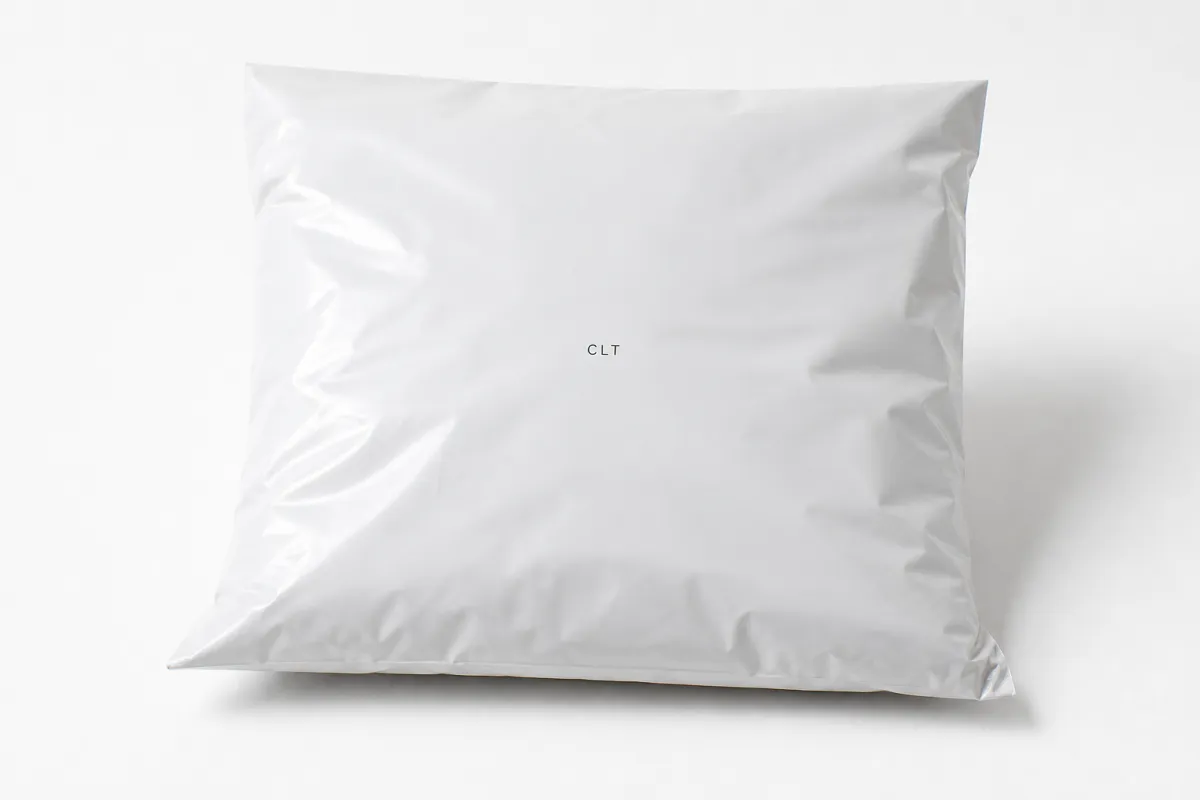
White poly mailers with logo sit in a useful middle ground between utility and branding. They are not a display box. They are not a rigid luxury carton. Still, they can change how a customer reads the order before the seal is broken. That first read happens fast. Shipping packaging is usually judged in seconds, not minutes. A crisp white bag with clean printing tends to suggest control. A bag that looks faded, stretched, or poorly sized suggests the opposite.
For packaging buyers, white poly mailers with logo are especially strong for apparel, accessories, beauty kits, subscription shipments, and lightweight soft goods. Those categories rely on visual trust more than brute protection. If the mailer looks neat, the customer assumes the inside was handled carefully too. That assumption may be unfair, but it is real. A logo placed cleanly on a white film surface can sharpen the brand even when the product itself is modestly priced.
The white surface matters because it raises contrast. Black, navy, red, and saturated brand colors usually read more sharply on white than on kraft or gray substrates. That makes white poly mailers with logo a safer choice for small type, thin-line marks, and compact taglines. When the artwork includes fine detail, the white base often makes the print feel more deliberate. On darker or recycled surfaces, the same logo can look slightly duller even when the print quality is technically acceptable.
Many brands underestimate packaging. They treat the mailer as a transport shell, then hope the customer ignores it. Customers rarely do. White poly mailers with logo can create a subtle premium effect because they look tidy in transit photos, on porch stacks, and in the customer’s hand during opening. That matters for direct-to-consumer businesses, especially ones that depend on repeat purchases and unboxing recall.
“A plain mailer ships the product. White poly mailers with logo shape the story around the product before the customer ever sees it.”
Branding only works if the execution fits the product. White poly mailers with logo may feel right for a minimal, refined brand, but they can feel out of place for a rugged or industrial catalog. They also do not rescue weak sizing, flimsy film, or sloppy print placement. Branding helps most when the basics already hold together. Once those basics are right, the package can do a surprising amount of selling.
For many teams, the decision comes down to one practical test: would the same order feel less trustworthy in a plain bag? If the answer is yes, white poly mailers with logo are probably doing more than decoration. They are reducing friction at the exact moment the customer starts judging the brand through physical evidence instead of ads or product photos.
One warehouse manager I spoke with put it bluntly: “We were not gonna win on packaging alone, but we could stop losing on packaging.” That is the real use case here. White poly mailers with logo do not replace product quality, and they should not pretend to. They simply remove one avoidable point of doubt.
How White Poly Mailers with Logo Are Made and Printed
White poly mailers with logo usually begin as a multilayer polyethylene film, often built with a co-extruded structure that balances strength, flexibility, and print performance. Film thickness is commonly measured in mils, and that number matters more than buyers sometimes think. A 2.5 mil mailer may be perfectly fine for lightweight apparel, while a 3 mil or 3.5 mil version gives more confidence for sharper corners, bulkier items, or shipments that travel longer distances through rough handling networks. A 3.5 mil bag is not twice as strong as a 1.75 mil bag, but the added material can be enough to change how the mailer survives in real transit.
The seals matter just as much as the film. Side seams, bottom seams, and the closure flap affect whether the bag holds up under normal shipment stress. A strong adhesive strip helps, yet it does not make up for weak film or poor sealing. White poly mailers with logo are only as dependable as the weakest part of the bag, so buyers should ask about seal width, adhesive quality, and whether edge welds stay consistent from batch to batch.
Printing methods vary. Flexographic printing is common for larger runs because it is efficient, repeatable, and cost-effective once setup is complete. Rotogravure can deliver rich coverage and fine detail, but it usually makes more sense at higher volumes because cylinder engraving and setup cost more upfront. Digital printing is the most flexible for shorter runs or frequently changing artwork, though the unit cost is often higher. For many brands, white poly mailers with logo are a natural fit for flexo because the artwork is usually simple: one logo, one color, one placement, clean presentation.
The white base helps the ink sit visibly on top of the film. That is one reason white poly mailers with logo often look crisper than the same artwork on a translucent or recycled surface. Opacity matters too. If the film is not opaque enough, shadows from the contents can interfere with the appearance of the print. Registration matters as well. Even a small misalignment can make a logo look soft or unprofessional, especially if the design includes a border or small text.
Artwork prep is where production teams save or lose time. Most printers want vector art, clear Pantone or CMYK references, and a logo version that still reads at small scale. White poly mailers with logo need bleed, safe zones, and realistic line weights. A logo that looks elegant on a website can lose clarity once it is stretched across a flexible film panel. Thin outlines, tiny contact details, and stacked type are common trouble spots. If the artwork includes gradients or photographic elements, ask early whether the chosen print method can reproduce them cleanly or whether a simplified one-color version will look stronger in practice.
White poly mailers with logo also benefit from a direct prepress conversation. How much of the bag is printable? Is the seal area off-limits? Will the logo sit centered on the front panel or repeat across both sides? These seem like small questions, but they affect appearance and waste. A careful prepress review can prevent a situation where the design technically fits the bag but looks awkward once the first sample arrives.
For buyers comparing suppliers, thinking in terms of print behavior usually works better than focusing on color alone. White poly mailers with logo reward simpler artwork, stronger contrast, and deliberate placement. That combination often looks better than a more complicated design that tries to do too much on flexible film.
A quick note from the production side: if a supplier promises the moon on a complicated artwork file and never asks about line weight or placement, that is a red flag. Good printers are picky for a reason. They know where flexible packaging tends to fail visually, and they usually bring that up early instead of after the proof has already been approved.
White Poly Mailers with Logo Cost, MOQ, and Quote Factors
White poly mailers with logo can look straightforward on a quote sheet, but the final number usually depends on several moving parts. Size is the obvious one. A 10 x 13 bag costs less than a 14 x 19 bag because the film area is smaller and shipping density is better. Thickness follows closely behind. Heavier film uses more material, and that increase shows up in the unit price before print is even added.
Print complexity is the next major lever. One-color logos are usually the most economical, especially for high-volume orders. Add a second color, a back-panel message, or a full-coverage design, and the price moves quickly. White poly mailers with logo printed on one side are typically cheaper than double-sided versions because there is less press time and fewer registration risks. Buyers often miss one detail: the cheapest-looking artwork on screen is not always the cheapest to produce. Fine details can create setup issues that appear in the quote.
Minimum order quantity matters because it spreads setup cost across more bags. If a supplier needs to make plates, load press time, and approve artwork, a run of 1,000 pieces will carry those costs more heavily than a run of 10,000. That is why a lower MOQ usually means a higher unit price. White poly mailers with logo sometimes tempt smaller brands with low entry thresholds, but the math can become expensive if volume is steady and predictable. A buyer may save cash on inventory and lose it on the per-bag cost.
Shipping and handling should not be ignored. A quote that looks attractive before freight can change sharply once cartons, pallets, and destination charges are added. Setup fees, plate charges, and artwork revisions can move the total more than buyers expect. White poly mailers with logo may also require proofing or sample runs, and those costs should sit in the comparison. A supplier who offers a low per-unit number but adds a charge for every artwork change can end up being the most expensive option by the time the order lands.
Here is a practical comparison many buyers find useful. It is not a universal price sheet, because material markets and order size change the numbers, but it shows the pattern clearly.
| Option | Typical MOQ | Indicative Unit Cost | Strength | Best Use |
|---|---|---|---|---|
| One-color flexographic print | 5,000 to 10,000+ | $0.16-$0.32 | Good for repeat orders and simple logos | Apparel, subscriptions, steady DTC volume |
| Digital print | 250 to 2,000 | $0.35-$0.85 | Fast artwork changes and short runs | Launches, seasonal campaigns, testing |
| Rotogravure print | 20,000+ | $0.12-$0.28 | High detail and strong consistency at scale | Large programs with stable artwork |
| Plain stock bag plus label | Any | $0.08-$0.20 | Lowest entry cost, least brand impact | Testing, temporary use, very small runs |
That table shows why white poly mailers with logo are best evaluated as a total landed cost, not as a bag price alone. A quote should be reviewed for material grade, print method, freight, setup, and any extras for artwork edits or rush service. I would also ask whether the supplier includes overage for spoilage in the quote. If not, you may need to order more than planned, which changes the real unit cost.
There is another angle buyers overlook: what the package saves elsewhere. White poly mailers with logo can reduce the need for branded stickers, extra inserts, or secondary outer packaging in some programs. That does not make them free, but it can offset part of the spend. Good packaging buyers look at the whole system. If the branded bag replaces three smaller touches, the value equation changes quickly.
For a cleaner comparison process, ask every supplier to quote the exact same specs: size, thickness, print colors, print sides, adhesive type, and delivery destination. White poly mailers with logo are hard to compare fairly when each vendor is quoting a slightly different build. Standardize the request, then compare the landed number and the quality notes side by side.
If you are buying for more than one quarter, pressure-test the quote against expected reorder volume. A slightly higher first run can be smarter if it locks in cleaner art, fewer proof revisions, and fewer surprises on the second order. The savings do not always show up in the headline number.
Production Steps and Timeline for White Poly Mailers with Logo
White poly mailers with logo usually move through a predictable sequence, and the smoothest projects are the ones where the buyer supplies clean artwork early. It starts with artwork review. The printer checks file format, line thickness, color usage, and panel placement. If the design needs simplification, that happens here, not after production begins. For a simple one-color logo, this step may take a day or two. For a multi-element design, revisions can stretch longer, especially if the brand team wants to compare several layout options.
Once the art is approved, the job moves into prepress and proofing. That can include a digital proof, a plate proof, or a sample bag depending on the print method and order size. White poly mailers with logo often benefit from a physical sample if the logo has fine details or if color matching matters. On screen, white can look neutral. On film, it can shift slightly based on ink opacity and film finish. A proof is far cheaper than a pallet of bags that print beautifully in theory and slightly wrong in reality.
Production then moves into printing, curing, inspection, and packing. With flexographic work, the press speed can be fast once everything is set. The actual timeline is usually governed less by printing time and more by queue timing, drying, and inspection. White poly mailers with logo that require tighter alignment checks or double-sided printing can take a bit longer. If the supplier is running a busy schedule, even a small delay in artwork approval can push the job back several days.
For planning purposes, many buyers can think in ranges like these: proofing in 1-3 business days, production in 7-15 business days after approval, and freight depending on destination. Large or complex orders can take longer. Small digital runs may be quicker if the supplier has materials in stock, while high-volume custom runs may need more lead time for plates, material allocation, and inspection. White poly mailers with logo are not hard to produce, but they are easy to delay if feedback arrives late.
Transiting a packaging program also means thinking about standards. For testing shipped goods, ISTA protocols are a useful benchmark because they reflect realistic distribution stress rather than just a lab assumption. For material and waste considerations, the EPA recycling guidance is a better reference point than vague marketing language. White poly mailers with logo should be evaluated the same practical way: how they perform, how they ship, and how they fit the broader packaging system.
If you want to avoid losing a week to preventable revisions, send four things first: final vector artwork, exact bag size, preferred quantity, and delivery ZIP or destination country. Then ask for a written timeline that separates proofing, manufacturing, and freight. White poly mailers with logo move much faster when the first email already contains the details the production team needs to quote confidently.
One more timing detail that gets missed: freight and production are not the same problem. A supplier can finish the bags on schedule and still miss the launch date because cartons sat waiting for a pickup window. If the rollout matters, confirm who is handling carrier booking, who signs off on the proof, and whether the job has any buffer for customs or transfer delays. That kind of housekeeping sounds boring. It is also the difference between a launch that feels planned and one that feels frantic.
Key Factors to Compare Before You Order White Poly Mailers with Logo
The right bag is rarely the cheapest one. White poly mailers with logo need to be compared on performance, fit, and visual result. Thickness is a good place to begin. A thin film may be acceptable for socks or tees, but once the contents include zippers, buttons, corners, or hardware, puncture resistance matters more. A difference of 0.5 mil can matter more than the quote sheet suggests, especially if the route includes sorting hubs that are hard on packaging.
Adhesive strength is another detail buyers sometimes treat as secondary. It should not be. A closure that lifts during transit hurts trust immediately. White poly mailers with logo also benefit from a seal that is wide enough to resist tampering without making the flap difficult to close on a packing line. If the seal area is too narrow, the team will notice it. So will the customer. Sample testing is worth the time for that reason alone.
Fit and capacity matter too. Oversized mailers waste film, increase dimensional weight in some networks, and make the shipment look underfilled. Too-small mailers stretch awkwardly and can distort the logo. White poly mailers with logo should leave enough breathing room for inserts, tissue, or folded garments without creating a ballooned appearance. A practical test works well: pack your most common order, your bulkiest order, and the one with the most awkward shape. If the mailer handles those three, it is probably sized correctly.
Branding details deserve the same scrutiny. Where does the logo sit after the bag is folded? Does the print still read once a shipping label covers part of the panel? Does the finish feel glossy, matte, or somewhere between? White poly mailers with logo can look surprisingly different after handling. A pristine sample on a table is not the same as a parcel that has been stacked, rubbed, and tossed through transit. The best suppliers will show you where the print sits relative to the flap and seams so you can judge the appearance after use, not just before it ships.
Consistency matters if a brand uses multiple fulfillment partners. White poly mailers with logo need to behave predictably across all of them. That means the adhesive should close the same way, the material should feel the same, and the print should not drift from lot to lot. Small variations are normal; large ones signal a weak spec or a supplier that is not controlling quality tightly enough. If you have ever seen a row of parcels from the same brand look like they came from different companies, you already know why consistency matters.
One more point: think about how the mailer will look after shipping. White poly mailers with logo can survive transit well, but scuffs, creases, and label placement still change the visual effect. A bag with a strong logo can look unplanned if the size is wrong or the artwork sits too close to a fold. A short test pack usually tells the truth faster than a long quote thread.
If sustainability sits in the buying brief, compare claims carefully and ask for material details rather than buzzwords. Some suppliers can discuss recycled content, downgauged film, or packaging reduction in a sensible way. Others cannot. White poly mailers with logo may be a better answer than a multi-layer box system for certain products, but only if performance and reuse profile make sense for the actual orders.
In practical terms, I always tell teams to compare three samples side by side: the one they think they want, the one the supplier recommends, and the one that hits the lower-cost end of the spec. That comparison usually exposes the tradeoffs immediately. A logo can look sharper on one bag, but the seal may be weaker. Another may feel sturdier, but it may print a little dull. Seeing those differences in hand makes the buying decision much less abstract.
Common Mistakes Brands Make With White Poly Mailers with Logo
The first mistake is designing for a monitor instead of a flexible film bag. White poly mailers with logo are not posters. Thin strokes, tiny sublines, and intricate gradients can look beautiful in a mockup and then fall apart at production scale. If the logo depends on hairline detail, simplify it before the printer has to do that work for you. Cleaner files usually produce cleaner bags.
The second mistake is oversizing. Too many brands pick a mailer that feels “safe” and then discover it is wasteful, expensive to ship, and visually loose around the product. White poly mailers with logo should look deliberate. A stretched bag says the contents were chosen around the mailer, not the other way around. That is a subtle but real signal, especially for premium apparel and accessories.
Skipping samples or treating proof approval as a formality is another common issue. That is risky. White poly mailers with logo can show color shifts, registration drift, or unexpected opacity issues that do not appear on a screen proof. If the logo needs to stay readable on a delivery stack, You Need to Know that before the production run is locked. The cheapest mistake is the one caught in sample stage.
There is also a brand promise problem. A premium product in a flimsy bag creates cognitive dissonance. White poly mailers with logo can elevate a shipment, but only if the film thickness, seal quality, and print all feel consistent with the product’s price point. If the order is fashion-forward and the packaging looks bargain-bin, the package undermines the brand message the moment it lands on the doorstep.
Some buyers ignore the pack line entirely. If the fulfillment team has to wrestle with the adhesive or search for the logo orientation every time they pack an order, the packaging is not truly ready. White poly mailers with logo should speed things up, not slow them down. The best formats make the operation easier while also looking better to the customer.
Here is a practical rule I use: if a packaging choice creates more work for the warehouse and only a little more value for the customer, it needs another look. White poly mailers with logo should ideally do the opposite. They should make packing cleaner, keep shipping costs predictable, and give the order a sharper first impression.
Another mistake is assuming the first successful run means the spec is finished forever. It is not. Material lots change, inks age differently, and one fulfillment center may handle bags more roughly than another. If the mailer becomes part of your repeat purchase experience, keep an eye on it every few months. Packaging drifts quietly; customers notice before spreadsheets do.
Expert Tips and Next Steps for White Poly Mailers with Logo
Start with one hero size. That sounds simple, but it is often the smartest move. White poly mailers with logo become easier to manage when the team is not trying to standardize three or four dimensions at once. Choose the size that fits the highest-volume order, confirm the logo placement, and make the first reorder cycle as clean as possible. Once the process is stable, add more sizes only if oversized or small-batch SKUs truly need them.
Ask for physical samples, not just proofs. A sample lets you compare feel, seal strength, opacity, and print clarity with your actual product in hand. White poly mailers with logo can look excellent in a file and still feel too slick, too thin, or too large once packed. That real-world check is cheap insurance. If your brand uses multiple fulfillment sites, send the sample to the people who will actually pack the orders.
Build a decision matrix before you choose a supplier. I would weigh four things: Cost, Lead Time, protection, and brand impact. White poly mailers with logo rarely win on every column, so the goal is to know where the tradeoff sits. A lower quote may be worth it if turnaround is faster and the print is stable. A higher quote may be justified if the seal is stronger and the logo reproduces more cleanly. That is a more disciplined way to buy packaging than chasing the lowest number in isolation.
Thinking in reorder terms also helps. If the artwork is likely to stay the same for six months or longer, a more economical print method may make sense. If the branding will change often, a more flexible setup may save money over time. White poly mailers with logo are easiest to manage when the art direction and inventory plan are aligned from the start. The worst-case scenario is buying too much of a design you will want to replace soon.
Here is the simplest next-step sequence I recommend:
- Gather final vector artwork and confirm the exact logo version you want on the bag.
- Measure your most common packed order and select a real bag size, not an estimate.
- Ask for a quote that separates material, print setup, freight, and any proof charges.
- Request a physical sample or production proof before approving the full run.
- Compare at least two quotes using the same spec so the numbers mean something.
If you are standardizing your shipping presentation, review the rest of your packaging stack at the same time. Sometimes the right move is not just better mailers, but a cleaner combination of mailers, inserts, labels, and cartons. A broader look at Custom Packaging Products can save both time and money. White poly mailers with logo should fit into that system naturally, not fight it.
White poly mailers with logo work best when they are treated as a functional brand asset rather than a decorative afterthought. The right size, the right thickness, the right print method, and the right lead time all shape how the customer experiences the order. Get those details right and white poly mailers with logo can do something surprisingly valuable: make the package feel more thoughtful before the product is even revealed.
My practical takeaway is this: choose the mailer by the order you ship most often, not the prettiest mockup in the deck. Then verify the artwork on a real sample, lock the spec, and keep that version stable long enough to measure reorder performance. That is the point where white poly mailers with logo stop being a line item and start acting like part of the brand.
Frequently Asked Questions
What size white poly mailers with logo should I choose for apparel orders?
Base the size on your folded product dimensions, then leave a little room for inserts, tissue, and a clean closure. White poly mailers with logo should fit the most common order without looking stretched or overly loose. A quick pack test with your standard size, plus one bulkier item, is usually more reliable than guessing from a chart alone.
Are white poly mailers with logo waterproof and durable?
Most poly mailers resist moisture well and hold up better than paper-based shipping bags in wet transit conditions. Durability depends on film thickness, seal quality, and the shape or weight of the product inside. White poly mailers with logo are typically strong enough for apparel and soft goods, but anything sharp, heavy, or irregular should be tested before you place a large order.
How long does production usually take for white poly mailers with logo?
Turnaround depends on artwork readiness, print method, order volume, and freight distance. In many cases, proofing takes a few business days, and production can run another week or two after approval. White poly mailers with logo move faster when the first artwork file is complete, because back-and-forth on logo layout or color can easily add several days.
What affects the price of white poly mailers with logo the most?
The biggest price drivers are order quantity, bag size, thickness, print colors, and whether the design is printed on one side or both. Setup charges, plate fees, and shipping can also change the final landed cost more than buyers expect. White poly mailers with logo are easiest to price fairly when every supplier is quoting the same spec sheet.
Can I print a full-color logo on white poly mailers with logo?
Yes, but the result depends on the print method, artwork quality, and how much detail the film can support. For smaller orders or highly detailed art, a simplified logo version may print cleaner and cost less. White poly mailers with logo often look best with strong contrast and controlled color count, especially if the artwork needs to stay readable after handling and shipping.
For most brands, white poly mailers with logo are not just a packaging choice. They are a small, repeatable signal that the order was planned carefully. If you Choose the Right construction, compare quotes on the same spec, and approve the artwork with real production in mind, white poly mailers with logo can deliver branding value without turning into a source of hidden costs or delays.


