Buyer Fit Snapshot
| Best fit | Wholesale Corrugated Mailers for Apparel projects where brand print, material claims, artwork control, MOQ, and repeat-order consistency need to be specified before quoting. |
|---|---|
| Quote inputs | Share finished size, material target, print colors, finish, packing count, annual reorder estimate, ship-to region, and any compliance wording. |
| Proofing check | Approve dieline scale, logo placement, barcode or warning zones, color tolerance, closure strength, and carton packing before bulk production. |
| Main risk | Vague material claims, crowded artwork, missing packing details, or unclear freight terms can make a low unit price expensive after revisions. |
Fast answer: Wholesale Corrugated Mailers for Apparel: Specs & Pricing should be specified like a repeatable production item. The safest quote records material, print method, finish, artwork proof, packing count, and reorder notes in one written spec.
Production checks before approval
Compare the actual filled-product size with the drawing, then confirm tolerance on folds, seals, hang holes, label areas, and retail display edges. Reserve space for logos, QR codes, warning copy, and material claims before decorative graphics fill the panel.
Quote comparison points
Review material grade, print process, finish, sampling route, tooling charges, carton quantity, and freight assumptions side by side. A quote is only useful when the supplier can repeat the same color, closure quality, and packing count on the next order.
Wholesale Corrugated Mailers for Apparel: Specs & Pricing
Wholesale corrugated Mailers for Apparel solve a deceptively expensive problem: a garment can be light, flat, and low-risk on paper, yet still arrive creased, crushed, or partially opened if the outer shipper fails in transit. That is why wholesale corrugated mailers for apparel deserve attention beyond their unit price. They reduce damage claims, trim replacement shipments, and cut the labor tied up in repacking orders that should have left the dock correctly the first time. Folded tees, knitwear, loungewear, and boxed apparel all benefit when the package keeps its shape through a carrier network that is not always gentle.
The business case usually starts with structure. A rigid mailer holds corners and edges better than a thin poly shipper, keeps the product presentation crisp, and still stays compact enough for standard ecommerce workflows. That compact footprint matters because dimensional weight can punish oversized packaging even when the item inside is almost weightless. It matters on the customer side, too. A parcel that opens cleanly feels deliberate; a bent, sagging, or overstuffed one can create friction before the garment is even unfolded. A few cents saved on the package can disappear quickly if even a small percentage of orders need a second trip.
Buying at wholesale scale changes the math in a few quiet ways. Replenishment becomes easier to forecast. Packing stations need fewer format changes. Warehouse teams stop juggling several loose packaging options for similar apparel SKUs. Storage gets simpler, which rarely shows up in a sales presentation but shows up every month in labor and space use. Buyers who treat the mailer as part of the operation, not just a printable surface, usually end up with a clearer total cost picture and fewer surprises when volume spikes.
“The right apparel mailer is not the cheapest sheet of board on the quote sheet. It is the format that lowers damage, speeds pack-out, and keeps the brand looking deliberate when the customer opens the parcel.”
Why wholesale corrugated mailers for apparel beat flimsy shipping formats
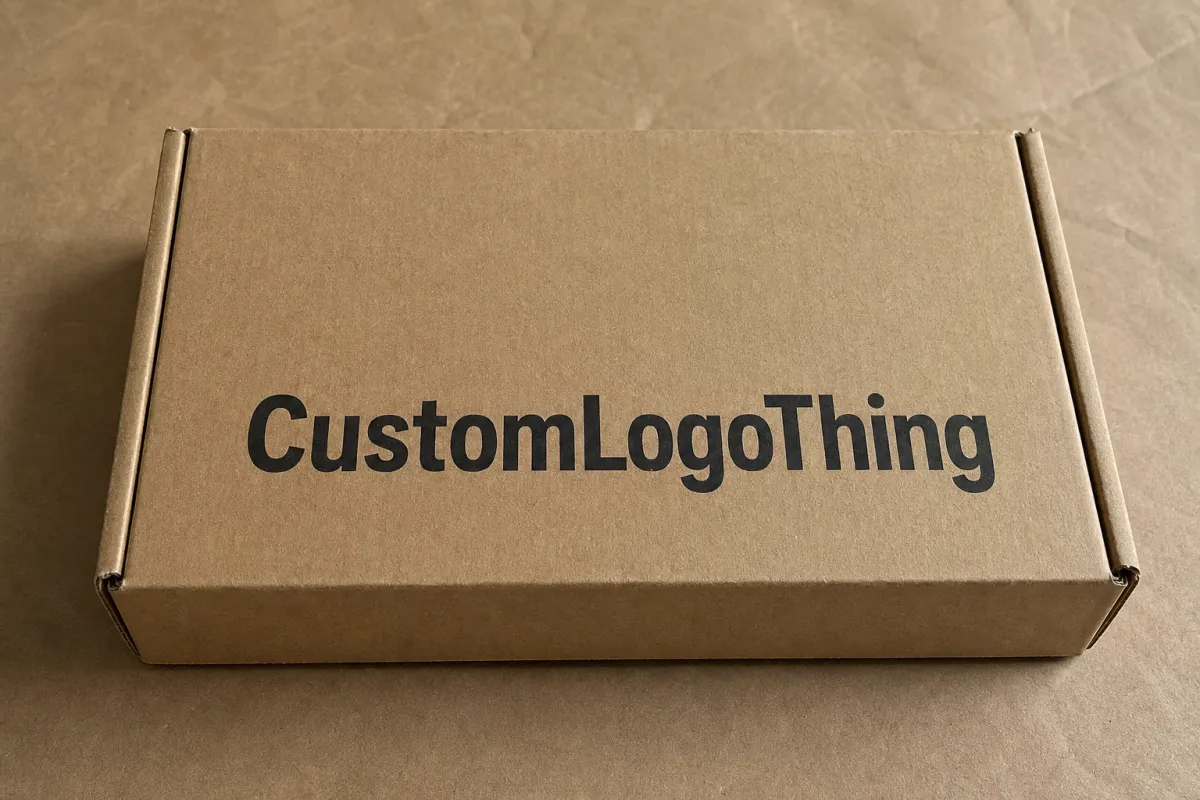
Thin shipping formats often look fine in procurement. Then the first stack of parcels gets compressed on a sortation belt, or a driver drops a bag at the end of a route, and the weakness becomes visible. A lightweight shirt does not need much abuse to show it. A folded corner, a crushed edge, or a torn flap is enough to turn a clean shipment into a support ticket. That is the part many buyers miss when they compare a rigid mailer to a soft poly option on piece price alone. The outer package is not only carrying the garment; it is absorbing the stress of the whole shipping lane.
Corrugated mailers create a more stable profile than basic poly mailers because the board resists flexing. That stiffness helps folded apparel stay flat, which matters for branded tees, premium knitwear, loungewear, and gift-ready orders. It also protects the contents when tissue, inserts, or a thank-you card ride inside the shipper and shift during transit. A soft pouch may save money at checkout, but it can let the contents drift and buckle. Once returns, reships, and support time enter the picture, the savings are often smaller than they first appear.
The real question for a packaging buyer is not “How low is the unit price?” It is “What does each shipped order cost once damage, rework, and customer support are counted?” A replacement shipment can erase the savings from a cheaper mailer in a single move. Add the time to print labels again, repack the order, and answer the email from the customer who expected a clean delivery, and the math gets even less flattering. A small packaging upgrade can stop that bleed before it starts.
There is also a workflow angle that gets overlooked more often than it should. Standardized corrugated mailers are easier to train against. Staff learn the fold pattern, the tuck closure, and the fill level faster when every unit behaves the same way. Inventory bins stay cleaner. Reordering is less chaotic because dimensions and print specs do not drift every time a new purchase order is written. For high-volume apparel operations, that consistency can be worth more than the difference between two quote lines.
For brands comparing formats, the tradeoff usually looks like this:
- Poly mailers are lighter and often cheaper, but they offer less crush resistance and a flatter brand impression.
- Corrugated mailers are heavier and usually cost more per unit, but they protect better and present better.
- Shipping boxes provide the most structure, but they can add dimensional weight and packing cost for flat apparel.
For a large share of apparel shipments, corrugated mailers sit in the middle in the best possible way. They are rigid enough to protect, yet compact enough to avoid the bulk of a full carton. That balance explains why this format shows up so often in ecommerce apparel, subscription kits, and promotional drops. It is the packaging equivalent of a well-cut blazer: structured, practical, and more capable than it first appears.
For more packaging formats that can complement an apparel program, see our Custom Packaging Products and compare them against Custom Poly Mailers if you want to benchmark protection, weight, and presentation side by side.
Product details: what corrugated apparel mailers are made to do
A corrugated apparel mailer has three jobs. It must protect the garment, present the brand, and survive transit. That usually means a scored corrugated board construction with panels that fold cleanly, a closure that holds without extra tape, and an exterior that can carry branding or handling instructions. The best versions feel straightforward because the engineering happened before the box ever reached the warehouse.
Most apparel mailers use a die-cut or scored structure that folds into a flat, compact shape. Some use tuck-in flaps; others use self-locking panels that shorten assembly time. Tear-strip or easy-open features have become more common because they improve the unboxing experience without adding much material. Apparel is one of the few categories where the opening moment can influence repeat purchases almost as much as the fit of the product itself.
These mailers become especially useful when the order needs to look retail-ready. A folded shirt wrapped in tissue with a size sticker and a branded insert feels very different from the same shirt inside a loose shipping pouch. The same is true for subscription kits and promotional drops, where the package becomes part of the product story. If the outer shipper looks sloppy, the whole order reads as less thoughtful, even when the garment itself is excellent.
Compatibility matters, too. A good mailer layout should account for the items that usually travel with apparel:
- Tissue wrap for a cleaner opening experience
- Inserts such as care cards, discount cards, or thank-you notes
- Size labels for warehouse picking and customer identification
- Barcode stickers and fulfillment labels that sit cleanly on the panel
That planning step saves headaches later. If the mailer is sized only around the garment and not the full pack-out, the fit can become too tight once inserts and tissue are added. If it is too loose, the garment can shift and crease. Good packaging programs map the whole bundle before a production order is placed, which sounds cautious until you compare it with the cost of a thousand misfit shipments.
On a supply chain level, corrugated mailers often sit closer to small mailer boxes than to soft envelopes in terms of protection, but they are usually faster to pack than a traditional folding carton. That is a major reason they are popular in ecommerce apparel operations that want a cleaner look without giving up speed. Industry references from groups such as the International Safe Transit Association can help buyers think about package performance in transit, not just appearance.
Specifications and sizing for apparel mailers
Good buying decisions start with the spec sheet. If you are evaluating wholesale corrugated mailers for apparel, the request for quote should include inside dimensions, board thickness, flute type, closure style, print area, finished weight, and the performance target for the shipper. Without those details, two quotes may look similar while describing entirely different products. That is a fast route to bad comparisons and inventory surprises.
Inside dimensions matter more than most first-time buyers expect. A mailer marked as 10 x 8 can behave very differently from another 10 x 8 piece if one has tighter score lines or a deeper closure flap. Measure the folded garment first. Then decide how much buffer you need for tissue, inserts, and any flattening tolerance. A shirt that fits neatly in sample form can become difficult to close once it is dressed for a premium presentation. The extra half inch is often the difference between a clean tuck and a bulging flap.
Board construction deserves equal attention. Single-wall corrugated is often enough for standard apparel, while heavier board can make sense for bulkier knits, longer shipping lanes, or premium kits where crush resistance matters more. Buyers should also ask about burst strength or Edge Crush Test performance, especially if the shipment will move through automated sortation. ASTM methods are commonly used to compare board performance, and those numbers help separate marketing language from real protection. A spec that sounds strong is not the same as one that actually holds shape under load.
Here is a practical sizing view based on common apparel use cases:
- Slim format: one folded T-shirt, hosiery, socks, accessories, or lightweight promo items
- Mid-size format: a hoodie, sweatshirt, knit top, or two lighter garments
- Larger format: multi-item orders, heavier fleece, or bundles with inserts and tissue
Structural choice is not only about size. It also affects how the parcel behaves in transit and how the warehouse handles it. A stronger mailer can help on long shipping lanes where parcels get stacked, dropped, or compressed. That said, a stronger grade is not always the right answer. If the garment is light and the lane is short, extra board can add cost without much benefit. The best spec is the one matched to the actual order profile, not the one that sounds safest in a meeting.
Quality checks are where many programs succeed or fail. Buyers should ask about score accuracy, fold memory, print registration, adhesive or locking performance, and whether the mailer closes without over-compressing the garment. If the fold is off by even a small amount, the mailer may look fine empty and behave poorly once packed. That kind of miss is expensive because it tends to surface only after production begins. Once the shipment is live, every flaw becomes a recurring cost.
| Option | Typical Use | Protection | Approx. Unit Cost at Volume | Notes |
|---|---|---|---|---|
| Poly mailer | Light tees, low-cost apparel, low-risk lanes | Low to moderate | $0.08-$0.18 | Lowest weight, least structure |
| Corrugated mailer | Branded apparel, folded garments, premium presentation | Moderate to high | $0.18-$0.45 | Better crush resistance, stronger unboxing |
| Small folding carton | Gift sets, higher-value apparel, heavier bundles | High | $0.32-$0.70 | Best structure, often larger dimensional footprint |
That table is directional, not a promise. Actual pricing depends on size, print coverage, board grade, and quantity. Still, it shows why corrugated mailers are often chosen for apparel: they land in a middle zone where protection and presentation improve without the full cost and bulk of a box.
Pricing, MOQ, and unit cost for apparel mailers
Pricing for wholesale corrugated mailers for apparel is shaped by a few predictable variables. Board grade is one. Size is another. Print complexity matters, too, especially if the design uses multiple colors, heavy coverage, or custom finishing. If the mailer is a standard size but fully custom printed, the artwork spec can weigh more heavily than the carton itself. If the size is custom, tooling and setup can become a bigger part of the quote. The same packaging shape can land in two very different price bands depending on those choices.
For practical budgeting, many buyers see unit pricing fall into a few rough bands. A simple, stock-size corrugated apparel mailer might sit around $0.18-$0.28 per unit at moderate volume. A custom printed version with more coverage or a sturdier board often lands closer to $0.25-$0.45. Very small runs can be higher. Larger replenishment orders can come down, especially once the spec is locked and the printer is not relearning the job every cycle. A ten-thousand-unit order can absorb setup in a way a two-hundred-unit run simply cannot.
Minimum order quantity is where buyers need to stay realistic. Small runs are possible in many programs, but custom printed wholesale orders usually become materially more efficient in the mid-hundreds or higher. The exact MOQ depends on whether the construction is stock or custom, whether the print method is simple or more involved, and whether the supplier is pulling from existing tooling or making new tooling for your mailer. A low MOQ can be useful for testing, yet a better price often appears only after the first validation round is done.
What should a quote include? At minimum:
- Materials and board grade
- Printing and number of colors
- Setup or tooling fees
- Samples or prototype charges
- Freight to your destination ZIP code
- Special handling if the order needs palletization, split shipments, or rush processing
That level of clarity matters because unit price alone can hide the true landed cost. A cheaper mailer can become expensive once freight, damage, and labor are added. A slightly pricier mailer can become the better buy if it reduces returns, improves pack speed, or eliminates extra void fill. The useful calculation is total cost per shipped order, not just cost per blank piece. That is the difference between buying packaging and buying outcomes.
It also helps to compare print and sustainability options in the same conversation. For example, an FSC-certified board program may carry different pricing than a standard recycled-content board, but it can support broader brand claims if the supply chain documentation is in order. The Forest Stewardship Council is a useful reference point if you need packaging procurement to line up with sourcing language that customers can actually understand.
For buyers who want a packaging benchmark beyond apparel, compare your mailer estimate with our Custom Shipping Boxes program. In some apparel categories, the box is the right answer. In others, it is only adding cost and air.
Process, timeline, and production steps
The cleanest production runs usually follow a predictable path: brief, size review, dieline approval, artwork proofing, sample sign-off, production, quality review, and shipment. Each step matters because a mistake early in the process tends to show up later as rework, freight changes, or customer complaints. The good news is that apparel mailers are straightforward when the information is complete. A clear spec sheet and a real packed sample save far more time than a dozen email threads after the fact.
Timing depends on the configuration. Stock-style formats move faster because the structure is already established. A custom size or custom printed mailer needs more time because someone has to confirm the fit, align the artwork, and often produce a sample. After final proof approval, standard runs often move through production faster than a complex structural job, but the exact lead time still depends on current press load and freight distance. Busy seasons stretch every calendar, and packaging is no exception.
A realistic planning window for a custom corrugated apparel mailer order is often measured in business days, not hours. Simple repeat orders can move quickly once the spec is locked. New programs may need extra time for measurement, mockups, and sample approval. Buyers who leave no room for those steps usually end up paying for rush freight, which is avoidable if the timeline is handled honestly from the start. A week saved on the front end can cost more on the back end if the order arrives with the wrong fold or the wrong closure tension.
Where do delays usually happen?
- Incorrect garment measurements that lead to the wrong finished size
- Artwork files that arrive without bleed, incorrect scale, or poor dieline alignment
- Spec changes after sampling, which reset approvals and sometimes tooling
- Late sign-off from brand, operations, or compliance teams
The easiest way to avoid those delays is to be disciplined at the beginning. One clean approval cycle beats three rounds of “small” corrections. That is true on almost every packaging job, but especially on apparel mailers, where fold behavior and closure tension can change what looks like a minor size adjustment into a new production problem.
Packaging performance references from industry bodies can help structure the process. For buyers who want more detail on transit testing and package performance, the International Safe Transit Association and ASTM testing standards are useful starting points, especially when shipping lanes become rougher or returns are sensitive to appearance.
One practical rule holds up across categories: approve the mailer against the actual garment, not against a theoretical size chart alone. A folded hoodie with a drawstring can behave very differently than a flat tee. If the sample closes too tightly, the garment can curl or crease. If it is too loose, the product shifts and the presentation drops. Measuring and testing with the real packed item avoids both problems and gives you a more honest read on what the customer will see.
Why choose us for wholesale corrugated mailers for apparel
The strongest supplier is not the one that sells the most packaging categories. It is the one that can verify fit, keep specs stable, and support reorders without making the buyer start from scratch each time. That is the difference between a packaging vendor and a packaging partner. For apparel, consistency matters because the product itself already changes by size, color, and season. The mailer should be the steady part of the system.
At Custom Logo Things, the value starts with fit. The right wholesale corrugated mailers for apparel should be checked against the real folded garment and the actual pack-out method. That means the mailer is chosen around the item, not the other way around. For a buyer, that reduces the chance of overbuying oversized packaging or underbuying a mailer that looks fine in sample form and fails once production begins. One accurate fit check can prevent months of waste.
Operational reliability matters just as much. Stable specifications, repeatable print quality, and organized replenishment help warehouse teams move faster and reduce errors. A flashy sample is not enough if the final order drifts in print placement or fold behavior. A good apparel mailer program should look the same on order one and order ten. Consistency is the real luxury in fulfillment.
Support also counts. If a mailer needs structural adjustment, artwork refinement, or a change in closure style, the supplier should help think through the tradeoff. That is especially useful when the packaging has to do two jobs at once: sell the brand and protect the garment. Packaging decisions in apparel rarely live in isolation. They sit between merchandising, operations, and customer experience, and each group notices a different flaw first.
Sustainability should be concrete, not vague. Recyclable corrugated board, reduced void fill, and right-sized packaging can lower material waste without hurting protection. If the board carries recycled content or FSC certification, that should be documented clearly and used accurately. Vague claims do more harm than good. Buyers are better off with a narrower claim they can defend than a broader claim they cannot. The packaging should hold up under questions as well as under pressure.
For buyers already comparing formats, our Wholesale Programs page can help frame the purchase as a repeatable sourcing decision rather than a one-off print job. That is often the point where apparel brands save the most: not on the first order, but on every reorder after the spec is locked.
Actionable next steps for launching your mailer program
The best starting point is a SKU audit. Measure your top-selling apparel items in their folded state, note the weight, and separate them into groups by protection need and presentation need. A slim tee does not need the same mailer as a heavyweight fleece. A premium drop may deserve stronger print and a cleaner opening experience than a basic replenishment order. Once those groups are clear, packaging decisions get a lot less vague.
Then request samples or a dieline against your best-selling garments. This is where many programs either save money or uncover hidden problems. Test the closure feel, the visual presentation, the space available for tissue and inserts, and the shipping performance after a short internal run. If a sample fails on fit, it is better to discover that before a purchase order is released. A sample that looks good on a desk can tell a very different story once it is folded, labeled, and stacked.
Your quote package should be specific. Include quantity targets, the finish or print style you want, the destination ZIP code, and your target launch window. The more concrete the request, the easier it is to compare pricing across suppliers. If the supplier knows the mailer will be used for premium apparel, promotional kits, or subscription orders, the recommendation should reflect that use case. The end result is usually a cleaner quote and fewer revisions.
After approval, set a replenishment rule. That can be a simple reorder point tied to weekly use or a seasonal buy tied to a launch calendar. Once the specification is locked, wholesale corrugated mailers for apparel can be reordered quickly without rebuilding the job every time. That is where a lot of operational value appears: less rework, fewer surprises, and less time spent chasing packaging details that should already be standardized.
One final test is usually worth the effort. Ship a small live batch through your normal carrier mix and inspect the returns, if any, for crush marks, open corners, or product shifting. Laboratory specs are useful, but live orders expose the practical realities of your lane. A mailer that passes both is a strong choice. A mailer that only passes the sample bench is a risk waiting to show up on the customer side.
For a brand that wants cleaner presentation and more control over shipping outcomes, wholesale corrugated mailers for apparel are often the most balanced choice. They protect more than a poly mailer, present better than a loose pouch, and still keep the parcel compact enough for efficient fulfillment. If your goal is to reduce damage, keep packing steady, and maintain a branded opening experience, the smartest move is to test this format against your actual folded garments and compare the landed cost, not just the blank unit price.
What size wholesale corrugated mailers for apparel work best for one folded T-shirt?
Choose the smallest mailer that still lets the shirt lie flat without bending the edges. Measure the folded garment first, then allow a small buffer for tissue, inserts, or a size card. Oversizing is usually a mistake because it adds empty space, weakens presentation, and can increase shipping cost. A snug fit looks sharper and wastes less board.
Are corrugated mailers better than poly mailers for apparel shipping?
Corrugated mailers are usually better when presentation, crush resistance, or premium branding matters. Poly mailers can be lighter and cheaper, but they offer less structure and less protection against compression. For higher-value apparel, the added rigidity often lowers damage and repack risk. The cheaper option on the quote sheet is not always the cheaper option once returns are counted.
What MOQ should I expect for wholesale corrugated mailers for apparel?
MOQ varies by size, print method, and whether the design is stock or fully custom. Many buyers see more efficient pricing once quantities move into the mid-hundreds or above. Ask for tiered pricing so you can compare the cost difference between a test run and a full replenishment order. That makes it easier to judge whether the savings are real or only temporary.
How long does production usually take after artwork approval?
Lead time depends on whether the mailer is stock, custom size, or custom printed. After final proof approval, standard runs often move faster than custom structural jobs that require tooling or sampling. Build extra time for freight, especially if the order needs to be delivered to multiple locations. A clean approval early usually beats a rush order late.
Can wholesale corrugated mailers for apparel be printed with logos and product details?
Yes, most programs can include logos, brand colors, care messaging, or size-specific labeling. Ask for the print area, color limits, and file requirements before submitting artwork. If the mailer doubles as a branded unboxing surface, keep the design readable and aligned with the fold lines. A good print layout should help the package do its job, not compete with it.