Buyer Fit Snapshot
| Best fit | packaging buyers who need clearer specs, stronger internal paths, and repeatable quote decisions where brand print, material, artwork control, and repeat-order consistency matter. |
|---|---|
| Quote inputs | Share finished size, material target, print colors, finish, packing count, annual reorder estimate, and delivery region. |
| Proofing check | Approve dieline scale, logo placement, barcode or warning zones, color tolerance, and any recyclable or compostable wording before bulk production. |
| Main risk | Vague material claims, crowded artwork, or missing packing details can create delays even when the unit price looks attractive. |
Fast answer: Wholesale Recyclable Pouches Bulk: Specs, Pricing & More should be specified like a repeatable production item. The safest quote includes material, print method, finish, artwork proof, carton packing, and reorder notes in one written spec.
What to confirm before approving the packaging proof
Check the product dimensions against the actual filled item, not only the sales mockup. Ask for tolerance on folds, seals, hang holes, label areas, and retail display edges. If the package carries a logo, QR code, warning copy, or legal claim, reserve that space before decorative graphics fill the panel.
How to compare quotes without losing quality
Compare board or film grade, print process, finish, sampling route, tooling charges, carton quantity, and freight assumptions side by side. A lower quote is only useful if the supplier can repeat the same color, closure quality, and packing count on the next order.
Wholesale Recyclable Pouches Bulk: Specs, Pricing & More
Wholesale recyclable pouches bulk orders usually come down to one question: does the packaging still make financial sense once the volume gets real? A flexible pouch ships flat, stores efficiently, and can reduce packaging waste without forcing the product into a bad fit. That matters in operations, not just in pitch decks.
Packaging has to do a lot at once. It protects the product, creates shelf presence, controls freight, and decides how much room a warehouse loses to empty space. A pouch trims dead air out of the equation. A jar, tin, or rigid tub carries space you still pay to move. A recyclable pouch cuts that waste down fast. For coffee, snacks, supplements, pet treats, and light non-food items, the difference shows up in shipping, storage, and replenishment.
Buyers also get a practical sustainability story without giving up the basics that keep a product competitive. Mono-material pouches can still support strong print, a resealable zipper, a tear notch, and a window if the design calls for one. The point is not to cram every product into the same structure. The point is to match the pouch to the product and stop pretending every use case is identical.
There is one catch, and it matters. Recyclable does not mean universally recyclable. Mono-PE and mono-PP structures can be designed for better compatibility with certain recycling streams, but local acceptance still varies. A pouch that looks good on a spec sheet and goes nowhere in the real collection system is a weak story. Buyers should ask where the material is expected to end up, not just what the brochure says.
Wholesale recyclable pouches bulk: why the economics work
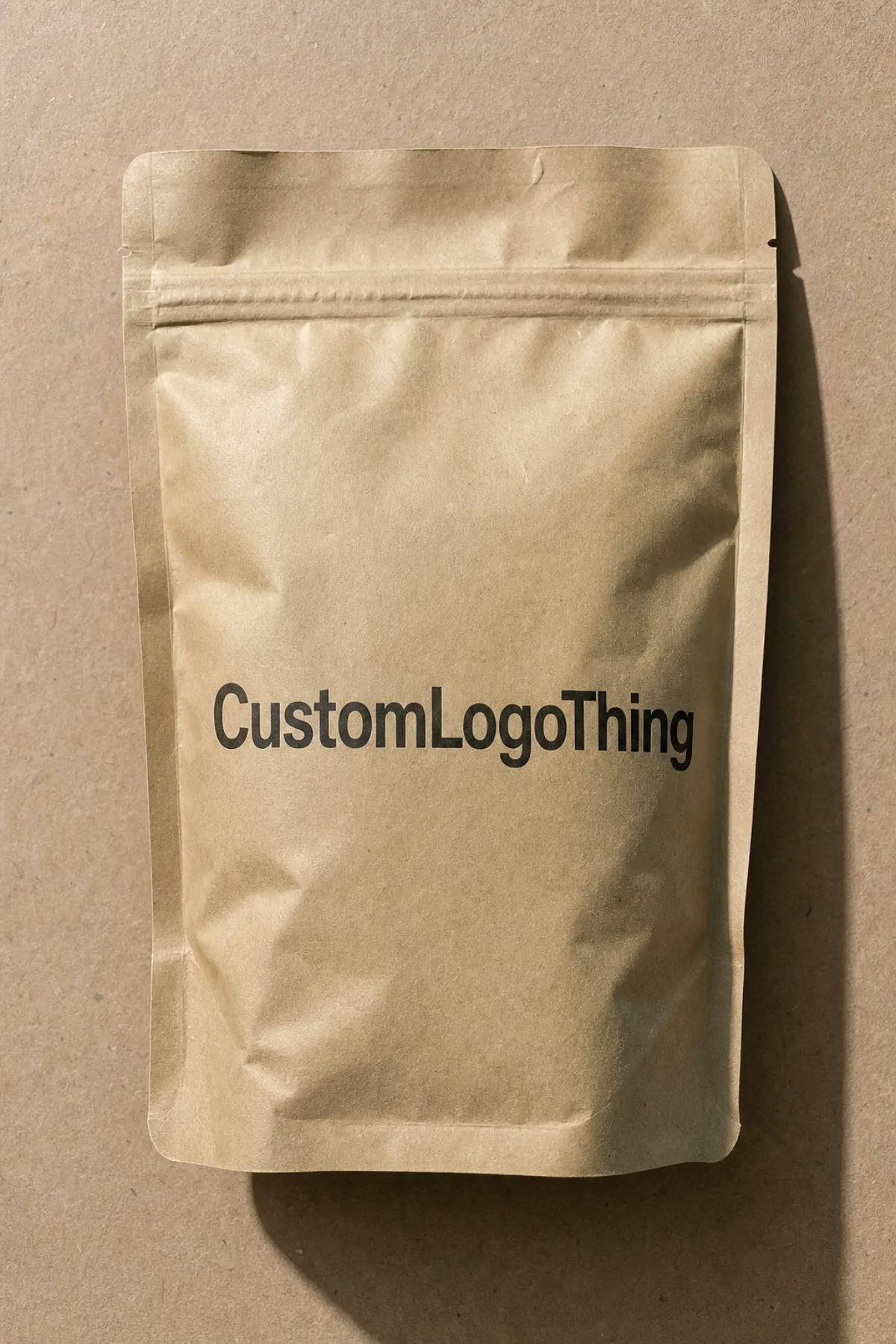
Flexible packaging earns its keep the minute freight gets involved. A pouch arrives flat before filling and usually holds far less dead air after filling than a rigid container. More units fit in a carton. More cartons fit on a pallet. More pallets fit in a truck without paying to haul air. Brands moving dried goods, coffee, powders, or lightweight goods see the difference quickly.
Bulk purchasing sharpens the math. Once artwork, structure, and size are approved, unit cost usually drops as quantity rises. That is why wholesale buying works better for repeat replenishment than for one-off experiments. Stable products deserve stable packaging. Reordering the same recyclable pouch in larger lots often lowers cost per unit, keeps inventory from running out, and gives procurement a cleaner comparison across vendors.
Storage gets overlooked until the warehouse starts filling up. Flat pouches take far less space than rigid containers, which matters for tight stockrooms, contract packers, and brands that would rather hold inventory than rent another building. Receiving gets easier too. Fewer cartons. Fewer pieces to count. Less handling. Fewer chances for someone to stack things badly and call it a process improvement.
Dry goods fit the format best: trail mix, jerky, granola, tea, seasoning, coffee, supplements, and pet treats. The same logic works for lightweight non-food items like cosmetic refills, cleaning concentrates, sample kits, craft supplies, and small hardware. The product needs protection and shelf appeal. It does not need a rigid shell just to look serious.
That is why the economics usually hold up. A pouch is not a badge. It is part of the supply chain. If it reduces freight, fits the fill line, and protects shelf life, the cost model often makes sense faster than teams expect.
For general packaging context, the Packaging School and Institute of Packaging Professionals resources are useful for checking how the industry talks about materials, recycling claims, and testing language.
"A recyclable pouch earns its place by doing the job. If it saves space, runs cleanly, and holds up in transit, the sustainability part stops sounding theoretical."
That is the whole point. The best packaging is the one that survives production, ship-out, and shelf life without creating a second problem somewhere else.
Product details: recyclable structures, finishes, and closure options
Mono-PE and mono-PP are the common recyclable pouch structures. Both reduce material complexity compared with mixed laminates, though local recycling acceptance still varies. That part is not glamorous, but it decides whether the "recyclable" claim is actually useful. Buyers should ask how the pouch is meant to enter the recycling stream and whether that stream exists where the product is sold.
Mono-PE usually brings a softer hand feel and strong sealability. It works well for food, household goods, and general retail use. Mono-PP can offer different stiffness, clearer presentation, and higher heat tolerance. Neither one wins every time. The right call depends on shelf life, product chemistry, filling method, and how the brand wants the pack to look under retail lighting that never flatters anybody.
Most buyers compare a short list of features first:
- Zipper style: press-to-close, child-resistant, or slide zipper based on the product and user experience.
- Tear notch: helps the pack open cleanly without a wrestling match.
- Hang hole: useful for peg displays and smaller retail formats.
- Finish: matte for a quieter premium look, gloss for brighter color and more pop.
- Window: lets shoppers see the product, if barrier needs still hold.
- Top seal: heat-seal closure for freshness and tamper evidence.
Barrier performance shapes the spec more than a lot of teams expect. A pantry item may only need basic moisture control. Coffee, aroma-sensitive powders, and odor-prone products need more careful protection against oxygen, moisture, and scent migration. If shelf life matters, the film build and seal quality matter too. A cheap pouch that leaks freshness is not cheap. It is expensive in the slow, annoying way that shows up later as returns, stale product, or customer complaints.
Form factor changes the buying decision as well. A flat pouch, stand-up pouch, gusseted pouch, or side-gusset design all affects how the pack fills, stacks, and shows up on shelf. Stand-up pouches are handy for retail and consumer resealability. Flat pouches make sense for sample programs, e-commerce, and products that do not need to stand upright. Manual fill lines usually favor simpler geometry. Automated lines care more about consistency, closure behavior, and whether the pouch feeds properly without a daily argument.
Testing keeps the spec honest. Seal strength, distribution resistance, and package integrity checks give buyers a way to confirm that the pouch is functional, not just recyclable in a sentence. Standards such as ASTM F88 and distribution testing practices informed by ISTA methods are useful for teams that care about how a pouch behaves in transit, not just how it looks in a render. The ISTA standards library is a solid place to start if your team wants packaging selection tied to shipping performance.
Specifications buyers should lock down before ordering
Vague specs waste time. "Something around snack size" is how quotes drift, samples get revised three times, and the final pouch no longer matches what anyone thought they ordered. Exact dimensions cost less than confusion. That is not a slogan. It is how the process actually works.
Before requesting pricing, lock down the basics: width, height, gusset depth, film thickness, and usable fill volume. Those numbers tell the supplier whether the pouch fits the product, seals properly, and holds the right weight without looking stuffed or sad. A pouch that is too small strains the seal and creates filling problems. A pouch that is too large looks underfilled and can push freight cost up for no good reason.
Artwork is part of the spec, not an afterthought. Buyers should know whether the design needs front-only printing, front and back printing, or a layout with dedicated regulatory panels. Bleed, registration tolerance, and color count all affect the final result. Fine text, gradients, and full-coverage art need more care than a simple logo. A two-color label is easy. A photo-heavy pouch asks a lot more from the print setup.
Before approving a quote, procurement teams should confirm the essentials:
- Exact pouch dimensions and target fill weight.
- Preferred material: mono-PE or mono-PP.
- Closure type: zipper, tear notch, or heat-seal only.
- Print format: front, back, both sides, or window cutout.
- Finish: matte, gloss, or mixed finish treatment.
- Barrier requirement: moisture, oxygen, or odor protection.
- Fill method: manual, semi-automatic, or automated line.
- Shipping target: cartons per pallet, e-commerce, or retail distribution.
Performance specs deserve a seat at the table too. Seal strength, puncture resistance, temperature tolerance, and line speed compatibility are not extras. They decide whether production runs clean or becomes a support ticket. If the pouch has to survive a high-speed fill line, ask how it handles heat sealing and whether the zipper or top seal affects throughput.
Packaging never lives alone. It is judged in production, on the truck, in the warehouse, and on shelf after the boxes are opened. If a supplier cannot talk through those tradeoffs without hiding behind buzzwords, the quote is not ready.
A shared comparison sheet helps a lot. Put every supplier on the same page and compare material, dimensions, finish, zipper, barrier, MOQ, lead time, freight, and sample policy. Facts beat hand-waving every time.
Wholesale recyclable pouches bulk pricing, MOQ, and quote factors
Price depends on more than quantity, but quantity still matters. Main drivers include material choice, pouch size, print complexity, barrier level, closure type, and order volume. A small unprinted pouch with a standard zipper is not the same job as a large custom-printed pouch with a specialty finish and stronger barrier film. Quoting them the same way would be nonsense.
For rough planning, stock or lightly customized recyclable pouches may land around $0.12-$0.28 per unit at volume. Custom printed recyclable pouches often sit closer to $0.18-$0.55 per unit, depending on size, structure, print coverage, and quantity. Smaller orders and more complex formats can run above that. Freight, setup, and sampling can move the landed cost more than people expect, which is annoying but not mysterious.
MOQ means minimum order quantity. It usually reflects material sourcing, setup, printing, and production efficiency. Stock formats often allow lower minimums because the supplier is not building a new structure from scratch. Fully custom work usually carries higher minimums, especially when new tooling, color matching, or special closures are involved. Ask whether the MOQ applies per size, per artwork version, or per production run. That detail saves a lot of back-and-forth later.
Here is a practical comparison buyers can use as a baseline:
| Option | Typical MOQ | Unit Price Range | Lead Time | Best For |
|---|---|---|---|---|
| Stock recyclable pouch, unprinted | 500-2,000 units | $0.12-$0.24 | 7-15 business days | Tests, small launches, short-run replenishment |
| Custom printed mono-PE pouch | 5,000-10,000 units | $0.18-$0.42 | 15-25 business days | Snack, coffee, supplement, and pet treat brands |
| Custom printed mono-PP pouch with specialty finish | 10,000+ units | $0.22-$0.55 | 20-30 business days | Premium retail, stronger shelf presence, larger programs |
The unit price is only part of the story. A quote can look fine until freight, sample fees, setup charges, plate costs, or finishing add-ons show up. Some suppliers bundle proofing and basic setup. Others break out every line. Landed cost is the number that matters, because it includes unit price, shipping, sample logistics, and one-time charges needed to get the project moving.
The cheapest quote is not automatically the best spend. A low unit price with a heavy setup fee can still work for a huge run and still be a bad fit for a moderate one. A bargain quote that comes with slow responses and fuzzy specs is not a bargain. Procurement should ask for all-in pricing, not a headline number that looks pretty for five minutes.
If the annual volume is likely to repeat, spend more time on the first quote. A steady spec pays for itself by cutting revisions, rejected samples, and emergency freight. That is where bulk buying becomes a sourcing strategy instead of a spreadsheet exercise.
Order process, timeline, and lead time for bulk pouches
A clean order process saves money. Not glamorous money. Real money. The normal flow starts with inquiry and ends with shipment, but every stage has a purpose. The brief comes first: product type, dimensions, fill weight, closure preference, print goals, and target quantity. The supplier reviews the spec, confirms structure options, and sends a quote. Once that is accepted, dieline and artwork proofing follow, then sampling or pre-production approval, then manufacturing, inspection, and shipment.
Timing matters because packaging schedules have a way of colliding with launch dates. Repeat orders move faster because the structure is already approved. First-time custom pouches take longer because there are more chances for revision. A realistic range often looks like this:
- Quote review: 1-3 business days if the spec is complete.
- Dieline and artwork proof: 2-5 business days depending on revision cycles.
- Sampling: 5-10 business days for many standard structures, longer for custom builds.
- Production: 12-25 business days for many bulk runs, depending on complexity and quantity.
- Freight: variable, but often 3-10 business days domestically and longer for international routing.
Most delays start in familiar places. Artwork approval drags. File corrections arrive late. Someone asks for a different finish after the sample is already approved. Or the team decides the zipper should change after the barrier spec is locked. Every change ripples through the schedule. Sometimes that is unavoidable. Usually it just means the internal sign-off process was too loose.
Rush orders can happen, but they often cost more and leave less room for error. If the supplier has to rearrange production, expedite materials, or compress inspection, the premium should not be a surprise. The smarter move is to lock the structure earlier and leave enough room for proofing. One earlier decision is cheaper than three urgent ones.
For teams that want to tie packaging selection to transport validation and disposal context, resources from EPA packaging and waste reduction guidance can help frame the sustainability side alongside performance. That is useful when operations, compliance, and marketing all want different answers and all want them yesterday.
Sample approval is not a checkbox. It is the point where seal quality, zipper feel, barrier expectations, and shelf appearance are tested before the full run starts. Skipping samples is a good way to turn a manageable order into a reprint headache. Strong procurement teams treat the sample as a production gate.
Why choose us for sustainable packaging supply
Custom Logo Things is built around the boring parts that matter: consistent materials, repeatable production, and direct communication. Boring is good here. Sustainable packaging only works if the supply chain can actually support it. A recyclable pouch that misses launch week is not sustainable. It is just late.
Buyers need more than a listing and a price. They need help with dielines, sample selection, barrier choices, and print limitations. They need clear guidance on whether mono-PE or mono-PP is the better fit for the product and the fill setup. They also need straight answers about what the pouch can do and what it cannot do. That honesty saves time and keeps bad decisions from turning into expensive ones.
We keep procurement documentation simple on purpose. Clear specs, direct pricing, realistic lead times, and sample support make internal approvals easier. Marketing can review branding. Operations can review fill-line fit. Procurement can compare landed cost. Everyone looks at the same facts instead of trying to decode a polished promise.
There is a sustainability angle that deserves blunt treatment. Recyclable packaging works best when the material choice, print build, and disposal path all line up. That is why we focus on structures that fit the product, not just structures that look good on a sales page. Too thin, and the pouch can fail in transit. Too heavy, and it costs more than the product can justify. The right answer usually sits somewhere in the middle, and the numbers need to support it.
For brands aligning packaging decisions with material sourcing goals, standards and certifications help keep the conversation grounded. FSC matters for paper-based components, inserts, and outer packaging programs. Testing standards matter for transport behavior. Sustainability is not a slogan. It is a chain of decisions, and every link has to hold.
What buyers tend to value most:
- Clear advice on material selection instead of generic "eco" claims.
- Realistic lead times based on production complexity.
- Support for custom artwork without turning the project into a maze.
- Sampling that reflects the final pouch instead of a near miss.
- Consistent repeat orders for replenishment and scaling.
That is what makes a supplier worth keeping. Not flashy promises. Predictable execution.
Next steps for buying wholesale recyclable pouches bulk
Before asking for a quote, gather the essentials: product dimensions, target fill weight, preferred closure, artwork files, and a realistic monthly volume estimate. If the product already exists, include the current package dimensions and the problems you want to fix, such as warehouse space, shelf presentation, or seal failures. If this is a new launch, start with product behavior. Does it bridge, clump, absorb moisture, or release odor? Those details shape the pouch spec more than brand adjectives do.
Request samples or a sample kit next. A sample should be judged on seal performance, shelf fit, fill-line compatibility, zipper feel, and how the pouch behaves after opening. Food products should be tested under real use conditions. E-commerce packs should be checked for carton efficiency and damage resistance. Retail packs should be reviewed at the actual shelf angle, not from the pleasant fantasy angle people use in presentations.
Compare at least two or three quotes on the same spec sheet. Use one comparison grid for material, size, closure, print, MOQ, freight, sample policy, and lead time. Do not compare a custom pouch against a stock pouch and pretend the price gap means something useful. The terms have to match.
Once the numbers and timing look good, approve the spec, confirm the artwork, and place the bulk order. That is the clean path. Wholesale packaging should reduce friction, not create it. For most brands, wholesale recyclable pouches bulk becomes the right choice only after the technical details are settled and the landed cost is clear.
The takeaway is simple: choose the pouch only after you have checked product behavior, line compatibility, recycling path, and landed cost. If those four pieces line up, wholesale recyclable pouches bulk can cut freight, save storage space, and support the shelf without turning procurement into a guessing game.
FAQ
What is the usual MOQ for wholesale recyclable pouches bulk orders?
MOQ changes based on pouch size, print method, and whether the format is stock or fully custom. Stock structures often allow smaller runs, while custom printing pushes the minimum up because setup and production efficiency have to pencil out. Get the MOQ in writing and confirm whether it applies per size, per artwork version, or per production run.
How do I compare quotes for recyclable pouches in bulk without missing hidden costs?
Compare the same pouch spec across every quote: material, dimensions, closure, print coverage, and quantity. Add freight, sampling, setup, and finishing fees to get the landed cost. The lowest unit price can still be the worst deal if the supplier tacks on heavy setup charges or disappears when questions come up.
Are wholesale recyclable pouches bulk orders suitable for food packaging?
Yes, if the structure matches the product's barrier and sealing needs. Dry foods, snacks, coffee, and supplements often work well when the film, seal, and closure are chosen correctly. Confirm food-contact requirements, storage conditions, and shelf life targets before approving production.
What files do you need to quote custom recyclable pouches quickly?
Send target dimensions, estimated volume, artwork files, preferred closure, and the quantity you want to order. A dieline-ready file speeds things up, but even a simple branded concept can move the quote forward. The tighter the spec sheet, the faster the supplier can confirm Pricing and Lead Time.
How long does production usually take for bulk recyclable pouches?
Lead time depends on complexity, quantity, and how fast proofs get approved. Repeat orders usually move faster than first-time custom runs because the spec is already locked. Leave room for sampling, revisions, and shipping so the order does not crash into your launch date.


