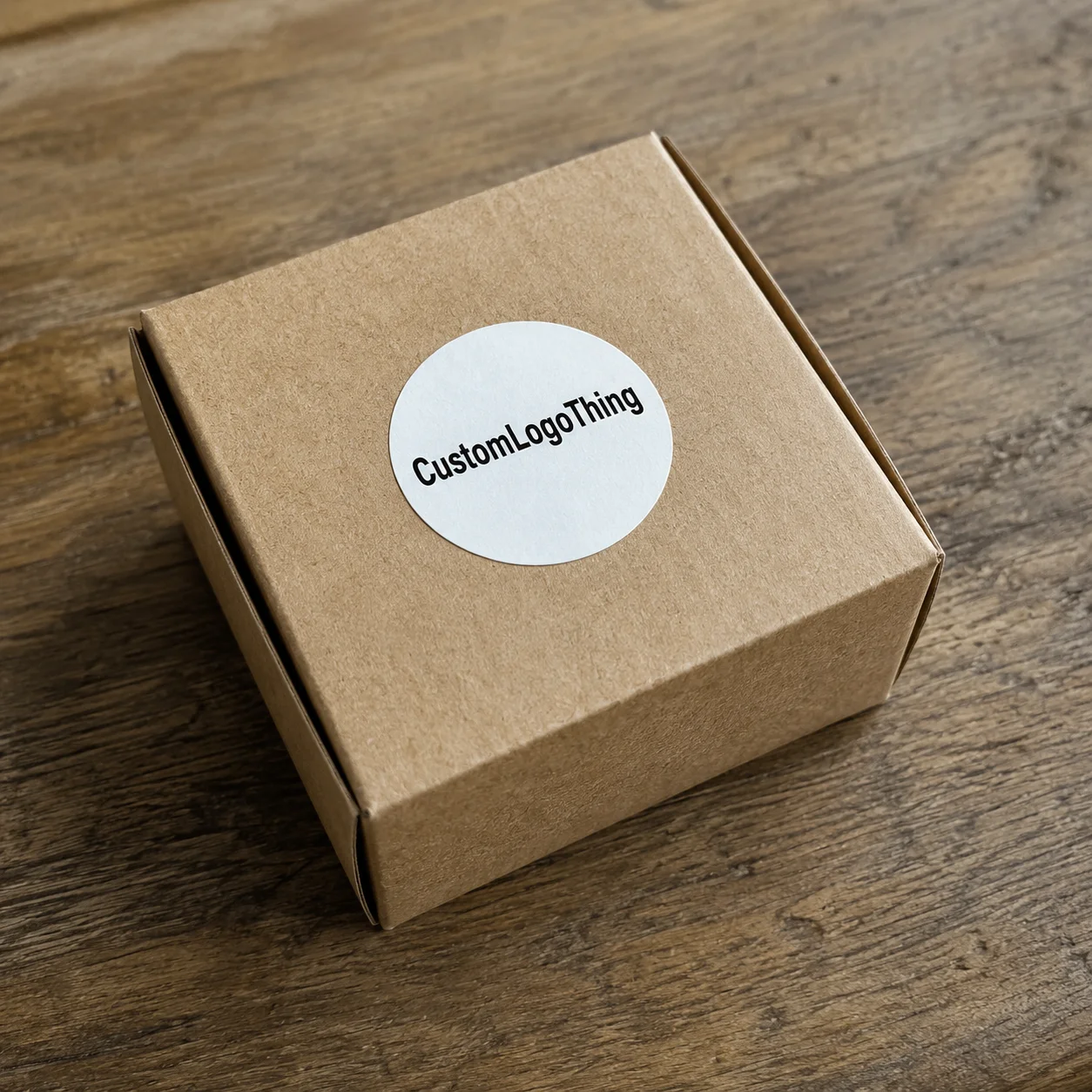
Buyer Fit Snapshot
| Best fit | Wholesale Reusable Produce Bag Packaging for Brands projects where brand print, material claims, artwork control, MOQ, and repeat-order consistency need to be specified before quoting. |
|---|---|
| Quote inputs | Share finished size, material target, print colors, finish, packing count, annual reorder estimate, ship-to region, and any compliance wording. |
| Proofing check | Approve dieline scale, logo placement, barcode or warning zones, color tolerance, closure strength, and carton packing before bulk production. |
| Main risk | Vague material claims, crowded artwork, missing packing details, or unclear freight terms can make a low unit price expensive after revisions. |
Fast answer: Wholesale Reusable Produce Bag Packaging for Brands should be specified like a repeatable production item. The safest quote records material, print method, finish, artwork proof, packing count, and reorder notes in one written spec.
Production checks before approval
Compare the actual filled-product size with the drawing, then confirm tolerance on folds, seals, hang holes, label areas, and retail display edges. Reserve space for logos, QR codes, warning copy, and material claims before decorative graphics fill the panel.
Quote comparison points
Review material grade, print process, finish, sampling route, tooling charges, carton quantity, and freight assumptions side by side. A quote is only useful when the supplier can repeat the same color, closure quality, and packing count on the next order.
Wholesale reusable produce bag packaging is the first signal a buyer gets before they ever touch the bags. That first signal matters more than most brands admit. A clean pack can lift perceived value in seconds. A weak one does the opposite, and it does it fast. A useful product starts looking bargain-bin the moment the outer presentation feels crowded, flimsy, or half-planned.
Custom Logo Things works with brands that need packaging to do real work: protect the bags, stack cleanly, move through wholesale channels without friction, and still look deliberate on a shelf or inside a shipping carton. That sounds simple. It usually isn't. Wholesale reusable produce bag packaging has to earn its keep twice, once in the warehouse and again at the point of sale.
Good wholesale reusable produce bag packaging delivers three things at once: a cleaner retail presentation, lower labor during fulfillment, and a spec that can be repeated without guesswork. That is the job. Not decoration. Not vague sustainability language. A package should justify its place in the supply chain the same way a shipping carton or shelf-ready insert does.
I have sat in packaging reviews where a buyer liked the bag but rejected the whole order because the belly band curled in humid storage. That is the kind of detail that decides whether a program feels polished or a little off. The bag may be reusable, but the packaging still has to make the first impression count.
Why Does Wholesale Reusable Produce Bag Packaging Sell?
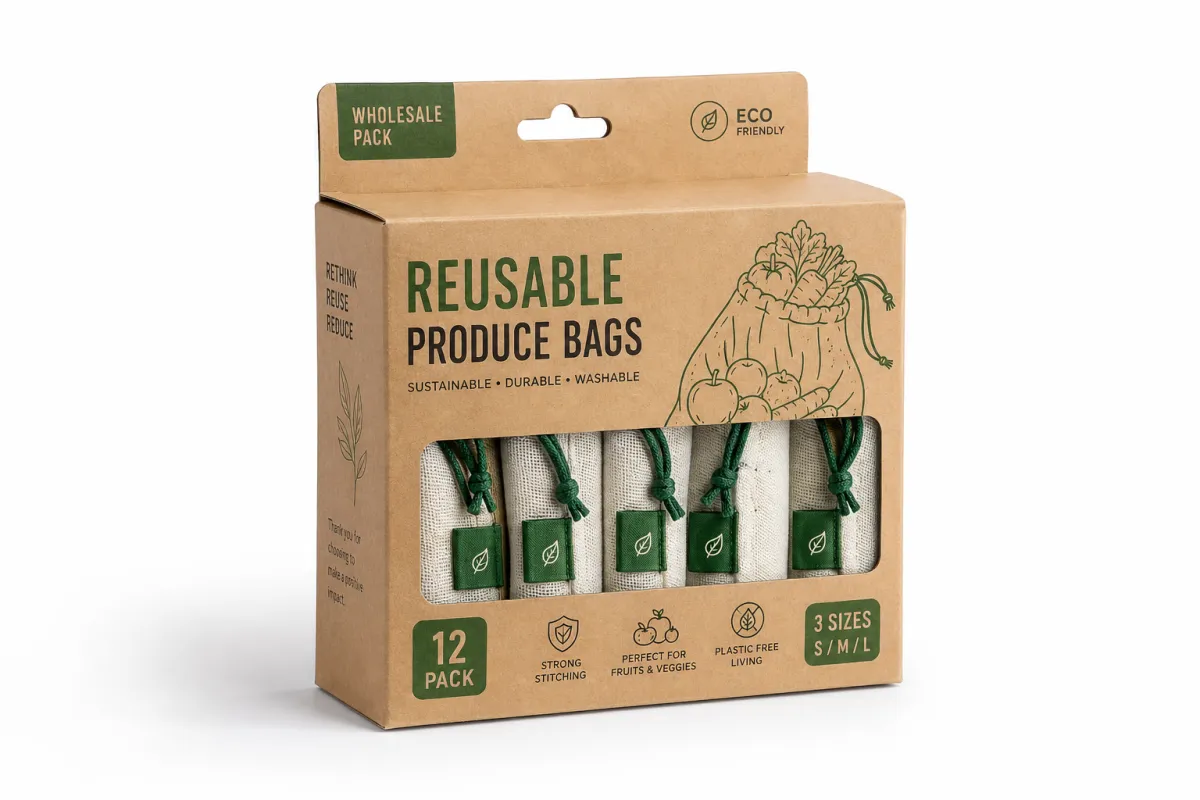
Wholesale reusable produce bag packaging sells because shoppers are not only buying a bag. They are buying the system around it. A crisp belly band, a clear hang card, a labeled carton, and a package that looks planned rather than patched together all tell the customer that the item inside was handled with care. Cheap display, cheap perception. Buyers notice faster than brands expect, and they do not always say why.
Picture a grocery buyer, a farmers market seller, or a CSA team packing weekly boxes. None of them wants a product that arrives loose, tangled, and hard to count. They want wholesale reusable produce bag packaging that stacks flat, ships in practical case counts, and can be moved by one person without slowing down the rest of the order. Labor matters. Freight space matters. Shelf impact matters too.
"The bag may be reusable, but the packaging still has to earn the first impression."
The value proposition is not a vague sustainability speech. It is tighter unit economics. Reusable produce bags can help reduce single-use waste, yes, but wholesale reusable produce bag packaging also has to protect the product in transit, support retail merchandising, and keep picking and packing labor low. If the outer pack adds time at fulfillment, the savings disappear quickly. A 12-second handling step does not sound like much until you multiply it by 1,000 units, which is 3.3 hours of labor. Multiply it again by a full seasonal reorder and the math gets annoying in a hurry.
From a buyer's point of view, the decision usually comes down to four things:
- Unit cost: What does each finished pack cost at the target quantity?
- Shelf impact: Does the package look clean enough to support the retail price?
- Freight efficiency: How many finished units fit in a carton or master case?
- Handling speed: Can staff label, count, and ship it without extra steps?
That is why wholesale reusable produce bag packaging performs best when the format is easy to understand in five seconds. A customer should be able to see the size, count, branding, and value without hunting around. Custom printed boxes are useful in many categories, but produce bags follow a different logic. Airflow, visibility, and compact packing matter more than structural flourishes.
Wholesale reusable produce bag packaging also helps brands control perception across channels. The same bag can look premium in a retail display, practical in a farmers market bin, and organized in e-commerce fulfillment if the pack style is chosen with care. That is the difference between Packaging That Works and packaging that just sits there taking up shelf inches.
There is another reason it sells: repeatability. Wholesale buyers do not want a new story every time they reorder. They want the same size, the same print placement, the same case count, and the same result. That steady, boring consistency is a feature, not a flaw.
Reusable Produce Bag Formats, Sizes, and Use Cases
Wholesale reusable produce bag packaging starts with format choice. Choose the wrong format and the rest of the project turns into damage control. Choose the Right One and the product makes sense from the first glance because the presentation matches the use case.
The most common formats are mesh produce bags, cotton drawstring bags, RPET bags, folded sets, and mixed-size kits. Mesh is the practical choice when airflow and visibility matter. Cotton feels more premium and more natural. RPET makes sense when recycled content is part of the selling story. Mixed sets work well when the buyer wants one purchase that covers several produce categories at once.
- Mesh produce bags: Best for citrus, onions, potatoes, apples, and other items where visibility and ventilation matter.
- Cotton drawstring bags: Good for premium grocery programs, wellness brands, and private-label retail packaging.
- RPET bags: Useful for recycled-content claims and brands that want a more technical sustainability story.
- Folded sets: Best for grab-and-go retail packs or e-commerce bundles that need a tidy footprint.
- Mixed-size kits: Strong fit for CSA boxes, farm stands, and promotional programs that want broader utility.
Size choice changes the buying outcome more than most people expect. Small bags work for herbs, lemons, garlic, and soft fruit. Medium bags are the workhorses for daily grocery use. Larger bags fit bulk vegetables, pantry refills, and mixed-order packs. If you sell a set, the assortment matters too. A two-bag set feels light. A four- or five-piece set can feel complete, but only if the sizes are clearly different and clearly labeled. That is where wholesale reusable produce bag packaging starts acting like a merchandising tool instead of a container.
Wholesale reusable produce bag packaging also shifts depending on the sales channel. Loose-packed bulk cartons work best for wholesale distribution and backroom handling. Belly-banded sets are easy to stack and count. Hang-tagged retail packs are better for hooks and pegs. Header cards create a stronger storefront presence. Carton-ready bulk shipments are the simplest path for buyers who repack the goods on their side.
There is no magic answer here. There is only the right fit for the selling channel. A farmers market pack needs speed and low waste. A retail pack needs visual clarity. An e-commerce pack needs efficient cube and a decent unboxing moment. Wholesale reusable produce bag packaging should support the channel, not fight it.
For brands deciding between formats, the tradeoff is usually this: the more retail-ready the pack becomes, the more cost and handling steps get added. That does not make it wrong. It just means the buyer should know what they are paying for. Pretty is not free. Labor is not free either. A package that adds 20 seconds per unit can turn into nearly 6 hours across 1,000 units. That adds up, and then some.
Materials, Print Options, and Specification Details
Wholesale reusable produce bag packaging works best when the spec sheet is boring in exactly the right way. Clear dimensions. Clear materials. Clear labeling. Clear carton counts. Nothing glamorous about that. Still, if those details are sloppy, the order gets expensive before production even starts.
Mesh, cotton, and RPET each bring a different buying story. Mesh offers airflow and visibility, which helps produce that needs to breathe. Cotton brings a softer, more premium feel and fits natural or upscale retail packaging. RPET can support recycled-content positioning, especially for brands that want package branding tied to sustainability claims without sounding forced. Those choices also shape how wholesale reusable produce bag packaging performs on shelf and in transit.
For the spec sheet, buyers should lock down the basics early:
- Bag dimensions: Length, width, and gusset if the bag has one.
- Fabric weight: Heavier cotton can sit around 120-180 gsm, while mesh and RPET vary more by weave and denier.
- Stitch quality: Reinforced seams and clean edge finishing reduce returns.
- Drawstring style: Cotton cord, polyester cord, loop closure, or ribbon tie.
- Label placement: Woven label, care tag, hang tag, or belly band.
- Carton pack count: How many finished packs per master case and how many cases per pallet.
Print and branding choices shape the final look more than buyers sometimes admit. One-color logo print is usually the cleanest and most cost-effective option. Woven labels feel more permanent. Care tags are useful if washing instructions matter. Belly bands sit in the middle because they add branding without printing on the bag itself. Hang cards work well in retail. Custom outer cartons help with warehouse handling and can make wholesale reusable produce bag packaging look far more organized on arrival.
If your design includes paperboard hang cards or belly bands, FSC certification is worth asking about. The standard matters because it gives paper sourcing more credibility than generic "eco" language ever will. See the Forest Stewardship Council at fsc.org. If the brand is serious about printed retail packaging, that paper trail belongs in the conversation.
Compliance and performance should stay on the checklist too. Washability is a real issue if the bag will be reused often. Moisture tolerance matters if the product is packed damp or stored in humid conditions. Food-contact caution matters if the bag touches unpackaged produce directly. I can talk packaging all day, but local compliance still belongs on the buyer's side of the table. Rules change by market, and the right answer in one country can be wrong in another. That is not a loophole. It is just how regulated goods work.
Wholesale reusable produce bag packaging is not just about the bag. It is about how the material, print method, and finishing pieces work together. A clean spec keeps the order repeatable. That is what separates product Packaging That Scales from product packaging that turns into a small crisis every time a reorder lands.
For buyers comparing options, one simple rule holds up: the more print locations and finishing components you add, the more you need to verify color, alignment, and packaging design before production starts. That is not a warning. It is just how wholesale production works. Get the proof right and the reorder goes smoother. Miss it, and the next batch starts with a phone call nobody wanted.
There is also a practical design truth here. If the item will be displayed near fresh produce, the graphics should stay legible from a short distance and from a slight angle. A pretty front panel that cannot be read in motion is just decoration.
Wholesale Reusable Produce Bag Packaging Pricing and MOQ
Wholesale reusable produce bag packaging pricing depends on a few predictable drivers: material, size, print coverage, packaging format, number of SKUs, and whether the order needs retail-ready finishing. Anyone giving you a fixed price without asking those questions is guessing. Maybe confidently. Still guessing.
The minimum order quantity changes with construction. Stock-style runs can start lower because the base product already exists. Custom printed wholesale runs usually make more sense around 1,000 to 5,000 units and up, depending on the material and how many finishing steps are involved. Complex sets, multiple sizes, and custom cartons usually push the floor higher.
| Packaging Option | Typical MOQ | Common Unit Price Range | Best Use |
|---|---|---|---|
| Loose-packed stock mesh bags | 250-1,000 units | $0.18-$0.42 each | Wholesale distribution, farm stands, internal fulfillment |
| Belly-banded single bags or sets | 1,000-3,000 units | $0.32-$0.78 each | Clean retail packaging with low setup complexity |
| Hang-tagged retail packs | 1,000-5,000 units | $0.48-$1.10 each | Hooks, peg displays, e-commerce resale |
| Mixed-size branded kits | 3,000-5,000+ units | $0.65-$1.40 each | Premium retail programs and curated bundles |
Those ranges are not fantasy numbers. They are the kind of ranges buyers should expect once material, print coverage, and finishing are specified. A plain mesh bag with minimal branding will sit on the lower end. A stitched cotton set with a printed belly band and custom carton will land higher. That is normal. Wholesale reusable produce bag packaging is costed by labor and components, not by wishful thinking.
Here is the clean way to compare quotes:
- Ask for unit price at the exact quantity you need.
- Ask for setup cost for print, plates, screens, or tooling.
- Ask for sample cost and whether it is credited later.
- Ask for carton count and master case count.
- Ask for landed cost, not just factory cost.
- Ask whether reorders match the original spec or need fresh setup.
That last one gets ignored too often. A cheap quote that hides freight, carton charges, or repeat setup is not cheap. It is incomplete. Buyers who compare landed cost usually make better decisions because they are looking at the real bill, not the headline number.
Wholesale reusable produce bag packaging can stay under control if the order is kept simple. Standard sizes help. One color helps. Fewer SKUs help. A single packaging format helps. If you need different bag sizes for herbs, citrus, and bulk vegetables, that is fine, but each added SKU adds complexity. Complexity costs money. It always does.
There is also a pricing tradeoff between retail-ready presentation and warehouse efficiency. Loose-packed wholesale reusable produce bag packaging is cheaper to produce and easier to ship in bulk. Hang-tagged and belly-banded packs cost more, but they also sell better on shelf. That is the actual decision. Not "good" versus "bad." Just value versus cost.
One more useful comparison: the cheapest-looking pack is not always the cheapest to run. If a low-cost format creates more counting, relabeling, or repacking work, the labor bill catches up quickly. A buyer might save 7 cents a unit and spend far more in labor. That gap is easy to miss if you only stare at the first quote. Experienced teams judge wholesale reusable produce bag packaging as a system, not as a single number on a spreadsheet.
Process, Sampling, and Production Timeline
Wholesale reusable produce bag packaging moves faster when the brief is tight. Vague briefs slow everything down. Every extra revision adds time, and every missing detail turns into a correction later. The process should be orderly enough that the buyer can actually plan inventory around it.
The clean order flow usually looks like this:
- Project brief and use case.
- Quote based on quantity, size, material, and finish.
- Spec confirmation with bag dimensions and artwork placement.
- Artwork review and file cleanup.
- Sample or pre-production proof.
- Production after approval.
- Inspection and shipping.
That sequence sounds ordinary because it is ordinary. And ordinary is good. It keeps wholesale reusable produce bag packaging from turning into a guessing game. The fastest jobs are the ones where the buyer already knows the bag size, the print method, the packaging format, and the deadline.
Timing depends on complexity, but practical ranges are easy enough to give. Quote turnaround is often 1-2 business days once the brief is clear. Sample development can take 5-10 business days. Production for simple wholesale reusable produce bag packaging is often 12-20 business days after sample approval. Shipping is separate, and it depends on whether the order moves by air or ocean.
Delays usually happen in the same places every time. Artwork is incomplete. Bag dimensions are described loosely instead of precisely. The buyer changes from loose-packed bulk to retail hang cards halfway through. Or someone decides they want a different print location after the proof has already been approved. That is not a supplier problem. That is a planning problem.
If the bags need to survive rough transit, ISTA test programs are the right language to use. See the International Safe Transit Association at ista.org. Packaging that is going into e-commerce, wholesale distribution, or palletized freight should be judged by transit reality, not by optimism. A carton that looks fine in the office may behave very differently in the back of a truck.
For brands launching seasonal promotions, plan backward from the sell date, not forward from the purchase order. Give yourself time for proofing, correction, and a second review if the artwork is complicated. Wholesale reusable produce bag packaging is not hard to produce, but it does reward buyers who respect the calendar. The ones who skip sampling usually learn the expensive version of that lesson.
One more practical note: if the order is tied to a retail reset, a farm subscription launch, or a new grocery account, leave room for one buffer week. That buffer is cheap insurance. It keeps the whole packaging program from collapsing because someone approved art a little too late.
I have seen buyers rush a pre-production proof because they were trying to hit a market launch. More than once, that rushed proof caused a later reorder to be delayed by days. The fix was small, the impact was not. A little patience up front usually costs less than a correction at the end.
Why Choose Us for Wholesale Reusable Produce Bag Packaging
Wholesale reusable produce bag packaging is one of those categories where reliability matters more than hype. Custom Logo Things focuses on clean specs, consistent quality control, clear quoting, and packaging that is built for real wholesale use. That means fewer surprises, fewer back-and-forth emails, and fewer unpleasant discoveries once production starts.
The practical advantage is simple. We help buyers avoid expensive mistakes before the run is locked. Wrong bag size? That gets caught early. Overdone Branding That Makes the pack feel crowded? That gets trimmed. Carton counts that would cause warehouse headaches? Those get adjusted before anyone starts printing. Good packaging design is mostly problem prevention. People love to skip that part until the invoice shows up.
Custom Logo Things also helps with package branding across formats. Some brands need a retail-ready look with hang tags and belly bands. Others need simpler wholesale reusable produce bag packaging that moves fast in distribution. A few need a hybrid: clean outer cartons, basic branded labeling, and a reusable bag That Feels Premium without becoming expensive. There is no prize for making the structure more complicated than the channel requires.
"We thought the bag size was the whole decision. It wasn't. The packing style and carton count changed the whole quote."
That is where practical experience saves money. Brands often compare reusable produce bags the way they compare custom printed boxes, and that leads to bad assumptions. Bags compress differently. They ship differently. They need different finishing. Wholesale reusable produce bag packaging has to respect the material and the handling flow, not copy a box program and hope for the best.
For related needs, see our Custom Packaging Products if you want to build out companion items like branded sleeves, inserts, or retail add-ons. If your business is planning recurring orders or a broader program, our Wholesale Programs page is the better place to start. The point is to make the packaging path clear before you spend on the wrong structure.
We also keep the process grounded in what wholesale buyers actually care about: stable lead times, repeatable reorders, and packaging that arrives ready to move. That does not sound flashy. Fine. Flashy does not matter much if the product misses its launch window or the carton count is off by a case and a half.
Wholesale reusable produce bag packaging should feel calm to buy. Straight specs. Real numbers. No mystery. No endless redesign cycle. That is the difference between a supplier relationship that helps the business and one that burns time.
In practice, that means we ask the annoying questions early. What size gets used most often? Will the bags be displayed on hooks, stacked on a shelf, or repacked into cartons? Is the brand trying to signal premium, natural, recycled, or practical? Those answers shape the packaging more than a pretty mockup ever will.
Next Steps for Wholesale Reusable Produce Bag Packaging
Wholesale reusable produce bag packaging gets easier once the buyer makes the core decisions upfront. Start with the format. Then lock the size. Then choose the print location. Then decide whether the order needs retail finishing or just clean bulk packing. Do that in the right order and the quote becomes a real quote, not a rough approximation.
Before requesting pricing, gather the basics:
- Dimensions: Exact bag size and set count.
- Material preference: Mesh, cotton, or RPET.
- Branding files: Logo, colors, label text, and any compliance notes.
- Packaging style: Loose packed, belly band, hang tag, or custom carton.
- Delivery deadline: The date the goods must be in hand, not the date you hope to order.
If the bags will be sold at retail, ask for a sample or pre-production proof. That step is not busywork. It is how you check print size, material feel, bag fold, and overall presentation before the full run starts. A sample costs a little. A bad production run costs a lot more. The math is not mysterious.
It also helps to compare landed cost instead of unit cost alone. Freight, carton counts, packing style, and sample charges all affect the final number. A cheaper unit price can still be the more expensive option once the whole shipment is counted. Wholesale reusable produce bag packaging should be judged as a finished system, not as a bag floating in space.
Use the same logic for reorders. Save the approved spec. Save the carton count. Save the artwork files. If the supplier cannot reproduce the original build without re-litigating every detail, the process will get slower every time. Nobody needs that.
For brands ready to move, the next step is straightforward: choose the build, confirm the quantity, request a quote, and ask for a proof before committing to the full order. That is the practical path for wholesale reusable produce bag packaging, and it is the one that keeps the project on budget.
If you are still comparing options, make the decision on paper before you make it with a purchase order. A one-page spec that covers material, dimensions, finish, carton count, and target delivery date will save more time than another round of guessing. That is the part most teams skip, and it is usually the part that costs them.
What material is best for wholesale reusable produce bag packaging?
Mesh works best when airflow and visibility matter most. Cotton fits premium or natural-positioned brands. RPET is a strong option when recycled content is part of the selling point. The best choice depends on the product mix, retail channel, and target price, not on whatever sounds nicer in a sales pitch.
What MOQ should I expect for wholesale reusable produce bag packaging?
Stock-style packaging can start lower, but custom printed orders usually need a higher minimum. A practical custom MOQ is often in the 1,000 to 5,000 unit range, sometimes higher for complex specs. More colors, more SKUs, and more finishing steps can raise the MOQ or price floor.
How long does wholesale reusable produce bag packaging take to produce?
Simple orders move faster because there is less setup and approval work. Custom samples usually come before production, and that step can add several business days. Production and freight timing depend on quantity, finishing complexity, and shipping method.
Can I customize wholesale reusable produce bag packaging with my logo?
Yes, logo branding is common on hang tags, belly bands, labels, cartons, and sometimes the bag itself. One-color branding is usually the most cost-effective option. More print locations increase cost, setup time, and approval steps.
How do I keep wholesale reusable produce bag packaging costs under control?
Use standard sizes when possible. Limit the number of colors and packaging components. Keep the order to a small number of SKUs. Ask for landed cost so freight and packaging are included in the comparison.
Wholesale reusable produce bag packaging works best when the buyer treats it like a real packaging program, not a one-off purchase. Pick the format that fits the channel, confirm the specs, check the proof, and compare landed cost before you sign off. If you do those four things, the order is far less likely to go sideways, and the reorder is far easier to repeat.