A wine club embroidered Beanies Unit Cost Review usually starts with a simple reality: the blank is rarely the cost driver. Decoration, setup, and order size do most of the work. For wineries and clubs, that matters because a clean embroidered beanie can feel retail-ready without the production overhead that comes with cut-and-sew apparel or heavily customized packaging.
Beanies also solve a practical merchandising problem. They are one-size, easy to store, useful in cold weather, and simple to slip into member shipments, tasting-room displays, or end-of-year gift bundles. The format is forgiving. A good logo on a well-made knit hat looks considered even when the run is small.
That is the lens worth using here. Not hype, not guesswork, just the production details that change the unit price and the finish quality.
Why embroidered beanies fit wine club merch orders
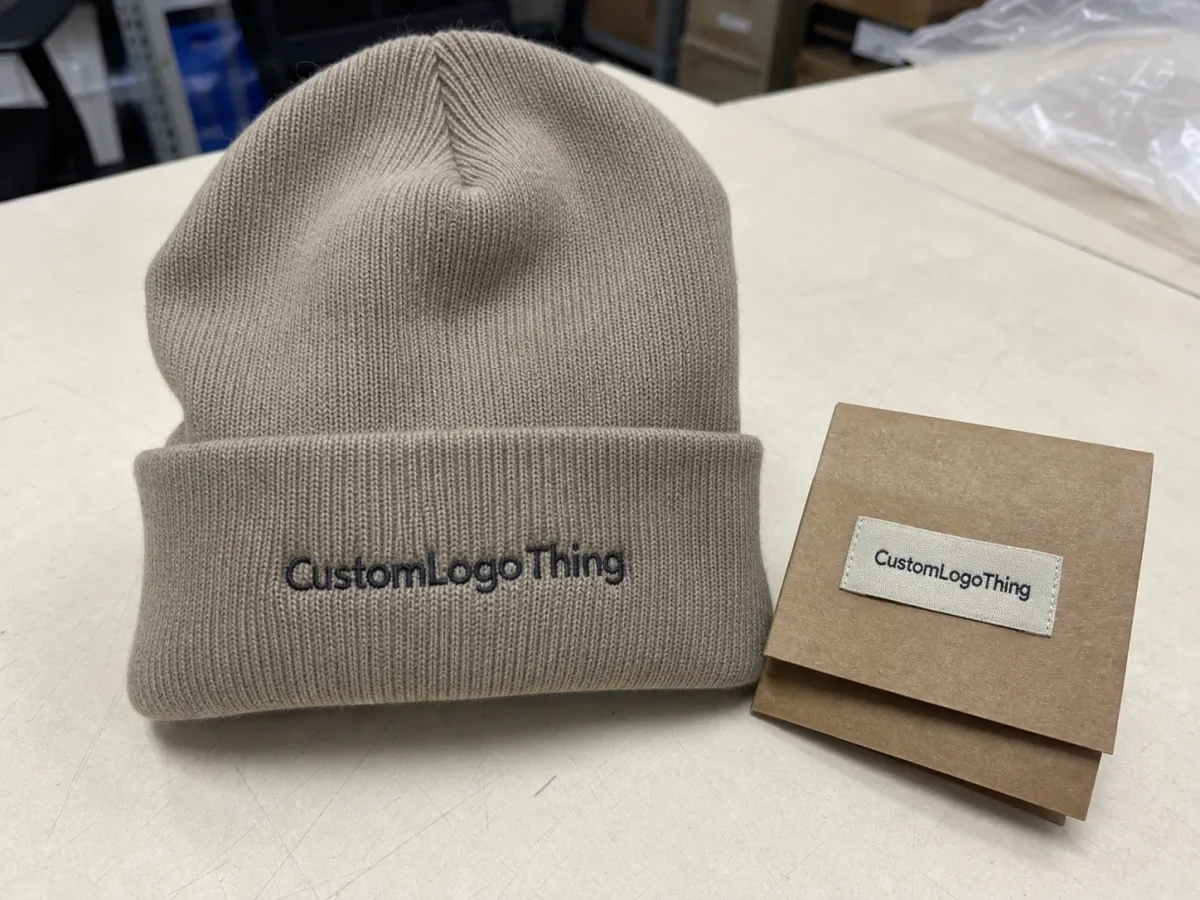
Wine club merch has a narrow job: feel useful, look credible, and survive handling. Embroidered beanies do all three better than many lower-priced items. They carry more perceived value than a printed accessory, yet the production path stays relatively straightforward. There is no fit matrix, no grading by size, and no complicated assembly sequence.
Embroidery also suits the visual language of wineries. It reads as craft without looking rustic by default. A small crest, wordmark, or monogram stitched into a cuff can feel more intentional than a full-front print, especially on a winter item that will be worn outdoors and photographed at a distance. That blend of utility and polish is why beanies show up often in club shipments and holiday sell-through programs.
Durability is another reason buyers return to them. A properly digitized embroidery file on a stable knit usually holds its shape longer than a print on soft fabric. The stitching is not immune to wear, but it tolerates repeated use, folding, and washing better than a design that sits on top of the surface.
- One-size simplicity: easier to buy, pack, and distribute than graded apparel.
- Seasonal relevance: strong fit for winter club shipments, retail shelves, and event gifting.
- Brand visibility: embroidery photographs well and stays legible in casual wear.
- Practical value: buyers receive something that feels more substantial than its blank cost.
For a buyer, that means the decision is less about whether beanies work and more about how to keep the decoration clean at the quantity available. The best programs are usually the simplest ones: stable blank, clear logo, controlled placement, and a run size that matches actual demand.
Beanie styles, yarns, and stitch choices that affect hand feel
The beanie choice shapes both the customer experience and the decoration result. Cuffed knit, slouch fit, rib knit, and heavier cold-weather styles are the most common options. Cuffed knits are the safest starting point because the cuff gives embroidery a flatter, more predictable area. That matters when the logo has lettering or a clean crest shape that needs a stable surface.
Slouch styles create a different mood. They feel more relaxed and fashion-driven, but the extra drape makes placement less uniform. If the brand wants a quieter premium look, that looseness can help. If the logo needs to sit consistently from piece to piece, the style can be trickier to control.
Ribbed knits usually strike the best middle ground. They stretch well, feel comfortable, and hold enough structure for a clear mark. That makes them a common choice for club gifts, especially when the goal is to offer something people will actually wear beyond the tasting room. Thicker cold-weather beanies bring more warmth and more visual heft, but a denser knit can soften small details once the needle starts pulling thread through the fabric.
Fiber content matters too. Acrylic remains the budget workhorse because it is consistent, easy to source, and available in a wide color range. Wool blends usually sit higher on the scale and can justify a better retail story, but they can also be less forgiving on hand feel if the blend is too coarse. Mixed yarns often give the best balance of softness, stretch, and durability. The right answer depends on whether the beanie is meant for retail resale, a member premium, or a bundled giveaway.
Knit gauge changes the finish more than many buyers expect. Tighter gauges support embroidery better because the surface is more stable and less prone to distortion. Looser knits can feel softer and more casual, but they also expose more texture under the stitches, which can blur small lettering or delicate line work. Fine detail and loose knit rarely become friends.
Placement is just as important as the blank. Center cuff embroidery remains the standard because it is easy to approve and easy to repeat. Side placement can look sharper and more understated, especially for clubs that prefer a more fashion-adjacent presentation. Larger front designs allow more branding, but they need careful digitizing so the stitch fill does not overpower the knit.
Sometimes embroidery is not the best decoration method. A woven patch or leatherette patch can be the better answer if the logo contains thin strokes, small type, or layered shapes that would collapse under direct stitching. Patches add a different texture and sometimes a slightly more premium look. They also tend to protect tiny details that would otherwise get lost in the knit. The tradeoff is that they introduce an extra material and, in some cases, extra tooling.
Artwork, placement, and spec details to lock before quoting
Accurate quoting starts with usable information. The biggest delays usually come from incomplete artwork or vague decoration instructions, not from the blank hat itself. A print-ready logo is not always embroidery-ready, and those two files are rarely interchangeable without cleanup.
Vector artwork is the safest starting point. It gives the digitizer room to build a clean stitch path and match the brand as closely as the knit allows. If the winery has approved brand colors, include them. If there are placement rules, include those too. A thread match that looks right in a PDF can drift once it is translated into yarn and stitch density.
Design complexity affects both cost and finish quality. A compact one-color mark is usually straightforward. A large multi-color emblem, especially one with small lettering or thin outlines, often needs more stitch passes and more time in digitizing. That adds labor. In some cases, the logo has to be simplified rather than forced into production as-is. That is not a compromise; it is a requirement of the medium.
"If the logo becomes too detailed for the knit, simplify the art before the first proof. Fixing it on paper is cheaper than fixing it in production."
Before any quote is finalized, the following points should be confirmed: beanie color, decoration size in inches, logo placement, quantity by style, whether the run is for retail or member gifting, and whether the order needs individual packaging. Those details change the labor profile in ways that are easy to miss from a distance.
Shipping method matters too. A pallet to a warehouse, a carton drop to a tasting room, and a split shipment into member boxes are not the same order. Packaging requirements can affect both cost and appearance. If the beanies will travel through multiple handling points, they need enough carton protection to arrive without crushed cuffs or misshapen crowns.
For clubs with strict packaging standards, shipment testing guidance can help frame the conversation. Standards from organizations such as ISTA are useful references for thinking about transit stress, carton performance, and how presentation changes after distribution.
Wine Club Embroidered Beanies Unit Cost Review: pricing and MOQ
The cleanest way to think about unit cost is to split it into five parts: blank cost, decoration cost, setup, packaging, and freight. Quantity changes the balance of those pieces more than anything else. A 50-piece run will almost always carry more overhead per item than a 250-piece run, even if the artwork never changes.
MOQ is the pressure point for many clubs. Small orders do not fail because the product is bad; they become expensive because fixed tasks like digitizing, proofing, and machine setup have to be spread over fewer pieces. That is the math behind the “small order penalty.” It is not a markup trick. It is a labor distribution problem.
These planning ranges are useful for early comparison. They are not quotes, but they are close enough to help a buyer understand where the cost tends to land.
| Option | Typical MOQ | Typical cost per piece | Notes |
|---|---|---|---|
| Basic acrylic cuffed beanie, 1-color embroidery | 50-100 pcs | $5.50-$8.50 | Strong starting point for member gifts and simple retail runs |
| Midweight rib knit, 1-2 color embroidery | 100-250 pcs | $4.75-$7.25 | Balanced hand feel and a better retail look than a basic blank |
| Wool blend beanie, larger logo | 100-250 pcs | $6.75-$10.50 | Higher perceived value, especially in tasting rooms and seasonal shelves |
| Beanie with woven patch or leatherette patch | 100-250 pcs | $7.00-$12.00 | Helpful when small logo details are too fine for direct embroidery |
| High-coverage or complex multi-color logo | 250+ pcs | $8.50-$13.50 | More digitizing time, more stitch count, more inspection effort |
Two extra costs often get missed in early budgeting. First, digitizing fees, which commonly land somewhere around $35-$85 depending on design complexity and how many files need to be prepared. Second, any specialty patch or custom trim that requires tooling, a die, or a separate production step. Those charges are small individually, but they change the landed number fast on lower quantities.
Sample pricing deserves a separate line. A sew-out proof, mockup, or pre-production sample is not the same thing as the bulk run. Buyers should ask whether those costs are credited back if the order moves forward. They should also check whether freight is included or charged separately, because a low production quote can become average once shipping and handling are added.
The lowest per-piece price is not always the best result. A club order that matches actual demand, shipping schedule, and storage capacity usually performs better than a cheap run that leaves half the inventory sitting in a back room. The most expensive beanie is often the one that gets over-ordered and discounted later.
If sustainability or packaging claims matter to the club, build those into the estimate early. FSC-certified cartons, printed inserts, and branded sleeves all affect the total. FSC certification guidance is useful for understanding what is behind paper-based packaging claims and why they sometimes carry a modest cost premium.
Process, proofing, and lead time from quote to shipment
The production path should be clear enough that the buyer can see where time is being spent. A standard workflow usually runs through inquiry, artwork review, quote approval, digital proof, production, finishing, and shipment. Most delays happen before production starts. Once the proof is signed off, the machine time is the easiest part to predict.
Lead time depends on stock availability, quantity, embroidery complexity, and whether the order needs special packing. A straightforward 100-piece run with one-color embroidery can move quickly. A larger run with multiple colors, split packs, or tiered packaging needs more time, not because the work is mysterious but because more decisions have to be locked before the first stitch.
The shop sequence is fairly methodical. The artwork is digitized if needed, thread colors are matched, a test sew-out is checked, and then production begins. After embroidery, each piece is trimmed, inspected, and packed according to the order instructions. The difference between a smooth run and a messy one usually comes down to how clean the instructions were at the start.
A realistic timing outline looks like this:
- Artwork review and quote: often 1-3 business days if the file is usable.
- Proofing: usually 1-2 business days, longer if the logo needs redraws.
- Production: often 10-15 business days after approval for standard runs.
- Finishing and freight: add several days depending on destination and carton count.
Rush work can happen, but it compresses the margin for corrections. The danger is usually not the embroidery itself; it is the approval lag. If a club changes the logo, thread, or placement after the proof has already been prepared, the calendar gets tight very quickly.
If the beanies are headed through parcel shipping rather than bulk freight, ask about carton strength, pack-out density, and whether the hats need additional compression protection. A good beanie can still arrive looking tired if it spends too much time under pressure. That kind of issue is avoidable, but only if the packing spec is treated as part of the product.
How we keep club orders consistent across reorders
Reorders are where process quality becomes visible. The most reliable method is simple: keep the digitized file, thread references, placement measurements, approval notes, and packaging instructions from the first order. If those records are complete, the next run starts from the same point instead of a new interpretation.
Color consistency deserves special care. Knit dye lots can vary slightly, and thread lots can shift as well. Even when the catalog name stays the same, the tone can move just enough to be noticeable next to an earlier batch. The best reorder workflow compares the new stock against the approved sample before production begins, not after the cartons are sealed.
Inspection should focus on the things a club member notices first: stitch tension, logo placement, clean backing, and whether the same beanie looks the same across cartons. A quarter inch of drift may not sound like much, but it shows up fast on a repeated brand mark.
Fulfillment instructions matter just as much as decoration specs. Bulk packing, carton labeling by color or tier, and notes for split shipments save labor on the receiving end. If the same order serves tasting-room retail and direct-to-member boxes, that split should be documented before production starts so no one has to sort mixed inventory later.
There is also a forecasting benefit. If a first run sold through in six weeks, the reorder can be timed before the next season instead of after the demand window has already closed. That changes the economics more than a small price difference ever will. A strong wine club embroidered beanies Unit Cost Review should therefore include not only the first order price but the repeatability of the program.
The same applies to packaging. Keep the carton count, insert spec, and label format consistent, and the reorder becomes faster to quote and easier to ship. A repeat program should feel like a repeat, not a new puzzle every time.
What to send next for an accurate quote and order plan
If the goal is a quote that reflects the real job, send the logo file, target quantity, preferred beanie style, color direction, and required in-hand date. That information gives a supplier enough to price the blank, digitizing, embroidery, packing, and freight without padding the estimate for missing details.
It also helps to define the structure of the order early. Is this one style for all members, or are there multiple colors for different tiers? A single style is easier to manage, but a split program can still work well if quantities are clear and the decoration stays consistent across versions.
Shipping destination should be stated up front. A warehouse drop, a tasting-room delivery, and a direct-to-member fulfillment job are different labor profiles. Packaging can change as much as the blank. If the order needs inserts, branded sleeves, or tier-specific packing, that needs to be visible before quoting rather than introduced after the price is already being compared.
The cleanest request for pricing usually includes the following:
- Vector logo or the best available artwork file.
- Beanie style, color, and decoration location.
- Target quantity and any MOQ concerns.
- Standard packing or custom club fulfillment instructions.
- In-hand date and ship-to destination.
The most useful quote is the one that lets a buyer compare real options side by side. Once the artwork, quantity, and packing plan are clear, the numbers stop drifting. The order becomes a production decision rather than an exercise in guesswork, which is usually what a club needs most.
What affects the unit cost of wine club embroidered beanies the most?
Quantity usually has the biggest effect because setup charges spread across more pieces. Decoration size, stitch complexity, thread count, beanie material, packaging, and freight also affect the final landed cost.
What is a realistic MOQ for embroidered beanies for a wine club?
MOQ varies by blank and decoration method, but small runs almost always cost more per piece. It helps to ask for pricing at 50, 100, and 250 pieces if the supplier can quote those tiers, then choose the level that matches actual demand.
Can a small winery logo be embroidered clearly on a beanie?
Yes, if the artwork is simple enough and sized correctly for knit fabric. Thin lines, tiny text, and gradients usually need to be simplified before stitching, and vector art gives the cleanest starting point.
How long does production usually take after approval?
Lead time starts after the proof and specs are approved. Timing depends on stock availability, decoration complexity, and order size, with standard runs often taking around 10-15 business days before freight.
Can wine clubs reorder the same embroidered beanie later?
Yes, and reorders go more smoothly when the original specs are archived. Keeping the same thread colors, placement, blank style, and packaging notes makes the second run easier to match to the first.


