Buy Stationery Woven Label Beanies Unit Cost Review
A stationery woven label beanies Unit Cost Review is mostly a spec check. The beanie body sets the base cost, but the woven label often drives the real spread between quotes. Color count, weave density, edge finish, placement, and artwork complexity can move the price more than buyers expect, especially on smaller runs.
This format keeps showing up for launch kits, seasonal merch, staff uniforms, and private-label drops because it gives a clean retail read without forcing the order into heavier decoration. For buyers who need the product to look finished and stay repeatable, that tradeoff is usually the point.
Why These Beanies Sell Cleanly
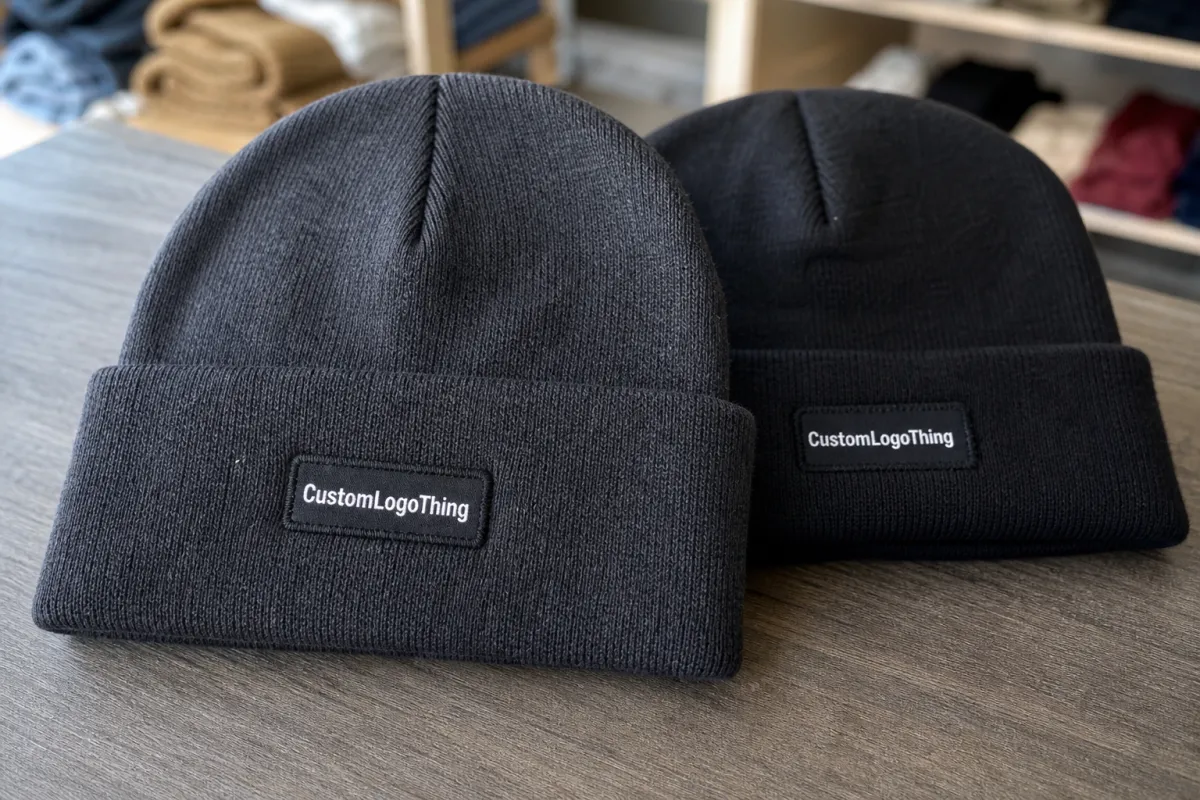
Most first-time buyers assume the beanie itself drives the price. Usually, it does not. A basic acrylic or acrylic-blend body stays fairly stable across quotes, while the woven label introduces the real variables. Tight artwork, extra colors, and unusual fold styles can move the unit cost faster than a modest yarn upgrade.
The label has to read well at a glance. A woven label on the cuff or side seam can make a plain beanie look finished, but only if the size is right and the logo survives the weave. Tiny type, thin strokes, and crowded symbols often look better on screen than on fabric, where the limits are obvious.
That is why a good quote starts with one question: how much detail can the label carry before it stops helping the product? A cleaner label usually means fewer revisions, faster approval, and fewer surprises in production.
The lowest quote is not always the lowest landed cost. A label that is hard to produce can create sampling delays, rework, and freight changes that erase the savings.
This build works best when the brand wants a tidy presentation, a repeatable spec, and a production path that does not depend on complicated decoration.
Product Details Buyers Should Lock Before Quoting
Quote requests are easier to compare when the style is already narrowed down. The difference between a folded cuff beanie, a rib-knit body, and a double-layer construction is not cosmetic. It affects knit time, yarn usage, and how the label sits once sewn.
If you want a useful price comparison, lock the body style, label position, and attachment method first. Then ask for pricing on the same spec in more than one quantity band. That is the only way to see where the breakpoints are.
The most common use cases are straightforward:
- Retail launches where the brand mark needs to look deliberate.
- Staff kits where consistent color and fit matter most.
- Promo bundles where the item needs better presentation than a giveaway.
- Event merch where speed and price have to stay aligned.
- Seasonal private-label runs where reorders should match the first batch.
Before sending a quote request, confirm five pieces of information: beanie style, cuff height, label size, label placement, and packaging format. Loose-packed, folded, banded, and retail-boxed all land differently in cost and handling. If the order includes recycled yarn, paper inserts, or FSC-related packaging claims, get that sorted early. Material claims often need documentation, not just a verbal promise.
For a quick reference point on label formats and how they affect appearance, our Custom Labels & Tags page is useful before final art is sent. If sustainability paperwork matters, buyers usually check the FSC framework first because it is familiar and widely recognized.
Specs That Change the Price
The beanie body sets the floor, but the spec stack decides how far the quote can climb. Acrylic remains the budget baseline for many orders. Wool blends cost more, but they can justify the premium if warmth, texture, or retail perception matters. Cotton blends are less common for cold-weather use, though some buyers prefer them for lighter seasonal collections. Recycled yarn adds another layer of cost and may also change minimum order expectations.
Knit gauge matters just as much as fiber choice. A tighter gauge generally looks cleaner and supports more detailed branding, yet it can increase knitting time. Single-layer construction usually costs less than double-layer, although the latter may be preferred for warmth and shape retention. The difference shows up in yarn consumption, labor, and how the beanie feels in hand.
The woven label has its own price levers. Weave density, thread count, fold type, and edge finish all affect the result. A high-density jacquard-style label reads crisply but may require more setup. A softer, looser weave can reduce cost, though it may also blur tiny text or thin outlines. Heat-cut, folded, and merrowed edges each have a different look and a different production path.
Color count is often underestimated. One or two label colors are easier to manage than four or five. Gradients are the hardest request to support because woven labels are built from threads, not ink. Micro text has the same problem. If the copy is too small to read at actual size, the label is too ambitious for the format.
There are also hidden fee lines that buyers should not ignore. Sample charges, loom or file setup, and artwork corrections may appear separately. Some suppliers bundle those costs into the unit price, while others split them out. Ask which is which so you can compare quotes honestly.
Stationery Woven Label Beanies Unit Cost: Pricing, MOQ
This is the part buyers compare line by line. The short version is simple: stationery Woven Label Beanies unit cost drops as quantity rises, but only if the spec stays disciplined. Multiple colorways, multiple logo versions, or mixed attachments can wipe out the advantage of a larger order.
For simple custom Woven Label Beanies, minimum order quantities often start around 100 to 300 pieces. Better pricing usually appears from 500 pieces and up, especially when the label spec remains fixed and the body color does not change. If the order includes multiple sizes, multiple colorways, or separate logo versions, confirm whether MOQ applies per style or across the full order.
| Quote Level | Typical Spec | MOQ Range | Sample / Setup | Typical Unit Cost |
|---|---|---|---|---|
| Lean spec | Acrylic beanie, one woven label, one to two label colors, standard cuff stitch | 100-300 pcs | $30-$60 sample, $25-$80 setup | $1.40-$2.10 at 300 pcs |
| Core retail spec | Better knit gauge, two to three label colors, folded label, clean edge finish | 300-500 pcs | $40-$75 sample, $40-$120 setup | $1.05-$1.75 at 500 pcs |
| Premium spec | Recycled yarn, denser weave, more colors, special fold or patch mount | 500-1,000+ pcs | $50-$100 sample, $60-$150 setup | $0.85-$1.45 at 1,000 pcs |
Those ranges are planning tools, not universal rules. Yarn type, label width, stitch count, finishing method, and carton packing all nudge the final number. A quote well below the range may be missing setup or freight. A quote above it may include premium fiber, tighter finishing, or simply a supplier who does not want the order.
Watch for add-ons. Packaging upgrades, rush fees, custom inserts, hangtags, and shipping can change the landed cost fast. If transit testing is part of the brief, ISTA methods are a sensible reference point for comparing shipment strength and carton abuse resistance. The ISTA standard is not decoration; it is a way to keep packaging decisions grounded.
Ask for three quote versions if possible. One should match the exact spec. One should simplify the label or attachment. One should show a larger quantity band so you can see the break in unit cost.
Quality Checks That Save Money Later
Price matters, but beanie quality failures are expensive in a different way. A low quote means very little if the label curls, the stitches pucker, or the logo reads unevenly after the first wash.
Ask for a proof at actual size. A design file on a laptop tells you almost nothing about how a woven label will read at cuff width. Check whether the label edge is flat, whether the stitching bites cleanly into the knit, and whether the logo remains legible after the beanie is folded.
Color matching deserves more attention than buyers usually give it. Pantone references help, but woven labels are subject to thread availability and loom behavior. The result can be close rather than exact. What matters is avoiding approval from a low-resolution mockup that hides the problem.
There are also physical checks worth asking for on the body itself:
- Measure cuff height and compare it across samples.
- Check rib tension so the hat does not feel loose at the edge.
- Inspect seam alignment, especially on folded or double-layer styles.
- Test the label attachment so the stitching does not distort the knit.
- Review packaging fold consistency if the product is going to retail shelves.
The most useful QC habit is simple: compare sample, pre-production approval, and bulk shipment against the same checklist.
Timeline From Artwork to Delivery
A clean order usually moves in a predictable sequence: artwork review, digital proof, sample approval, bulk production, inspection, and shipment. If one step stalls, the rest slow down.
Typical timing is fairly consistent. Proofs may take one to three business days if the artwork is ready. Sampling often takes a few more business days after approval, depending on label complexity and factory queue. Bulk production usually takes 12 to 20 business days for moderate quantities, with peak season pushing that longer. Shipping is separate.
Buyer-side delays are the common weak point:
- Unclear label size or placement.
- Logo files that are not vector-ready.
- Late changes to color or fold type.
- Vague sample feedback.
- Waiting too long to approve the final spec.
If you want the schedule to stay honest, send the vector logo, target quantity, desired placement, and deadline in the first message. Include a Pantone reference or a clear color photo if color matching matters. Packaging should be discussed early too, because retail display cartons, bulk warehouse cartons, and direct-to-consumer prep are not interchangeable.
Why Repeat Buyers Stick With This Build
Repeat buyers like woven labels because the result stays stable. If the spec is controlled, the first run and the third run can look nearly identical. That matters for seasonal brands and private-label programs where a small shift in branding can create inconsistency across channels.
The cost structure is another reason this format lasts. A woven label gives a basic beanie a retail-ready finish without forcing the product into expensive full-body decoration. Buyers who care about resale confidence, corporate gifting, or fulfillment efficiency usually prefer that balance.
There is also a handling advantage. Beanies with a small woven label are easier to fold, bundle, store, and restock than styles with oversized patches or heavy embroidery. That shows up in labor time, packing errors, and shelf presentation.
That is the practical lesson behind a stationery woven label Beanies Unit Cost Review: the smartest spec is usually the one that keeps the logo readable, the order repeatable, and the landed cost within margin.
If you are lining up beanies with other branded accessories, our Custom Labels & Tags page is a useful reference for comparing construction styles across a wider sourcing plan.
How to Request a Clean Quote
Send one message with the essentials: vector artwork, quantity bands, preferred beanie color, label placement, and deadline. Add a Pantone reference or a clear visual sample if color matching matters. If that information is scattered across several emails, the quote gets slower and less reliable.
Ask for two versions of the quote. One should match the exact build you want. The second should remove one or two cost drivers so the savings are visible. Then compare the whole landed picture: sample cost, production lead time, shipping method, and setup charges all belong in the same review.
What affects stationery woven label beanies unit cost the most?
Label size, color count, weave density, and attachment method usually affect the price more than the beanie body itself. Quantity matters too. The same spec can feel expensive at a small MOQ and reasonable once the order reaches a larger run. Packaging and rush timing can move the total as well.
What MOQ should I expect for woven label beanies?
Many factories can quote small orders, but simple specs often start around 100 to 300 pieces. Better unit pricing usually appears at 500 pieces or more, especially when the label and body spec stay fixed. If there are multiple colorways or logo versions, confirm whether MOQ is per style or across the full order.
Can I lower the quote without making the beanie look cheap?
Yes. Reduce label colors, keep one body color, and use a standard fold or stitch method. Avoid tiny details that will not read well at label size. In many cases, a cleaner label looks more premium than an overworked one.
How long do sampling and bulk production usually take?
Sampling often takes a few business days after artwork approval, depending on the label spec and factory workload. Bulk production commonly takes 12 to 20 business days for moderate quantities. Shipping time is separate, so production speed does not automatically mean quick delivery.
What should I send to get an accurate quote fast?
Send a vector logo, quantity estimate, beanie color preference, label placement, and deadline. Include any Pantone or visual references that matter for color approval. If packaging or sustainability claims are part of the brief, include those too so the supplier does not guess.


