Wine Club Folding Cartons Cost: What Buyers Should Know
wine club folding cartons cost is almost never a single clean number, and honestly, that is where a lot of buyers get tripped up. Board grade, carton geometry, print coverage, finish selection, and even the way the pack behaves on the fulfillment table all shape the final price. A quote that looks low on paper can become the expensive option later if the carton slows packing, scuffs the label, or needs a second pass after the first shipment leaves the building. For wine club programs, that is the real test. The carton has to protect glass, present well during unboxing, and do it again and again without adding extra labor for the team filling orders.
That is why buyers should treat wine club folding cartons cost as a packaging system question, not just a print quote. Mixed SKUs, seasonal bottles, and recurring mailings each pull the carton in a slightly different direction. The best answer usually sits between durability, appearance, and pack-out speed. A carton that appears inexpensive at the start can turn into a higher total cost if it creates waste, slows the line, or forces a more expensive shipper to compensate for a weaker structure.
Wine Club Folding Cartons Cost: Why the Cheapest Quote Can Backfire
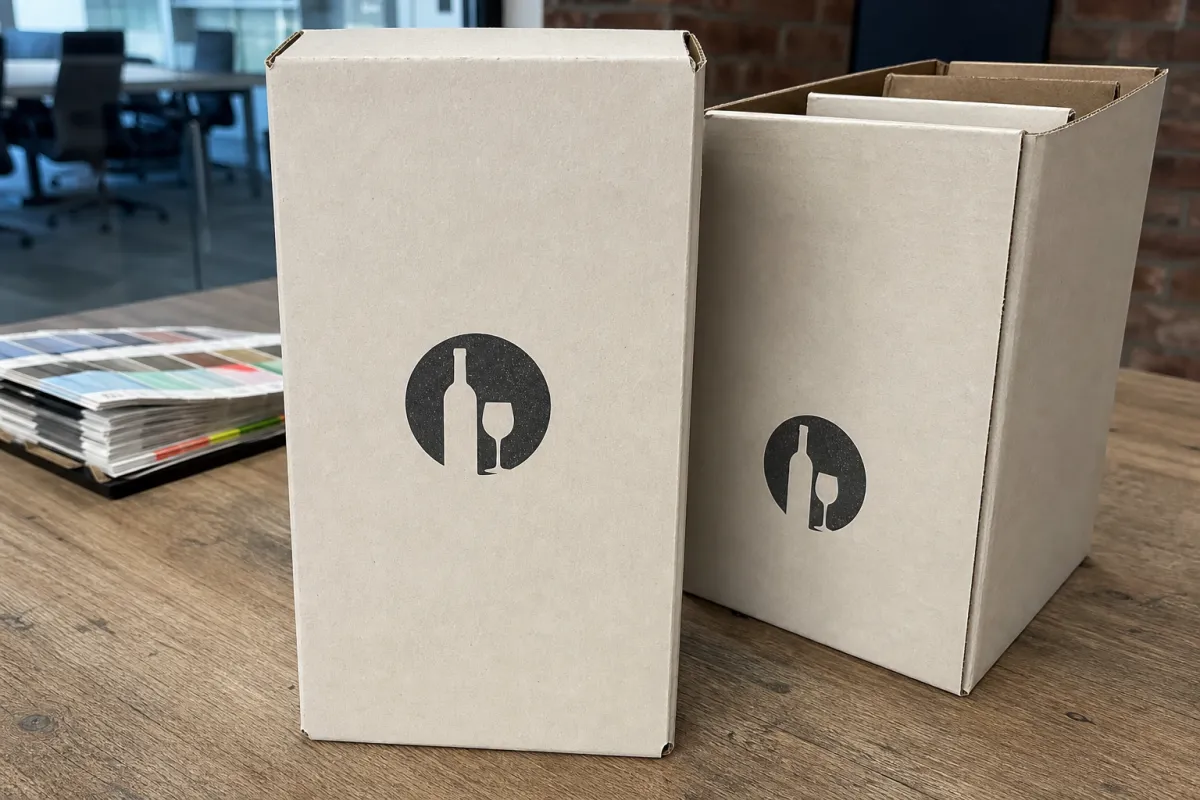
Most wine club buyers already know the difference between a fair price and a false economy. They need a carton that arrives safely, looks clean in the customer’s hands, and keeps the operation moving at a steady pace. wine club folding cartons cost gets complicated because the lowest quote often leaves out the hidden work. Thin board can crush at the corners. A loose tuck can pop open during transit. A decorative finish may look sharp in a sample yet add time at pack-out, especially when the fulfillment team is handling thousands of bottles across multiple club tiers.
The carton sits inside the customer experience, not outside it. Unboxing matters because the first impression supports retention just as much as freight protection does. A club member may never see the shipping carton, yet they will notice whether the inner pack feels premium, whether the bottle sits straight, and whether the graphics hold up from one shipment to the next. That is why wine club folding cartons cost should be weighed alongside presentation, damage rates, and labor efficiency.
Wine club buyers also live with recurring complexity. One month may call for a standard 750 ml bottle, the next a taller Burgundy shape, and the next a seasonal label with heavier ink coverage. A carton spec that looks fine on a one-off run can become a headache when multiplied across a subscription schedule. The most stable programs are the ones where the carton structure is locked early, the bottle profile is measured carefully, and the buyer knows how much flexibility the design truly has.
A carton that saves two cents but jams the pack-out table is not a saving; it is a delay with nicer graphics.
Brand perception matters here as well. Wine club members often judge the product before they ever taste it. A flimsy carton makes the entire program feel less considered. A carton that opens cleanly, protects the glass, and presents the bottle in a controlled way reads as organized and trustworthy. That is why wine club folding cartons cost should be framed as a balance of material, structure, and repeatability, not as a race to the bottom.
I have seen teams focus so hard on unit price that they miss the real cost hiding in the warehouse. One extra motion per carton does not sound like much until it repeats across a few thousand shipments. Then the savings start slipping away, kinda quietly, and nobody notices until the packing crew is backed up on a club deadline.
Wine Club Folding Cartons: Product Details That Drive Performance
Several carton styles appear again and again in wine club packaging, and each one changes wine club folding cartons cost in a different way. Tuck-end cartons are often the simplest and least expensive to produce, but they are not always the right choice for heavier bottles or for shipments that need a firmer closure. Crash-lock bottom cartons usually cost more, yet they can speed up packing and improve stability. When the bottle is unusually heavy, or when the club wants a more premium feel, the design may call for internal supports, a die-cut insert, or reinforced panels that keep the bottle from shifting inside the pack.
Material selection matters just as much as the structure. Solid bleached sulfate, often called SBS, gives a clean print surface and a polished look, especially for bright graphics and refined wine labels. Clay-coated unbleached kraft, or CUK, usually brings more stiffness and a sturdier feel for mail-order use. Caliper, density, and fiber blend all influence how the carton folds, how sharply it holds the crease, and how much pressure the panels can take before they begin to bow. For many buyers, the decision comes down to whether the carton is serving as a presentation piece, a transit-ready retail pack, or both.
Surface finish changes the equation as well. A matte aqueous coating may be enough for a restrained, clean look. Gloss can sharpen color and give the printed panels more energy. Soft-touch coating creates a velvety feel, which often works well for premium clubs, but it adds cost and can require more careful handling during packing. Foil and embossing can elevate the brand story, though they should be used with restraint; pushing those effects too far can raise wine club folding cartons cost without making the pack more functional.
The fulfillment team’s workflow should stay in the conversation from the first quote onward. A carton that folds flat, stacks neatly, and opens predictably can save minutes on every case line. Multiply that by a recurring club run and the labor savings become real. Good packaging buyers ask not only how the carton looks, but how fast it can be assembled, how it stores on the shelf, and whether it causes hand fatigue or misfolds during a heavy mailing window.
- Tuck-end cartons are often simpler and lower in unit cost.
- Crash-lock bottoms usually cost more, but can improve pack-out speed.
- Internal inserts increase stability for heavy or irregular bottles.
- Premium coatings improve presentation, but they can raise the final price.
- Board stiffness affects both protection and how the carton feels in hand.
That is why wine club folding cartons cost should never be compared as a single price without asking what is actually built into the structure. Two quotes can sit close together on paper and still deliver very different results in the warehouse.
Specifications That Shape Fit, Print, and Shelf Appeal
Good quoting starts with good measurements. Before anyone talks seriously about wine club folding cartons cost, the buyer should have bottle height, shoulder shape, base diameter, closure style, and any label protrusions ready to share. A champagne-style bottle, a long-neck Burgundy bottle, and a standard Bordeaux shape do not behave the same way inside a folding carton. A difference of a few millimeters can create loose movement, bulged panels, or a tuck flap that refuses to close cleanly.
Artwork requirements matter just as much. Printers need bleed, safe zones, color targets, and clear barcode placement. If the design carries heavy ink coverage, dark backgrounds, metallic effects, or small reversed type, the proofing stage takes more care. Every revision adds time, and time often becomes part of wine club folding cartons cost because the supplier has to account for additional checking, more proof rounds, or a more complex press setup. A clean dieline with final artwork is almost always cheaper than a vague concept that changes twice after sampling.
Structural details deserve early decisions. Window cutouts, tear strips, embossing, foil, and hand holes can all be useful, but only when they solve a real packaging need. Window cutouts show the bottle or label, yet they may weaken a panel if the carton is already carrying a heavy bottle. Tear strips can improve access, but they add converting steps. Embossing and foil can make a club pack feel special, although they raise tooling fees and make the artwork less forgiving. If the buyer wants a strong recommendation, the supplier should see the bottle and the artwork together before making the final call on wine club folding cartons cost.
Consistency across repeat shipments is another point that gets overlooked too often. If the club mails twelve times a year, the carton must perform the same way in January as it does in October. Reorders should not depend on guesswork. A clear spec sheet protects the buyer from hidden changes in board caliper, print coverage, or structural interpretation. The more complete the spec package, the lower the chance of reprint surprises, and the easier it is to hold wine club folding cartons cost within a predictable range.
From a practical buying standpoint, an accurate carton drawing pays for itself. A clean spec sheet helps the structural engineer design around the real bottle, the artwork team build the right proof, and the production crew quote the right manufacturing path the first time.
Wine Club Folding Cartons Cost, Pricing, MOQ, and Quote Factors
Price is the part everyone asks about first, so it makes sense to address it directly. wine club folding cartons cost is usually driven by five things: board grade, carton size, print coverage, finish level, and the number of unique SKUs in the run. Add inserts, special closures, or structural reinforcement, and the unit cost climbs again. The reason is simple: each added requirement either consumes more material, adds setup charges, or slows the line enough to affect output.
Tooling fees and die charges matter too. A clear production quote should show whether the cutter die, plate setup, or sampling work is included. On small orders, those setup charges can weigh heavily on the unit price because they are spread across fewer pieces. On larger orders, the same fixed costs get diluted, which is why bulk pricing usually improves as quantity rises. Buyers often focus on the headline number and miss how quickly unit cost changes when the order moves from 2,500 pieces to 10,000 pieces.
MOQ is another practical concern. Some packaging suppliers can support smaller runs, but the tradeoff is usually a higher cost per piece or a narrower set of finishing options. If the club is testing a new release or running a limited seasonal shipment, a smaller MOQ may be the right fit. If the carton is intended for a recurring monthly program, a larger MOQ often makes more sense because it balances inventory planning with better wine club folding cartons cost efficiency.
Freight and fulfillment should sit inside the same conversation. A carton that ships flat is efficient, but if the design requires extra corrugate, extra inserts, or a complex pack-out sequence, the warehouse may absorb the real cost through slower labor and higher damage rates. Buyers should ask for landed cost, not just ex-works carton pricing. That means comparing production, packaging configuration, freight, and timing as one picture. A lower carton quote can still lose if it forces a more expensive distribution plan.
| Carton Option | Typical Unit Cost at 5,000 Pieces | Best Fit | Cost Notes |
|---|---|---|---|
| 18pt SBS tuck-end | $0.18-$0.30 | Lighter bottles, strong graphics, simple presentation | Lower setup burden, but less stiffness for heavy glass |
| 24pt CUK crash-lock | $0.26-$0.42 | Heavier 750 ml bottles, faster fulfillment packing | Better rigidity and handling, usually a better transit feel |
| Carton with die-cut insert | $0.34-$0.58 | Premium clubs, unusual bottle shapes, higher retention needs | More tooling fees and assembly complexity, but better bottle control |
| Soft-touch, foil, and embossing | $0.40-$0.72 | Gift-oriented or luxury club programs | Raises print and finishing costs; best used when the premium feel is central |
Those numbers are only examples, of course, because wine club folding cartons cost depends on exact dimensions, artwork coverage, insert strategy, and how many times the buyer plans to reorder. A quote for 3,000 cartons may look very different from a quote for 20,000, even if the structure is the same, because setup charges are spread across a much smaller base at the lower quantity.
That is why every clean quote should separate the major cost buckets. A buyer should be able to see artwork preparation, tooling fees, samples, production, and freight as distinct items. If those are blended together, it becomes almost impossible to judge where the money is going or whether a lower quote is truly better. A transparent breakdown is one of the simplest ways to control wine club folding cartons cost without inviting surprises later.
For club programs that care about responsible sourcing, board selection may also need to align with chain-of-custody goals. Many buyers ask for paper sourced under FSC standards or for recycled-content options where the print and performance targets still hold. If you want a quick reference point on certification, the Forest Stewardship Council provides public information at fsc.org. That kind of sourcing decision does not replace good structure, but it can support the brand story while keeping wine club folding cartons cost grounded in a realistic material spec.
Process and Timeline for Wine Club Folding Cartons
A solid process saves money before production even begins. The usual path starts with inquiry, moves to spec gathering, structural review, dieline creation, artwork proofing, sample approval, and then full production. When each step stays in sequence, wine club folding cartons cost remains more predictable because the supplier is not forced to guess. If the bottle dimensions are incomplete or the artwork is still changing, the quote becomes a moving target and the schedule stretches out.
Delays usually show up in a few familiar places. The first is missing bottle data. The second is artwork that is not press-ready, which means the supplier has to chase font issues, image resolution, overprint settings, or color corrections. The third is a structural change after sampling. That last one gets expensive because it can send the project back through the die stage, the proof stage, and the sample stage all over again. Every reset has a cost, and that cost shows up in wine club folding cartons cost whether the buyer sees it on the invoice or in the schedule.
Timeline also depends on the run type. If the dieline is already approved and the artwork is final, production can move faster. If the carton needs a new structure or a new insert, the lead time naturally stretches. For many standard runs, a practical timeline often falls between 12 and 18 business days after final proof approval, though complex finishing or multiple SKUs can push that longer. Rush work is sometimes possible, but compressed timing usually narrows finish choices, proof depth, and the amount of sampling available before full production begins.
Sampling is not a formality. It is the point where fit, closure, fold quality, and printed appearance get checked before the main spend happens. A sample carton can reveal whether the shoulder hits the roof panel, whether the base sits too loose, or whether the closure drifts open under handling. It is also the place where a smart team compares the sample to the original goals and asks whether the design is carrying extra cost that does not add value. In that sense, sampling is one of the strongest tools for controlling wine club folding cartons cost.
If the shipment goes through a difficult distribution chain, buyers should think about transit testing as well. Packaging groups often reference ISTA procedures or ASTM-style verification to understand how a pack behaves in motion. The International Safe Transit Association keeps current resources at ista.org. A carton does not need every test in the book, but if the bottle is expensive or the route is rough, a fit-and-transit review is time well spent. That kind of discipline usually lowers reprint risk and protects wine club folding cartons cost over the life of the program.
The simple rule is easy to live by: the more the buyer defines early, the less the supplier has to assume later. Early clarity shortens proofs, reduces revisions, and keeps the project from drifting into expensive surprises.
Why Choose Us for Custom Wine Club Cartons
Many buyers want a direct answer instead of a polished sales pitch. That approach fits this category well. The goal is to help you choose a carton structure, Board Grade, and Print method that hold up in the warehouse and still look good when the customer opens the box. Practical guidance like that often lowers wine club folding cartons cost because it avoids overbuilding the pack just to feel safe on paper.
Experienced packaging support matters because small mistakes become expensive quickly. A weak closure can create a rework problem. A carton that is too tight can slow the fill line. A carton that is too loose can put the bottle at risk in transit. Catching those issues before production starts is where a good packaging partner earns trust. The right spec does not just look right on screen; it works in the hands of the people actually assembling the club shipment.
Repeat orders deserve special attention. Many wine club programs need the same pack month after month, and consistency becomes part of the brand promise. If the first run is excellent but the reorder shifts in board feel, print quality, or cut accuracy, the customer notices. Stable quality control protects the buyer from that kind of drift and keeps wine club folding cartons cost from creeping upward because of corrections or rejected lots.
Clear communication adds real value. Finance teams usually want a clean budget. Operations teams want a carton that moves quickly. Marketing teams want it to look premium without draining the budget. A straightforward recommendation helps all three groups compare the options without wading through unnecessary complexity. That is especially useful on projects where MOQ, tool charges, and finishing options all end up in the same meeting.
Good packaging advice should also protect margin. A carton that uses the right board, the right structure, and just enough finishing can often outperform a more elaborate concept that costs more but does not improve the actual customer experience. In practice, the best spec is the one that supports the bottle, the brand, and the reorder plan at the same time. That is the most reliable way to hold down wine club folding cartons cost without sacrificing the presentation the club member expects.
- Keep the structure simple unless the bottle truly needs added retention.
- Choose board that matches the bottle weight and shipping route.
- Use premium finishing only where the brand can feel the difference.
- Lock artwork early so proofs do not create extra revisions.
- Plan reorders around the actual club schedule, not an optimistic guess.
Next Steps to Quote Wine Club Folding Cartons Confidently
If you want a quote that reflects reality, gather three things first: bottle dimensions, expected annual or per-run quantity, and the ship-to destination. Those three inputs do a lot of the heavy lifting because they tell the supplier how the carton must fit, how the pricing should be structured, and how the freight should be estimated. Without them, wine club folding cartons cost turns into a rough guess instead of a useful budget number.
Whenever possible, send a physical sample bottle. Measurements matter, but a real sample often reveals a shoulder shape, label bulge, or closure profile that a dimension sheet does not fully capture. A sample also helps the packaging team judge how much clearance the carton needs and whether a standard structure will work or whether a custom insert is the smarter move. That simple step can prevent a reprint and keep wine club folding cartons cost under control.
It also helps to compare at least two structures or board options. One may be a straightforward tuck-end carton, while another may be a crash-lock bottom with a cleaner pack-out flow. Sometimes the simpler option performs just as well and cuts the unit price. Other times the slightly better-built option saves money by reducing damage or speeding fulfillment. The point is not to buy the cheapest carton; it is to buy the carton that fits the program at the lowest workable total cost.
Before approving production, ask the fulfillment team to review sample photos or the actual sample itself. The people packing the order often see issues that buyers and designers miss. They know whether the carton is fussy to assemble, whether it stacks badly, and whether the closure is likely to open under pressure. Their feedback is one of the best ways to stabilize wine club folding cartons cost across repeat runs.
When the spec is precise, the schedule is realistic, and the quote is built on the final bottle profile, wine club folding cartons cost becomes much easier to manage. That is the real path to a dependable club program: lock the structure, confirm the print method, compare the quote apples to apples, and place the order only after the carton is proven against the bottle it will carry.
For buyers who want to keep the process clean, the smartest move is to request pricing after the carton structure, finish level, and ordering volume are locked. That is the point where wine club folding cartons cost can be read honestly, compared fairly, and approved with fewer surprises later.
One last practical takeaway: if a carton looks attractive but does not pack fast, protect the bottle well, and reorder consistently, it is not really a better carton. The spec should do three jobs at once - fit the bottle, support the brand, and hold the line on total cost. If it does those three things, you are in good shape.
What affects wine club folding cartons cost the most?
Board grade and thickness usually have the biggest impact, followed by carton size, print coverage, and any special finish. Insert complexity, window cutouts, and structural reinforcement can raise both material and setup costs. Order volume matters because setup and tooling are spread across the run, which changes the unit price quickly. In many cases, those three factors together explain most of the difference in wine club folding cartons cost.
What MOQ should I expect for wine club folding cartons?
MOQ depends on structure, print method, and finishing requirements, so it is best treated as a quote-by-spec question. Higher-complexity cartons often need a larger minimum to keep pricing efficient and production stable. If you need a smaller run, ask for the cleanest structure that still protects the bottle and keeps the print simple. That usually gives you the best balance between flexibility and wine club folding cartons cost.
How do I compare wine club folding cartons quotes fairly?
Make sure every quote uses the same bottle dimensions, board grade, finish, insert count, and quantity. Ask whether tooling, proofing, and freight are included so you are comparing total cost, not partial pricing. Check whether the quote reflects the final artwork coverage, because changing the print area can shift the price. A fair comparison is the fastest way to understand true wine club folding cartons cost.
How long does the process usually take?
Timeline depends on how quickly the dieline is approved and whether the artwork is ready for press. Sampling and fit approval can add time, but they also reduce the risk of costly production mistakes. Once everything is approved, production moves much faster when the spec is locked and the reorder plan is clear. For most buyers, schedule discipline is one of the easiest ways to protect wine club folding cartons cost.
Can one carton design work for multiple wine club SKUs?
Sometimes a shared structure works if the bottle shapes are close and the internal fit can be controlled. If the SKUs vary too much, one universal carton can increase movement, weaken presentation, or force extra inserts. A better approach may be a common print family with small structural adjustments for each bottle profile. That approach often gives better performance while keeping wine club folding cartons cost more predictable across the line.