A wine club order can look polished on the packing bench and still come apart in transit if the film is too thin, the seal is weak, or the load is shaped wrong for the mailer. The wine club Poly Mailers Material guide matters before a single proof is approved, because the bag is not just a wrapper, it is part of the shipping system. Buyers are deciding how the product moves, how it prints, how the team packs it, and how much risk the warehouse carries. I have seen plenty of well-designed mailers fail for one simple reason: the spec was written for the sample table, not for the actual route.
Wine Club Poly Mailers Material Guide: Why the Right Film Matters
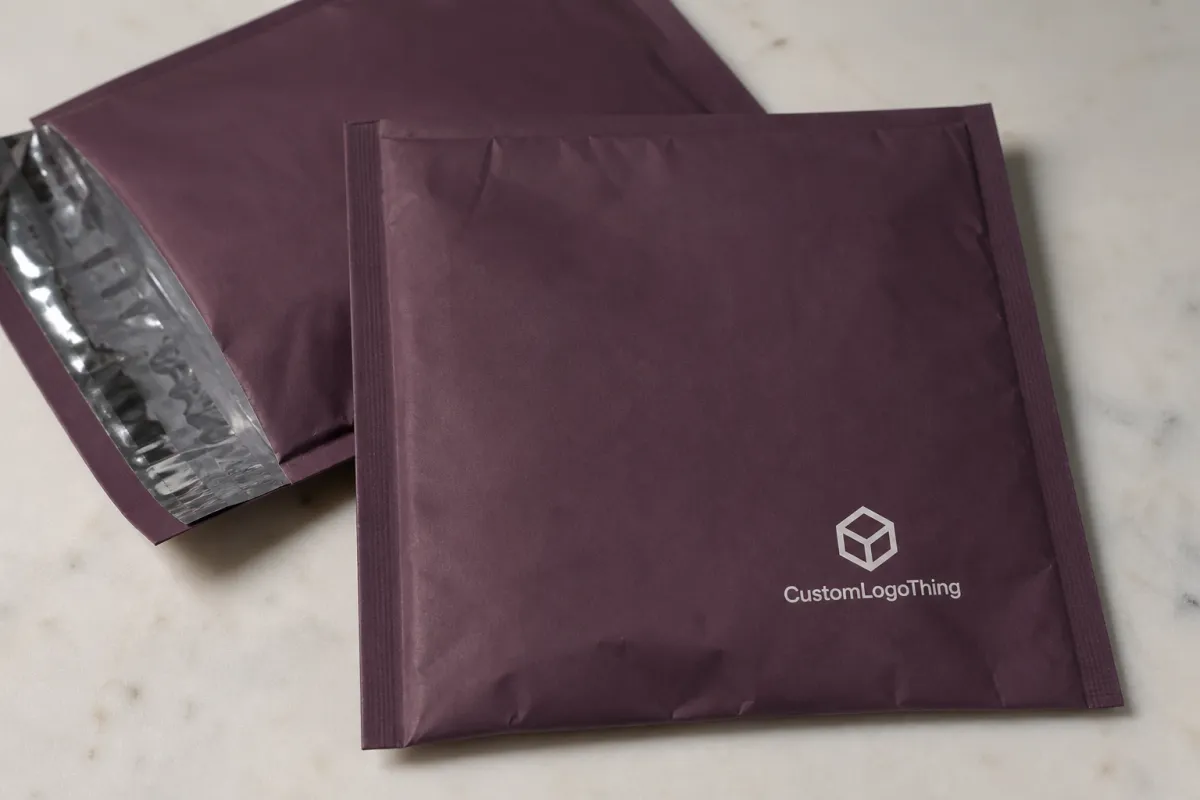
The Wine Club Poly Mailers material guide starts with a floor-level reality: a mailer that feels solid in your hand can still split, stretch, or scuff once it is packed, stacked, and pushed through a carrier network. Bottle-shaped loads change the rules. They create point pressure at corners, stress at seals, and abrasion where labels or closures rub against the film. The wine club Poly Mailers Material guide is not about choosing the nicest-looking bag; it is about matching film structure to the shipment that will actually move.
Wine clubs use poly mailers in a few different ways. Some send small bottle assortments with a slim profile and a protective insert. Others use them for membership kits, tasting notes, replenishment items, and branded outer packaging that travels with a rigid protector. The wine club poly mailers material guide separates those use cases because not every club needs the same film. A light promotional packet may do well in a flexible LDPE mailer, while a heavier bottle load may need co-extruded film, a stronger seam, or a different format entirely.
The common material choices are LDPE, co-extruded film, recycled-content blends, and opaque film. LDPE stays popular because it is flexible, seals well, and can be produced in a wide range of gauges. Co-extruded film layers can improve puncture resistance and give the mailer a more balanced feel. Recycled-content blends can reduce virgin plastic use while still supporting everyday packing needs, provided the formulation is designed correctly. Opaque film works well when privacy, shelf presentation, or better concealment of the contents matters.
The expectation around the package has to stay grounded too. The wine club poly mailers material guide is really a package system guide. Film, width, closure type, print method, and pack-out flow all work together. If any one piece misses the mark, the whole experience suffers. Beautiful print on a weak film does not help if the seam opens. Heavy-duty film does not help if the opening is too narrow for the insert and workers start forcing product in at speed. That kind of mismatch is where teams end up paying twice, once for the material and again for the rework.
Some wine club programs are strong candidates for poly mailers, and some are not. A flat, lightweight shipment with a sleeve, literature, or a compact bottle pack can be a good fit. A heavier glass program, a multi-bottle club with sharp edges, or a lane with rough carrier handling may still belong in corrugated cardboard with molded pulp or corrugated dividers. If the order leans toward higher weight, more glass, or a longer transit lane, the wine club poly mailers material guide should be read with caution, not optimism. That is the honest answer, even if it is not the most exciting one.
How Wine Club Poly Mailers Work in Packing and Transit
The wine club poly mailers material guide gets practical once you look at how the bag is built. Most mailers use one or more film layers, a seam at the bottom or sides, and a closure that may be an adhesive strip, zipper-style lock, or fold-over seal. Each choice changes how the mailer behaves under stress. A thin single-layer bag may save cost, but it can telegraph every hard edge inside. A multi-layer structure can spread stress better and hold up against puncture where bottle caps, insert corners, or rigid accessories push outward.
Transit is messy. Mailers slide on conveyors, get compressed in totes, rub against adjacent parcels, and sit through temperature swings that affect film stiffness. In a cool warehouse, a mailer can feel a little firmer. In a hot trailer, the same film may relax and stretch more than expected. The wine club poly mailers material guide should not rely on a bench test alone. Empty bag samples tell you something, but not enough. The real question is what the filled load does after sorting, stacking, and a few sharp handling events.
Dimensions matter as much as thickness. If the mailer is too tight, the load creates pressure points at corners and seals. If it is too loose, the product shifts, which increases abrasion and makes the package feel less controlled. The best spec usually gives the product a flat, clean profile with just enough room for literature, tasting cards, or an insert sleeve. When a club includes a corkscrew, promo card, or membership booklet, those extras can change the pressure map inside the bag more than people expect. I have watched a seemingly minor card insert turn into the thing that pushed a seal over the edge.
A mailer that only works when it is empty is not the right spec. The real test is whether the loaded package stays closed, stays flat, and survives the carrier path without bruising the contents.
Closure selection can quietly make or break fulfillment speed. An adhesive strip is fast and common, but the adhesive has to be positioned cleanly and stay reliable if the pack line is moving fast. A zipper or resealable style can help with returns or recurring club kits, though it may slow pack-out if workers must double-check the closure. A fold-over seal can be simple, but only if the bag width and film stiffness are right. If the closure creates a ridge or catch point, the bag may open under sorting or fail when stacked.
Secondary protection is often the smart answer, even when the outer mailer looks strong on paper. A sleeve, internal wrap, divider, or light corrugated cardboard insert can reduce rub damage and keep the load centered. For some clubs, kraft paper cushioning works well when the contents are low-profile and the film is opaque enough to hide the internal structure. The wine club poly mailers material guide should compare the whole system, not just the outer skin. A few cents spent on an insert can save a lot more in replacement shipments and customer frustration.
If you want a testing benchmark for distribution abuse, the ISTA procedures are a solid place to start. They help teams think about compression, vibration, and drop events in a way that is closer to reality than a quick hand squeeze. For packaging material context and recovery thinking, packaging.org is also a helpful reference point, especially if your team is comparing material formats across multiple product lines.
Material Factors in the Wine Club Poly Mailers Material Guide
Gauge, or mil thickness, is the first number buyers usually ask about, and for good reason. A thicker film often feels safer, but thicker is not automatically better. If the film gets too stiff, it can be harder to pack, harder to seal cleanly, and heavier than it needs to be. The wine club poly mailers material guide should balance flexibility with durability. For a light club packet, a lower gauge may work. For a loaded bottle shipper or a film that sees rough sortation, a stronger gauge or layered structure usually earns its keep.
Puncture resistance, tear behavior, and seam strength are different things, and they do not always rise together. A film may resist puncture well but tear quickly once a cut starts. Another may stretch nicely but have a weak seal line. Bottle corners, cap edges, closures, and accessory boxes create very different failure points than flat apparel or paper goods. The wine club poly mailers material guide should ask for more than a generic "heavy-duty" claim. Ask what the film does at the seam, what it does around a hard edge, and how it behaves after a short vibration cycle.
Finish changes the customer experience too. Glossy film can look bright and premium, but it can also show scuffs more easily. Matte film often hides handling marks better and can feel more restrained and upscale. Opaque white gives strong print contrast and privacy, while tinted film can create a subtle brand color without fully committing to a custom printed surface. The right finish depends on how the package will be seen at first glance, how much ink coverage is needed, and whether the bag should hide the contents from view.
Printing matters here as well. Recycled-content films can still support crisp graphics if the surface treatment is correct and the ink system is matched to the film. That matters for brands that want a cleaner sustainability story without giving up presentation. A lot of buyers hear "recycled materials" and assume the film will print poorly or look rough. That is not always true. If the resin blend is engineered well, the mailer can look polished and still use post-consumer waste in the structure.
Sustainability deserves a careful, practical conversation. Source reduction, recycled content, and right-sizing usually do more real work than a vague green claim. If the program also uses corrugated cardboard inserts or kraft paper sleeves, those pieces may be easier to recover or recycle than the film itself, depending on local systems. Some teams ask about biodegradable packaging, but a poly mailer should not be described loosely or wishfully. A standard polyethylene film is not biodegradable in the compostable sense, and if the business goal is lower impact, a tighter spec with less material and more recycled content can be the cleaner move.
For brands that need paper-based alternatives in some lanes, FSC certified paper components can support a better sourcing story, especially for inserts, literature, or outer cartons. The point is not to force one material into every role. It is to Choose the Right material for the job and back up the claim with real performance data. That is the standard the wine club poly mailers material guide should hold. If a supplier cannot explain the difference between a marketing claim and a tested property, keep asking until the answer gets real.
| Material Type | Typical Gauge | Feel and Print | Protection Profile | Typical Unit Cost at 5,000 Pieces |
|---|---|---|---|---|
| Standard LDPE | 2.5-3 mil | Flexible, smooth, easy to print | Good for light, flat loads | $0.14-$0.22 |
| Co-extruded film | 3-4 mil | Balanced feel, stronger surface control | Better puncture resistance and seam stability | $0.18-$0.30 |
| Recycled-content blend | 3-4 mil | Can print well if the blend is tuned | Good when matched to the right load | $0.20-$0.34 |
| Opaque or matte film | 3-4 mil | Premium look, scuff-hiding surface | Solid everyday protection with privacy | $0.22-$0.38 |
These ranges are not a quote. They are a useful buying frame. The wine club poly mailers material guide works best when the team asks suppliers to compare the same size, the same print coverage, the same closure position, and the same delivery destination. Otherwise, one quote may be for a light stock film while another includes a thicker custom build with heavier ink coverage and a better seam.
Process and Lead Time: Step-by-Step Material Selection
The most efficient way to use the wine club poly mailers material guide is to start with the packed product, not the mailer. Measure the filled bottle size, confirm whether the load includes inserts or accessories, and note whether the shipment is going out as a single piece, a two-pack, or a small club set. A 750 ml bottle wrapped with a literature card is very different from a slimmer promotional packet or a multi-item renewal kit. If the filled profile is not clear, the spec will drift before production even starts.
From there, narrow the field by protection, appearance, closure, and print method. Some clubs need a matte finish for a more restrained premium look. Others want an opaque white or black film so the contents stay hidden and the branding reads clean from a distance. If recycled materials are part of the brief, make sure the supplier can explain exactly how that blend performs, because "eco" is not a spec. The wine club poly mailers material guide should ask for the concrete details: gauge, resin mix, seal area, print surface, and whether the bag will use a single or multi-layer structure.
Samples matter more than sales language. Ask for two or three versions, preferably with different gauges or finishes, and pack them with real product. Empty samples can hide a lot. A loaded sample will show whether the opening is wide enough, whether the seal closes without forcing, whether the outer surface scuffs under handling, and whether any insert corners press against the seam. If the club uses Custom Poly Mailers as part of a larger kit, test the whole kit together rather than piece by piece.
Proofing should cover more than artwork placement. Check seam location, adhesive strip position, zipper alignment if applicable, and how the branding sits when the bag is folded or stacked. A logo that looks centered in a flat proof may drift once the mailer is filled. The wine club poly mailers material guide works best when the proof is evaluated in pack-out form, not as a flat graphic alone. That matters especially if the artwork sits near the seal zone or if the mailer needs barcode space, shipping labels, or compliance copy.
Lead time usually depends on the art setup, the film choice, and the order size. Simple stock or lightly customized runs may move in a shorter window, while fully printed mailers with special finishes or recycled-content requirements often need more room for film sourcing, proof review, and production. A common planning range is 12-15 business days after proof approval for a straightforward custom run, but that can stretch if the bag size is unusual, the print has multiple colors, or freight needs to be booked around a fixed fulfillment calendar. The wine club poly mailers material guide should include the full timeline, not just the press time, because the slow step is often not the print run at all.
One practical habit saves a lot of trouble: write a one-page spec before ordering. Put the bottle dimensions, fill weight, closure type, print needs, shipping method, and target order quantity in one place. Then send that same sheet to every supplier. If the program also buys cartons, inserts, or branded outer kits, keep those details under the umbrella of Custom Packaging Products so the whole package stack stays aligned.
Cost, Pricing, MOQ, and Unit Cost for Wine Club Orders
Pricing in the wine club poly mailers material guide is usually driven by film type, gauge, bag size, print coverage, and any added features like matte finish, recycled-content blend, or a special closure. A plain unprinted mailer with a moderate gauge will sit at the lower end. Add full-color branding, a larger format, or a premium surface, and the number moves quickly. The most useful way to compare quotes is to focus on the same spec, because a lower quote can hide a smaller bag, lighter film, or less print coverage.
MOQ affects more than unit price. It changes cash flow, storage, reorder timing, and how much variation a wine club can tolerate across different tiers. If your monthly volume is modest, a high minimum can tie up room and money in inventory. If your program is steady, a larger MOQ may reduce the unit rate enough to justify the space. The wine club poly mailers material guide should ask whether one standard mailer can serve multiple club levels, because a single well-chosen size often simplifies pack-out better than three nearly identical variants.
Real landed cost matters more than the quote sheet. Freight can erase a small unit-price advantage, especially if the bags are bulky or need multiple pallet moves. Waste and rework matter too. A mailer that tears at the pack line, slows the team, or causes higher damage claims can become the most expensive option in the room. The wine club poly mailers material guide should include labor, packing speed, and defect risk alongside the product price. A bag that is a few cents higher but saves ten seconds per pack can pay for itself quickly in a busy fulfillment line. That is not theory; it shows up in the daily rhythm of the warehouse.
The table below is a simple way to think about cost and use. It is not a quote, and it should not replace a supplier spec sheet. It is a buying lens.
| Option | Best Fit | Pros | Trade-Offs | Typical Buying Signal |
|---|---|---|---|---|
| Standard LDPE | Light club packets and flat inserts | Lowest cost, flexible, easy to handle | Less margin for rough handling | Use only if load is light and flat |
| Co-extruded film | Regular bottle-shaped loads | Better puncture resistance, stronger feel | Higher price than basic film | Good middle ground for most clubs |
| Recycled-content blend | Brands with recycled materials goals | Better sustainability story, often good performance | Needs testing to confirm seal and print quality | Ask for resin mix and performance data |
| Opaque matte printed | Premium membership kits | Strong branding, hides scuffs and contents | Usually the highest unit cost | Worth it when presentation drives retention |
There is also a hidden cost in consistency. If the mailer is hard to load, the warehouse team slows down. If the seal zone is finicky, the risk of mispacks rises. If the dimensions are awkward, cartons or shelves may not fit efficiently. The wine club poly mailers material guide should make room for those operational realities instead of pretending the cheapest film is automatically the smartest buy.
Common Mistakes When Choosing Wine Club Poly Mailers
One of the biggest mistakes is choosing a film because it looks premium on the sample desk. The wine club poly mailers material guide has to hold up in transit, not just in a sales meeting. A glossy bag may photograph well, but if the gauge is too light or the seam is narrow, the package can tear once it is under load. Buyers often see the finish first and the failure mode later. That order of events is expensive.
Another common miss is ignoring temperature, humidity, and surface abrasion. A package can ride through a warm dock, then cool down in a trailer, and the film response changes enough to matter. Labels can scuff. Seals can loosen. Condensation can create slip between layers. If the wine club poly mailers material guide does not account for those transitions, the test data will look optimistic and the real operation will not. That is especially true in lanes where packages rub against corrugated cardboard, kraft paper fillers, or other parcel surfaces.
Teams also get into trouble when they forget the filled profile. Bottle necks, cap edges, corks, closure hardware, and promotional items all create hard points. A mailer that is technically "large enough" can still fail if those hard points sit against a seam or an adhesive strip. The wine club poly mailers material guide should always be checked against the exact packed configuration. The same is true if the club uses a sleeve or insert that shifts load to one side. Balanced packaging is safer than a spec that is only correct on paper.
Over-branding can backfire. Heavy artwork coverage may hide important instructions, cover the seal area, or force a thinner film to accept more ink than it should. A good design keeps brand impact high and operational clarity high at the same time. If the pack line needs to see the closure or barcode, leave that space alone. The wine club poly mailers material guide should not force design teams to choose between appearance and function. The better spec usually supports both with clear print zones and a film surface that takes ink well.
Finally, do not order before confirming stackability, carton fit, and storage footprint. A mailer can be perfect for the product and still be a headache in the warehouse if it arrives in oversized cartons or packs too loosely on pallets. If the team is already handling multiple SKUs, the inventory burden can get real fast. The wine club poly mailers material guide should include storage and staging questions, not just product questions. Otherwise the operation ends up working around the packaging instead of the other way around.
For programs that still need more structure, a different format may be the better answer. A heavier bottle load may move better in a corrugated cardboard shipper with molded pulp or a paper-based sleeve. A flat literature kit may be fine in a mailer. The point is to choose the package that fits the workload instead of asking the workflow to absorb a bad choice. That advice is a little blunt, but it is the kind that keeps damage claims from creeping up later.
Expert Tips and Next Steps for Specifying the Right Mailer
The cleanest way to finish the wine club poly mailers material guide is with a one-page spec that a production buyer, a designer, and a fulfillment lead can all read without decoding it. Include bottle dimensions, fill weight, closure type, print needs, recycled-content goals, and the target shipping method. If the shipment is intended to be a branded outer layer over a more rigid inner pack, say so clearly. That kind of detail cuts down on back-and-forth and stops bad assumptions before they reach production.
Ask for sample builds, not just loose samples. Two or three variations with different gauges or finishes will show you more than a stack of blank bags ever will. Pack them with actual product, actual inserts, and the same people who will handle the live orders. The wine club poly mailers material guide works best when the sample test includes the real pace of the packing table, because a bag that is acceptable at two units a minute may be awkward at twenty units a minute. A setup that looks easy in a quiet sample room can get fussy once the line is moving.
Build a pass-fail checklist that covers seam strength, seal security, print legibility, scuff resistance, and appearance after a short transit test. That checklist does not need to be complicated. In fact, simpler is usually better: closed cleanly, stayed closed, protected the contents, printed clearly, and survived a basic handling cycle. If a package fails on one of those items, the spec should be adjusted before the order is released. The wine club poly mailers material guide is most valuable when it becomes a working tool instead of a one-time read.
Coordinate early with fulfillment. The selected mailer has to fit the existing line, label placement, pallet pattern, and storage rhythm. A beautiful package that slows the team down is not a win. A slightly simpler package that packs faster and still protects the contents often delivers better business value. That is why the wine club poly mailers material guide should sit beside the warehouse plan, not apart from it.
If the club is scaling or refreshing its packaging system, keep the next order point visible on the calendar and set the reorder trigger before stock gets tight. That gives room for proof review, sample approval, and freight planning without panic. It also gives the team time to compare a few suppliers on equal footing. The wine club poly mailers material guide is not just about choosing the right film; it is about protecting the whole schedule.
Used well, the wine club poly mailers material guide keeps the program honest. It ties the film choice to the packed load, the print to the workflow, and the cost to the real line performance. That is how you end up with a mailer that protects the shipment, presents the brand well, and keeps fulfillment moving. If you are specing one right now, start with the packed sample, the actual handling lane, and the exact closure the warehouse will use; everything else should support those three points. That is the cleanest path to a mailer that works in real life, not just on paper.
What material is best for wine club poly mailers?
LDPE and co-extruded films are common because they balance flexibility, sealability, and puncture resistance. The best choice depends on bottle weight, print needs, recycled-content goals, and how rough the carrier lane is. If the shipment includes heavier glass or rigid inserts, the wine club poly mailers material guide usually points toward a stronger film or a secondary protective layer.
How thick should wine club poly mailers be?
Start with the heaviest packed order, not the empty bag, because the filled load drives seam stress and puncture risk. Thicker film helps, but only to the point where stiffness, cost, and packing speed still make sense. A sample test with real bottles is the fastest way to see whether the gauge in the wine club poly mailers material guide is enough for your lane.
Are recycled-content wine club poly mailers durable enough?
Yes, if the recycled-content blend is engineered for strength and the film is matched to the shipment weight. Look for puncture resistance, seal integrity, and stretch recovery rather than relying on recycled content alone as a quality signal. A good wine club poly mailers material guide treats recycled materials as a performance spec, not just a marketing line.
How long does production usually take for custom wine club poly mailers?
Timelines vary with artwork approval, print complexity, film availability, and order quantity. Simple stock or lightly customized runs usually move faster than fully printed jobs with special finishes or recycled-content requirements. Build extra time for proofing and sample approval so the wine club poly mailers material guide does not collide with the pack-out schedule.
What drives the price most on wine club poly mailers?
Material type, gauge, custom printing, bag size, and MOQ usually have the biggest effect on unit price. Freight and warehousing can change the real cost just as much as the quote itself, especially for recurring replenishment orders. Comparing quotes with identical specs is the best way to see whether the price difference is real or just a result of different assumptions in the wine club poly mailers material guide.


