Wine club PVC garment bags only look simple. In Bulk Order Planning, the real cost comes from the wrong size, the wrong closure, unclear pack-out rules, or a timeline that ignores sampling and freight. A unit price can look good while the actual landed cost rises through rework, slower fulfillment, and missed ship windows.
The first buying decision is the job the bag has to do. Is it meant for member gifts, tasting-room retail, seasonal apparel kits, or internal storage before shipment? Each use case changes the spec. A display bag needs clearer finish and better presentation. A storage bag can be more functional. A shipping support bag needs stronger seams and a packing method that protects the garment during handling.
Before you ask for quotes, build a spec sheet that covers finished size, film thickness, closure style, hang-hole requirement, branding method, and delivery window. For broader buying support, review our Wholesale Programs and the ordering basics in our FAQ. That gives suppliers one consistent basis for pricing and reduces assumptions later.
Wine Club PVC Garment Bags Bulk Order Planning: Start with the use case
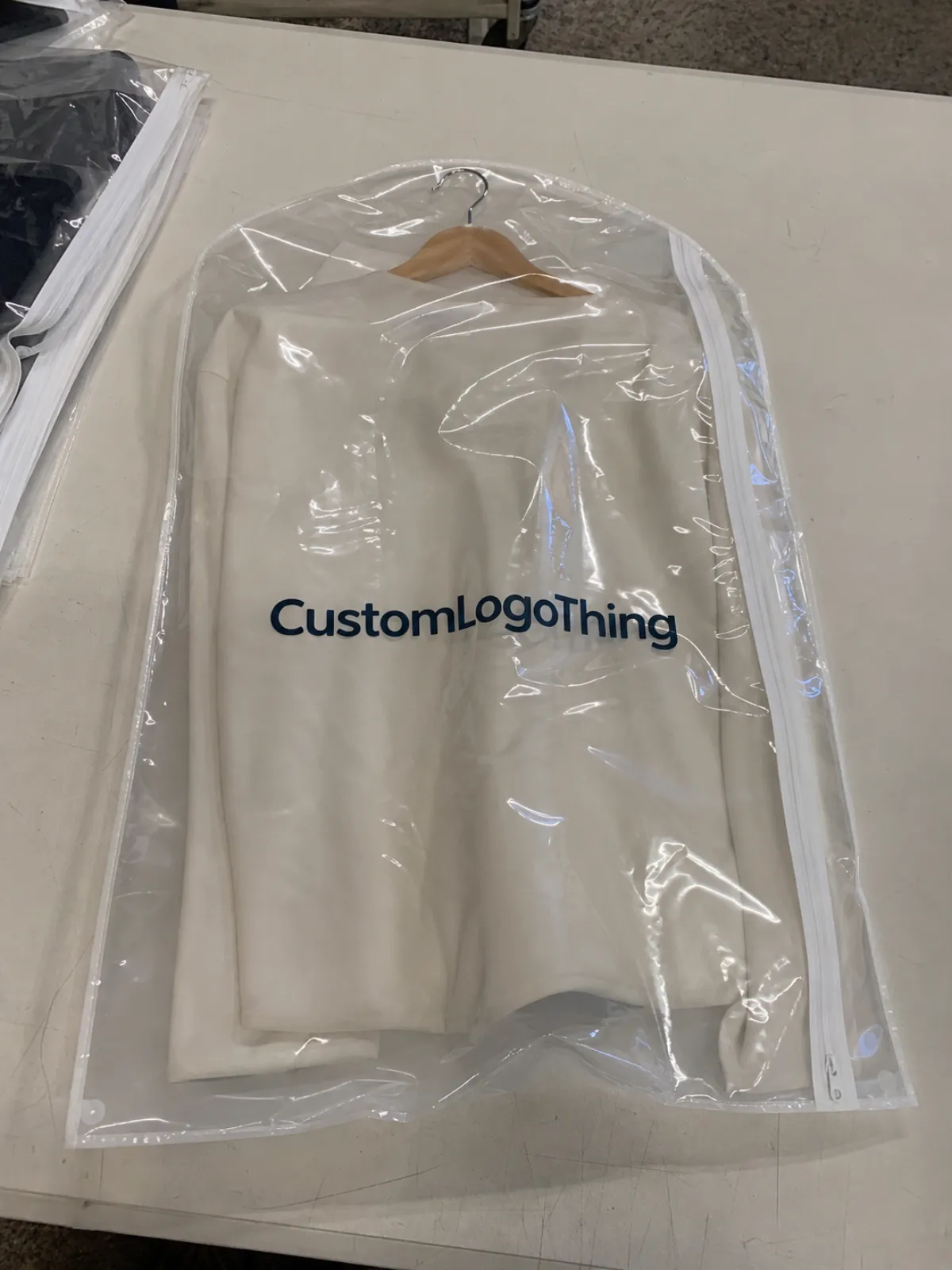
Most cost overruns come from unclear pack-out rules, not from the PVC itself. The bag is only one part of the system around it: carton, insert card, hanger, label, and labor all affect the final cost. If the bag arrives with the wrong fold, wrong opening, or wrong closure, the quoted price stops matching the warehouse reality.
Define the job in practical terms. A member gift may need a cleaner finish and stronger brand presentation. A backroom storage bag may need durability and stackability more than visual polish. A tasting-room retail bag may need high clarity and a hang hole. Those are different programs, even if they use the same general product family.
Clear PVC is useful because it keeps contents visible and simplifies inspection. Fulfillment teams can verify style, quantity, and size faster when the product is easy to see. That lowers the chance of sealing the wrong item into a kit and discovering it only after delivery.
Also decide whether the bag will hang, fold flat, or move through repeated shipping cycles. Hanging display favors reinforcement at the top and a precise hang hole. Folded storage rewards smoother film and compact packing. Repeat handling requires stronger seams and better zipper performance. The use case should drive the structure, not the other way around.
Buyer rule: define the bag as a display item, a storage item, or a shipping support item before you request pricing. That one decision usually separates a stable program from a costly one.
What the bags need to survive in storage and transit
A sample can look great and still fail once it enters real operations. The main stress points are basic: stacking pressure, repeated opening and closing, carton friction, and occasional contact with zippers or hanger hardware. For wine club programs, those small stresses matter more than a polished product photo.
Many clubs run on fixed shipment calendars, so inventory may sit for weeks before release. During that time the bag still has to remain clean, flat, and easy to inspect. Dust, scuffing, and moisture exposure are common storage problems, especially if cartons are opened during counting or kitting. The bag is not the impact barrier; the shipper carton does that. The bag’s job is to preserve presentation and organization.
That distinction matters. A PVC garment bag is not a substitute for proper carton protection. If the program needs transit testing, ask whether it should be evaluated against a standard such as an ISTA procedure. That will not guarantee success, but it gives everyone a shared framework for how the package should behave in distribution. See ISTA for distribution test references.
For general packaging terminology and supplier comparisons, packaging.org is useful because it keeps the focus on structure, handling, and material choice rather than sales language.
Who sees the bag also matters. If the end customer sees it, clarity, edge finish, and alignment become high priorities. If only the fulfillment team handles it, stackability, label readability, and low-friction packing may matter more. The same product family can support both uses, but the spec should reflect the real audience.
PVC gauge, zipper style, hang hole, and size specs to lock in
A good bulk order depends on a small set of locked specs: film thickness, closure style, top opening, finished size, and any reinforcement points. If those items are still open during quoting, pricing will move later. The change may look minor per unit, but it becomes expensive across a full annual buy.
Thickness is often the first question. Lighter bags may work around 0.12 mm to 0.15 mm for small, folded garments with limited handling. More durable retail or storage bags often fall around 0.18 mm to 0.25 mm. Heavier items, repeated use, or longer storage can justify thicker film, but thicker is not automatically better. If the bag becomes too stiff or too glossy, presentation can suffer. The goal is the thinnest gauge that still protects the garment and keeps its shape.
The closure matters almost as much. Standard zippers are common because they are quick for fulfillment and familiar to users. Snap or press closures can work for lighter programs, but they may not hold up as well under repeated use. Reinforced zipper tracks help with alignment and reduce snagging. If the bag is meant to hang in display, specify the hang hole or hanger opening precisely, since a small tolerance change can alter how the garment sits.
Size should be based on the actual folded or hanging garment, not on a broad apparel category. Wine club assortments often mix polos, jackets, scarves, and other pieces, so one standard size may not fit every kit unless the pack-out is tightly controlled. Ask for finished dimensions, internal usable dimensions, seam allowance, and fold orientation. Those details prevent quotes built on assumptions.
Finish options also affect the decision. Ultra-clear PVC gives the sharpest visibility. Frosted film softens the look and hides minor scuffs. Reinforced seams help when the bag will be reused. Printed insert cards, color-coded zippers, or a small custom label can add branding without forcing a full print run on the bag itself. That is often the best balance between presentation and cost.
For material consistency, ask whether the film is tested for basic tensile and tear behavior under references such as ASTM D882. The point is not to over-engineer the order. It is to make sure the bag behaves the way the warehouse and customer actually need it to behave.
Cost, pricing, MOQ, and unit cost drivers for bulk buys
Pricing is driven by a few predictable variables: material thickness, finished size, closure type, printing, carton configuration, and total order volume. Buyers often focus on the per-unit quote, but the better question is how the price changes as the spec becomes more complex.
MOQ is usually tied to setup efficiency, cutting patterns, print prep, and line changeover time. A lower MOQ helps when you are testing a new program or launching a first run, but the unit price usually rises because the factory cannot spread setup cost across as many pieces. A larger annual buy often lowers unit cost, but only if the spec stays stable and the forecast is dependable.
Request pricing at multiple volume tiers. That shows the gap between a first production run, a replenishment order, and a larger annual commitment. Without that comparison, a buyer can miss a better break point just above the original quantity. That matters for wine club programs because shipment calendars are repetitive and predictable.
Ask early about costs that should not hide in the final approval. Tooling, sampling, freight, import duties if applicable, and rush charges should all be visible before the order is signed. If the launch date requires expedited production or priority freight, that is fine, but it should be a conscious tradeoff rather than a surprise.
| Option | Typical spec | MOQ profile | Illustrative unit cost | Best fit |
|---|---|---|---|---|
| Basic clear bag | 0.12-0.15 mm PVC, standard zipper, no print | Lower to mid | $0.22-$0.38 | Storage, internal pack-out, pilot runs |
| Retail-ready clear bag | 0.18-0.20 mm PVC, reinforced zipper, hang hole | Mid | $0.34-$0.58 | Member gifts, tasting-room sales, display |
| Branded presentation bag | 0.20-0.25 mm PVC, custom label, insert card, upgraded finish | Mid to higher | $0.48-$0.82 | Premium club drops and seasonal launches |
These ranges are directional, not universal. Volume, print coverage, carton pack-out, and freight terms can move them in either direction. Still, they give the buyer a better starting point than a vague promise. If a supplier cannot explain why one tier costs less than another, the quote is too thin to trust.
Compare landed cost, not unit cost alone. A bag that saves a few cents but slows pack-out, increases damage, or adds inspection time is often the more expensive choice. The smartest buyers treat the bag as part of the total operation, not as a standalone SKU.
Process, timeline, and production steps from sample to shipment
The order path should be simple enough that everyone can repeat it: spec confirmation, artwork approval, sample review, production scheduling, final QC, and shipment booking. If the supplier cannot describe those steps clearly, expect confusion later.
Sample lead time and mass production lead time are not the same. A sample may take 5 to 10 business days depending on tooling and materials. Full production can take 12 to 25 business days, sometimes longer if the order is large or the factory schedule is tight. Freight time adds on top of that. Buyers who merge all of those into one “delivery estimate” usually miss the real deadline risk.
Delays usually come from a few familiar places: late artwork changes, measurements approved without a physical reference sample, unclear carton marks, or approvals that sit too long between review rounds. Even when the factory is ready, a stalled approval can push the project beyond the target ship date.
Wine club calendars need buffer time because shipment dates are tied to member events, subscription mailings, or seasonal releases. Those dates do not move when a sample is late. Build in time for comparison, internal sign-off, and one correction cycle if needed. That buffer protects the launch rather than delaying it.
Ask for three documents in the same conversation: a sample, a volume-based quote, and a production calendar. Together they show structure, economics, and timing. If one of those is missing, the project is not ready to approve.
For a cleaner starting point, use the standard inquiry path through FAQ and Wholesale Programs. That usually shortens back-and-forth and gets the team to a usable spec sheet faster.
Branding, pack-out, and QC checks that prevent costly rework
Branding works best when it is restrained. A logo card, a label, or a colored zipper can make the bag feel deliberate without turning the project into an expensive custom print run. For Bulk Order Planning, the rule is simple: add value where the customer sees it, and avoid spending where the customer will not notice.
Pack-out details affect labor time, so they should be written down before production begins. Some clubs want each bag folded a specific way. Others add a membership card, size sticker, or insert. Some need cartons packed to a fixed weight for easier handling. If these instructions are still informal when the order starts, the fulfillment team will improvise, and improvisation is expensive at scale.
Quality control should start before the full run, not after it. Confirm dimensions against a physical sample. Check zipper alignment. Verify seam quality. Confirm carton counts. Approve one master sample for clarity, logo placement, and closure behavior. That sample becomes the production reference. Without it, there is no single standard.
The biggest rework risk is discovering a problem after the bags have reached the fulfillment center. At that point the cost is no longer just the bag. It also includes labor disruption, possible repacking, and shipment delay. A small sampling error can become a major expense once the goods are already on site.
Practical rule: approve one master sample, then freeze the spec. Every late change increases risk, even if it seems minor on a screen.
If sustainability matters to the brand story, keep the claims accurate. FSC-certified paper inserts or cartons can support the presentation, but only if the material is actually certified. The same discipline should apply to the full package. Precision matters more than polished language.
Next steps for confirming artwork, quantities, and delivery windows
Before the final quote, confirm finished garment dimensions, PVC thickness, closure style, hang-hole requirement, branding method, carton pack-out, and target delivery window. That is the minimum usable brief. Anything less invites assumptions and quote drift.
Send one clean spec sheet and one artwork set. Not multiple versions, not a phone photo, and not a loose mockup. A clear file set lets suppliers compare pricing on the same basis. If one quote is based on a thinner film, a tighter size, or a simpler closure, that difference should be visible before approval.
Request the sample, the volume quote, and the production calendar together. That keeps cost and timing in the same review and exposes tradeoffs early. If a lower price adds two weeks, the team can decide whether the savings are worth the delay. If a tighter launch window adds freight cost, the buyer can weigh that against the value of hitting the date.
The decision sequence is straightforward: specs first, quote second, sample third, shipment date last. That order lowers risk and helps the buyer avoid paying twice for the same mistake. The strongest programs are not the ones that chase the lowest number. They are the ones that define the bag clearly enough to buy it once and use it confidently.
FAQ
What MOQ should I expect for wine club PVC garment bags?
MOQ depends on size, thickness, and whether the bag needs printing or custom hardware. A higher quantity often lowers unit cost, but the right MOQ is the smallest run that still gives stable pricing and efficient setup.
Which PVC thickness works best for bulk order planning?
Use the thinnest gauge that still protects the garment and holds its shape during storage and fulfillment. Heavier pieces, repeated handling, or retail display usually justify a thicker film and stronger seams.
Can I add branding without pushing the price too high?
Yes, if branding stays simple, such as a printed insert, label, or limited logo placement. Full-color printing, specialty closures, and custom finishes raise cost faster than a basic clear bag with one branded touchpoint.
How long does production usually take after approval?
Timeline depends on sample approval, order size, and factory schedule, so ask for sample lead time and mass production lead time separately. Build in extra buffer if the bags have to arrive before a wine club shipping cycle or a seasonal launch.
What should I confirm before placing a bulk order?
Confirm finished size, material thickness, closure style, artwork, carton pack-out, and target delivery date. Also ask for freight terms, sample cost, and any tooling or setup fees so the quote reflects the real landed cost.

