The first package a member touches shapes the rest of the shipment. A wine club box can carry the bottle, but the mailer sets the tone. If it feels flimsy, looks off-brand, or arrives with scuffs, the damage starts before anyone opens the seal. That is why wine club soft touch poly mailers Bulk Order Planning deserves more attention than it usually gets.
The real job is not just picking a pretty mailer. It is building a repeatable buying plan that holds up across monthly drops, seasonal pushes, and new-member kits. The best programs avoid the usual traps: buying the wrong size, under-ordering during a promotion, or paying more later because the spec changed halfway through the year.
Bulk planning is useful for another reason people tend to underestimate. It turns packaging from a recurring emergency into a controlled input. Once the size, print, and film are locked, the reorder gets boring. Boring is good. It means the warehouse is not improvising, the freight bill stays predictable, and the brand stops relearning the same lesson every quarter.
If the club also needs inserts, labels, or outer packaging to match the mailer, keep the whole program aligned instead of treating each piece as a separate decision. The packaging should feel like one system, not a pile of unrelated purchases.
The cheapest mailer is the one you do not have to replace, reprint, or rush through freight because somebody guessed wrong on the first order.
Wine club soft touch poly mailers bulk order planning that avoids reorders
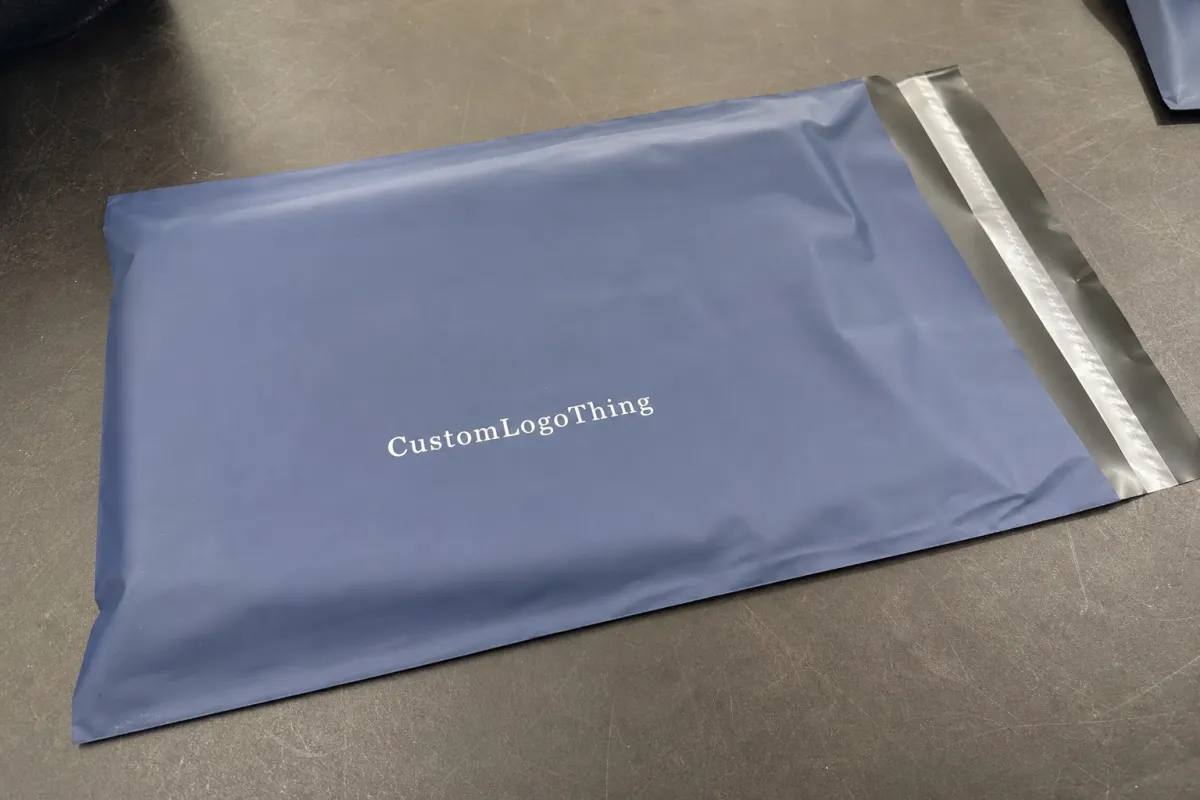
Good planning starts with the shipment cycle, not the artwork file. If the club ships monthly, do not order as if this were a one-off promotion. The right buying unit is usually a quarter, half-year, or full-year supply, depending on storage, cash flow, and how stable the subscriber base is.
That sounds simple. It usually is not, because clubs grow, shrink, or split into tiers. A one-bottle membership and a two-bottle membership may need different mailers. If the team tries to force both into one too-small spec, the packing line slows down and the bags start to look stressed. If the spec is too large, you waste material and freight. Neither option is smart.
Recurring shipments punish inconsistency. One month the bag fits perfectly. The next month the seal strip is in a different place, or the print color shifts, or the film feels thinner. None of that makes the brand look premium. It makes the operation look unsettled. That is the exact opposite of what a club wants to communicate.
- Monthly drops work best with one stable spec that can be reordered without reopening the file set.
- Seasonal shipments usually justify larger buys because production and freight both get tighter when demand spikes.
- New-member kits can use a distinct presentation, but the structure should still match the main brand system.
- Multiple fulfillment centers need the same dimensions and print references so every location packs the same way.
Planning the order around the full cycle also gives you room to think about storage. Soft-touch poly mailers are lighter than corrugated boxes, but they still take space when you are holding cartons for several months. Buyers often focus on unit price and forget the warehouse cost of extra pallet positions. Then the “cheap” order gets expensive because it sits around too long.
There is also a practical reason to keep the spec stable: it reduces training friction. A repeatable mailer lets the packout team move fast without checking a new measurement every time. When the staff changes or the seasonal crew comes in, the old spec still works. That is where the real savings start to show up.
Soft-touch finish, film construction, and print durability
Soft-touch is a finish, not a miracle. It gives the mailer a smoother, less glossy hand and a more deliberate feel than a standard shiny poly bag. For a wine club, that matters because the mailer is often the first physical brand cue a member gets. It makes a simple shipment feel more considered without pushing the program into a heavier, more expensive structure.
But feel is only part of the story. The actual film construction decides whether the bag survives sorting, stacking, and abrasion. In practice, most buyers are balancing three things at once: strength, appearance, and cost. A co-extruded film usually gives better puncture resistance than a bargain thin film. A matte or soft-touch surface looks better, but it can show scuffing if the design is too dark or too dense. And the wrong print system can make a premium bag look tired before it reaches the customer.
For bulk runs, the printing approach matters just as much as the finish. A simple one-color logo often ages better in transit than a full flood of dark ink. Heavy coverage can look dramatic in a mockup and messy after the bag has rubbed against other cartons for a few days. If the route is rough, restraint is usually the safer design choice.
Common branding options for these mailers include:
- One-color logo print for a clean, lower-cost run.
- Full-coverage art for a stronger unboxing presence.
- Handling panels for shipping notes, compliance text, or service instructions.
- Return-label zones so the fulfillment team does not have to build a second label layer later.
Soft-touch finishes are most useful when the design is already disciplined. They do not fix weak branding. If the logo is too small, the contrast is off, or the layout is crowded, the finish will not rescue it. It will just make the mistake look more expensive.
For transit-heavy programs, ask for packaging that can handle a relevant drop and vibration profile. ISTA testing is a common reference point for distribution performance; see ISTA for the standards many packaging teams use as a baseline. If your mailer program includes paper components, FSC certification is worth specifying for those parts; the standard is outlined at FSC.
Size, gauge, and seal strength for bottle-club shipments
Size is where many clubs either save real money or throw it away. The right mailer depends on bottle count, sleeve or insert thickness, neck height, and whether the shipment uses a single bottle, two bottles, or a mixed pack with different shapes. Measure the package as it ships, not as it looks on a table.
That means checking the full outside dimensions after the bottle is sleeved, boxed, or padded. A mailer that looks fine in a sample photo can become a problem once the closure strip, shipping label, and fold lines are added. The final package should slide in without force and close without stretching the film.
Before approving a quote, confirm these dimensions:
- Flat width so the bottle fits without pinching.
- Side gusset for thickness and clearance.
- Length for the bottle plus any closure room.
- Usable opening so the packer is not fighting the seal strip.
- Label panel area if shipping or compliance text needs a clean zone.
Gauge matters too. A lighter film may lower the unit price, but it can also reduce puncture resistance. For standard wine club shipments, a midweight film in the 2.5 to 4 mil range is a common starting point. If the route is rough, the bottle is heavy, or the insert adds edge pressure, that is not the place to get clever and shave film weight for a small savings.
Seal strength is the other half of the equation. A weak peel-and-seal strip slows the pack line and creates inconsistent closure. A strip that bonds too aggressively can make rework annoying when a shipment needs to be checked or resealed. The goal is a closure that feels firm, stays closed, and behaves the same across production lots. If the program needs tamper evidence or a one-time seal, say so early. Changing that late is a good way to ruin a schedule.
Compatibility questions to settle before production:
- Does the bag fit the bottle with its sleeve or protective insert?
- Is the closure strong enough for the route and carrier handling?
- Can the warehouse pack it quickly without stretching the film?
- Will one size cover every club tier, or do you need two SKUs?
For recurring wine shipments, one well-fit spec usually beats a slightly cheaper bag that only fits “close enough.” Close enough is how reorders get messy.
Pricing, MOQ, and unit-cost drivers for bulk mailer runs
Unit price is only one piece of the cost picture. The real number is landed cost: bag price, printing, setup, freight, and storage all rolled together. Buyers often compare quotes on the bag alone because that is the easiest number to see. Then freight lands, the cartons take up space, and the “winner” is not actually cheaper.
The main price drivers are predictable:
- Material weight affects both bag cost and freight.
- Print complexity adds setup time and color control work.
- Bag size changes material use and carton efficiency.
- Order volume lowers the unit price fastest.
- Shipping method can erase savings if the timeline is tight.
MOQ is where planning either gets disciplined or gets lazy. Small minimums feel safer, but they often carry a higher unit price. Larger orders usually make sense if subscriber volume is predictable and there is enough room to store the cartons. For many clubs, a quarter-year or half-year buy is the practical middle ground. A full-year buy can improve pricing again, but only if the inventory will not sit long enough to become a storage headache.
| Run size | Typical unit cost | Setup impact | Best use |
|---|---|---|---|
| 2,500-5,000 units | $0.28-$0.55 | Highest per-piece setup burden | Launches, pilot clubs, format testing |
| 10,000 units | $0.19-$0.38 | Setup spread across a larger run | Quarterly buys, steady subscriptions |
| 25,000+ units | $0.15-$0.30 | Lowest unit pressure, best efficiency | Established clubs, annual planning, multiple drops |
Those are planning ranges, not guarantees. A simple one-color logo can come in lower than a full-coverage print. A bigger mailer, a custom finish, or split deliveries can push the number back up. Freight rates and order timing matter more than people like to admit, especially during peak shipping periods.
One detail worth repeating: a low factory quote can still be the wrong choice if the freight is ugly or the reorder window is too tight. A strong buying decision compares the full landed cost per shipped unit, not just the print quote.
Production steps, proofing, and lead time for repeat drops
A repeat order should not feel like a new project every month. The basic path is always the same: quote, spec confirmation, proof, approval, production, packing, and freight booking. The challenge is not the sequence. It is keeping each handoff clean enough that the schedule does not drift.
The usual delays are unglamorous. Missing artwork files. A dimension that was assumed instead of measured. A proof approved too late for the freight booking. A color change that looked harmless in email and turned into a redo on press. None of that is mysterious. It is just sloppy process.
For standard custom-printed mailers, a realistic lead time is often 12-15 business days from proof approval to production completion, plus freight time. Rush orders can cut that down, but they usually reduce options and raise the cost. If a club ships near holidays or around a major tasting event, build in extra time. The warehouse calendar always gets crowded faster than the sales calendar does.
The best habit is to treat the next reorder as part of the current approval. Once the artwork is locked and the dieline is final, the next batch moves faster. That is where wine club Soft Touch Poly Mailers Bulk Order Planning earns its keep. The first order sets the template. Every reorder after that should follow the same path with fewer unknowns.
A useful file set should include:
- final artwork files
- approved dieline or exact dimensions
- print color callouts
- target quantity by shipment cycle
- delivery dates for each drop
Keep the calendar realistic. If the warehouse gets congested at the end of the quarter, move the order earlier. If the freight lane is unreliable, split the delivery. If storage is tight, stagger the quantities instead of forcing everything into one shipment. The schedule should support the packing line, not the other way around.
How we keep color, sizing, and delivery consistent across reorders
Consistency is the part members never ask for directly and absolutely notice when it is missing. A bag that shifts color, size, or finish between drops can make a premium club feel less controlled. That is especially true when the packaging is part of the brand promise rather than just a shipping container.
Quality control starts with the basics. Measure the bag. Check the print placement. Confirm the color against the approved reference. Pull random cartons and inspect seal strength. Good reorder management is not exciting. It is just disciplined.
File retention matters as well. The approved artwork, notes, dieline, and reorder history should stay attached to the account so nobody has to rebuild the job from memory. That prevents the classic “close enough” problem that shows up when someone grabs the wrong file version and no one notices until the shipment is already in motion.
If the club ships from multiple fulfillment locations, split-shipment planning helps a lot. One site should not be overloaded while another runs short before the next drop. Aligning the specification across locations keeps everyone working from the same playbook. For programs with multiple packaging SKUs, it helps to keep the mailer spec stable and central rather than reinventing it each time the route changes.
For a buyer, the upside is straightforward:
- Fewer mistakes on color, size, and seal performance.
- Fewer emergency reprints caused by bad file control.
- Less time babysitting the same order every month.
- Cleaner inventory planning for staggered club drops.
There is nothing flashy about consistency. There is money in it, though. Clubs that manage reorders well spend less time fixing preventable problems and more time shipping on schedule. That is the goal.
Next steps to lock your wine club mailer order plan
Start with the actual shipment inputs: bottle count, mailer dimensions, print colors, target quantity, and the month each drop needs to land. Send those together. Clean inputs mean cleaner quotes and fewer revisions. If the club is changing bottle sizes or upgrading the finish, ask for samples or a spec check before committing the full run.
Compare quotes by landed cost, not just the unit price. Freight, storage, and reorder timing can outweigh a small difference in the bag itself. A smaller order that needs three reprints is often more expensive than a larger order that covers the full cycle. The math gets obvious once the calendar is attached to it.
Order early enough to avoid peak-season pressure. Holiday freight and end-of-quarter congestion make late buys expensive for no good reason. If the club knows its ship dates, there is no reason to wait until stock is already tight. That kind of delay is avoidable, and avoidable problems are usually the most annoying ones.
Lock the spec, keep the file history clean, and confirm reorder timing before the next cycle starts. Good planning here is not about adding complexity. It is about making a recurring shipment look polished without paying twice for mistakes.
How many wine club soft touch poly mailers should I order at once?
Base the quantity on the full club cycle, not just the next shipment. For monthly programs, a quarter’s supply is a useful minimum, and a half-year order often improves unit pricing. Leave room for growth, damaged units, and sample sends so the schedule does not go short mid-cycle.
What size soft-touch poly mailer fits a one-bottle wine club shipment?
Match the mailer to the bottle’s outside dimensions, including any sleeve or insert, not just the bottle itself. Check flat width, gusset, and opening clearance so the bottle slides in without stretching the film. If the club uses more than one bottle format, pick the size that fits the largest shipment without creating too much empty space.
Does soft-touch film hold up to shipping scuffs and handling?
Yes, if the film structure and print method are specified for the route. Soft-touch finishes can show abrasion faster on dark solid art, so design choices matter. Ask for a sample or proof review if the bags will be packed, sorted, and handled several times before delivery.
What affects the quote for bulk wine club mailers the most?
Bag size, film thickness, print coverage, and quantity are the biggest drivers. MOQ, setup, and freight can move the landed cost more than the difference between two similar bag styles. The cleanest quote comes from sending the bottle count, dimensions, target quantity, and artwork details together.
How far ahead should I place a reorder for recurring club shipments?
Place the reorder before the current stock gets tight, not after. For monthly programs, build in proofing time plus production and freight time so the schedule has slack. If the club ships during peak season, order earlier than usual because lead times stretch when everyone else remembers planning at the same time.


