A good wine club Shopping Bags Supplier does more than print a logo on paper. The bag shows up at pickup, in a tasting room, at a club event, and sometimes in the trunk of a car beside the actual bottles. If it tears, tips, or looks underbuilt, the failure is immediate and visible. The wine may be excellent; the packaging still feels cheap.
That is why bag selection should be treated as a packaging decision, not a decorative one. Wine clubs use paper bags in several different ways, and each use case changes the spec. A bag for one-bottle tastings does not need the same structure as a two-bottle fulfillment bag or a giftable event carrier with inserts. The best suppliers understand those differences and build around them instead of forcing one generic format to do every job.
There is also a branding effect that buyers sometimes underestimate. A well-made paper bag increases perceived value in seconds because it signals attention to detail. A flimsy bag does the opposite. Members may never mention it, but they notice. So do staff, who are the ones dealing with handle failures, awkward fills, and damaged packs at the counter.
Why Wine Club Bags Change Perceived Value Fast
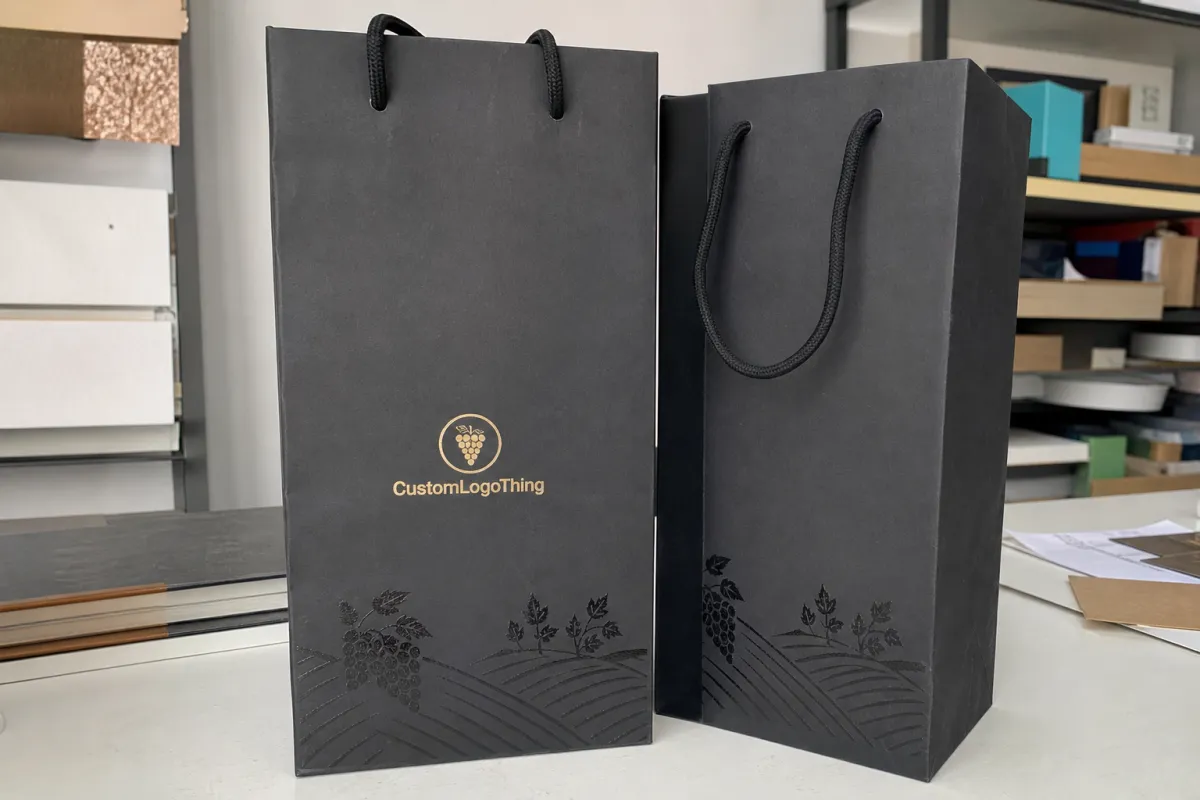
The perceived value jump happens almost instantly. Heavy glass, especially with two bottles, needs a carrier that feels deliberate. If the bag sags or flexes too much, the whole presentation drops a tier. A stronger paper stock, a squared base, and a handle that does not twist under load send a different message: this club pays attention to the details members can see and feel.
Paper bags also function as repeat brand exposure. They are carried across parking lots, into homes, and sometimes reused for other purchases. That makes them more than a disposable container. They are a moving brand surface that may be seen several times after the original pickup.
For that reason, the bag should be planned from the bottle outward. The dimensions need to fit the actual pack architecture, not just the artwork. Standard 750 ml bottles, boxed sets, magnums, and sparkling bottles all create different height and width demands. If the bag is built too tightly, staff waste time forcing the product in. If it is too loose, the bottles shift, the presentation suffers, and the bottom board takes more strain than it should.
The supplier matters because bottle weight changes the entire equation. A vendor that only thinks in terms of print and paper grade will miss the larger issue: how the bag behaves after a bottle is lifted, carried, set down, and lifted again.
Useful test: if the bag looks fine empty but bows badly once the bottles are inside, the spec is probably too light for club use.
Paper, Handles, and Reinforcement Specs That Matter
Paper weight is the first place to get serious. For premium club bags, common starting points fall between 157gsm and 250gsm. Lighter paper can work for single bottles or low-stress retail pickup, but it tends to show panel bowing and a softer handfeel. Heavier stock costs more and adds a little more dead weight, yet it pays back in stiffness and structure. That extra rigidity matters when the bag is holding glass instead of apparel.
Handle choice is just as important. Twisted paper handles are economical and suitable for lighter loads. Cotton, rope, and grosgrain handles feel more premium and usually hold up better under repeated lifting. The attachment method is not a minor detail either. Reinforcement patches spread stress across the top panel, which reduces the chance of tearing at a single point when the bag is filled and moved fast.
The base deserves the same scrutiny. A bottom insert or board keeps the bag square under load and helps prevent bottle corners from punching through the underside. Side gussets control how the bottles sit inside the bag, so width matters. Too narrow, and the shoulders of the bottle rub against the paper. Too wide, and the contents shift enough to reduce stability during carry.
Finish influences both appearance and performance. Matte or uncoated paper gives a more restrained, craft-forward look and works well for wineries that want a natural feel. Coated paper prints sharper and handles darker colors more cleanly. Lamination adds surface protection and shine, which can be useful for high-traffic retail use, though it may read as too glossy for brands that want a quieter presentation.
For sustainability claims, ask for FSC-certified paper options if that fits the brand brief. Certification does not magically improve strength, but it does support paper-traceability requirements and makes procurement conversations cleaner. If recycled content is part of the story, ask for the exact percentage and whether the finish or ink system affects recyclability in practice.
A practical sizing rule helps here: start from the heaviest real pack, not the lightest sample. One bottle is easy to over-spec; a two-bottle club pack or sparkling bottle is harder to support. If the same bag family needs to cover seasonal variations, size around the most demanding format and use inserts or packaging fillers only where they genuinely improve stability.
- Single-bottle bags: best for tasting-room pickup and gift add-ons.
- Two-bottle bags: need stronger handles, a wider base, and more rigid bottoms.
- Gift-set bags: often need extra gusset depth for inserts, tissue, or note cards.
How the Process and Timeline Usually Work
The production path is fairly standard, though the timing often depends on how complete the buyer’s brief is. It usually starts with an inquiry, then moves to a spec review, artwork setup, proofing, sample approval, production, packing, and freight. A reliable wine club shopping bags supplier should be able to explain each step in plain language and show where approval is needed.
- Inquiry and quote: the supplier collects bottle count, bag size, print coverage, handle choice, and quantity.
- Spec confirmation: both sides lock paper weight, dimensions, finish, and reinforcement details.
- Artwork and proofing: files are checked for bleed, placement, and color count.
- Sampling or pre-production proof: especially useful for first-time custom bags or higher-value programs.
- Production and packing: bags are made, inspected, and boxed for transit.
- Freight and receiving: delivery is scheduled around club launches, tastings, or shipment cycles.
First-time custom orders usually take longer than repeat runs because the structure, print layout, and approvals all need to be set. Special handles, foil, embossing, or imported paper can extend the calendar. So can artwork changes that arrive late in the process, which is one reason a clean brief matters.
For simple custom paper bags, lead times often land around 12 to 20 business days after proof approval. That is a workable planning range, not a promise. Volume, factory load, material availability, and freight method all move the schedule. If the bags are tied to a club release or event date, the safer choice is to build in extra time rather than count on the fastest case.
Transit testing should not be improvised. The guidance from ISTA is a useful reference point for buyers who want packaging to survive actual handling rather than only looking good in a mockup. A printed proof cannot show whether a handle will fail after repeated lifts or whether a bottom board will hold under a real bottle load.
Good suppliers surface problems early. They will usually tell you if the handle type is too light for the intended weight, if the print will lose clarity on textured stock, or if a crowd of logos and badges is going to make the front panel feel busy. That kind of feedback saves more money than a cheap quote ever can.
Cost, Pricing, MOQ, and Quote Drivers
Paper bag pricing looks straightforward until the variables start stacking up. The biggest drivers are paper grade, bag size, print colors, handle construction, total quantity, and whether the design prints on one panel or multiple sides. A heavy laminated two-bottle bag with specialty handles will cost materially more than a simple kraft bag with a one-color logo. That gap is normal.
MOQ has a major effect on unit cost. Small runs carry more setup burden per bag, so the price per piece rises. Larger runs usually lower the unit cost, but they also create storage and cash-flow pressure. A club may save a few cents on the bag and still spend more overall once warehouse space, carrying cost, and reorder timing are included.
For a custom order at roughly 5,000 units, the following ranges are directional only. They help buyers compare quotes on the same footing, not replace a formal estimate.
| Bag Build | Typical Use | Indicative Unit Cost | What Moves the Price |
|---|---|---|---|
| 157gsm printed paper, twisted handle | Light tasting-room pickup, single bottle | $0.28-$0.45 | Print colors, bag size, and panel coverage |
| 200gsm kraft or art paper, rope handle, reinforced base | Standard club packs, one to two bottles | $0.42-$0.78 | Handle type, base board, and higher load rating |
| 250gsm laminated paper, premium finish, specialty handle | Gift programs, events, upscale retail use | $0.85-$1.60 | Lamination, foil, embossing, and custom insert labor |
Quotes can also hide costs if the buyer does not ask for a full breakdown. Freight may be separate. Samples may be charged. Tooling or plate fees can appear on the first run. If the program includes inserts, tissue, tags, hand packing, or split shipments, labor can become a bigger part of the total than expected. In club operations, the real purchase is not one bag. It is a replenishment system.
The best way to compare offers is to line up the specs exactly. Same paper weight. Same handle. Same print coverage. Same delivery terms. If one supplier quotes a lower number on a lighter build, that is not a better deal. It is a different product.
How to Vet a Wine Club Shopping Bags Supplier Before You Order
This is where many buyers protect their margin. A strong supplier should be willing to provide a plain-language spec sheet, material samples, and a printed sample before production begins. If the answer is only a rough quote and a promise that the bag will be fine, keep asking questions.
Ask whether the team has worked on beverage packaging, gift bags, or Retail Paper Bags before. General shopping bags are not the same as bottle carriers. Bottle weight changes handle stress, bottom support, and gusset performance. A vendor can produce a clean-looking bag and still miss the structural requirements that matter in a wine program.
Use a simple check list:
- Sample quality: ask for blank stock and printed examples.
- Artwork support: confirm review of bleed, dieline, and color expectations.
- Production transparency: request a clear timeline, not a broad estimate.
- Quality control: ask how the supplier checks handle adhesion, bottom strength, and print alignment.
- Reorder consistency: verify that approved specs stay on file for repeat runs.
Sample approval is useful, but it is not the same as proving performance. A bag can look right in a photo and still fail under load. Fill the sample with the actual bottles, lift it by the handle, and carry it the way staff and members will use it. If it feels awkward in the hand, it will not improve after a second bottle goes in.
Repeatability matters too. Color matching, handle placement, and paper feel should stay stable from one run to the next. If the supplier cannot explain how approved specs are stored and matched, the first order may look fine while the second drifts enough to create a visible mismatch. For a club brand, that kind of inconsistency is easy to spot and hard to defend.
Good question to ask: “If we reorder this bag in six months, what exactly stays on file so the next run matches the first one?”
Common Mistakes That Hurt Bottles and Margins
The most common mistake is selecting a bag by appearance alone. A glossy mockup can look elegant while hiding weak handles, a thin bottom board, or a narrow gusset. Paper is unforgiving once glass is inside it. A bag that seems premium on screen can collapse under normal movement.
Undersizing creates its own problems. Bottles begin to scuff at the corners, necks bump during insertion, and staff spend more time forcing product into the bag at an angle. Oversizing is not better. It allows the bottles to shift, which makes the pack feel loose and less refined. Both errors create operational drag and hurt margin through damage, rework, and replacement.
Graphic design can cause trouble as well. A front panel packed with text, badges, icons, and promotional lines may look busy and energetic in a layout review, but in use it often feels less premium. Clean hierarchy tends to win for wine packaging because the bag has a short viewing window. People notice the major cues first: logo, finish, handle, and the way the bag stands.
Operational mistakes are just as expensive. Some clubs skip load testing. Others forget to align bag inventory with shipment calendars. A few print a seasonal design without a plan for leftover stock, then have to store the bags long after the campaign has moved on. That is a planning failure, not a print failure, but the cost still lands in the packaging budget.
A better process is simple: test the bag at actual load, inspect handle performance after repeated lifts, and review receiving dates before placing the order. That discipline prevents the most common failure mode, which is buying for appearance and discovering too late that the spec does not fit the job.
Expert Tips for Better Retail Conversion and Reorders
The strongest bag programs are built to do more than one job. They need to work for pickup, gifting, and retail carry without forcing a new structure every time the artwork changes. If members keep the bag for reuse, that is a bonus. The brand gets additional impressions from the same run.
Seasonal graphics can be useful if the base spec stays stable. A club can change the front-panel artwork, tier messaging, or event callout while keeping the same dimensions, paper weight, and handle construction. That keeps forecasting manageable and reduces the risk of a last-minute structural change that ripples through production.
Standardization across locations also matters. If one tasting room uses a different size or finish than another, members notice the inconsistency. Usually not as a complaint, but as a subtle sign that the operation is less organized than it should be. A tighter bag family simplifies replenishment and makes reorders easier to manage.
Extra content should earn its place. QR codes, tasting notes, bottle-care tips, or shipping reminders can be useful if they reduce friction or support repeat buying. Add them only when they solve a real problem. Otherwise, they become clutter and weaken the premium feel.
Long-term consistency often comes from staying with the same wine club shopping bags supplier once the spec is proven. A repeat partner knows the paper behavior, remembers the artwork constraints, and catches production issues sooner. That kind of continuity is worth more than shaving a few cents off one order.
Next Steps for Requesting Samples and Quotes
Before requesting quotes, define the basics clearly: bottle count, dimensions, paper feel, handle preference, print coverage, annual volume, and delivery schedule. The sharper the brief, the cleaner the quote. Vague requests tend to produce vague answers, and vague answers are where budget surprises hide.
Then ask for three things: a physical sample, a printed proof, and a quote that separates unit cost, setup, freight, and optional add-ons. If a supplier cannot break out those items, comparison becomes guesswork. A single all-in number may look tidy, but it often hides the actual economics of the program.
It helps to compare two or three suppliers using the same spec sheet. That gives a real read on quality differences, not just price differences. One vendor may be stronger on finish. Another may be better on lead time. A third may have better reorder discipline. Those differences matter more than a small unit-price spread when the bags are tied to the club experience.
A narrow pilot run is usually the safest starting point. Test the bag in actual club operations, check how it handles real bottles, and only then scale the order. If the handles hold, the bottles fit, and the bags arrive on schedule, the program has earned the right to grow. At that point, the supplier is no longer just a vendor. It is part of the club’s operating rhythm.
What should I send a wine club bag supplier for an accurate quote?
Send bottle count, bag dimensions, paper preference, handle style, print colors, finish, and expected annual volume. Include artwork files or at least a rough layout so the supplier can estimate setup and print complexity. Ask for separate pricing on samples, freight, and repeat orders so the full landed cost is visible.
How much do custom wine club shopping bags usually cost?
Price depends on size, paper weight, print coverage, handle construction, and how many bags are ordered. Lower volumes usually have a higher unit cost because setup fees are spread across fewer bags. Freight and storage can matter almost as much as the bag itself, especially for recurring club programs.
What lead time should I expect for printed paper wine bags?
Simple reorders can move faster than first-time custom jobs because artwork, sampling, and tooling are already approved. Complex finishes, specialty handles, or imported materials can extend production time. Build extra calendar time before seasonal club shipments so you are not forced into rushed freight.
Which bag specs matter most for one-bottle and two-bottle packs?
The most important specs are bottom strength, handle durability, width, gusset depth, and overall height. Two-bottle packs usually need stronger reinforcement and more precise sizing to keep bottles from shifting. Test actual filled bags before approving production because paper alone does not show real-world load behavior.
How do I know if a supplier can handle recurring club reorders?
Ask whether they keep your spec sheet, artwork, and approved samples on file for repeat production. Check if they can match color, structure, and print placement across multiple runs without drift. A good recurring partner should also help forecast inventory so club shipments and retail demand stay aligned.

