A small retail paper bags Sample Order Checklist saves money because the sample is where most mistakes show themselves cheaply. A bag can look polished in a render and still fail in the hand: the opening is too tight, the gusset buckles, the handle feels short, or the print lands across a fold. Those are not minor defects. In a retail setting, they change how the package behaves at the counter and how the brand is remembered after the sale.
For boutiques, gift shops, apparel counters, candle brands, and specialty food retailers, a sample is not a courtesy item. It is the first proof that the size, paper weight, handle construction, and print method work together under real use. A good sample should answer practical questions quickly: does it stand straight, does it carry well, does it fit the product without crowding, and does the branding still look clean after the bag is filled?
That is the standard used in this guide. Not theory. Not design language for its own sake. Just the checks that matter before a small retail order moves from approval to production.
Small Retail Paper Bags Sample Order Checklist: Start With the Right Brief
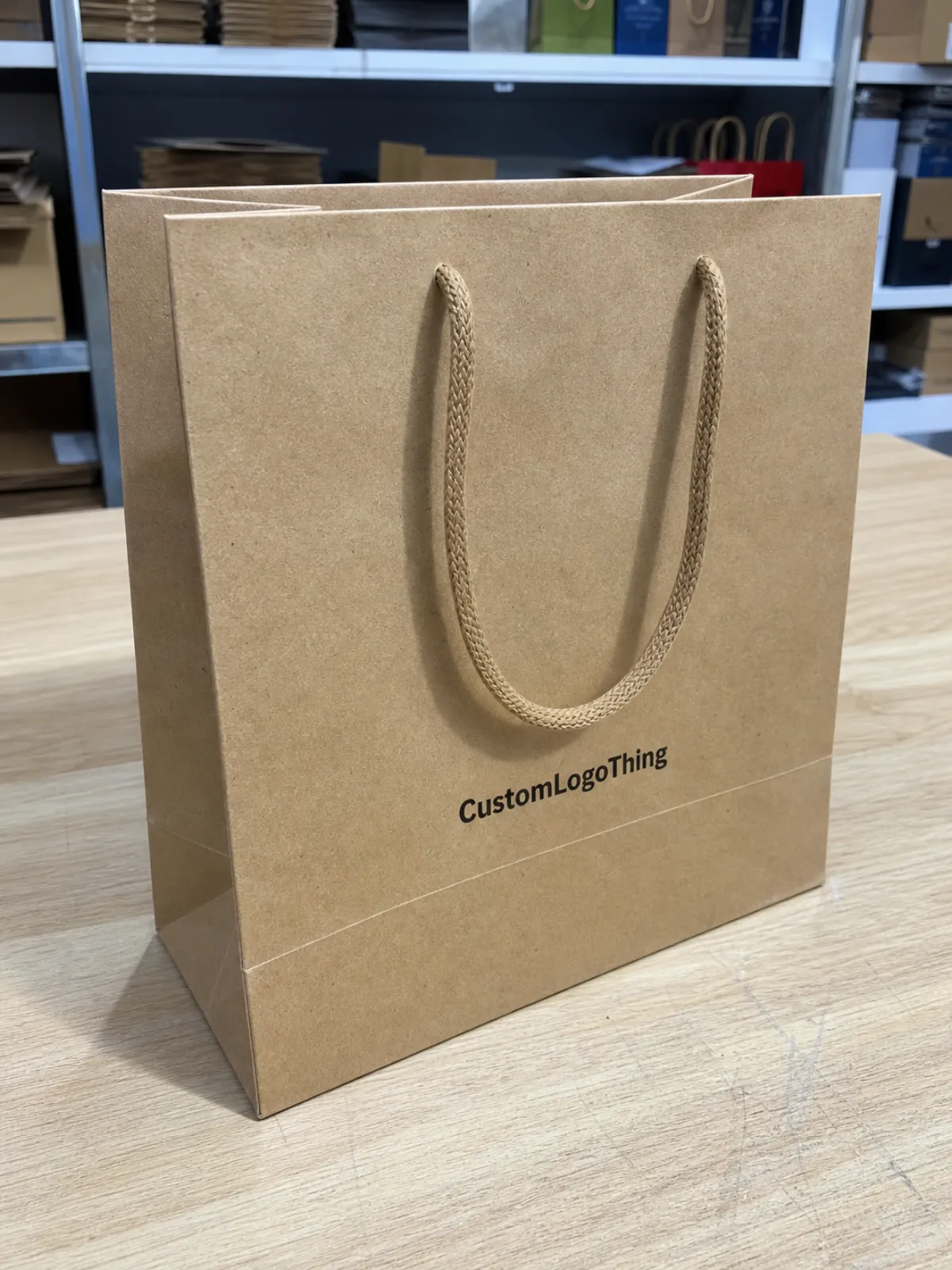
The quality of the sample almost always mirrors the quality of the brief. Buyers who send finished dimensions, target quantity, paper preference, handle style, artwork status, and shipping address usually get a faster and more accurate response. Buyers who send "small bag, nice finish, quote please" usually trigger a chain of clarification emails that can drag on for days.
Start with the basics and write them down in measurable terms:
- Finished size: width, gusset, and height.
- Product type: apparel, cosmetics, candles, gifts, or general retail use.
- Quantity needed: one approval sample, a backup sample, or both.
- Paper stock: kraft, white paper, recycled-content board, coated stock, or uncoated stock.
- Handle style: twisted paper, flat paper, ribbon, die-cut, or no handle.
- Artwork status: final print file, draft layout, or plain sample only.
- Ship-to destination: office, warehouse, store, or event location.
That brief does more than shorten the quote process. It also keeps the sample aligned with the final order. Small retail packaging often gets judged by people who never read the spec sheet, so the sample has to do the explaining. If the bag is the wrong height or the handle drop feels awkward, the problem is not cosmetic. The bag may still look good in isolation and fail the actual use case.
A sample is useful only if it answers the same questions the production order will have to answer later.
What the Sample Must Reveal About Bag Size, Structure, and Branding
A useful sample should show how the bag behaves, not just how it photographs. A 6 x 3 x 9 inch bag may be perfectly fine for one product line and useless for another. A tall box may force the top edge open too much. A wide folded item may distort the gusset. A soft product may sit neatly while a rigid product changes the entire bag geometry.
That is why the sample needs to be tested with the actual retail item, or at least with a representative dummy load. The question is not whether the bag exists in the right dimension on paper. The question is whether it stands, opens, closes, and carries the product without strain.
The structure matters just as much. A good sample should stand upright on a counter, keep its side panels square, and resist collapse at the base. If the bag is meant to sit in a shopping basket, on a display shelf, or in a bagging station, the gusset and bottom construction need to be checked under load. Weak adhesive or thin reinforcement often looks acceptable in a flat sample and fails the first time the bag is filled.
Branding requires the same discipline. Check logo position, safe margins, color density, and whether the artwork clears the fold lines and bottom seam. Thin type can disappear on kraft stock. Heavy ink coverage can make a light paper bag curl. Foil and spot varnish can lift the perceived value, but only if the base print is registered correctly and the substrate can take the finish without distortion.
For practical comparison, these are the sample types most buyers encounter:
| Sample Type | What It Proves | Typical Cost Range | Best Use |
|---|---|---|---|
| Plain structural sample | Size, shape, handle feel, and build quality | $20-$60 plus freight | Fast fit check before artwork is final |
| Printed sample | Logo placement, color appearance, and retail presentation | $60-$180 plus freight | Brand approval and buyer sign-off |
| Pre-production sample | Final spec, finish, and build close to production | $100-$250 plus freight | Higher-risk launches and larger orders |
For heavier items, the hand feel matters too. A handle can look sturdy and still cut into the palm after a short carry. A bag can pass a shelf test and still swing poorly once loaded. Those are small losses if you spot them during sampling. They are much more expensive after a production run.
Specifications to Confirm: Paper Stock, Handles, Finish, and Recyclability
Most sampling mistakes come from vague material language. "Kraft" can mean several things. "Premium" can mean almost nothing unless the stock weight, surface, and finish are defined. For Small Retail Paper Bags, lighter retail applications often sit around 120-200 gsm, while more rigid or premium-looking bags may need heavier board or additional reinforcement. The right choice depends on the product weight, the desired hand feel, and how often the bag will be reused.
Paper choice affects both appearance and performance. Brown kraft gives a natural, practical look and usually shows recycled character clearly. White paper can sharpen logo contrast and improve color consistency. Coated stock can make print look crisper, but it changes the tactile feel and may affect recycling expectations. If a buyer wants a more upscale finish, laminations or specialty coatings are common options, though they add cost and can complicate sustainability claims.
Handle style should be reviewed with the sample in hand. Twisted paper handles are common because they balance cost and presentation reasonably well. Flat paper handles feel simple and are often chosen for straightforward retail use. Ribbon handles create a more gift-oriented look, but they change the price quickly. If the handle is die-cut, reinforced, glued, or knotted, ask how it is anchored and whether the reinforcement patch is part of the quoted spec.
Do not overlook the bottom and side construction. Reinforced bottoms, clean gusset folds, and reliable glue lines matter more than most product photos suggest. A structurally weak bag can pass visual inspection and still fail after a few fills. The sample should reveal that early.
Finish details deserve the same attention. Matte, gloss, spot UV, embossing, foil, and specialty inks all change the final look. Some finishes increase shelf appeal; others add production time or make the bag harder to recycle. If the retailer has a recycling policy, ask how the finish affects it. If a sustainability claim is part of the buying decision, ask for the actual paper source, the recycled-content percentage, and whether the material is certified to a recognized fiber standard such as FSC where that matters.
A useful specification check usually includes these points:
- Paper stock: kraft, white, coated, uncoated, or recycled-content board.
- Weight: enough stiffness for the product, not just enough to look thick.
- Handle build: twisted paper, flat paper, ribbon, die-cut, or reinforced grip.
- Structure: side gusset, base reinforcement, and adhesive quality.
- Finish: matte, gloss, embossing, foil, varnish, or none.
- Compliance: store recycling policy, buyer standards, or certification needs.
Pricing, MOQ, and Sample Cost Checks That Matter
A small retail Paper Bags Sample order checklist should separate sample cost from production cost because they are not the same calculation. Sample charges usually cover setup, materials, and packing. Sometimes they are credited back against the final order, sometimes not. That needs to be confirmed before the sample is made, not after the invoice lands.
The main price drivers are predictable once you look at the spec instead of the headline quote. Size matters. Paper weight matters. Print coverage matters. Handle type matters. The number of colors matters. Finishing steps matter. Carton pack requirements matter. A plain kraft sample is obviously cheaper than a laminated bag with ribbon handles and metallic foil, but buyers often compare those quotes as if they were similar.
MOQ, or minimum order quantity, shapes both unit price and inventory risk. A low MOQ helps when a retailer wants to test a new product line, but it usually raises the per-bag cost because setup work is spread across fewer pieces. A larger run lowers the unit price, although it also increases the risk of overbuying if the design changes or the season ends sooner than expected.
A clean comparison between vendors keeps the variables aligned:
- Use the same dimensions across every quote.
- Keep paper weight, handle style, and finish constant.
- Ask whether freight, plates, cylinders, and sampling fees are included.
- Confirm whether the sample is plain, printed, or pre-production.
- Ask what happens to the price if the quantity changes slightly.
For small retail runs, price usually sits in a narrow band until the spec starts stacking extras. A simple kraft bag may stay inexpensive. Add print, heavier stock, special handles, and a finish layer, and the price climbs quickly. That is normal. The trap is assuming the first quote already includes everything the finished bag needs.
Sample Process, Proofing, and Lead Time Expectations
The sample process is usually straightforward, but delays happen when the brief is incomplete. It starts with the spec, moves to artwork review, then a digital proof or technical sheet, then physical sample production, packing, and shipment. If the artwork file is low resolution, the color target is not defined, or the dimensions are still changing, the schedule stretches almost immediately.
Plain structural samples are often quicker, sometimes ready in 3-7 business days before shipping, depending on workload and complexity. Printed samples usually take longer, often 7-15 business days, because print setup, color checking, and finishing add steps. Foil, embossing, multi-color artwork, and unusual handle construction can add more time. International freight is its own variable and can be the longest part of the process.
One practical rule helps reduce avoidable delays: ask for a digital proof or spec sheet before the physical sample is made. That lets the buyer confirm size, print placement, and text content before paper is cut. Fixing a logo on screen is fast. Fixing it after a sample has been built is slower and sometimes expensive.
Launch timing deserves a realistic buffer. If the bags are needed for a store reset, seasonal campaign, product launch, or event opening, work backward from the date the sample must arrive, not from the date production is expected to begin. Shipping delays, internal approvals, and revision rounds all consume time. If more than one department needs to sign off, allow for that too.
Questions worth asking before approval:
- What is the estimated sample ship date?
- Will I receive a digital proof first?
- Are print and finish approvals included in the timeline?
- Which carrier will be used, and where is the sample shipping from?
How to Check the Sample on Arrival
The arrival day inspection is where a lot of weak samples reveal themselves. Open the carton carefully, then check whether the bag arrived flat, folded, or crushed. A sample that looks fine in a proof can still arrive with bent corners, scuffed print, or handle damage if the pack-out was sloppy. That does not always mean the production method is wrong, but it does show how the supplier handles the product after it leaves the machine.
Start with the measurements. Confirm width, gusset, and height with a ruler, not by eye. Then check the opening and the base. A retail bag should open cleanly and stand without obvious lean. Fill it with the intended product, or a weighted substitute if the product is not available. Watch the side walls, the bottom seam, and the handle attachment points. If the bag shifts shape too much, the spec needs review.
Print inspection should happen under decent light. Look for color drift, image placement, edge alignment, and rubbing. Small text is often the first thing to fail. On kraft paper, color can appear darker and less saturated than it does on white stock. That is not necessarily a defect, but it should be understood before production starts.
Finally, check the handling experience. Pick the bag up, carry it, set it down, and open it again. Does it feel balanced? Does the handle bite? Does the bag fold back into shape or stay wrinkled? That short test tells you more than a dozen photos.
Why Buyers Stick With a Supplier That Handles Small Retail Runs Well
The supplier that earns repeat business is usually the one that reduces friction. They read the brief properly, ask direct questions, and explain where the spec is underdefined. That matters more in small retail programs than in large, highly standardized orders, because smaller runs leave less room for expensive mistakes.
Communication is a strong signal. Clear file checks, written summaries, and honest feedback on feasibility save time. So does practicality. If a buyer asks for a delicate finish that will slow production without adding much value, a useful supplier says so plainly. If a handle choice is too light for the load, they should say that too. A polished quote is not enough if it ignores how the bag will actually be used.
Repeatability matters more than a one-off perfect sample. A sample should represent what production can consistently deliver, not a special version assembled with extra attention. Retail buyers need bags that match across restocks, seasonal orders, and store locations. Consistency is the real value.
Packaging quality also shows up in the way the sample is delivered. Clean carton protection, accurate labeling, and intact paperwork are all part of the signal. If a sample arrives mixed with the wrong documents or packed carelessly, ask more questions before approving volume. The bag itself may still be fine, but the process deserves scrutiny.
Common Sample Order Mistakes That Waste Time and Budget
The most common mistake is sending artwork before the bag size is locked. That seems efficient, but it usually creates rework because the print has to be resized or shifted once the dimensions change. Lock the format first. Then finalize the layout.
Vague language causes another set of problems. "Make it premium" does not tell a production team whether the target is heavier kraft, a smoother surface, a matte coating, or a ribbon handle. "Use a nice kraft" is not much better. The team needs dimensions, weights, finishes, and use cases, not taste descriptions.
Buyers also compare samples that are not equivalent. A printed sample from one vendor and a plain structural sample from another answer different questions. One tests branding. The other tests structure. If the comparison is not like-for-like, the price discussion becomes noisy and misleading.
Missing product details slow the process too. If the supplier does not know the weight of the item, whether the bag must stand on a shelf, or whether it needs to fit inside a shopping basket, the sample may look correct and still fail the job. Store packaging has to work in the actual environment.
The last mistake is vague feedback. "Not right" forces everyone to guess. Better feedback sounds like this:
- The logo should sit 8 mm higher.
- The handle feels too short for customer carry.
- The kraft tone is darker than our shelf display.
- The base needs more stiffness for boxed products.
Specific feedback shortens the correction loop and protects the schedule. That is the kind of discipline that keeps small orders from becoming slow ones.
What to Send Next for a Fast Quote and Sample
If you are ready to move, send the essentials in one message. Include finished dimensions, desired quantity, artwork files, paper preference, handle preference, and the delivery address. If the design is not final, say whether you need a plain structure sample, a printed sample, or both.
Add the retail context as well. Is the bag for apparel, cosmetics, candles, bakery items, gifts, or broad checkout use? Is it for a one-time launch or an ongoing replenishment item? Will it sit on shelves, go into shipping cartons, or be handed out at a counter? Those details affect the right stock, the handle choice, and the finish.
Ask for a written summary before sample approval. A clear summary should list the spec, sample cost, MOQ, lead time, and whether any part of the sample fee can be credited to production. That one document prevents most misunderstandings later, especially when the order has to move quickly.
If the goal is a repeatable retail bag, the final check should be practical rather than decorative. Use the small retail paper bags Sample Order Checklist to verify size, structure, print, finish, and cost together. If one of those pieces is out of line, the sample is telling you something useful. Listen to it before the production run starts.
Frequently Asked Questions
What belongs in a small retail paper bags sample order checklist?
Include finished dimensions, paper stock, handle style, print details, quantity, shipping address, and the retail use case. If the bag must carry a specific product weight or fit a shelf display, say that plainly. Those details change the recommendation.
How many sample bags should I order for a small retail launch?
One approval sample is the minimum. A backup sample is useful if more than one person needs to review it. If branding is a major decision point, request a printed sample rather than relying on a plain structural version.
Can the sample cost be applied to the final production order?
Sometimes yes, sometimes no. Many suppliers can credit part of the sample fee against production, but the terms should be confirmed before the sample is made. Ask whether freight, setup, and artwork charges are separate.
What affects MOQ and unit cost for retail paper bag samples?
Bag size, paper weight, handle type, print coverage, and finishing steps are the main cost drivers. MOQ affects unit cost because setup work is spread across more or fewer bags. A like-for-like quote is the only fair comparison.
How long does a small retail paper bags sample order usually take?
Plain structural samples are often faster than printed samples. Lead time depends on proof approval, artwork readiness, finishing, and shipping distance. Ask for an estimated ship date before approval so the launch plan stays realistic.

