Wine club trucker caps Bulk Order Planning works best when the cap is treated as a piece of working merchandise, not a flat mockup approved in a hurry. A hat that spends its life in tasting rooms, on patios, in delivery vehicles, and on long staff shifts gets judged by comfort, fit, and how clearly the logo survives movement and wear. The right questions are practical: does the crown sit correctly, does the closure fit a broad audience, and will the next reorder match the first one closely enough to avoid brand drift?
From a buyer's point of view, this kind of order usually has several jobs at once. Staff uniforms need durability and comfort. Club-member gifts need a price point that leaves room for packaging and fulfillment. Retail caps need cleaner presentation and a decoration style that can carry shelf appeal. The more those uses overlap, the more important it is to define the spec before anyone prices the job.
The cleanest orders usually define fit, color, artwork scale, packaging, and reorder consistency before quote requests go out. That sounds simple, yet it prevents a lot of back-and-forth later. A buyer may like a style in principle and still find, after proofing, that the logo sits too low on the panel, the mesh feels stiff, or the adjustment range does not suit the audience. Those are small misses on paper and expensive ones in production.
Wine Club Trucker Caps Bulk Order Planning Starts With Wear Time
Good cap planning starts with use case, not decoration. A tasting-room team may wear caps for six to ten hours at a time, so comfort matters as much as appearance. A club giveaway, by contrast, may spend most of its life in a gift box or shipment carton before a member ever tries it on. That difference changes the spec conversation. The first order needs durability and fit stability; the second can lean harder on visual impact and presentation.
This is why one winery may need more than one cap path from the same supplier. A staff cap often needs dependable fit, a neutral color, and a repeatable blank body. A club-member cap may call for a more distinctive colorway or a slightly more polished finish. A retail cap usually needs the strongest shelf presence of the three. If the order is serving only one audience, the choices are straightforward. If it serves all three, the buyer should separate must-haves from nice-to-haves before quoting begins.
A strong bulk cap order does not start with “How many can we make?” It starts with “Who wears it, how often, and what has to stay the same when we reorder?”
That framing saves time later. It also keeps the order honest. A cap that looks good in a digital proof can still feel wrong if the sweatband is scratchy, the front panel collapses when worn, or the brim angle clashes with the rest of the merchandise program. The less guesswork in the beginning, the fewer corrective decisions at the end.
Practical planning also means deciding how much variation you can tolerate. For example, if staff and members will both wear the same cap, one size range has to cover more head shapes. If the caps are strictly for retail, the spec can be a little more fashion-driven. That split matters because a cap that feels slightly generic in a catalog can be exactly right once it is worn by a mixed audience over a long season.
Mesh, Crown, and Closure Specs That Hold Up at Tastings
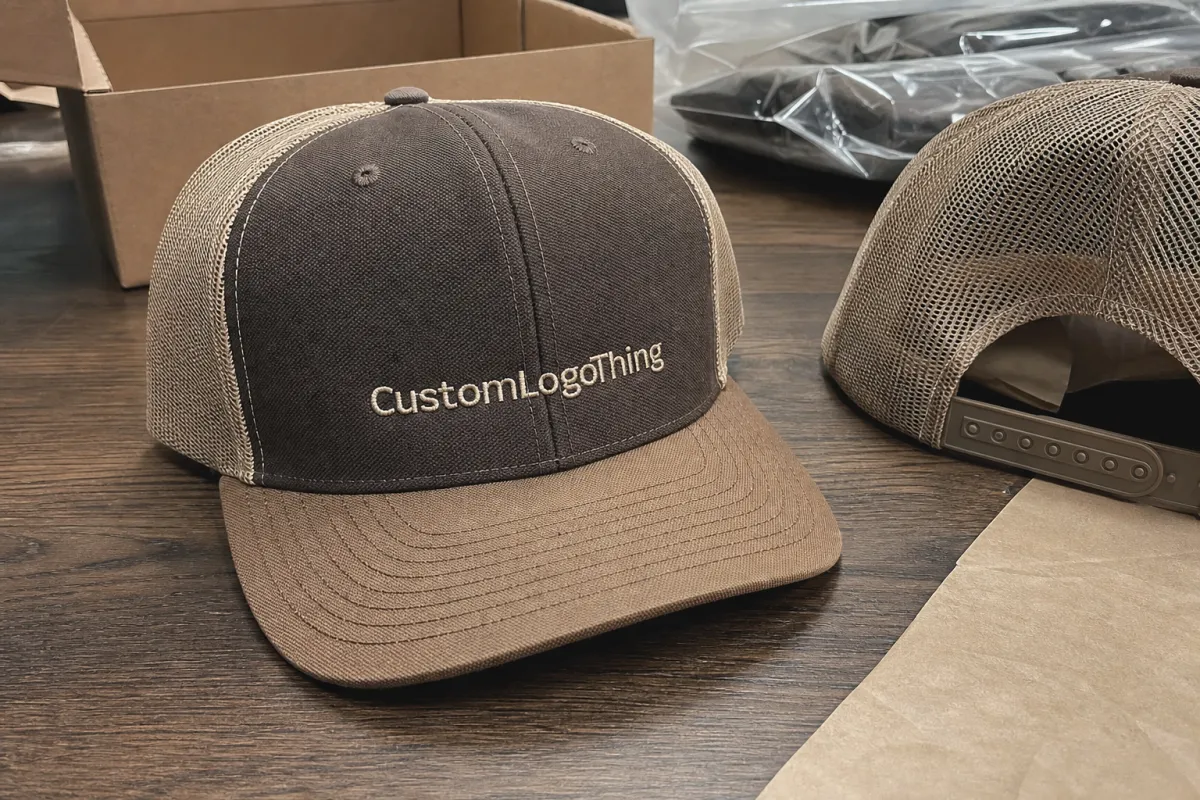
Trucker caps look similar on a screen, yet the body construction changes the feel much more than most buyers expect. A structured front holds its shape and creates a crisp brand face, which suits wineries that want a neater retail presentation. An unstructured front feels softer and more casual, which can fit a relaxed club culture. Foam-front truckers give the strongest retro look and a larger imprint area, but they can read more promotional than premium unless the rest of the spec is carefully chosen.
The mesh matters too. Standard polyester mesh is common because it breathes well and keeps weight down, but the density changes the visual tone. Finer mesh can look a little cleaner and more refined. Coarser mesh feels more classic and more obviously casual. For warm tasting rooms and outdoor events, breathability is not a minor feature. It is the difference between a cap being worn all day and being left in a car cupholder after one shift.
Crown height affects comfort across a mixed audience. Mid-crown caps are usually the safest bulk choice because they suit a wider range of head shapes and wearing preferences. Low-crown styles feel more fitted and can look fashion-forward, but they are less forgiving. High-crown styles preserve the traditional trucker silhouette and can display more vertical presence on a shelf. The brim follows the same logic. A gently curved brim is easy for most wearers. A flatter brim creates a sharper profile for retail display and photo use.
Closure choice should be treated as a fit decision, not a hardware afterthought. Snapback adjustment remains the most practical default for bulk orders because it covers a broad size range and is easy to wear across staff and guest groups. Fabric straps and buckle closures can look a little more elevated, but they are not always as forgiving in high-volume programs. If the caps will move between employees, event staff, and customers, snapback usually creates fewer fit complaints.
Color often decides whether the order feels timeless or tied to one campaign. Stock black, navy, charcoal, white, and forest green are common for a reason: they work with most apparel, hold up on display, and avoid the short shelf life of more novelty shades. Bright seasonal colors can work for special events, but they also date the product quickly. Unless the order is tied to a short promotion, it usually pays to think in terms of brand longevity rather than temporary attention.
Two quiet details deserve more attention than they get: the sweatband and the panel construction. A smoother sweatband helps the cap feel less scratchy in warm weather, especially for staff who will wear it repeatedly. Clean panel seams and even stitching help the hat look better in person, in photography, and on retail hooks. That matters because the same item may need to perform as a uniform piece, a gift, and a merchandise line.
Typical trucker cap weights run light enough for all-day wear, but the final feel depends on the blank. A cap with a stiff front panel and thicker mesh can hold shape better in retail display. A lighter blank can improve comfort but may wrinkle faster in shipping. Buyers who need a balanced result should ask for samples or detailed spec sheets before locking the order.
Decoration Choices That Stay Clear on Curved Panels
For most winery programs, embroidery remains the safest decoration choice because it is durable, familiar, and readable on a moving person. Simple winery marks, short wordmarks, and bold monograms usually embroider well, especially when stitch count is kept under control. A clean logo often looks better at 4,000 to 7,000 stitches than it does at a much heavier fill. More stitches can add dimension, but they also raise cost and can make a design feel crowded on a curved front panel.
That curved front is where artwork either works or starts to blur. Thin lines, small type, and detailed crests often need more support than standard panel embroidery can provide. In those cases, woven patches, embroidered patches, or a simple woven label may preserve the artwork more cleanly. Patches also change the tone of the piece. They tend to feel a little more craft-driven and less corporate, which many wine brands prefer.
Placement should be confirmed before approval. Front-panel decoration is the most common and usually the most balanced. Side placement can work if the cap also needs a secondary mark, a vintage reference, or a club identifier. Back decoration is less common on truckers because the mesh and adjustment area limit the available space, but a small woven tag or subtle side hit can still work if the artwork stays simple.
The file checklist matters more than many buyers expect. Send vector artwork whenever possible, along with Pantone references, preferred thread colors, and a clear note on whether the logo must read from a distance or hold up under close inspection. If the art includes very fine lines or tiny text, ask the supplier to flag simplification before digitizing begins. That is far better than discovering the issue after proof approval.
There is a practical tradeoff here. Embroidery gives depth and a durable finish, patches protect detail, and labels can support very simple branding at a lower price point. The right choice depends on the logo, the cap body, and the intended use. A clean two-color winery mark on a structured front cap usually embroiders well. A detailed crest with script and thin outlines often benefits from a patch.
Most suppliers will also ask for a maximum decoration width. For trucker caps, the front panel usually works best with compact artwork rather than oversized graphics. A logo that is too wide can run into seams, distort around the front curve, or feel crowded once the cap is worn. That is why a proof should show actual placement, not just artwork centered on a blank rectangle.
For buyers who want a quick comparison, this is the sort of table worth asking for during quote review:
| Option | Best For | Typical MOQ | Typical Decorated Unit Cost at 500 pcs | Notes |
|---|---|---|---|---|
| Stock trucker cap + embroidery | Staff wear, giveaways, simple resale | 100-250 pcs | $3.80-$6.25 | Best for clean logos and faster approvals |
| Stock trucker cap + woven patch | Small type, detailed crest work | 150-300 pcs | $4.60-$7.40 | Helps preserve detail on curved front panels |
| Special color cap + embroidery | Brand-driven retail programs | 300-500 pcs | $5.10-$8.75 | Better visual impact, but minimums usually rise |
Pricing, MOQ, and Quote Variables That Move the Unit Cost
On a bulk cap order, unit cost depends on more than the blank cap. The biggest drivers are quantity, decoration method, stitch count, thread color count, cap blank quality, and packaging. If you want a clean quote, separate those elements early so the supplier can price the actual build instead of guessing at a generic hat number.
MOQ deserves a practical explanation. Stock cap styles usually support lower quantities because the blank body already exists and decoration is the main variable. Once the order asks for custom colors, specialty trims, branded taping, or a more complex decoration layout, the minimum often rises. That is normal and usually tied to how the factory stages materials and sets up production.
The quote should show more than one quantity tier. A jump from 250 to 500 pieces can lower the unit cost enough to justify a larger inventory buy if the caps are likely to move through tasting rooms, club bundles, and seasonal events. A jump from 500 to 1,000 can improve price again, but only if the brand can use the quantity without creating dead stock. The real question is not just “What is the cheapest unit price?” It is “Where does the order size make the most sense for margin and shelf life?”
Ask for landed cost too. Freight, labeling, split-shipment charges, and carton handling can change the real cost enough to matter. A quote that looks strong on unit price can weaken after it is delivered into three tasting rooms, an event warehouse, and a direct-to-member fulfillment center. If the supplier cannot explain those delivery variables clearly, the quote is incomplete.
For decorated caps, setup fees also deserve attention. Some suppliers include digitizing in the decoration price, while others bill it separately. Patch orders may include a one-time mold or program fee. Those charges are not necessarily a problem, but they should appear before approval so the buyer understands the first-run cost versus the reorder cost. Reorders are usually where the budget improves, and that is often the number that matters most.
Bulk pricing for trucker caps is sensitive to cap body availability. If a specific blank is in short supply, the price can rise faster than expected. That is one reason many experienced buyers keep a backup color or a second acceptable blank on file. It avoids starting over when the preferred cap body is delayed or discontinued.
The most useful comparison is the one that shows how price changes with quantity and complexity. If the supplier can present 250, 500, and 1,000 piece tiers side by side, the buyer can make an inventory decision instead of a blind purchase.
For buyers who want a larger purchasing framework, our Wholesale Programs page is a good place to compare order structures across different custom merch categories.
Production Process, Proofs, and Turnaround Timing
A clean order usually follows the same path: quote, artwork intake, digitizing or layout prep, digital proof, buyer approval, production, packing, and shipment. That sequence sounds basic, but the pace changes depending on how quickly the buyer responds and how clean the art file is. In practice, the proof stage is where many timelines either stay tight or drift.
Digitizing matters especially for embroidered caps. The sew file has to account for panel curvature, logo size, and the way stitches sit on fabric that moves during wear. If the design is being translated from a flat logo file, the supplier may need to simplify fine elements so they read clearly on the cap. That is not a defect. It is part of making embroidery look deliberate instead of crowded.
Turnaround depends on four things more than anything else: stock availability, decoration complexity, proof approval speed, and whether the order requires special assembly or split shipments. A straightforward stock cap with one decoration location can move quickly once approved. A more customized build, especially one with patch production or mixed color lots, needs extra lead time. Buyers planning a launch, club mailing, or tasting-room refresh should build in a buffer so freight does not become the only cushion.
That buffer matters because production time and transit time are not the same thing. A supplier may finish the run on schedule, yet cross-country freight or a multi-stop delivery plan can still push the handoff late. If the caps must arrive before a club ship date or event opening, the delivery window should be set with margin, not guessed at the last minute.
For standard stock trucker programs, production can be relatively fast once the proof is approved. More customized orders take longer because the blank, decoration method, and packaging all need to line up. A buyer who wants a realistic timeline should ask for the earliest ship date, the most likely ship date, and the risk factors that could shift the order. That is a better planning tool than a single optimistic estimate.
Packaging and transit handling also deserve attention. Caps are not fragile in the same way glass is, but they can still lose shape if cartons are overpacked or crushed. If the order has to meet transport tests or survive a long freight lane, ask how the supplier packs bulk cartons and whether the outer cases are qualified against common distribution stress. Standards such as ISTA are useful references when you want to think beyond the product and into the shipment itself.
A good proof should show decoration placement, approximate size, thread or patch colors, and cap blank color. If the proof only shows a logo floating on white space, it is not enough for approval. The buyer needs to know how the design sits on the actual cap, because a one-inch shift can change how premium or promotional the final piece feels.
What a Packaging-Focused Supplier Should Handle for You
The best suppliers do more than quote a cap. They keep approved artwork on file, preserve the same decoration placement and color tone on repeat runs, and help the buyer avoid drift from one reorder to the next. That consistency matters for wineries because merchandise often gets reordered in the background while the brand is still expected to look exactly the same on the floor and in member shipments.
They should also manage the less visible parts of the job: carton labeling, count verification, and shipping coordination. Those details become very real when caps are heading to multiple tasting rooms, event sites, or fulfillment locations. A buyer should not have to chase missing boxes or guess which case belongs to which destination.
From a packaging standpoint, material traceability can matter too. If a winery is asking for recycled inserts, branded carton notes, or a broader sustainability story, it helps to work with a supplier who understands paperboard sourcing and can align packaging choices with recognized programs like FSC when paper components are part of the order. That does not change the cap itself, but it improves the overall program and helps the buyer explain the merchandise more clearly.
Quality control should be visible, not assumed. A supplier ought to check stitch alignment, logo centering, color consistency, loose threads, and carton counts before shipment. For patch programs, the patch should be set square and pressed cleanly. For embroidery, thread tension should not distort the front panel. For any order, the cap should be checked under normal light, not only under ideal proof conditions.
Here is the buyer-side checklist I would use before approving a vendor:
- Clear proofs that show logo placement, size, thread colors, and decoration method
- Sample photo references or prior-run examples that show the actual cap body and decoration style
- Responsive updates on art approval, material status, and ship timing
- Quality control on decoration alignment, stitch consistency, and color tone
- Practical guidance when the artwork needs cleanup or the cap spec needs adjustment
If the supplier cannot explain how they will keep reorders consistent, that is a warning sign. If they can explain the spec, the proof process, and the packout method in plain language, that is usually a much better fit for a winery program that needs repeatability more than hype.
For quick reference material and common order questions, our FAQ page is a useful starting point before you send art files for quoting.
Next Steps for a Clean Bulk Cap Order
The simplest way to move a cap order forward is to gather quantity by color, choose the cap style, confirm the decoration method, and collect vector artwork before requesting pricing. That small bit of prep usually saves more time than it takes, because the quote can be built around a real spec instead of a rough idea.
Then ask for three things together: a tiered price table, a proof timeline, and an estimated ship date. Those three numbers tell you whether the order fits the launch window, the tasting-room season, or the club shipment calendar. If delivery timing matters, say so early. A good supplier can usually point out where the schedule is tight and where there is room to adjust.
It also helps to decide how much reorder flexibility you want. If the cap is meant to become a repeat item, keep the blank, thread numbers, patch art, and packaging notes in one record. That reduces guesswork on the next run and makes color drift easier to prevent. Reorder consistency is one of the quiet advantages of disciplined planning, and it is usually more valuable than shaving a few cents off the first order.
Good wine club merch is often the kind nobody talks about because it just works. The logo reads clearly, the fit is comfortable, the color holds steady, and the reorder arrives without drama. That is the point of planning.
If you are organizing wine club trucker caps Bulk Order Planning, send the quantities, art files, cap color targets, and delivery details together so the quote can be accurate the first time and the production path can stay simple.
FAQ
What is the best MOQ strategy for a wine club trucker cap bulk order?
Ask for tiered pricing at several quantities so you can see where the unit cost drops without buying more inventory than you need. If the order has to stay smaller, use a stock cap style and keep the decoration to one primary location.
Which decoration method works best for bulk trucker caps for a wine club?
Embroidery is usually the most durable choice for simple logos and strong winery marks. Patches can be better when the artwork has fine detail, a small script line, or thin elements that embroidery would crowd.
How do I keep cap colors consistent across a re-order?
Save the approved cap style, color code, and artwork setup so the next run starts from the same specification. It also helps to request a proof before production and note any Pantone or thread color references in the quote record.
How long does production usually take after proof approval?
Turnaround depends on stock availability, decoration method, and how quickly the proof is approved. Plan extra time for shipping and event deadlines so production timing is not your only buffer.
What should I send to get a fast quote for a wine club trucker cap order?
Send quantity by color, logo files in vector format, decoration placement, and the delivery ZIP code. Include your target event date or in-store launch window so the quote reflects the right timing and freight needs.