A beanie leaves little room for sloppy execution. That is why custom Woven Label Beanies for private label apparel brands can look more polished than a louder logo treatment when the label size, placement, and body spec are handled with care.
Most margin loss comes from vague specs, late changes, and approvals that drift. The woven label itself is usually not the expensive part. The cost creep comes from unclear artwork, rework, packaging changes, and shipping decisions made too late. Treat the beanie like any other branded item: define the finish, lock the structure, and make sure the presentation fits the line.
Why custom woven label beanies for private label apparel brands sell better
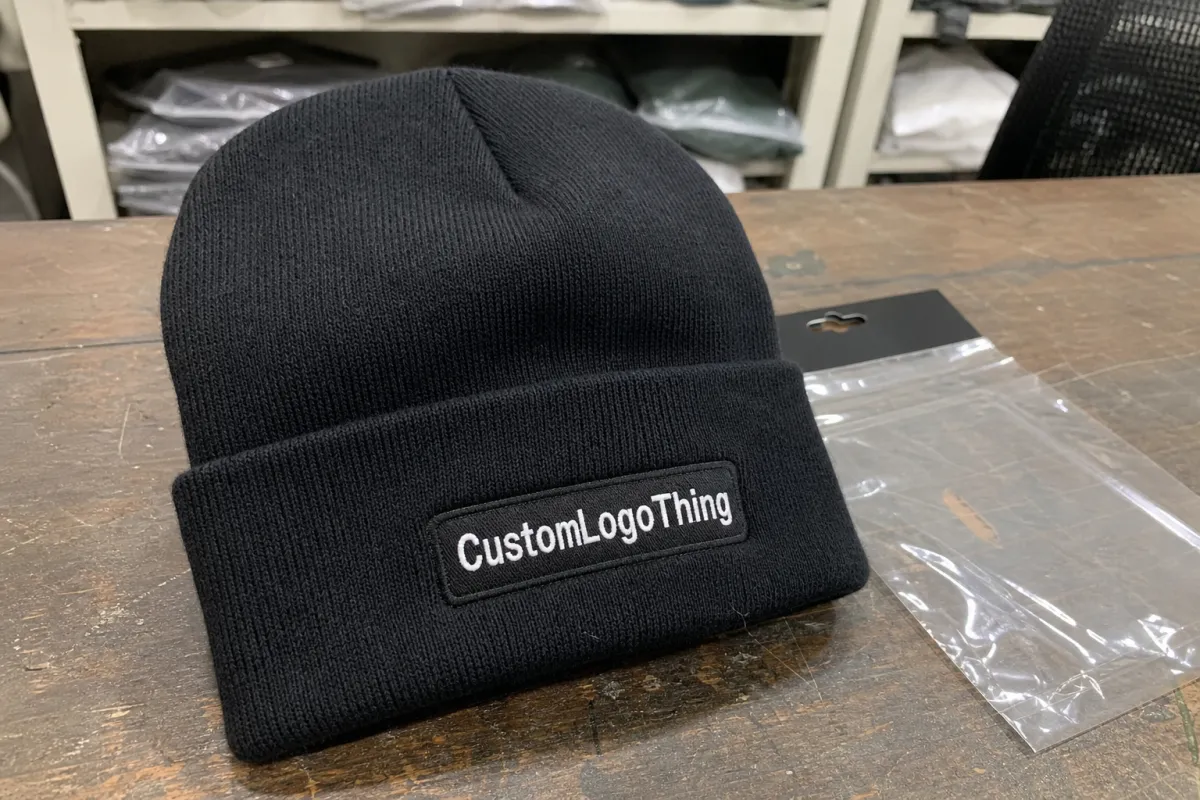
A woven label works because it gives the eye a clean read without competing with the knit texture. On a small product, that balance matters. If the decoration is too loud, the beanie can look busy. If it is too small or too detailed, it stops reading as intentional branding.
Retail buyers notice that quickly, and so do end customers. A tidy label on the cuff signals that the brand thought about presentation, not just decoration. For private label lines, that matters across DTC, wholesale, and gift sets because the product has to feel ready for resale, not like a promotional leftover.
The label is also a quality cue. It should reinforce the body spec, not fight it. A plain beanie can still feel premium if the label is proportioned correctly, the thread colors are controlled, and the placement sits cleanly on the fold. The more the product depends on visual discipline, the less it benefits from decorative noise.
“If the logo needs a magnifying glass, it is not a premium detail. It is a readability problem.”
The goal is simple: make the beanie feel deliberate, consistent, and aligned with the rest of the brand system.
Process and timeline: from tech pack to delivered beanie
Start with the spec sheet, not a loose concept. For Woven Label Beanies, the important variables are body style, knit gauge, label size, color codes, attachment method, and packaging. If any of those change after sampling starts, expect extra time and another approval cycle.
The production flow is usually straightforward:
- Artwork review and file cleanup.
- Mockup approval with placement and scale confirmed.
- Sample or pre-production sample.
- Revision if the logo reads too small or sits awkwardly on the cuff.
- Main production and label attachment.
- Inspection, carton packing, and shipment.
Most delays come from predictable issues. Woven labels are not billboards, so thin rules, tiny type, and intricate icons often need simplification. Placement changes also slow things down because moving a label 10 mm can trigger another round of review once stitching and fold behavior are considered.
Lead time depends on the body and the amount of customization. For stock beanie bodies with a woven label added, a realistic budget is 12-18 business days after approval, plus transit. If the body is custom knit, the order includes multiple SKUs, or the packaging has extras like inserts or custom printed boxes, the timeline usually stretches to 18-30 business days before shipping. Faster turns exist, but they usually cost more and leave less room for correction.
Shipping should be planned with the same discipline as the product. If the order includes retail-ready bags, hang tags, or carton specs, the logic used by the International Safe Transit Association is a useful reference point. A beanie does not need fragile-goods protection, but it still needs to arrive with the label intact, the fold preserved, and the cartons readable at receiving.
Cost, pricing, and MOQ: what changes unit cost
Ask for pricing in pieces, not one blended number. For Woven Label Beanies, the main cost buckets are the base beanie, the label, setup, attachment labor, packaging, and freight. If a quote does not break those out, it is hard to compare suppliers accurately.
The woven label itself is rarely the expensive line item. Costs usually rise around it: multiple placements, special folds, individual polybags, barcode labels, insert cards, carton marks, and freight upgrades can move landed cost more than the label does.
| Option | Typical MOQ | Unit Cost Range | Lead Time | Best For |
|---|---|---|---|---|
| Stock beanie + standard woven label | 100-300 pcs | $2.20-$4.50 | 12-18 business days | Launches, small private label tests |
| Stock beanie + custom packaging | 300-500 pcs | $2.80-$5.80 | 15-25 business days | DTC, gift sets, retail-ready presentation |
| Custom knit body + woven label | 500-1,000 pcs | $4.20-$8.50 | 18-30 business days | Core private label programs |
| Premium body + branded packaging | 1,000+ pcs | $5.50-$10.00+ | 25-40 business days | Wholesale, seasonal collections |
MOQ changes unit cost because setup is spread across fewer pieces. A 100-piece run can work for a test, but it will never price like a 1,000-piece reorder. Complexity also raises cost: more colors, more sizes, more placements, and more packaging variations all add labor or material.
To compare quotes properly, ask each supplier to separate body, label, setup, attachment, packaging, and freight. If your program includes more than one trim item, review Custom Labels & Tags and Custom Packaging Products so you can see how the price stack changes once the beanie is part of a broader system.
Simple specs still win on cost. Standard bodies, one or two thread colors, one label location, and basic packaging usually offer the best value. If the logo is complicated and the label is tiny, simplify the art before trying to force the price down. That is where the savings usually are.
Choosing the right beanie spec for private label
The label only looks premium if the body supports it. A crisp woven label on a thin or overly textured knit can feel out of place, even when the graphic is strong. For Private Label Beanies, the body spec matters almost as much as the label spec.
Cuffed beanies are the easiest to brand because the cuff gives you a visible, relatively flat zone. Uncuffed styles feel cleaner, but the branding has less room. Slouch beanies create a softer look, though the label can disappear into folds if placement is too low. Ribbed knits help the shape hold, while looser gauges can warp more than brands expect.
Most label placements fall into four practical choices:
- Cuff edge - best for a clean retail read and simple branding.
- Side seam - subtle, though it can vanish in thick knit.
- Interior fold - useful for minimal exterior branding and secondary information.
- Woven patch - better when the brand mark needs a bolder presence.
Label size matters more than many teams expect. On many cuffed beanies, something around 30 x 12 mm to 45 x 18 mm works well. Larger than that, and the cuff can look crowded. Smaller than that, and the mark stops reading at normal viewing distance. Knit structure, yarn thickness, and stretch all affect how the label sits once the product is worn.
Packaging matters too. If the beanie ships in a fold-over bag, sleeve, or retail carton, the label has to stay readable after folding. That sounds minor until a carton is opened and the label is buried under the cuff. Brand presentation is a chain, not a single decision. The same logic applies to packaging design and to the way a product is arranged in a box, tray, or polybag.
Step-by-step ordering guide for private label brands
Define the end use first. A beanie for retail needs a stronger presentation than one made for team wear. DTC orders may need individual packaging and barcode labels. Wholesale orders may need cleaner carton marks and less decorative overhead. Once the use case is clear, pricing and approval become easier.
Use this order:
- Write the brief - include artwork, target price, size, placement, and deadline.
- Confirm the body - cuffed, slouch, ribbed, or another shape.
- Review the mockup - check scale and placement before sample production.
- Approve the sample - examine it in daylight, not under warm warehouse lighting.
- Lock packaging - polybag, hang tag, insert card, or carton spec.
- Start main production - only after the full spec is frozen.
- Inspect and ship - verify quantities, labels, and carton count.
Before mass production starts, put these details in writing:
- Color codes for yarn and label threads.
- Exact finished size and tolerance.
- Attachment method and stitching color.
- Packaging format and carton labeling.
- Any insert cards, UPCs, or barcode requirements.
If you are comparing vendors, compare the same thing. One supplier may quote a lower unit price because packaging or freight was left out. Another may include better finishing and still land lower once shipping is added. That is why a clean quote sheet matters.
For brands building a broader line, the beanie should fit the same visual system as the rest of the range. If your apparel line already uses a certain paper stock, insert style, or box format, carry that logic through the beanie. Consistency matters in branded packaging, and it matters just as much in accessories.
Common mistakes that drive up cost and delay launch
The most common mistake is using logo art that is too detailed for a woven label and then acting surprised when the text loses clarity. Tiny type, thin lines, and gradient-style artwork do not translate well at label scale. If the mark needs microscopic precision, it probably belongs on a hang tag or printed insert instead.
Another problem is moving the placement after sample approval. In production, that means more labor, another inspection, and usually a later ship date. If the knit direction or cuff structure changes with the label position, the fix becomes even more expensive.
Brands also over-order too early. Five colors, three sizes, two packaging styles, and a “just in case” quantity can turn one clean product into a storage problem. A better approach is to start tighter unless you already have sell-through data. Inventory is not proof of demand; it is only inventory.
Skipping a daylight check causes problems too. Screen color and thread color are not the same thing. A sample approved under warm indoor light can look different in neutral daylight. That is avoidable if the sample is reviewed in the light it will actually be seen in by buyers and customers.
Packaging mistakes can be just as expensive. The beanie may be right, but the final presentation can still feel unfinished if carton markings are vague or the insert card is wrong. If your line includes custom printed boxes, confirm the dimensions and print layout before committing.
Expert tips to make the label feel premium without overspending
Use contrast with intent. One or two strong thread colors often read cleaner than a crowded multi-color build. More colors usually mean more noise and more cost. A sharp two-color woven label can look better than a busier version because the eye processes it faster.
Keep the label size proportional to the cuff. On a slim cuff, a large label looks attached after the fact. On a generous cuff, a tiny label disappears. That proportion is part of the design, not an afterthought. Good packaging design works the same way: brand elements should fit the structure instead of fighting it.
“The most premium-looking beanie is often the one that knows when to stop.”
Spend where people touch first. That means yarn quality, stitch density, and the finish of the label attachment. A flat, tidy sew line matters more than a flashy extra layer. If the body feels scratchy or the cuff does not hold shape, the label will not rescue it.
Restraint is underrated. If the logo is simple, push for cleaner execution instead of adding extra decoration. A beanie with one clear brand mark, stable fit, and good handfeel usually reads more premium than a louder version with too many additions. That is true in apparel, and it is true in product packaging as well.
If you want a reference point for finishing standards and material selection, the Packaging Institute has useful industry context. Not everything there maps directly to knitwear, but the discipline behind material choice, print clarity, and presentation carries over.
Finally, use materials and components that fit the rest of the line. If your brand already uses FSC-certified paper for cards or sleeves, keep that continuity. It makes the order feel connected instead of patched together.
Next steps: spec, quote, and sample the right way
Create a one-page spec sheet before you request pricing. Include the artwork file, finished size, placement, yarn colors, target MOQ, deadline, packaging format, and whether you need sample approval. For custom Woven Label Beanies for private label apparel brands, that one page usually saves more time than a long email thread.
Then ask for a quote that separates the line items. You want body cost, label cost, setup, attachment, packaging, and freight. If a supplier can only give one number, you cannot judge the real landed cost. That is how brands get surprised later.
Sample before you scale. Check the piece in daylight, fold it the way it will ship, and compare it with the rest of your brand assets. If the beanie sits next to hang tags, sleeves, or custom packaging, make sure the visual language matches. The product should feel like part of the same system, not a lone item with a logo placed on top.
For reorders, keep the formula stable unless you intentionally change it. That means the same label size, placement, thread colors, and packaging notes. Reorder consistency reduces approval time and protects margin.
Used well, woven label beanies are not a seasonal afterthought. They are a repeatable accessory format with clear variables, measurable costs, and enough room for brand character without wasting material or labor.
Are woven label beanies better than embroidered beanies for private label brands?
Woven labels are usually better when the logo includes fine lines, small text, or a cleaner retail look. Embroidery works better when the artwork is simple and texture matters more than precision. The better choice depends on readability at cuff distance, not on habit.
What is a normal MOQ for custom woven label beanies?
MOQ depends on the beanie body, color count, and how customized the label setup is. Smaller runs usually cost more per unit because setup is spread across fewer pieces. Ask for pricing at 100, 300, 500, and 1,000 units so you can see the break points clearly.
How long does the process take for private label woven label beanies?
Sampling is often the slowest stage, especially if the artwork needs simplification. Production timing changes with stock availability, label approval, and shipping method. Build extra buffer for seasonal launches, because the last two weeks before a deadline are where small problems become expensive.
What affects unit cost the most on custom woven label beanies?
Artwork complexity, label size, thread colors, and attachment method all affect price. Packaging choices and freight can move the final landed cost more than people expect. Standard body styles and simpler specs usually bring the best value.
Can I use one woven label across different beanie styles?
Yes, if the label size and attachment method work on each body. Check how it looks on cuffed, slouch, and oversized styles before approving a full run. A reusable label spec makes reorders faster and keeps the brand consistent.

