Premium knitwear can look finished on a display wall and still arrive looking tired, flattened, or mislabeled by the time it reaches a customer. That is why Woven Label Beanies packing requirements for ecommerce apparel fulfillment matter so much: the pack spec decides whether the product keeps its shape, whether the label is shown the way you intended, and whether a 3PL can receive and ship it without repacking.
Buyers often focus on the beanie itself, then discover the real friction shows up in the carton. A fold that works for merchandising may not survive parcel transit. A barcode that looks fine in a sample may be hard to scan at intake. A bag that seems inexpensive can create extra hand labor on every unit. The right packing plan makes the item easier to store, count, replenish, and ship, which is exactly what apparel fulfillment needs.
What “Shelf-Ready” Actually Means for Woven Label Beanies
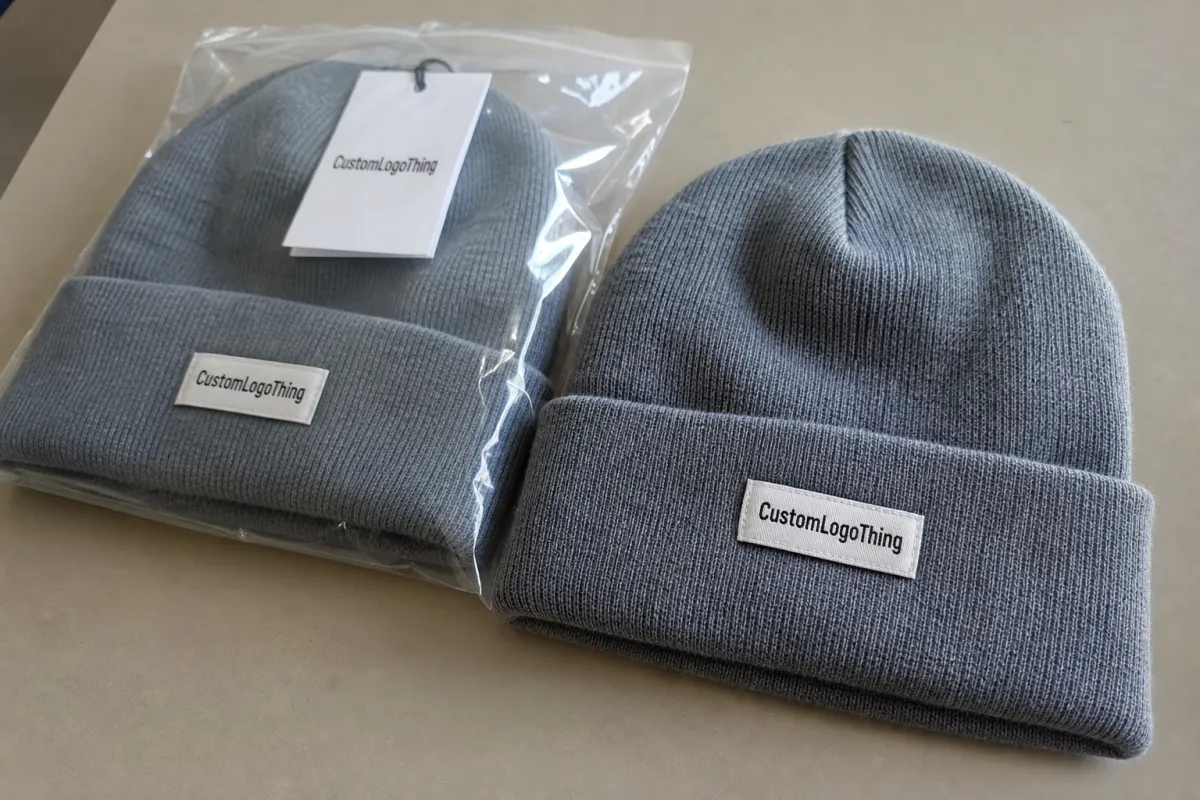
In practice, “shelf-ready” does not just mean the beanie looks neat. It means the unit can move through receiving, storage, pick-and-pack, and customer delivery without losing its shape or creating questions at the warehouse. For woven Label Beanies Packing Requirements for ecommerce apparel fulfillment, the job is to protect the knit, keep the label visible or intentionally hidden, and present a scannable SKU in a package the warehouse team can handle quickly.
That is a different goal from retail-only presentation. A beanie on a peg wall can be folded for visual impact. A beanie in a DTC parcel needs enough protection to survive compression, stacking, and repeated handling. The ideal spec does three things at once: preserves the cuff and crown shape, keeps the woven label from snagging or curling, and gives the fulfillment center a simple unit count.
From a buyer’s point of view, early decisions on pack format affect more than appearance. They affect damage rates, pick speed, insert visibility, and whether the 3PL can process the item in one pass. A clean spec also helps with replenishment. If every colorway packs the same way, a warehouse can train once and move faster instead of relearning each SKU.
Practical rule: the best-looking folded beanie is not always the best-shipping beanie. If the fold is elegant but fragile, the carton will tell the truth by the time it reaches intake.
How Packing Specs Work From Factory Carton to Customer Door
The flow starts long before the parcel label prints. A production run usually moves through folding, bagging, inner packing, master carton packing, palletization, warehouse receiving, and final shipment. Each step has to agree with the one before it. If the factory folds to 6 x 8 inches but the 3PL expects 6.5 x 8.5 inches, someone ends up reopening cartons and adjusting units by hand.
The woven label changes the plan more than many buyers expect. If the label is intended to be visible in a retail-facing bag, the fold direction and bag orientation become part of the design. If the label is just a brand marker inside the cuff, the packing goal shifts toward speed and protection. Placement matters for scanning too, especially if the SKU sticker or barcode sits near the fold line.
This is where ecommerce fulfillment systems can complicate things. Most 3PLs want a clear case-pack count, a predictable carton size, and a barcode location that can be scanned without opening the unit. A good spec should answer: How many units per inner pack? How many inner packs per master carton? What is the carton cube? Where does the SKU label sit? Does the warehouse receive by individual units or by case?
For teams working with multiple embellishments, a pack spec should also account for the product mix. A beanie with a woven label behaves differently from one with a rubber patch, a pom-pom, a lining, or a heavier rib knit. If you also use Custom Labels & Tags across the line, keep the label placement consistent so the pack-out instructions stay simple.
Parcel testing helps here. A sample that looks great on the table can still fail after vibration, compression, and corner drop events. Standards such as ISTA methods are useful reference points because they force the team to think like the parcel network does: stacked, dropped, and repeatedly handled, not gently displayed.
Key Factors That Change Beanie Packing Requirements
Not every beanie behaves the same in transit. Material weight and stretch matter first. Acrylic knits usually compress more predictably than wool blends, while ribbed constructions and cuffed silhouettes can spring back in odd ways if they are folded too tightly. A thin promotional beanie may fit a compact mailer. A thick cold-weather style may need a wider poly bag or a mailer with more clearance around the crown.
Decoration changes the risk profile. Woven labels can snag if they catch a rough carton edge. Patches can press against adjacent units and leave a mark. Pom-poms add height, which changes bag selection and carton fill. Lining can make the unit bulkier even when the outer knit looks small. Once you have mixed materials, the safest thing is to treat the beanie as a specific construction, not a generic cap.
Channel requirements matter just as much. A wholesale case going to one store chain is a different animal from a marketplace order going straight to a consumer. DTC parcels usually need smaller touchpoints, clearer barcode placement, and cleaner unboxing. Wholesale cases may prioritize count integrity and cube efficiency. Store replenishment often wants fast identification, easy case opening, and minimal repacking.
Climate and transit distance are easy to overlook. Long dwell times in humid or warm conditions can justify stronger outer cartons, a more moisture-resistant bag, or a simple desiccant insert for sensitive materials. If the destination is a dry domestic route with short transit, that level of protection may be unnecessary. If the route crosses multiple hubs and sits in storage before shipping, it can be worth the extra cents.
For sustainability requirements, carton and paper choices should also be checked early. FSC-certified board may be part of a retailer requirement, and packaging reduction can lower freight weight. FSC guidance is useful if your buyer or marketplace asks for traceable fiber content in outer packaging.
Process and Timeline: From Sample Approval to Production Steps
A clean run starts with a written pack spec, not an assumption. Before production begins, confirm the fold, bag style, barcode rules, carton count, and pallet pattern. If those details stay fuzzy, the factory will make a reasonable guess, and that guess may not match the 3PL’s receiving rules.
Sampling should test more than appearance. One pre-production sample should confirm the fold holds, the woven label stays in the right position, the barcode scans correctly, and the beanie rebounds after unpacking. If the sample is going into a poly bag, check whether condensation or static creates issues. If the unit is compressed too tightly, it may look tired for the first customer photo.
Lead times often extend because packaging materials move separately from the garment. Printed poly bags, custom inserts, and odd-size cartons can add sourcing time even when the beanie knit itself is ready. A common planning mistake is assuming the blank product lead time covers the full project. It does not. The pack format has its own calendar.
Most teams do better when they add a formal handoff step: final pack spec, production sign-off, warehouse receiving notes, and shipping label logic all in one document. That document should be read by the supplier and the fulfillment partner. If one side uses “inner pack” and the other uses “case pack,” the mismatch is usually expensive.
As a rough planning guide, many buyers budget 7-10 business days for sampling and review, then 12-15 business days for production once artwork and pack format are approved. Special materials can stretch that further. It is not always the beanie itself that takes time; sometimes it is the packaging supply chain around it.
Cost, Pricing, and Unit-Cost Drivers You Should Model
Packaging cost is rarely just a bag price. It is a system cost. The quote changes with bag type, folded dimensions, label application, carton size, and whether the units are hand-folded or machine-packed. A small change in the pack format can add labor at the factory, labor at the warehouse, or freight cost on the back end.
Here is a simple comparison buyers can use during sourcing:
| Pack format | Typical added unit cost | Best use | Main watch-out |
|---|---|---|---|
| Plain flat poly bag | $0.06-$0.18 | Basic DTC or wholesale protection | Can slow scanning if barcode placement is poor |
| Printed poly bag | $0.10-$0.25 | Brand presentation with light protection | Needs artwork approval and longer lead time |
| Retail-style header bag | $0.12-$0.30 | Display-ready packs or store programs | Can create extra opening time at fulfillment |
| Corrugated mailer or carton | $0.22-$0.50 | Premium beanies, long transit, fragile trim | Higher dimensional weight if sized poorly |
| No individual bag | $0.00-$0.05 | Tight controlled warehouse flows | Higher snag and presentation risk |
The cheap-looking option is not always the cheapest overall. A lower-cost bag can create more labor if it slows scanning or forces the warehouse to rebag damaged units. One minute of repacking on a 5,000-unit order becomes more than 80 labor hours, and that is before you count the replacement inventory for damaged pieces.
Hidden costs deserve attention too. Oversized cartons raise freight charges and can push apparel into dimensional-weight pricing. Extra air fill adds material and labor. Relabeling after receipt can delay replenishment. Even a carton that is 1-2 inches too deep can produce a freight penalty that wipes out the savings from a cheaper bag.
For that reason, ask every supplier to separate the quote into product cost, packing labor, packaging materials, and outbound preparation. That makes landed cost visible. It also gives you a fair way to compare suppliers who may bundle the same work very differently.
Common Mistakes That Hurt Presentation or Margin
One of the most common mistakes is using a single pack spec for every beanie style. Thin acrylic, heavy wool, cuffed knits, and pom-pom styles do not all fold the same way. A universal spec can look efficient on paper and still create fit issues, loose bagging, or crushed trim in the carton.
Another mistake is choosing packaging that looks premium but slows the warehouse down. A sealed poly bag without a clean opening tab may force the team to cut every unit. A beautiful insert may be useless if it blocks the barcode. Presentation only helps if the unit can still move through the building fast.
Carton efficiency is easy to ignore and expensive to ignore. If the master carton is oversized by even a little, the freight bill rises and the warehouse stores more air than product. For a high-volume beanie program, that can become a real margin drag over a season. It also increases the chance that the product shifts inside the box and arrives wrinkled.
Label discipline matters as well. Skipping pallet and master-carton labels slows receiving and causes count errors. A warehouse team should know, from the outside of the carton, what style, color, size, and quantity are inside. If they have to open boxes to find out, the process has already lost time.
- Do not assume the sample fold will scale without measuring it.
- Do not bury the SKU label under a fold line or seam.
- Do not approve a carton size before checking warehouse cube rules.
- Do not send the 3PL a spec sheet without photos.
Expert Tips for Faster Replenishment and Fewer Returns
Standardization is the easiest win. Keep fold direction and barcode placement consistent across related SKUs so the warehouse can train once and apply the same handling logic to every color. A line that uses the same inner-pack count across most styles also makes forecasting easier, which helps with replenishment.
A good pack-out spec sheet should include photos, measurements, and one clear receiving note. In a practical setup, that means front and back images, finished folded size, bag dimensions, case pack, master carton count, and pallet notes. If a 3PL can read the sheet in under a minute, the document is probably doing its job.
Small pilot runs are worth the time. Testing 50 to 200 units through the real fulfillment flow often exposes label visibility issues, bag fit problems, or scan failures that a lab sample misses. That is especially useful when you are introducing a new label, a new bag supplier, or a new warehouse partner.
Keep one alternate packaging option approved before the season starts. Inventory shortages happen. Art changes happen. A back-up poly bag or carton size can save a reorder from stalling while the packaging vendor catches up. Buyers who manage multiple knit accessories usually find that one spare spec prevents more trouble than it creates.
If sustainability is part of the brief, align packaging materials with the retailer’s requirements instead of guessing. FSC-certified board, right-sized cartons, and reduced void fill can all support the story without making the pack harder to handle. This is where thoughtful sourcing pays off.
Internal alignment is the hidden multiplier: if design, production, and fulfillment all work from the same pack sheet, there is less relabeling, less repacking, and fewer return reasons tied to crushed presentation.
Next Steps: Build a Pack Spec Your 3PL Can Execute
The fastest way to clean up a beanie program is to turn the packing plan into a document everyone can use. Start with finished folded dimensions, inner-pack count, bag type, carton spec, barcode location, and pallet notes. Then ask the supplier and the 3PL to sign off on the same file. That simple step removes a lot of guesswork.
For buyers working on woven label beanies Packing Requirements for Ecommerce apparel fulfillment, the real goal is not prettier cartons. It is a pack structure that protects the knit, preserves the branded label, and lets the warehouse ship the unit without extra handling. That is what keeps cost under control and presentation intact, from first intake to final delivery. If you need the label and tag side of the program aligned too, review Custom Labels & Tags as part of the same rollout.
Recheck the spec whenever you change a colorway, swap a label, add a patch, or move fulfillment partners. A beanie is a small item, but the packaging decisions behind it are not small at all.
What are the standard woven label beanie packing requirements for ecommerce fulfillment?
Most programs need a consistent fold, protective bagging, a scannable SKU label, and a case pack that fits warehouse receiving. The exact spec depends on beanie thickness, label placement, and whether the order ships direct to consumer or into wholesale inventory. A good standard protects the knit shape while still letting the 3PL count, pick, and ship quickly.
Do woven label beanies need individual poly bags for ecommerce apparel fulfillment?
Usually yes when the product needs protection, barcode visibility, or clean presentation at fulfillment and unboxing. If the beanie ships in a retail-ready carton or a tightly controlled warehouse flow, another inner pack may work. The decision should be based on handling risk, customer presentation, and the receiving rules of the fulfillment center.
How do packing requirements affect the cost of woven label beanies?
Costs rise when you add custom bags, inserts, hand-folding, relabeling, or special carton sizes. The cheapest material is not always the lowest-cost solution if it slows scanning or creates damage that must be replaced. Ask for a line-item quote so you can compare labor, materials, and freight impact separately.
What timeline should buyers expect for custom packing specs on beanies?
Sampling and approval usually take longer than the base beanie production because the pack format must be tested and confirmed. Printed bags, custom cartons, or special inserts can extend lead time if the materials are sourced separately. Build time for review, revisions, and warehouse alignment into the calendar before you release the order.
How can I reduce mistakes in woven label beanies packing requirements?
Use one written spec with photos, measurements, barcode placement, and case-pack instructions. Test a small pilot run with your 3PL before scaling the order. Review the spec whenever the style, label, or fulfillment channel changes so the packing stays consistent.


