Woven label Beanies Quality Control Checklist is a plain phrase for a surprisingly delicate job. A beanie only gives you a small working surface, and knit fabric does not forgive much; a label that sits 2 mm high, a cuff that twists slightly, or a seam that pulls at the edge can make a clean product look rushed the moment it leaves the bag.
That is why a useful checklist is less about polished language and more about repeatable checks. The buyer needs one reference for label placement, stitch quality, fold consistency, sizing, packaging, and carton count, because memory changes from person to person and factory to factory. The supplier needs the same reference, preferably with photos and measurements, so the order is judged against a fixed standard rather than a vague impression.
On woven-label headwear, the weak spots are usually small rather than dramatic. The issue is not a broken crown or a missing component; it is a label that drifts, thread tension that leaves a ripple, or a carton that arrives packed correctly but marked badly enough to slow receiving. Those are the problems that turn into rework, warehouse delays, and avoidable chargebacks.
Woven label beanies quality control checklist: why small defects matter
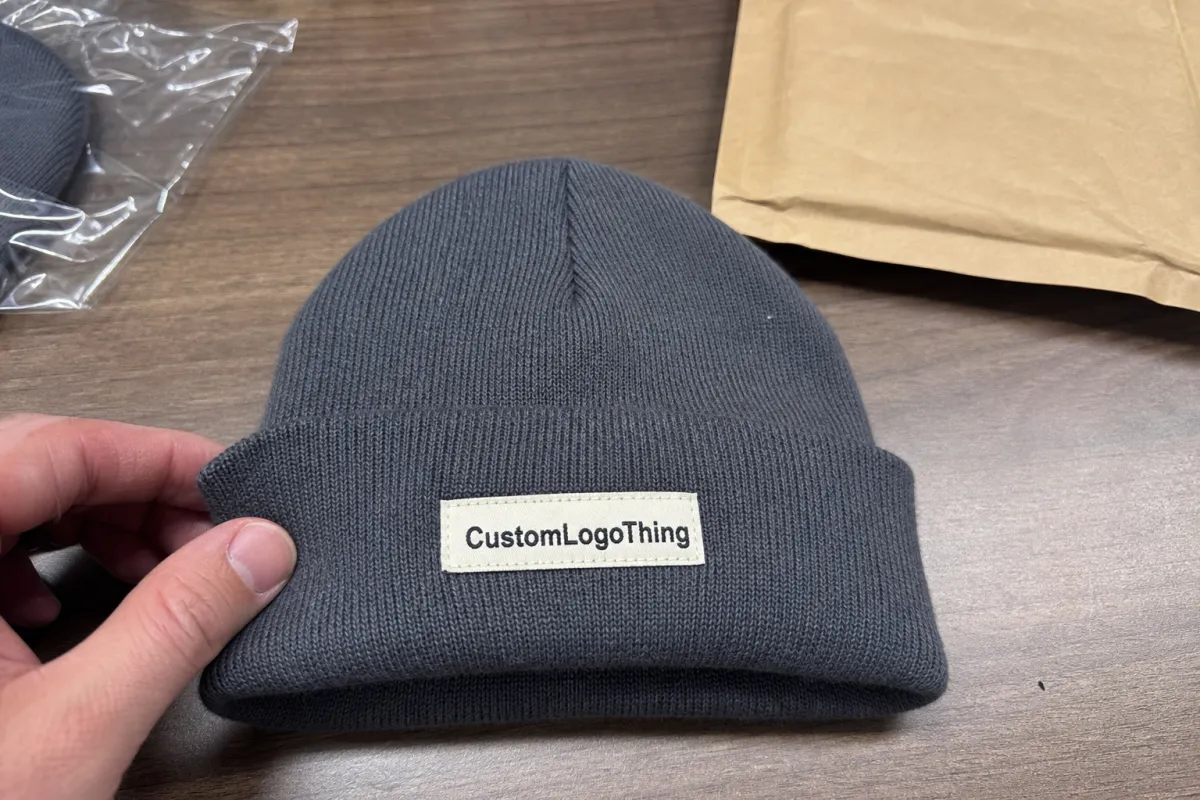
A beanie is not flat, stable, or predictable in the way a carton panel or printed insert is. It stretches when handled, relaxes after compression, and changes shape again once the buyer opens the polybag. That matters because a woven label can look centered in a factory photo and still read as slightly crooked on the cuff, where the eye compares it to a hard fold line rather than to the knit itself. The texture magnifies asymmetry.
Buyers often call that kind of issue minor, and on paper it is. In practice, the human eye catches it quickly, especially on cuffed beanies, where the fold becomes the first reference point. If the label is a little high, a little low, or sewn with uneven edge tension, the whole piece can feel less finished even if the Material and Sizing are otherwise acceptable.
The Woven Label Beanies quality control checklist usually needs to cover four risk groups: visible defects, construction problems, fit drift, and packout errors. Visible defects include crooked labels, loose threads, frayed edges, and color mismatch. Construction problems show up as skipped stitches, puckering, or a cuff depth that changes from unit to unit. Fit drift is more subtle; the beanie may measure correctly right after production, then relax differently after packing or steaming. Packout errors are the quiet ones that move straight into logistics: wrong counts, mixed SKUs, damaged bags, unreadable barcodes, or master cartons that do not match the packing list.
A beanie can pass a quick photo check and still fail on the warehouse dock. If the label is centered but the cuff twists after handling, the piece starts looking off before anyone checks the tag.
Dark yarn hides some noise, but it does not remove it. Light yarn exposes every needle path and loose thread. A dense woven label on a soft knit body can also ripple if the label is too large for the surface it is sewn onto. That is why the checklist should be written around the actual construction, not around a generic apparel standard. A 40 mm label may be fine on a structured cuff, yet too wide on a slouch style that needs more drape. The product decides the tolerance window, not the other way around.
How the inspection workflow works from sample to shipment
A solid inspection routine starts before bulk production. First comes artwork and color approval, usually followed by a physical sample or a small development round. The woven label should be checked for size, weave detail, fold style, thread color, and stitch direction. Once that sample is approved, it becomes the benchmark. That matters because a clean file on its own does not guarantee a clean final piece; the sample translates the artwork into something a production line can actually repeat.
After sign-off, the workflow should move through three separate checkpoints. Inline checks catch problems while the factory still has room to correct them, which is where label skew, inconsistent cuff depth, or stitch tension issues are easiest to fix. Final inspection compares finished pieces against the approved sample. Packout verification checks the step that often gets rushed: carton counts, barcode placement, assortment accuracy, and whether the pieces survive folding without damage to the label face.
Remote buyers can still do a lot with a disciplined photo request. Ask for front, side, back, and inside views under consistent lighting. Request close-ups of the woven label, the seam line, the fold, and the carton mark. Ask for one image that shows the beanie laid flat and another that shows it in natural shape, because a piece can look acceptable on a table and still pull strangely once handled. What remote review cannot fully replace is touch, stretch recovery, and the way the knit behaves after a few bends. That is where a third-party inspector or a hand sample still earns its cost.
For packaging and transit references, ISTA's published methods at ista.org are useful when cartons, compression, and drop behavior matter. If the order includes recycled board or paper inserts, FSC information at fsc.org is a straightforward way to verify a sustainability claim instead of taking it on trust.
Material and construction factors that change results
Not all beanies behave the same way on the line. Yarn fiber changes how the body relaxes after packing. Knit density changes how firmly the label sits. Cuff depth changes where the eye lands first. Even the label style itself, whether a damask weave, satin finish, or simple woven tab, changes the visual weight at the front of the hat. A product that looks balanced in one construction can feel top-heavy in another.
Dark yarn can make the label stand out cleanly, which is useful only if the placement is exact. If it is not, the contrast works against you. Light yarn does the opposite and exposes every small pull mark, thread tail, and needle path. A soft acrylic body can also ripple if the label is too stiff or too wide for the knit surface. Buyers sometimes focus on label artwork and forget that the body fabric has to support that label visually as well as physically.
Thread choice matters more than many quotes admit. A thread that is too glossy can make the attachment line look heavy, almost like a border around the label. A thread that is too weak can lift after folding or shipping compression. The same caution applies to the body itself. A premium woven label does not save a weak knit base, and a good knit base does not hide a badly sewn label. The two have to be specified together.
There is also a practical size limit. Label width around 30 to 45 mm works for many cuffed beanies, but that range is not universal. A wider label may suit a more structured style, while a narrow tab can look better on a soft slouch shape. The right answer depends on the fold, the yarn bulk, and the brand mark. In other words, the sample should decide the proportion, not a catalog photo.
From a buyer's point of view, the real question is not whether the beanie looks fine in a still image. The better question is whether it still looks aligned after being packed tight, shipped, opened, and folded again. That is where the gap between a photo sample and a saleable unit shows up.
Production steps and timeline before ship date
A typical order moves through artwork approval, sample development, bulk knitting, label sewing, finishing, folding, bagging, and carton packing. Each step can add delay if the spec changes after production has started. Woven label edits are especially slow because the factory may need to revise the loom file, confirm color counts, and reset the sewing line. Packaging changes can also push the schedule if the carton marks, barcode labels, or insert cards need to be reworked.
For a straightforward run, many suppliers can move from sample approval to bulk completion in roughly 18 to 28 business days. That window can stretch if the yarn is custom dyed, the woven label uses several colors or fine type, or the order includes embroidery, applique, or a patch application. A three-color label is usually simpler to produce than a seven-color label with tiny icons and tight line spacing. That sounds obvious, but it is one of the most common places where buyer expectations and factory reality drift apart.
It helps to ask for milestone dates instead of a single ship estimate. Ask when artwork is frozen, when the sample will be ready, when bulk knitting starts, when sewing is complete, and when pre-shipment images will be shared. That way a delay is visible early enough to fix, or at least to manage, before the truck booking becomes a problem. If a supplier cannot give those checkpoints, the schedule is probably softer than it should be.
Rushed production shifts risk to the end of the line, where corrections cost more and communication gets tighter. A careful check early in the process usually saves money later, especially on orders where the label is part of the product identity rather than a decorative add-on.
Cost, pricing, MOQ, and quote factors buyers should compare
Price is never just price. In a Woven Label Beanies quality control checklist, cost also signals what the supplier includes, what it treats as an extra, and where quality control is likely to be thin. The main price drivers are label complexity, color count, beanie fabric weight, any added embroidery or patch work, and packaging choices. MOQ matters too. A 500-piece order spreads setup, sampling, and loom preparation across fewer units, so the unit price rises quickly. A 5,000-piece order usually lowers the unit cost, but only if the factory keeps the same inspection discipline on the larger run.
| Quote item | Typical range | What to confirm |
|---|---|---|
| Woven label add-on | $0.08-$0.22 per unit | Color count, width, fold style, sewing method |
| Pre-production sample | $25-$80 each | Refundable or not, and whether revisions are included |
| Polybag, barcode, basic insert | $0.05-$0.18 per unit | Barcode accuracy, suffocation warning, insert material |
| FSC-certified carton upgrade | $0.12-$0.35 per unit | Board grade, print coverage, recycled content claim |
| Third-party inspection | $180-$450 per man-day | AQL level, carton pull count, report turnaround |
The lowest quote can look attractive because it trims the quiet things first: fewer photos, looser inspection, thinner packaging, or no allowance for rework. That is often a false bargain. Ask for line-item pricing so you can see whether QC, label sewing, packout, and carton handling are included or hidden behind later charges. If one supplier is 12% cheaper but does not include carton audits, photo proof, or replacement tolerance, the lower number may become the more expensive order once problems surface.
A practical example: on a 3,000-piece run, a buyer might save $0.14 per unit by choosing a simpler bag or thinner label, only to lose that advantage if 3% of the order needs relabeling or rebagging. That is why the woven label Beanies Quality Control Checklist should sit next to the quote review, not beside it as an afterthought.
Step-by-step quality control checklist for each beanie
Use the same acceptance rules on every carton. The easiest way to create disputes is to inspect one reference sample under warm light, then judge bulk goods under cool warehouse light with different handling and different expectations. Start with the artwork and the placement map. Confirm label size, position, orientation, and color against the approved spec sheet. On cuffed beanies, a small tilt is easy to see, so a 2 mm placement window is a sensible internal target. On slouch styles, a little more tolerance may be acceptable, but only if the label still reads centered once the garment relaxes.
- Check the label: look for straight edges, clean weave, no fraying, and color match to the approved sample.
- Check placement: verify the label sits in the same position on each unit, front to back and left to right.
- Check stitching: watch for skipped stitches, loose tails, puckering, and thread tension marks.
- Check body shape: compare crown height, cuff depth, and overall width across random pieces.
- Check recovery: stretch the knit lightly and see whether it returns without rippling.
- Check finishing: inspect folding consistency, polybag seal, barcode placement, and retail inserts.
- Check cartons: confirm count, outer marks, carton condition, and assortment accuracy.
Sampling matters as much as the checklist itself. Pull units from multiple cartons, not just the top layer. If possible, take pieces from the first, middle, and last cartons in the pallet stack. That is where hidden variation tends to show up. A run can look excellent on the top row and still contain mixed sizes, different fold tension, or labels sewn with a slightly different offset deeper in the stack.
It also helps to attach pass and fail photos to the purchase order. If the supplier can see what a rejected edge, crooked label, or wrong fold looks like in your program, the back-and-forth drops quickly. That matters for any order built around Custom Labels & Tags because the art file, the sewn label, and the finished beanie all need to match the same reference.
Many buyers also use AQL-style sampling for final inspection. The exact level depends on the order, but the logic stays the same: major defects should be rare, minor defects should stay within a controlled threshold, and carton counts should be verified rather than assumed. AQL does not replace judgment, though. A batch can pass a numerical plan and still fail if the label sits in the wrong visual position or the knit relaxes unevenly after packing.
Common mistakes that let defects reach the warehouse
The most common failure is approving a sample under one light and inspecting bulk goods under another. Photos can flatter a beanie. A bright warehouse can do the opposite. If the sample was checked under warm light and the final review happens in a loading area with hard fluorescent lighting, color and placement may appear different enough to trigger unnecessary arguments. That mismatch is easy to avoid, but it causes a lot of noise in otherwise decent orders.
Another mistake is only checking the front panel. Back seams, inside finishes, and edge binding often reveal the real quality of the run. If the seam twists, the label eventually looks off too. Buyers also get trapped by vague tolerances like "close enough." That phrase rarely survives a disagreement over a 3 mm shift, especially when the buyer has a retail team waiting for consistency across a full shipment.
Skipping carton audits is just as risky. A correct beanie can still arrive damaged, crushed, mixed, or packed in the wrong assortment. Master cartons should be checked for count, condition, and marks. If the packout uses inner bags, verify the seal, the barcode readability, and the warning text. If the outer carton is printed, make sure the print does not cover information the warehouse needs to scan quickly.
Shipping durability matters more than people expect on small products. A beanie is compact, but it still bruises when it is compressed too hard or exposed to moisture in transit. That is one reason the woven label beanies quality control checklist should stay attached to shipping instructions instead of living only in the sample file. The last mile is where good production can be undone by careless packout.
Expert tips and next steps before you place the order
Build a one-page QC sheet that shows measurements, acceptable variation, photo examples, and rejection rules. Keep it short enough that a factory supervisor can use it without translating a long memo. Include label size, placement point, stitch color, cuff depth, pack count, and carton marks. If the supplier can follow the sheet in production, the final inspection becomes much easier and the conversation stays practical.
Ask for a pre-shipment photo set that shows the label, seams, count sheets, packed units, and carton condition. Request images from multiple cartons, not one polished sample on a clean table. Variation hides in the stack, not in the hero shot. If the order is new in color, material, or artwork, a pilot run is often the cheapest insurance available. Even 300 to 500 pieces can reveal a label pull, fold issue, or finishing mistake that would be costly at larger volume.
Keep the spec sheet, approved sample notes, and woven label beanies quality control checklist in the same document set as the PO. That sounds administrative, but it stops the slow drift that causes most disputes. If the factory, the buyer, and the inspector are all working from the same reference, the order is easier to manage and easier to defend.
If the product is being developed from the label outward, confirm the woven construction first, then lock the sample before bulk knitting begins. That sequence leaves less room for repair work later. It also makes the rest of the process more predictable, which is what most buyers want from a knit accessory that has relatively little surface area and very little margin for error.
FAQs
What should a woven label beanies quality control checklist include?
It should cover label placement, stitch quality, fabric consistency, fit, finishing, packaging, and carton counts. Add photo standards and reject thresholds so the factory knows exactly what passes and what fails. Include a final comparison against the approved sample or spec sheet, not just a general visual review.
How do you inspect woven labels on cuffed beanies versus slouch styles?
Cuffed beanies need extra attention on label alignment because the fold can hide a slight tilt or height difference. Slouch styles need checks for puckering and distortion since softer drape can pull the label off-center. Inspect both front and side views under the same lighting so placement errors are easy to compare.
What label defects cause the most rework on beanies?
Crooked placement, loose edges, and visible thread tension are the most common reasons buyers request rework. Color mismatch between the label and yarn can also trigger rejection, especially on dark or highly saturated beanies. Poor label sizing can make the knit surface ripple, which looks small in a photo but obvious in person.
Does MOQ change the quality control plan for woven label beanies?
Yes, lower MOQ often means higher unit cost and less room for hidden defects, so the QC plan should be tighter. Smaller orders should still use the same acceptance criteria, because short runs can hide process variation. Ask whether sampling, replacement units, and inspection photos are included in the quote.
Can suppliers share pre-shipment proof for woven label beanie orders?
They should be able to share photos of labels, seams, count sheets, carton markings, and packed units before dispatch. Request images from multiple cartons, not just one finished sample, to catch variation across the run. If the supplier resists documentation, treat that as a risk signal and tighten your inspection terms.