Get a Woven Labels Supplier Quote for Fitness Brands
Why Fitness Labels Fail Faster Than the Garment
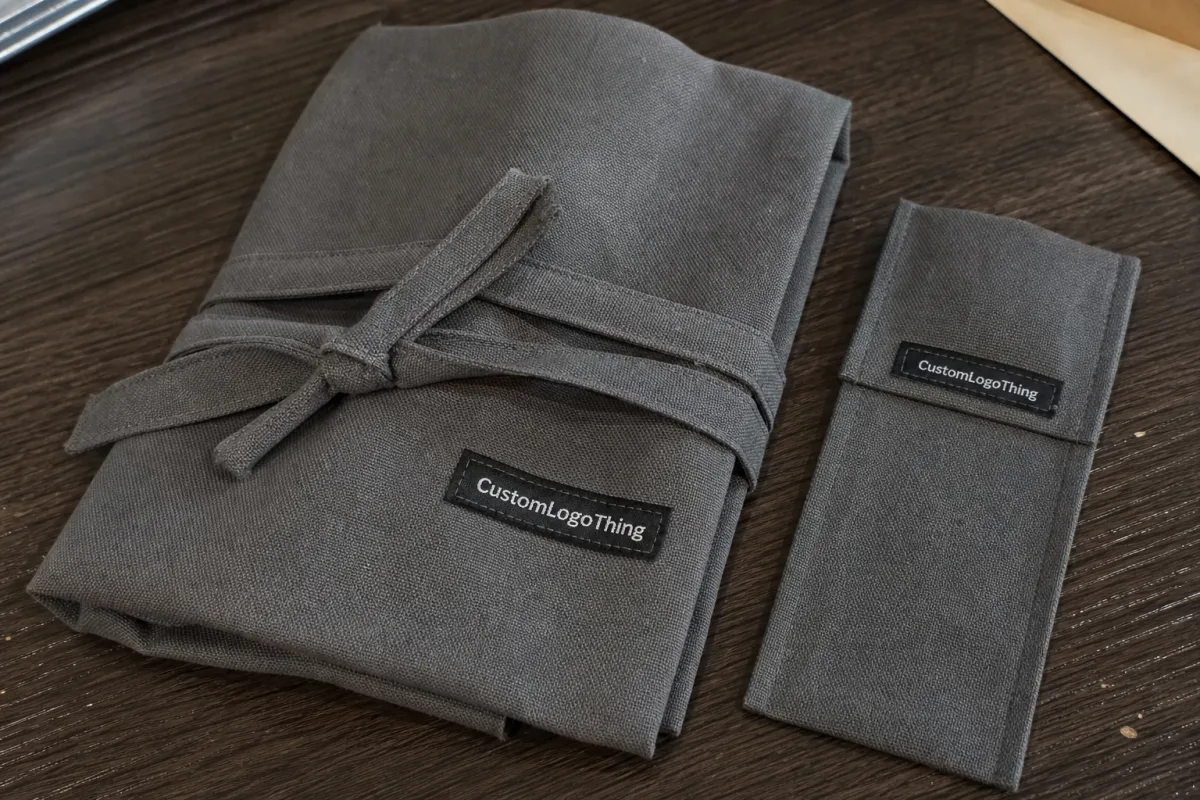
A compression legging can pass squat tests, survive sweat, recover after stretching, and hold up through dozens of wash cycles. Then one scratchy label curls inside the waistband and undermines the whole product. That is why a Woven Labels Supplier Quote for fitness brands should be treated as a durability decision, not a decoration line item.
The label is small. Its impact is not. It sits against skin, under tension, near coverstitching, inside waistbands, or beside heat-sensitive performance fabric. If it fades, frays, rubs, or buckles, customers rarely separate the trim from the garment. They blame the apparel brand.
Fitness apparel punishes labels harder than casual clothing. A lifestyle tee may be washed every second or third wear. A sports bra, running top, or training short often goes straight into the laundry after one session. Add perspiration, body heat, abrasion, detergent exposure, and stretch recovery, and weak label construction gets exposed quickly.
A low unit price is not the same as a low-risk label. For activewear, the stronger quote translates garment use into construction: weave type, fold, edge finish, softness, colorfastness, and sewing behavior.
Custom Logo Things works with branded components for activewear, athleisure, gymwear, yoga apparel, team training gear, and private-label fitness collections. The practical goal is simple: help buyers get a quote that fits the garment, the launch calendar, and the brand position. Not a vague price for “some labels.”
Woven Label Options That Match Activewear Use Cases
Most woven labels look similar in a product photo. In production, they behave differently. A soft neck label for a yoga tank is doing a different job than a dense hem label on a heavyweight training hoodie.
| Label Type | Best Fit | Buyer Notes |
|---|---|---|
| Damask woven labels | Premium neck, waistband, hem, and side-seam branding | Fine detail, smooth hand feel, strong option for logos with small text or tight curves |
| Satin woven labels | Neck labels for tops, lifestyle athleisure, light gymwear | Soft face and polished look, but may show snagging faster in high-abrasion placements |
| Taffeta labels | Care labels, size tabs, internal garment information | Usually lower cost, less premium texture, practical for compliance copy |
| High-density woven labels | Detailed logos, premium capsule collections, visible hem branding | Improved clarity, higher cost, needs disciplined artwork for very small lettering |
| Soft-edge labels | Sports bras, leggings, fitted tops, base layers | Designed to reduce scratch and edge irritation in close-to-skin garments |
Placement drives the decision. Neck labels on tanks and tees need softness first, especially if the garment is worn during running, Pilates, strength training, or hot yoga. Waistband labels for leggings and shorts need low bulk and accurate folding; even 2 mm of extra height can interfere with stitch placement. Hem labels and side-seam labels can carry more visual detail because they usually sit away from high-sensitivity skin zones.
Edge finish deserves more attention than it gets. Straight cut labels work for simple applications. End fold and center fold labels give sewing teams cleaner attachment points. Manhattan fold hides raw ends in a more polished construction. Mitre fold can help with angled attachment or premium detailing. Heat-cut edges may look clean, but close-contact fitness garments need careful checking. A sharp corner is enough to create irritation and returns.
Woven labels communicate premium positioning well because thread has texture and dimension. Print can crack or fade depending on application and fabric. A well-built woven label keeps brand recognition through repeated wash and wear. Still, woven is not always the right answer. Ultra-light bonded activewear, minimal running shells, and some second-skin garments may perform better with heat transfer labels or printed neck marks to reduce bulk.
For buyers comparing custom woven labels, woven neck labels, damask labels, and Custom Clothing Labels, the best route is not to chase the lowest first number. Match the label to the garment’s friction, stretch, skin contact, and sewing method. Price the correct label, not the easiest one to quote.
Specifications Buyers Should Send Before Requesting a Quote
A supplier cannot quote accurately from a low-resolution logo screenshot and the phrase “standard size.” They can guess. Guessing is how buyers end up comparing prices for products that are not actually equivalent.
Before asking for a Woven Labels Supplier Quote for fitness brands, send the core inputs in one place:
- Label size: width x height, preferably in millimeters or inches
- Fold type: straight cut, end fold, center fold, Manhattan fold, mitre fold, or another construction
- Quantity: target order plus any tier quantities you want priced
- Fabric base: damask, satin, taffeta, soft woven, or supplier recommendation
- Thread colors: number of colors and Pantone references where color matching matters
- Artwork file: AI, EPS, editable PDF, or high-resolution source file
- Attachment method: sewn on two sides, four sides, into seam, waistband insertion, or heat-applied if applicable
- Garment placement: neck, side seam, hem, waistband, inner bra band, or packaging add-on
Two labels can share the same 25 mm x 50 mm dimensions and land at different costs. Weave density, color count, fold complexity, backing, finishing, and packing method all change production time. A dense 6-color damask logo with micro lettering is not priced like a 2-color taffeta size tab.
Artwork quality affects both price and outcome. Vector artwork in AI, EPS, or editable PDF format gives the supplier cleaner lines to translate into woven construction. Pantone references help when brand colors are strict, although thread color matching is not identical to ink on coated paper. Thread reflects light differently. A dark navy woven on a soft ground can read differently than the same color in print.
Small labels need restraint. A compact neck label may only hold a brand name, size, and one short line before clarity suffers. Waistband and hem labels offer more room for detail. If compliance information is required, plan it as part of a label system: fiber content, care instructions, size tabs, country of origin, and RN or business identification where applicable.
A tech pack or physical garment sample can shorten the quote cycle. Fabric weight, stretch percentage, seam construction, and label placement all affect the recommendation. A label sewn into a compression waistband faces different tension than a label stitched to the hem of a relaxed-fit gym tee.
Custom Logo Things’ Custom Labels & Tags team can review these details and shape the quote around production needs instead of assumptions.
Pricing, MOQ, and Unit Cost Variables for Custom Woven Labels
Price is usually the first question. It should not be the only one. In activewear, the more useful number is cost per usable label, not just the quoted unit price.
Main pricing drivers include order quantity, label dimensions, thread count, weave density, number of colors, fold type, backing, finishing, sampling, packing, and shipping. Minimum order quantity depends on production setup and label construction. Smaller runs may be possible for sampling or new brand launches, but the unit cost usually falls as quantity increases because setup and machine time are spread across more pieces.
| Quote Variable | Typical Impact | Buyer Question to Ask |
|---|---|---|
| Quantity | Higher volume usually lowers unit cost | Can you quote 500, 1,000, 3,000, and 5,000 pieces? |
| Weave density | Higher clarity can increase cost and production time | Is high-density weaving needed for this logo? |
| Color count | More thread colors can add complexity | Can the logo hold with fewer colors? |
| Fold and finish | More handling can raise cost | Which fold works best for the sewing method? |
| Sampling | Adds upfront cost but reduces production risk | Is a physical sample recommended before bulk? |
| Shipping and packing | Can change landed cost and production handling | Are freight, split shipments, or bagging included? |
Planning ranges vary sharply between a 500-piece launch run and a 5,000-piece production order. A small sample run may feel expensive per unit because setup is concentrated. A production run spreads that setup across the full quantity. Exact pricing depends on final specs, so a quote should be based on actual artwork, size, fold, material, and quantity rather than a verbal estimate.
Buyers also miss add-ons. Artwork cleanup, color matching, rush production, individual bagging, barcode labeling, and split shipments can change the landed cost. If your sewing contractor needs labels counted in bundles of 100, ask before approving the quote. If the launch is being packed across two locations, ask about split freight early.
Tiered pricing is underused. Ask for at least three quantity levels. That lets purchasing teams compare launch volume, reorder economics, and inventory risk. A 1,000-piece order might protect cash flow. A 5,000-piece order may reduce unit cost enough to justify inventory, especially for evergreen neck labels used across multiple colors and sizes.
Process and Timeline From Artwork Review to Finished Labels
The label timeline is not just weaving time. It includes decision time. Many apparel launches lose days during proof review, not machine production.
A typical process looks like this:
- Inquiry and initial specification review
- Artwork check for line thickness, small text, color count, and logo detail
- Quote with itemized construction and quantity assumptions
- Digital proof showing dimensions, fold, orientation, and color references
- Physical sample or pre-production approval, if requested
- Weaving, cutting, folding, and finishing
- Quality control and quantity count
- Packing and shipment to the buyer or garment factory
Timeline depends on artwork readiness, sampling requirements, quantity, finishing complexity, and freight method. A clean repeat order moves faster than a new high-density woven label with 6 colors, tight text, and a special fold. Rush service may be possible, but speed has tradeoffs. Proofing time can shrink. Freight cost can rise.
During artwork review, the supplier should check what the loom can reproduce. Very thin lines may disappear. Tiny letters can fill in. Low contrast can make a logo look muddy even if the thread colors are technically correct. A good proof catches these risks before bulk production.
Proof approval needs discipline. Check dimensions, fold direction, thread colors, spelling, logo proportions, and label orientation. If the label is a center fold, confirm which panel faces outward after sewing. If it sits inside a waistband, confirm whether the finished label height includes fold allowance. Small mistakes become expensive once labels are sewn into finished garments.
Activewear adds testing concerns. Wash resistance matters, but so do edge comfort and sew-in behavior on stretch fabrics. Rub the back side of the label against skin. Bend it. Pull the garment fabric as it would stretch during wear. A label that feels acceptable on a desk can feel abrasive under compression.
Build labels into the garment calendar before bulk sewing begins. If labels arrive late, finished apparel sits idle. If labels arrive wrong, the factory may keep sewing and create a larger problem. Industry groups such as ISTA focus heavily on transit performance for packaged goods; the operational lesson applies here too. Small components can create large downstream delays if they are not tested, specified, and scheduled properly.
Quality Checks That Matter for Gymwear and Athleisure Brands
Quality control for fashion labels often centers on appearance. Fitness labels need appearance plus wear behavior. Different standard.
Ask suppliers how they check weave clarity, color accuracy, edge consistency, fold accuracy, thread softness, and quantity tolerance. For a premium activewear label, a 1 mm fold variance can affect sewing alignment. A rough heat-cut edge can irritate skin. A slightly muddy logo can make a $90 legging feel less premium before the customer even tries it on.
Comfort testing is low-tech, but useful. Rub the label edge against the inside of your wrist or neck. Check the back side of the weave, not only the front. Inspect corners under good light. Heat-cut labels should not feel sharp. Folded labels should not create bulky ridges in tight waistbands, sports bras, or fitted tops.
Dimensional accuracy is another practical checkpoint. A label that is too tall can interfere with neck seam construction. A label that is too wide can distort near a side seam. In waistband applications, even small size drift can affect coverstitch placement or cause the label to buckle after sewing.
Color control has its own limits. Woven thread does not behave like screen printing, sublimation, or paper ink. A supplier may match the intended color family closely, but sheen, surrounding thread color, and weave direction can shift perception. If brand color is critical, request a physical sample rather than approving only from a screen proof.
Packaging and handling quality matter as well. Bundled labels should stay flat, clean, and easy for sewing teams to count. If labels arrive twisted, loose, or mixed across sizes, the cutting-room savings disappear at the sewing line. For larger apparel programs, ask whether labels can be packed in counted bundles, marked by SKU, or separated by seasonal colorway.
Keep one approved production sample as the control reference. Reorders become easier when the buyer, supplier, and sewing factory can compare against the same physical standard. This is especially useful if multiple factories are sewing the same collection or if seasonal colorways change while the main branding label stays consistent.
For sustainability claims or responsible sourcing programs, be precise. Woven labels may be part of a broader packaging and trim review, but certification claims must match the actual material and chain of custody. The Forest Stewardship Council is relevant for paper-based packaging and hangtags, while textile labels require their own material and supplier documentation.
Supplier Fit: What Fitness Brands Should Verify Before Ordering
Generic supplier claims are cheap. Evidence is better. A reliable supplier shows it through sample quality, response speed, specification questions, proof accuracy, and familiarity with activewear use cases.
A strong supplier asks questions before quoting. Where will the label sit? Will it touch skin? Is the garment compression fit or relaxed fit? Does the sewing factory need end folds? Is the brand using the same label across tanks, leggings, and hoodies? These are not delays. They are risk controls.
A weak quote gives only a number. A useful Woven Labels Supplier Quote for fitness brands should define the construction behind that number: label size, weave type, fold, color count, quantity, sampling assumption, production time, shipping terms, and quote validity. Purchasing teams need written specifications because reorders and seasonal launches depend on repeatability.
Custom Logo Things supports buyers with custom label formats, artwork review, quote clarity, sampling guidance, and production coordination for branded packaging components. That includes labels, tags, and related presentation details that help apparel brands keep their trims aligned across product lines. For examples of branded component planning, visit the Case Studies page.
The sales process should be facts-first. Softness, durability, detail, speed, and unit cost trade against each other. A high-density damask label may make sense for a premium visible hem patch. A softer, simpler woven neck label may be better for a fitted performance tank. Faster delivery may be possible, but it can narrow sampling time. That is production reality, not a sales objection.
Evaluate the full order experience, not just the first quoted price. Reorders expose supplier discipline. Can they find the previous spec? Can they match the approved sample? Can they confirm whether a color or fold has changed? Fitness brands do not need drama in trim purchasing. They need repeatable inputs for repeatable garments.
Before You Approve Your Activewear Label Order
Before approving any label order, run a short checklist. It catches most expensive mistakes before they reach the sewing floor.
- Confirm garment type: legging, sports bra, tee, tank, hoodie, short, or base layer
- Confirm placement: neck, waistband, side seam, hem, inner band, or external branding
- Confirm dimensions, including finished size after folding
- Choose fold style and edge finish based on the sewing method
- Send editable artwork and Pantone references if color matters
- Select 2 or 3 quantity tiers for pricing comparison
- Confirm delivery address, shipping method, and target in-hand date
- Ask whether a physical sample is recommended before bulk production
If timing allows, request a proof and sample before committing to production. Digital proofing catches layout errors. Physical sampling catches touch, edge, and scale issues. For waistbands, sports bras, fitted tops, and compression pieces, test the label against the actual garment fabric. Do not judge it only on a table.
Send Custom Logo Things the artwork, size, quantity, label type, fold preference, usage details, compliance copy if needed, and delivery requirements. If you have a tech pack or garment photo, include it. More accurate inputs usually mean fewer quote revisions and cleaner production planning.
Use Contact Us to send the specifications and request options for your next activewear label order. A good woven label quote should give buyers enough detail to approve production with confidence, not just compare cents per piece.
FAQs
What should I include when requesting a woven label quote for a fitness brand?
Send artwork, label size, fold type, quantity, garment placement, preferred material feel, color references, and target delivery date. Mention whether the label will touch skin directly, because comfort requirements may affect weave type, edge finish, and backing choices. If available, include a tech pack or garment photo so the supplier can quote more accurately.
What is the typical MOQ for custom woven labels for activewear?
MOQ depends on label size, construction, finishing, and supplier production setup. Lower quantities may be possible for sampling or small brand launches, but the unit cost is usually higher. Ask for tiered pricing so you can compare small launch runs against more efficient production quantities.
How much do woven labels for fitness apparel cost?
Cost is driven by quantity, dimensions, thread colors, weave density, fold style, backing, sampling, and shipping. A larger order usually reduces unit cost because setup costs are distributed across more labels. For accurate pricing, request a quote using final artwork and exact specifications rather than a rough logo screenshot.
Are woven labels comfortable enough for leggings, sports bras, and performance tops?
They can be, if the label uses the right material, edge finish, fold style, and placement. For close-to-skin garments, ask about soft woven options and request a sample to test against the actual fabric. Some ultra-light or bonded garments may perform better with heat transfer or printed labels instead.
How long does the custom woven label process take for fitness brands?
Timing depends on artwork readiness, proof approval, sampling, order quantity, finishing complexity, and shipping method. The usual sequence is quote, artwork review, proof, sample or approval, production, quality control, and shipment. Build label production into the garment calendar before bulk sewing begins to avoid delaying finished apparel.