The unit cost surprise most gifting teams miss
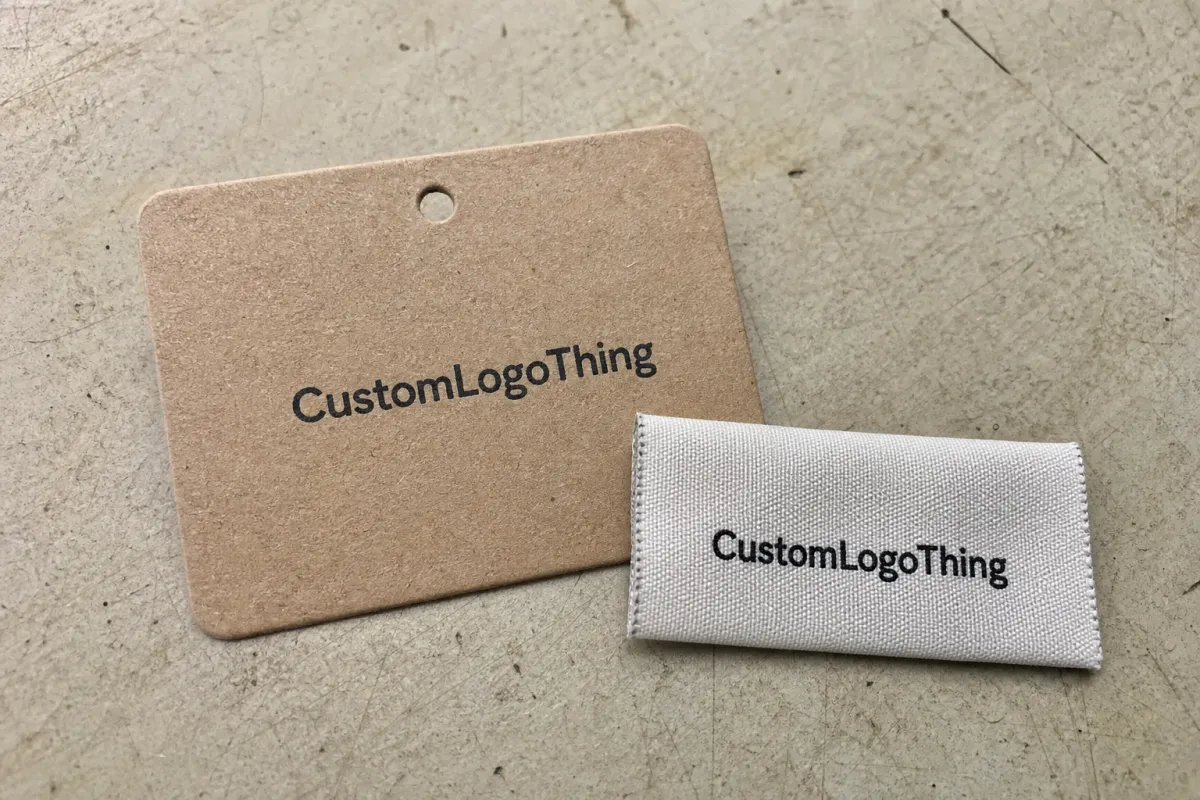
A woven label usually costs less than the hoodie, tote, pouch, blanket, or notebook it rides on. Still, Woven Labels Unit Cost for Corporate Gifting Teams can shape whether a gift feels finished or merely branded at the last minute.
That is the odd part. The smallest component often does the heaviest brand work. Employee onboarding kits, client mailers, event swag, seasonal gifts, and executive sets all depend on consistency. Not close enough. Consistent.
Woven labels help standardize mixed soft goods without relying only on printing, embroidery, stickers, or hang tags. A fleece blanket, canvas pouch, beanie, travel organizer, and fabric sleeve can all carry the same mark even if they come from different product lines. That matters when the final kit is photographed under office light, home light, and the ruthless light of a phone camera.
The cost surprise is not that woven labels are pricey. Most are not. The surprise is that the final number depends less on the word “premium” and more on size, weave density, fold style, thread count, edge finish, and backing. A simple straight-cut label in two colors may quote very differently from a high-density center-fold label with small text and adhesive backing.
So no, “premium woven label” is not a spec. It is a feeling. Suppliers quote dimensions, colors, construction, and quantity. Feelings are poor production inputs.
For gifting buyers, woven labels are one of the cleaner low-cost upgrades because they bring a retail finish to items that may have arrived from several vendors. The label does not need to carry the whole message. It only needs to fit the item, survive handling, and stay readable.
The rest of this piece focuses on the practical side: formats, price drivers, MOQ logic, production timing, and the checks that save teams from preventable delays.
Woven label styles, folds, and use cases
Format should come before appearance. That sounds plain, but it is the difference between a label that works and one that becomes an expensive compromise.
Corporate gifting teams usually work with a few common woven label styles:
- End fold labels: Both ends fold under, leaving clean edges for sewing onto blankets, pouches, apparel hems, and fabric accessories.
- Center fold labels: Folded in the middle, often used for neck labels in tees, hoodies, robes, and sweatshirts. They can carry branding outside and care or size information inside.
- Loop fold labels: Both cut ends are sewn into a seam, which makes them useful for side seams, towels, and garments where the label hangs slightly.
- Straight cut labels: Flat labels with no fold. These are simple, tidy, and often cost-effective for boxed sets, bags, and accessories.
- Sew-in labels: A broad category covering labels designed to be stitched into apparel, fabric packaging, or reusable gift components.
For tees and hoodies, center fold or side seam labels usually make sense. For tote bags, an end fold or flag-style label near the seam tends to look more retail. For drawstring pouches, straight cut and end fold labels sit flat and do not fight the fabric. For boxed sets with soft goods, a small woven tag can connect the items without adding another printed insert.
Material style matters too. Damask woven labels are the usual choice for corporate gifting because they hold detail well and feel smoother. Satin-style woven labels look softer and shinier, but fine text may not read as cleanly. Taffeta-style labels are more economical and a little more textured; they work for simpler art and basic identification, not tiny logos with legal copy underneath. Tiny legal copy on a one-inch label is how projects become funny in the wrong way.
Think through how the gift will be used. If the item will be photographed, high-contrast thread colors help. If it will be mailed in bulk, avoid bulky folds that snag during packing. If it will be worn, the backside feel matters because scratchy neck labels still manage to offend people in 2025. If it will be reused, prioritize weave clarity and durable edge finishing.
Buyer rule: the best woven label is the one that fits the product and survives the use case. Looking expensive helps. Being wrong for the application does not.
For teams sorting formats, the Custom Labels & Tags category is a useful reference point because it covers the label types most gift programs actually use.
Specifications that change the final quote
A fast quote starts with locked specs. A slow quote starts with “Can you price something premium around this logo?” That usually creates three follow-up emails and a careful pause from production.
For accurate pricing, send these details first:
- Finished size: Width by height, such as 1.5 in x 0.75 in or 40 mm x 20 mm.
- Fold style: Straight cut, end fold, center fold, loop fold, or another construction.
- Color count: Number of woven thread colors, not the number of colors in a digital file.
- Thread density: Standard or high-density weave, especially for small type and detailed logos.
- Backing: No backing, iron-on, pressure-sensitive adhesive, or heat-cut edge depending on use.
- Quantity: Exact run or range, such as 1,000, 2,500, 5,000, or 10,000 pieces.
Small text drives cost. So do thin lines, tight icons, layered crests, gradients, and logos designed for screens instead of thread. Woven thread does not behave like ink. A 0.25-point line from a vector file may disappear. Letters under roughly 5 mm tall can become muddy depending on the font and weave. Script fonts are especially risky. They look elegant in a brand deck and then turn into a knot on the loom.
Color matching can change the final quote too. Standard thread charts cover many corporate palettes, but they do not reproduce every digital brand color exactly. If a brand uses subtle tonal shifts, metallic effects, gradients, or five nearly identical blues, the label may need simplification. Pantone references help, but woven thread still reflects light differently than ink on coated paper or a soft-touch mailer.
Placement matters. A label for thick fleece may need more flexible construction than one for a cotton pouch. Lightweight knits need a softer label and careful edge finish. Tote bags can handle a sturdier label, especially near seams. Fabric wraps and reusable sleeves often work best with straight-cut or end-fold labels because they stay flat in photos and shipping.
Repeat orders get easier when specs are documented. Save the approved size, fold, thread colors, artwork version, backing, and quantity tier. Reorders are where sloppy setup turns into delays. If nobody knows whether the last run used high-density damask or standard damask, somebody gets to reconstruct the history from old emails. Not a thrilling use of time.
For programs tied to broader product launches, teams also need to think about transit. Woven labels themselves are rarely the problem; the finished kit is. Mailer boxes, inserts, and packed gift sets may need parcel-testing discipline so the presentation survives handling and still looks deliberate on arrival.
Woven labels unit cost, MOQ, and quote drivers
Woven Labels Unit Cost for corporate gifting teams usually comes down to four buckets: setup, weave complexity, quantity tier, and finishing. Not mystery. Not magic. Just production math.
Setup includes artwork preparation, loom setup, proofing, and any setup charges or tooling fees tied to the run. Some suppliers fold those into the unit price. Others list them separately. Neither method is inherently better. Compare the landed total, not only the shiny low price per piece.
Weave complexity affects the quote because detailed labels need finer construction and more production care. A two-color damask label with a simple wordmark is efficient. A six-color label with tiny text, a border, a micro icon, and a curved tagline is slower to set up and easier to reject during QC. That extra work shows up in pricing.
Quantity is the biggest lever. Small runs carry more setup cost per label. Mid-size runs often hit the best balance for gifting programs. Large campaigns can push the cost per piece down sharply, especially when one label design works across multiple items or multiple event waves.
| Approximate Quantity | Typical Use Case | Estimated Cost Per Piece | Buying Notes |
|---|---|---|---|
| 250-500 pcs | Small VIP gifts, pilot kits, sample runs | $0.45-$1.20+ | Higher unit cost because setup is spread over fewer labels. Good for testing, not always good for budget optics. |
| 1,000-2,500 pcs | Employee onboarding, regional events, client mailers | $0.22-$0.55 | Often the practical starting range for better value without overbuying. |
| 5,000-10,000 pcs | Multi-location gifting, seasonal campaigns, replenishment stock | $0.12-$0.32 | Strong bulk pricing range if specs stay stable and artwork is clean. |
| 25,000+ pcs | Large enterprise programs, recurring branded merchandise | $0.06-$0.18 | Best pricing, but only smart if the brand mark and application will not change soon. |
These ranges are estimates, not a universal price sheet. Final woven labels Unit Cost for Corporate Gifting teams depends on size, colors, finish, backing, delivery location, rush timing, and whether the supplier is producing only labels or also helping with application and kitting.
MOQ matters too. Many woven label orders start around 500 or 1,000 pieces, but specialty finishes, very small dimensions, high-density weave, or custom thread matching can raise the minimum. If a team needs 600 labels now, 400 next month, and 700 before a conference, pooled quantity usually prices better than three separate small runs. Procurement likes that. Production does too.
Add spoilage margin. For sewn applications, 3% to 5% extra labels is a reasonable buffer. For complex kitting programs with multiple pack-out locations, 5% to 8% may be smarter. Running short by a few dozen labels before launch is avoidable and strangely common.
The fastest quotes include clean vector artwork, exact dimensions, fold style, quantity, backing, target delivery date, and application type. The slowest quotes ask for “something premium” with no size, no quantity, and a screenshot of a logo pasted into a slide. That usually comes back padded or comes back with questions. Often both.
Process and timeline from artwork to delivery
The process is straightforward when the buyer gives complete information. It gets messy when specs keep moving.
- Request the quote: Send artwork, size, fold, quantity, backing, use case, and deadline.
- Review specs: The supplier checks whether the design can weave cleanly at the requested size.
- Confirm artwork: Vector files such as AI, EPS, or a clean PDF are best. A high-resolution PNG can help for reference, but it is not ideal for production.
- Receive digital proof: The proof should show size, fold, colors, and placement notes.
- Approve sample or mockup: Depending on timeline and order size, this may be a physical sample or a detailed digital approval.
- Produce labels: Loom setup, weaving, cutting, folding, backing, and finishing happen here.
- Inspect and ship: QC checks should catch edge issues, unreadable art, wrong folds, or color problems before shipment.
Typical production after proof approval may run 8 to 12 business days for simple labels, 12 to 18 business days for detailed multi-color woven labels, and longer if physical sampling, special backing, custom color work, or rush shipping are involved. Transit time is separate. That part gets missed often, which is impressive considering boxes still refuse to teleport.
Delays usually come from unclear artwork, missing dimensions, late proof approvals, color corrections, and quantity changes after quoting. Changing from 1,000 to 5,000 labels may improve unit cost, but it can require a revised quote and a different production slot. Changing the logo after proof approval can restart setup. That is not drama. That is production.
Corporate gifting calendars need padding. If labels must arrive before a holiday drop, onboarding wave, investor event, sales kickoff, or conference, work backward from the kit assembly date, not the event date. If the kitting partner needs labels by the 10th to sew or apply them, that is the real deadline. The public launch date matters less than the assembly schedule.
Once the proof is approved and the specs are stable, the order should move predictably. Good suppliers still communicate if something shifts. Better suppliers flag risks before they become problems, such as a logo detail that will not read at 20 mm wide or a thread color that sits too far from the approved palette.
For sustainability-sensitive programs, ask early about material claims and chain-of-custody documentation where relevant. Labels are one component in a larger kit, but teams building broader branded packages may also care about responsibly sourced paper components for hang tags, inserts, or cartons. Textile labels follow a different materials chain than paper packaging, so each part needs its own check.
What corporate gifting teams should demand from a supplier
Supplier choice should be about reliability, not slogans. Every supplier says they offer quality. Great. So does every restaurant with a laminated menu. Ask for proof.
A useful woven label supplier should provide clear proofs, realistic production notes, sample photos, responsive quoting, and reorder support. They should also be willing to say no when the design will not weave well. That honesty saves money. A supplier who accepts bad artwork without comment may simply be passing the risk back to you.
Corporate gifting teams should care about consistency because one campaign can involve several vendors. Apparel may come from one source, tote bags from another, packaging from another, and fulfillment from a separate kitting partner. A woven label can act as the common brand marker across all of those items, but only if the color, scale, and finish stay consistent.
Quality control signals are easy to check if you know where to look:
- Edge finish: Heat-cut edges should not fray or feel sharp. Folded edges should sit cleanly.
- Weave clarity: Logos and type should remain readable at the approved size.
- Stitch durability: Sew-in labels should tolerate handling, folding, and normal wear.
- Color handling: Thread selections should be documented for future reorders.
- Defect checks: The supplier should inspect for miscuts, wrong folds, thread pulls, and inconsistent batches.
Ask how reorders are handled. If the first run is for 2,500 onboarding kits and the program repeats quarterly, the supplier should keep the approved spec on file. That includes artwork version, thread colors, label dimensions, fold style, and backing. Reorder discipline is boring until someone needs 3,000 labels quickly and sends an outdated logo. Then boring looks excellent.
The right supplier reduces coordination pain for marketing, procurement, and operations. Marketing cares whether the brand looks right. Procurement cares about bulk pricing, MOQ, and invoice clarity. Operations cares whether labels arrive on time and match the application. A good supplier speaks to all three without creating another long email chain.
For teams comparing label formats across gift programs, a practical product category view can help more than rebuilding requirements from scratch.
Common mistakes that inflate price or slow approval
Overdesigning is the first mistake. A tiny side seam label does not need a full brand story, trademark line, founding date, campaign slogan, and microscopic icon set. Use the space like it has limits, because it does.
The second mistake is changing artwork after proof approval. That can restart setup, delay production, and create new approval loops. If legal, brand, and events teams all need to review the label, get them aligned before approval. After approval is where schedules go sideways.
Low quantity with premium expectations is another common mismatch. A 250-piece run with high-density damask, five colors, special backing, and rush delivery will not price like a 10,000-piece standard run. If the budget is tight, reduce complexity first. Keep the size practical, limit colors, simplify the logo, and choose a standard fold.
Font size causes plenty of waste. Before sending art, print the label at actual size on paper. If the team cannot read it at a normal viewing distance, woven thread will not rescue it. For small labels, bold sans serif type usually reads better than thin serif or script type.
Fold compatibility matters too. A center fold label needs enough height to show the visible area after folding. End fold labels need safe space near the folded ends so stitches do not cover the logo. Loop fold labels need art placement that still works once the label is inserted into a seam. The proof should make this clear. If it does not, ask.
A short internal checklist saves time:
- Final logo file approved by brand
- Actual label size confirmed
- Fold style matched to product application
- Thread colors reviewed against brand palette
- Quantity includes spoilage or replenishment margin
- Delivery deadline tied to assembly date, not launch date
- One person assigned to approve the supplier proof
That last one matters more than it looks. One approver keeps the order moving. Five approvers keep everyone informed, which is corporate code for not yet.
What to send for the fastest next step
If a team wants pricing without a slow back-and-forth, the quote request needs the right information up front. A complete request for woven Labels Unit Cost for corporate gifting teams should include final artwork, desired label size, fold style, quantity, brand colors, application type, and delivery deadline.
Add a reference photo or product mockup if one exists. A supplier can judge fit and readability much faster when they can see whether the label is going on a hoodie neck, blanket corner, tote seam, pouch front, or fabric wrap. Even a simple phone photo is useful.
Tell the supplier whether the order is for one campaign or repeated gift runs. That changes the recommendation. For a one-time VIP mailing, a smaller quantity with a slightly higher unit cost may be fine. For recurring onboarding kits, a larger pooled order can lower unit cost and keep future replenishment simpler.
Ask for at least two quantity tiers. For example, request pricing at 1,000 and 2,500 pieces, or 2,500 and 5,000 pieces. Procurement can then see how the unit cost moves before approving the final quantity. Sometimes the jump from 1,000 to 2,500 saves enough per piece to justify holding extra inventory. Sometimes it does not. Numbers beat guesses.
A useful quote packet is plain: artwork, actual size, fold preference, quantity tiers, deadline, and one clear point of contact. That usually does more for speed than any amount of polite hovering.
FAQs
What drives woven label unit cost for corporate gifting orders?
Quantity is the biggest lever, followed by color count, size, fold style, backing, and detail level. Rush timing, special finishing, and custom color work can raise the quote quickly. Clean vector artwork and clear specs usually keep the price down because the supplier spends less time fixing preventable problems.
What MOQ should corporate gifting teams expect for woven labels?
MOQ depends on label size, weave detail, production setup, and finishing. Smaller runs may be possible, but the unit cost is usually higher because setup charges are spread across fewer pieces. For multi-kit programs, it is usually smarter to quote one larger pooled order instead of several small runs.
How long is the typical production timeline after approval?
The timeline usually starts after artwork, specs, and proof are approved. Simple woven labels may move in about 8 to 12 business days after approval, while detailed multi-color labels can take 12 to 18 business days or more. Rush jobs are possible, but they need early confirmation and clean files.
Which label style gives the best value for gift boxes and apparel?
The best value is the style that fits the product without extra complexity. Straight cut and simple fold styles are usually cheaper and easier to apply. For apparel, center fold or loop fold labels may be better. For pouches, blankets, and totes, end fold or straight cut labels often make more sense.
Can woven labels match brand colors closely enough for corporate gifting?
Yes, woven labels can match brand colors closely enough for most corporate gifting programs, but thread colors are not identical to digital artwork or printed ink. Gradients, metallic effects, and subtle shade differences may need simplification. A supplier should review the palette before finalizing the quote so expectations stay realistic.