If you are comparing woven labels Unit Cost for Skincare, the key question is not just the price per piece. It is whether the label fits the product’s margin, shelf standard, and reorder plan. In skincare, the packaging detail often shapes the first impression before the customer reads the ingredient panel or claims.
A woven label usually costs more than a basic printed tag, but that difference can be justified when the packaging needs a more polished finish. For a premium serum pouch, a gift set, or a reusable cotton bag, a small increase in unit cost can buy better durability and a cleaner brand impression.
There is also a practical reason buyers pay attention to label quality. Skincare packaging is handled often, packed into cartons, opened at retail, and sometimes reused. If the branding looks worn quickly, the pack starts to feel tired even when the product inside is still strong.
Why skincare brands pay for woven labels instead of cheap prints
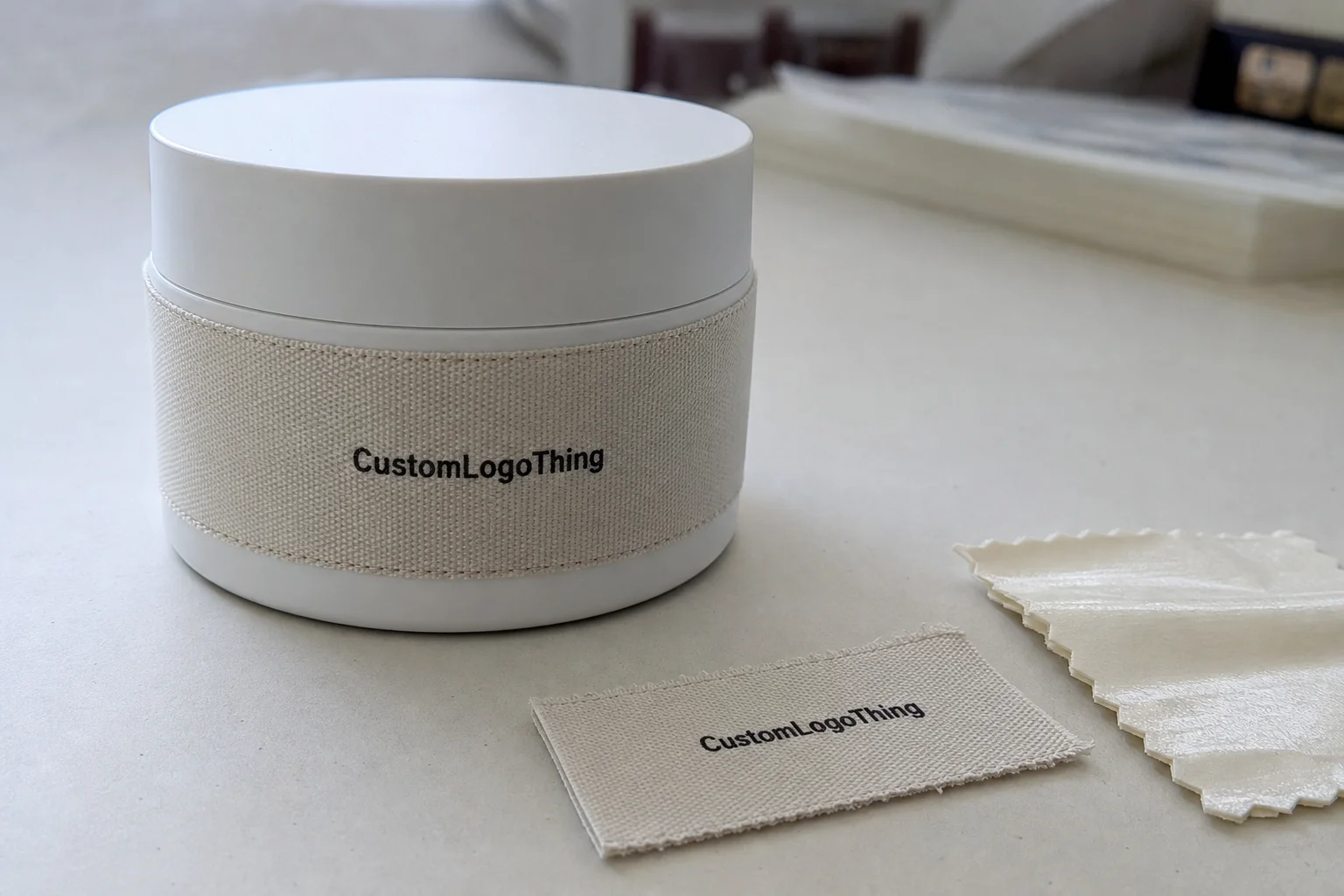
Skincare packaging has to feel calm, clean, and credible. Woven labels fit that space well because they add texture and depth without looking flashy. They also tend to read as more deliberate than a low-cost printed label, especially on fabric-based packaging.
For pouches, cotton bags, sleeves, and box inserts, woven labels generally hold up better than simpler printed alternatives when the item is touched often or reused. That matters for refill programs, travel kits, and premium sampling packs, where the packaging may stay in circulation longer than a single retail opening.
From a buyer’s point of view, the cost decision usually comes down to product value. If a label adds a little to the unit cost but protects a higher-margin SKU from looking underbuilt, the price is often justified. The mistake is paying for complexity that the packaging does not need.
“The label is often the last thing a buyer notices in a spec sheet and one of the first things a customer notices in hand.”
Woven labels make the most sense on packaging that needs a more finished look:
- Hero products that carry the visual identity of the line
- Gift sets where presentation influences perceived value
- Refill packaging that is handled repeatedly
- Retail-ready pouches and bags that need a finished look
- Reusable fabric accessories that benefit from durable branding
For a low-cost promotional item, a simpler printed label may be enough. For skincare, though, the label often supports the product’s positioning. Once the packaging is expected to look premium, buyers tend to focus less on “cheapest label” and more on unit cost, durability, and how the finished piece will hold up after packing and handling.
Product details that affect a woven label order
Woven labels are not interchangeable. The format affects appearance, attachment method, and price. Common styles include folded end, center fold, loop fold, and straight cut. In skincare packaging, the right choice usually depends on whether the label is sewn into fabric, tucked into a seam, or used as a visible brand marker on the outside of a pouch or accessory.
Sew-in labels are common for fabric pouches, cotton bags, wraps, and protective sleeves. They sit well in stitching lines and usually hold up through normal handling. Adhesive applications can work for certain inserts or temporary presentation pieces, but they are not suitable for every package and often do not match premium durability expectations.
Material construction matters too. A tighter weave with higher thread density usually gives cleaner detail, sharper borders, and more legible type at small sizes. A looser weave can save money, but it also increases the risk that fine artwork blurs. Backing choice affects feel and performance as well.
Artwork is where many quotes become expensive or difficult to reproduce cleanly. Tiny text, delicate lines, gradients, and too many colors all increase complexity. Woven labels handle strong branding well, but they do not reward designs that rely on microscopic copy or subtle shading.
Common skincare applications include:
- Inner neck labels for reusable product pouches
- Brand tags on cotton bags and fabric sleeves
- Presentation labels for gift packaging
- Care or origin tags for premium accessories
Some finishes are worth paying for because they improve readability, hand feel, or attachment quality. Others mostly inflate the quote. Metallic yarns, dense border treatments, and elaborate decorative textures can look good on a design file but add little value once the package is in use.
Specifications that change unit cost and order quality
Before asking for a quote, the spec needs to be clear. A moving target creates a vague price, and a vague price usually hides trade-offs in quality, setup, or lead time. The main details that matter are size, shape, fold type, color count, backing, and attachment method.
Size affects both appearance and cost. Smaller labels are usually less expensive, but there is a point where the artwork becomes too compressed to read comfortably. In skincare, that is a problem because the packaging often has only a small surface area to make an impression.
Color count is one of the biggest cost drivers. More colors usually mean more weaving complexity, more setup, and more chances for inconsistency. Two- or three-color branding is often the most practical range for skincare labels because it keeps the label legible and controlled.
Placement also matters. On a compact serum pouch or small box, oversized branding can crowd the layout and make the pack feel busy. On a premium refill pouch, a single clean woven label can anchor the entire identity. The label should support the packaging structure and visual hierarchy, not compete with them.
A buyer can reduce risk with a short quality checklist before full production:
- Edge finish is clean and free of loose threads
- Stitch integrity holds up after normal handling
- Color accuracy matches the approved proof closely
- Text legibility remains clear at final size
- Sample approval is completed before the full run
For packaging that will ship often or move through distribution, transit performance should also be considered. Industry references such as ISTA packaging testing standards and material guidance from ASTM-related sustainable materials guidance can help buyers think more clearly about how labels and packaging behave in real handling conditions.
Woven labels unit cost for skincare: pricing, MOQ, and quote factors
The main buying question is simple: what does Woven Labels Unit Cost for skincare look like in practice? The answer depends most on quantity, dimensions, weave complexity, color count, and fold style. Order volume is the biggest lever. Small runs always carry a higher unit cost because setup work is spread across fewer pieces. Larger runs usually improve the economics because the same preparation cost is absorbed over more labels.
For budgeting, it helps to work from realistic planning ranges rather than trying to guess a single price. The figures below are typical reference points for standard woven label orders. They are not fixed rates, and they can move based on artwork detail, attachment method, shipping terms, and whether the order includes samples or special finishing.
| Order size | Typical cost per piece | What usually drives the price | Best for |
|---|---|---|---|
| 500 pieces | $0.18-$0.35 | Higher setup charges, lower volume, simple designs only | Launch tests, limited runs, sample packaging |
| 1,000 pieces | $0.10-$0.22 | Better spread of tooling fees and production setup | Small brands, seasonal releases, pilot retail orders |
| 5,000 pieces | $0.04-$0.12 | Lower cost per piece, cleaner economics, better bulk pricing | Core SKUs, refill packs, consistent reorder programs |
| 10,000 pieces | $0.03-$0.08 | Volume efficiency, simpler repeat production | Established lines, national retail, high-turn items |
MOQ matters as much as the quoted unit cost. A lower minimum order quantity helps newer skincare brands test a packaging idea without tying up too much cash in inventory. The trade-off is that very low-volume orders often carry a higher cost per label, so the order can look affordable until setup, proofing, and shipping are added. That is why buyers should look at landed cost, not just the headline per-piece number.
Several extra charges can affect the final budget:
- Sample fees for strike-offs or pre-production approvals
- Rush charges when the schedule is compressed
- Shipping method that changes landed cost quickly
- Revision costs if artwork changes after proofing
- Tooling fees for certain custom formats or special construction
Buying teams usually get the clearest comparison by requesting pricing at 500, 1,000, 5,000, and 10,000 pieces. Those breakpoints make it easier to see where the per-unit drop really begins.
Production steps, turnaround, and lead time from proof to delivery
Custom Woven Labels follow a fixed sequence: quote request, artwork review, digital proof, sample or strike-off, approval, production, and shipping. If any step is delayed, the schedule stretches.
Typical turnaround varies with complexity and volume, but standard projects often land in the 12-15 business day range after proof approval, with transit time added on top. Simpler artwork can move faster, especially if the supplier already has the required material and the design is easy to reproduce. More detailed labels, color-matched programs, and orders that need a sample check usually take longer.
The most common delays are predictable:
- Unclear artwork files
- Late revisions after proofing
- Questions about color matching
- Waiting on sample approval
- Shipment delays outside production
Rush orders can be practical for a launch, a trade show, or a retail replenishment, but the file still has to be ready. Rushing a weak layout does not improve the outcome. If the label needs to support a premium skincare launch, the safer approach is to work backward from the launch date and allow room for proofing, sample review, and a final correction if needed.
Transit and handling should be considered at the same time as production. Labels that will go into broader distribution need to survive storage, packing, and shipping without obvious distortion or finish issues. Reordering later becomes much easier when the original spec is documented in detail and the approved sample is kept as a reference.
What to look for in a supplier before you reorder
The lowest quote is not always the best one. A good supplier gives clear pricing, realistic lead times, and consistent quality across repeat runs. If the responses are vague but light on detail, that usually points to problems later.
For skincare brands, supplier capability matters because the packaging often has a more exacting visual standard than a commodity product. The supplier should be able to explain how the label will be constructed, what kind of artwork works best, where the MOQ sits, and what part of the spec has the biggest effect on unit cost.
Repeat-order consistency is another issue worth watching. A later run should not drift in color, fold accuracy, or finishing. Good suppliers keep the spec on file, identify changes before production starts, and make reorders easier to approve. That is especially valuable for brands that manage seasonal packaging or several similar SKUs at once.
Communication matters too. If a supplier can explain why a center fold suits a pouch better than a straight cut, that saves time and reduces waste. If every answer circles back to marketing language instead of production detail, the quote may look fine while the execution stays uncertain.
It also helps when the supplier can support related branding pieces, because consistency across labels and tags often matters more than a buyer expects. For teams that need matching components, Custom Labels & Tags is a practical place to keep the packaging system aligned.
Next steps to lock in the right label spec and order size
To control Woven Labels Unit Cost for skincare without sacrificing presentation, start with the basics: label size, logo file, fold type, color count, and target quantity. Those five details are enough to receive a quote that can actually be compared against other options.
Once the first quote arrives, compare at least two more quantity tiers. One should match the minimum order you are comfortable carrying. Another should reflect the likely reorder volume if the product performs well. A third should show the next bulk step.
A simple rule helps keep the decision grounded: the lowest-cost option only works if it still matches the brand’s shelf standard. If a cheaper specification makes the packaging look thin, the savings are questionable. The product may still be technically correct, but the perceived value drops.
For premium skincare lines, sample approval is worth the time. A strike-off or pre-production sample can reveal problems with readability, fold direction, color strength, or edge quality before the full run begins. Fixing a small issue at the sample stage is far easier than sorting out a large order that already left production.
A clean order flow usually follows this sequence:
- Request a quote with exact specs
- Review the proof carefully
- Approve a sample if the line is premium
- Confirm production quantity and delivery window
- Place the order and keep the spec file for reorders
That approach keeps the conversation practical. Clear specifications, realistic pricing, and enough volume to make the economics work are usually the difference between a label that supports the product and one that quietly weakens it.
What is the typical woven labels unit cost for skincare orders?
Unit cost depends on size, quantity, color count, and fold style. Small runs usually cost more per label than bulk orders. Ask for pricing at multiple quantities so the break point is visible before you place the order.
What MOQ should I expect for woven labels for skincare packaging?
MOQ varies by supplier and by label complexity. Simple brand marks may have lower minimums, while more detailed woven designs usually require larger runs. If you are testing a new package, ask for a low-MOQ option and compare the landed cost, not just the label price.
How long does production usually take for custom woven labels?
Typical projects move through proofing, approval, production, and shipping in sequence. Standard timelines often fall in the 12-15 business day range after proof approval, though artwork complexity, sample requests, and shipping can extend that window.
Which woven label style works best for skincare products?
Center-fold and end-fold labels are common for sew-in and inserted applications, while straight-cut versions can work for simpler presentation uses. The best style depends on where the label sits, how it is attached, and how much detail the artwork needs to hold.
How can I lower the unit cost without making the label look cheap?
Keep the design focused, reduce the color count, and choose a size that keeps the artwork readable. If demand is stable, higher quantities can lower the unit cost further. Avoid adding decorative effects that increase complexity without improving the package.