For skincare brands, the frost of a zipper bag is never just a visual detail. It affects the first impression, the handling feel, the shipping risk, and the final line item on the packaging budget. A frosted pouch can make a sample set look deliberate and polished, but the wrong spec can raise costs fast without adding much real value.
That is why buyers keep returning to the same question: what does the Frosted Zipper Bags unit cost for skincare actually depend on? The short answer is that it is shaped by material choice, bag size, zipper style, print coverage, and order volume. The longer answer is where the real purchasing decisions sit, because the cheapest quote is rarely the cheapest result once freight, waste, and rework are included.
A pouch should support the product and the margin at the same time; if it only improves appearance, the spec still needs work.
Why skincare brands switch to frosted zipper bags for premium sets
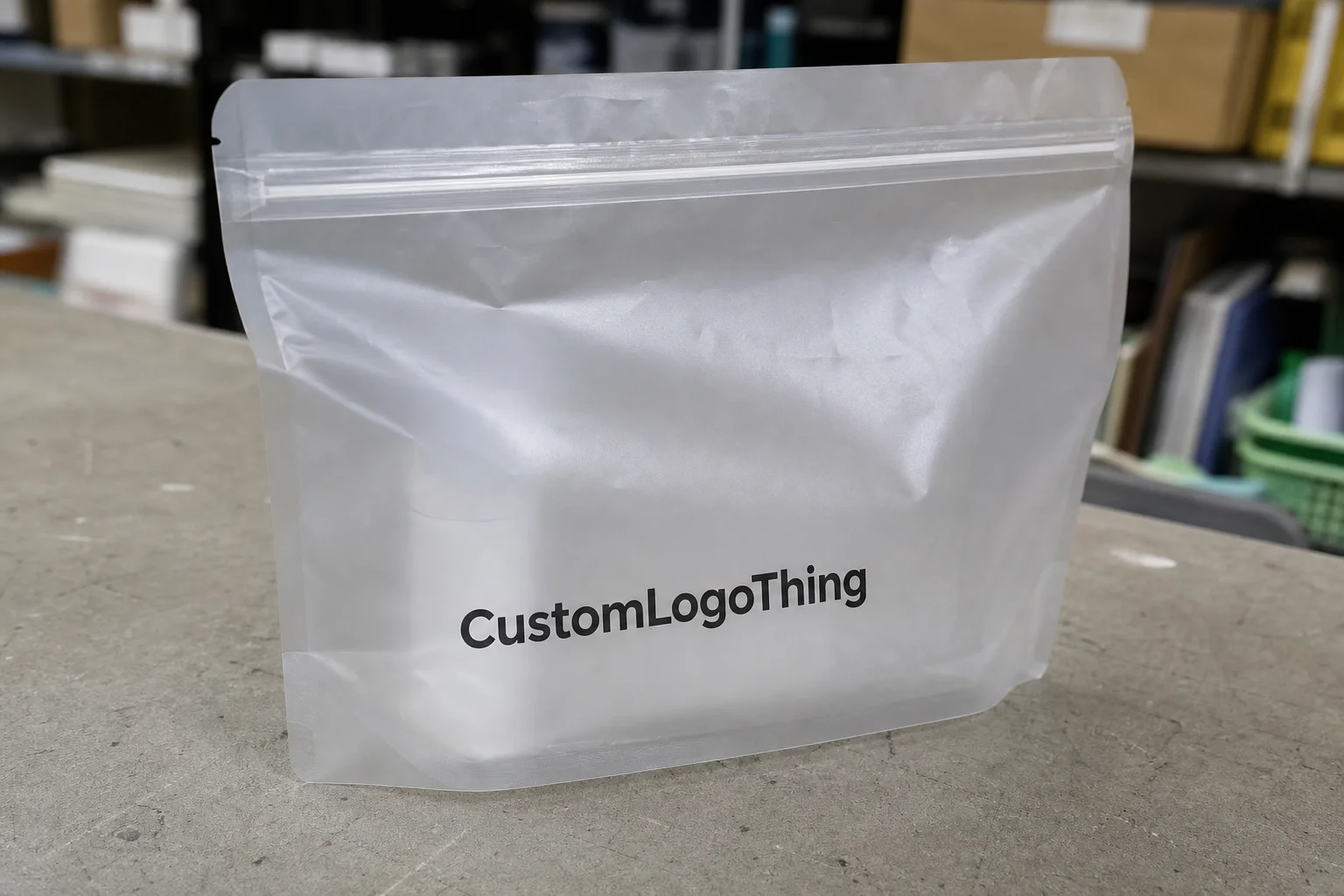
Skincare teams usually choose Frosted Zipper Bags for one practical reason: the pack needs to look premium without taking too much out of the unit economics. Sample kits, travel bundles, sheet mask sets, refill packs, and PR mailers all benefit from packaging that looks organized and modern. Frosted film has a soft matte appearance that reads as cleaner and more controlled than a plain clear bag, especially when the contents are a mix of small items, inserts, and minis.
Another advantage is visual forgiveness. Frosted film hides fingerprints, scuffs, and the clutter that becomes obvious in a transparent pouch. That matters for ecommerce shipping, retail handling, and influencer kits that may be photographed before the product is even opened. A clear bag can expose every label edge and uneven insert. A frosted one tends to soften that noise.
The cost benefit is easy to miss at first glance. A slightly better pouch often costs less than the value lost to repacking, customer complaints, or a launch that looks under-finished. When the bundle value is driven by presentation as much as by the items inside, packaging quality becomes part of the product economics. A weak zipper or a thin, floppy film can make a carefully assembled skincare set feel temporary.
Common skincare uses include:
- Travel kits with cleanser, toner, and moisturizer minis
- Sheet mask bundles
- Sample cards with sachets or strip packs
- Bath salts and spa add-ons
- Subscription and PR mailers that need a cleaner shelf look
None of these use cases need a luxury structure by default. They do, however, need the bag to match the product weight, the handling cycle, and the presentation standard. That is where the spec either supports margin or erodes it.
Frosted zipper bag specs that affect performance and appearance
Three material families appear most often in skincare packaging: frosted PE, EVA, and laminated structures. Frosted PE is the most economical and is usually the first option when brands want a matte look at a controlled cost. EVA feels softer and more flexible, with a cleaner visual finish, though it usually carries a higher price. Laminated structures add stiffness and can improve barrier performance, which is useful if the bag needs to hold scent-heavy, oil-based, or moisture-sensitive items.
Thickness changes both durability and cost. For skincare pouches, the common range is roughly 80 to 150 microns, depending on size, product weight, and how often the bag will be opened and closed. Thin film lowers cost and works for light sample use. Thicker film resists puncture better and holds its shape more neatly, but it adds resin use and can slow production slightly. Overbuilding the pouch is one of the more common budget mistakes, especially when the contents are lightweight.
Zipper style also matters more than many buyers expect. A standard press-to-close zipper is fine for basic sample sets and flat kits. A double-track zipper can improve closure feel and reduce accidental opening, which is useful for products that will be carried repeatedly or stored in travel bags. The tactile difference is noticeable in premium kits, and it usually shows up in the quote as a modest but real increase.
Size planning is another place where quote accuracy lives or dies. A pouch that holds one serum box is not the same as a pouch that carries three minis plus an insert card. Give exact dimensions, not a rough guess. Even a small change in width or height can affect material yield, cutting layout, and seal placement. That is one reason a quote based on “around this size” often comes back with a disclaimer attached.
Print choice changes the look and the cost together. For frosted film, minimal branding usually performs best. A one-color logo, a small centered mark, or a subtle spot print preserves the matte appearance and avoids turning the pouch into a busy graphic panel. Heavy coverage can make the surface look less frosted and more like a standard printed plastic bag, which is usually not what skincare brands want when they choose this format.
Product compatibility deserves attention before a bulk order is approved. Lotion, oil, alcohol-heavy formulas, and some active ingredients can create different demands on film and seal performance. If the contents are risky, ask for a stronger seal, a better-grade film, or a protective inner layer. For transit-sensitive packs, realistic shipping tests matter more than surface appearance. Packaging checks based on ISTA methods are useful because they reflect actual handling stress rather than only desktop inspection.
How frosted zipper bags unit cost for skincare is calculated
The Frosted Zipper Bags unit cost for skincare is usually built from five primary factors: material, size, zipper style, print coverage, and order quantity. Change one of those and the quote moves. Change several at once and the pouch becomes a different product entirely.
Material thickness is one of the clearest cost drivers. Thicker film uses more resin and generally requires more careful handling in production, so the base price rises. Size works the same way. Larger bags consume more film, produce more trim waste, and create more strain on sealing consistency. Zipper style adds another layer because stronger or more specialized closures take additional processing.
Quantity is where the unit cost starts to make sense. Setup charges, plate charges, prepress work, color matching, and production waste are all spread across the total run. A 5,000-piece order and a 20,000-piece order may use the same basic construction, but the larger run usually lands at a much lower cost per piece. Buyers sometimes compare only the factory unit number and overlook the fact that setup dilution is doing a lot of the work.
Typical market ranges often fall into the following bands:
| Option | Typical MOQ | Unit cost range | Best for | Notes |
|---|---|---|---|---|
| Stock unprinted frosted PE | 1,000-5,000 pcs | $0.08-$0.16 | Simple sample packs and internal use | Lowest price, least customization |
| Custom frosted PE with one-color logo | 3,000-10,000 pcs | $0.14-$0.28 | Brand kits and retail-ready sets | Common balance point for skincare buyers |
| Thicker frosted or EVA upgrade | 5,000-20,000 pcs | $0.22-$0.45 | Premium sets and repeated handling | Better feel, better durability |
| Laminated or multi-color printed version | 10,000+ pcs | $0.30-$0.70 | Launch kits and higher-value presentation | Higher setup charges and more prepress work |
Those figures are broad, not universal. Shipping, cartons, packing method, artwork prep, and any tooling or plate fees can change the landed cost enough to alter the decision. A quote that looks inexpensive before freight may become the more expensive choice once the order is boxed, shipped, and received. That is especially true on smaller runs, where fixed costs are spread over fewer pieces.
Special features add cost in predictable ways. Gussets increase capacity and can slightly raise material use. Hanging holes require die work and may slow production. Matte upgrades, thicker gauges, and multi-color printing all push the price upward. If a supplier gives a single price without showing what is included, the quote is incomplete. Setup charges should be visible, not hidden until the follow-up email.
A clean way to compare value is to request two structures at once: a standard spec and a premium spec. That gives a clear view of how much extra the upgraded version adds and whether the presentation benefit justifies the difference. For many skincare launches, the better-looking bag is still worth it. For internal kits or short promotional runs, the lower-cost version may be the smarter choice.
Pricing, MOQ, and quote options for skincare packaging orders
MOQ is where smaller skincare teams often feel the pressure. Small runs are possible, but the per-piece cost usually climbs because setup work does not shrink at the same rate as the order quantity. If the run is 500 or 1,000 pieces, customization options may narrow and the unit price will usually be noticeably higher. That is normal production math, not a pricing trick.
For planning, it helps to think in three volume bands:
- Entry volume: 1,000-3,000 pieces, best for tests or limited drops
- Mid-volume: 5,000-10,000 pieces, often the best balance of price and flexibility
- Bulk pricing: 20,000 pieces and up, where the unit cost becomes more efficient
Comparing quotes only works if the specifications are the same. Ask for the same size, same film thickness, same zipper type, and same print method. If one quote uses a 100-micron pouch and another uses 150-micron film, the numbers are not directly comparable. The same applies to print coverage, because a single logo and a full-panel design are not priced the same way.
A useful quote request usually includes the following:
- Exact bag dimensions
- Target quantity
- Material preference
- Thickness target
- Print colors and coverage
- Zipper style
- Delivery country or port
For many buyers, it helps to ask for one standard option and one premium option in the same request. That comparison makes the tradeoff visible. A basic frosted pouch may be enough for a sample program, while a thicker or better-finished version may be the right answer for a retail set or a gift bundle. The point is to choose with margin data in view, not with a vague sense of what “looks better.”
It is usually a mistake to choose the lowest quote without checking what is missing. Thin film, weak closure strength, poor print adhesion, or uneven sealing can create returns and rework that cost far more than the original savings. In packaging, the low number is only the beginning of the cost story.
If the outer carton or insert card is part of the project, ask about paper sourcing separately. The bag film is one material category; paper sleeves and cartons are another. If the brand needs a cleaner sustainability claim for non-plastic components, FSC-certified paper sourcing can support that part of the package without pretending the pouch itself is the same thing.
Production steps and lead time from artwork to shipment
The production flow is straightforward, but each stage can slow down if the buyer is vague or changes direction late. The typical sequence is inquiry, specification confirmation, artwork review, sampling if needed, production, inspection, packing, and shipment. Plain stock orders move faster. Custom printed or specialty orders take longer because every adjustment has to be checked before the run starts.
Lead time depends on volume and complexity. A plain unprinted order may be completed in about 10-15 business days after approval. Custom printed work often needs 15-25 business days. Add more time for thicker laminate, a special zipper, multi-color printing, or unusually detailed artwork. When a project is tied to a product launch date, that extra time matters more than it first appears.
The delays are usually predictable. Artwork changes are the most common source of slippage. Unclear dimensions come next. Late proof approval, color revisions, and missing shipping instructions can each push the schedule back by several days. Rush production is possible in some cases, but it usually carries a premium and leaves less room for testing.
Sampling is worth the time when the order involves liquids, oils, or a higher-value launch kit. A sample lets the buyer check seal feel, zipper function, print alignment, bag fit, and surface finish before the bulk run starts. That small delay can prevent a much larger problem later. If the first production run is wrong, correcting it after the fact is expensive and usually disruptive to the launch schedule.
Transit testing should not be treated as an extra luxury. Even a nice-looking pouch can fail if the carton compression, sealing quality, or zipper closure is not up to the trip. For ecommerce, a bag that survives the bench still has to survive the route from packing table to customer doorstep. The packaging needs to be stable, not just attractive.
How to reduce rework and protect the final pack
Consistency matters more than many buyers admit. If a pouch is reordered next quarter, it should look and feel like the first run. Same dimensions. Same frosted finish. Same zipper action. That consistency is what keeps a skincare line from appearing fragmented, especially when multiple product teams or seasonal launches are involved.
Spec discipline is the quickest way to reduce rework. Many packaging overruns start with a small adjustment that seems harmless: a slightly larger width, a darker print, a thicker film, or a change in zipper type. Each of those choices may be valid on its own, but combined they can push the project over budget or slow production enough to miss a launch date. The safest path is to finalize the structure before artwork is locked.
Quality control should go beyond checking the logo. A usable inspection routine looks at seal strength, print alignment, zipper function, film consistency, and the general appearance of the frost. A pouch can look fine on day one and still fail if the seal is weak or the gauge varies too much from piece to piece. For skincare, that matters because the pack often sits beside items that already have a premium feel. The bag should not drag the presentation down.
Useful buyer checks include:
- Confirming that the bag opens and closes without snagging
- Checking whether the seal line is even across the run
- Verifying that print placement leaves the frosted finish visible
- Reviewing whether the bag stands up to the weight of the contents
- Comparing packed samples against the actual fill set, not an empty pouch
One more practical point: the total landed cost matters more than the factory price alone. Freight, carton packing, repacking, duty, and any local handling charges can shift the real cost per pouch enough to affect the final margin. That is why an apparently small unit price difference sometimes disappears once the order lands. The cheaper quote on paper can still be the more expensive option in practice.
For most skincare projects, the best result comes from a balanced spec: enough structure to protect the product, enough polish to elevate the set, and no unnecessary extras that inflate the cost. That balance is what keeps the Frosted Zipper Bags unit cost for skincare aligned with the value of the bundle.
FAQ
What affects frosted zipper bag unit cost for skincare the most?
Size, thickness, zipper style, print coverage, and order quantity are the main cost drivers. Larger bags use more film, thicker gauges cost more, and custom printing adds setup work. Freight and packing also affect the landed cost, so the factory price should not be the only number reviewed.
What is the typical MOQ for frosted zipper bags used in skincare?
MOQ depends on size, material, and print method. Smaller runs are possible, but the unit cost is usually higher because setup costs are spread over fewer pieces. For many brands, the most efficient pricing starts around 5,000 to 10,000 pieces, though lower volumes can work for short campaigns.
Can frosted zipper bags hold skincare liquids or oil-based samples?
Yes, but the film thickness, seal strength, and zipper quality need to match the product. For liquids or oily formulas, ask for a stronger seal and confirm compatibility before bulk ordering. Sampling is a smart step if the contents are valuable or leak-sensitive.
How long does production usually take for custom frosted zipper bags?
Plain orders may take about 10-15 business days after approval, while custom printed orders often take 15-25 business days. Special zippers, thicker film, or more complex artwork can extend that timeline. Final artwork approval is usually the biggest factor in avoiding delays.
How do I get the best quote without sacrificing packaging quality?
Send exact dimensions, quantity, material preference, print details, and shipping destination in one request. Ask for a standard spec and a premium spec so the tradeoff is visible. The cheapest quote is only useful if the zipper closes properly, the print holds, and the bag performs as expected.
For skincare packaging, the real goal is not to find the lowest number in isolation. It is to keep the bag visually clean, structurally reliable, and priced in a way that leaves room for the product itself. Once the size is fixed and the spec is kept honest, the unit cost becomes much easier to control.


