The Packaging Line Item Apparel Brands Underestimate
A hoodie can be spec'd down to the stitch count and still ship in a pouch that looks flimsy or foggy in photos. Packaging sits in the same budget as the garment, so weak pouch decisions affect retail presentation, warehouse handling, returns, and the final cost per order.
If you are pricing Zipper Pouches for Apparel unit cost breakdown, the real goal is simple: estimate the per-bag cost before sampling, artwork changes, and freight add noise.
Zipper pouches protect garments from dust, handling marks, and moisture. They also help sort sizes, support pick-and-pack, and keep bundled items neat. For brands with retail, subscription, or influencer programs, the pouch is part protection and part presentation.
Cheap is not always low cost. A pouch that splits at the zipper, clouds the product, or slows fulfillment can cost more than a better spec that runs cleanly at scale. The useful question is not “what is the cheapest bag?” but “what spec does the job with the least waste?”
Pricing is driven by size, film type, thickness, zipper style, print coverage, quantity, freight, and lead time. Those inputs are easy to compare once they are written down clearly.
Practical rule: pay for protection, presentation, compliance, and handling efficiency. Do not pay extra for features that do not affect those outcomes.
What Zipper Apparel Pouches Actually Include
Zipper apparel pouches are resealable bags used for folded clothing and soft goods such as tees, hoodies, leggings, socks, underwear, sets, scarves, and accessories. Some are purely functional. Others are part of the product story.
The common closure is a press-to-close zipper. It is usually the lowest-cost choice and works well when a pouch is opened once or a few times. Slider zippers cost more, but they make sense for reusable storage, travel sets, returns, and premium kits. Double-track zippers increase reseal strength and add cost in exchange for better durability.
Flat pouches handle most folded garments. Bottom gussets add depth for hoodies, bundled sets, and bulkier items. Stand-up styles are more common when the pouch needs shelf presence for socks, trims, or small accessory packs. Optional features such as hanger holes, carry handles, tear notches, rounded corners, and ventilation holes also affect cost and usability.
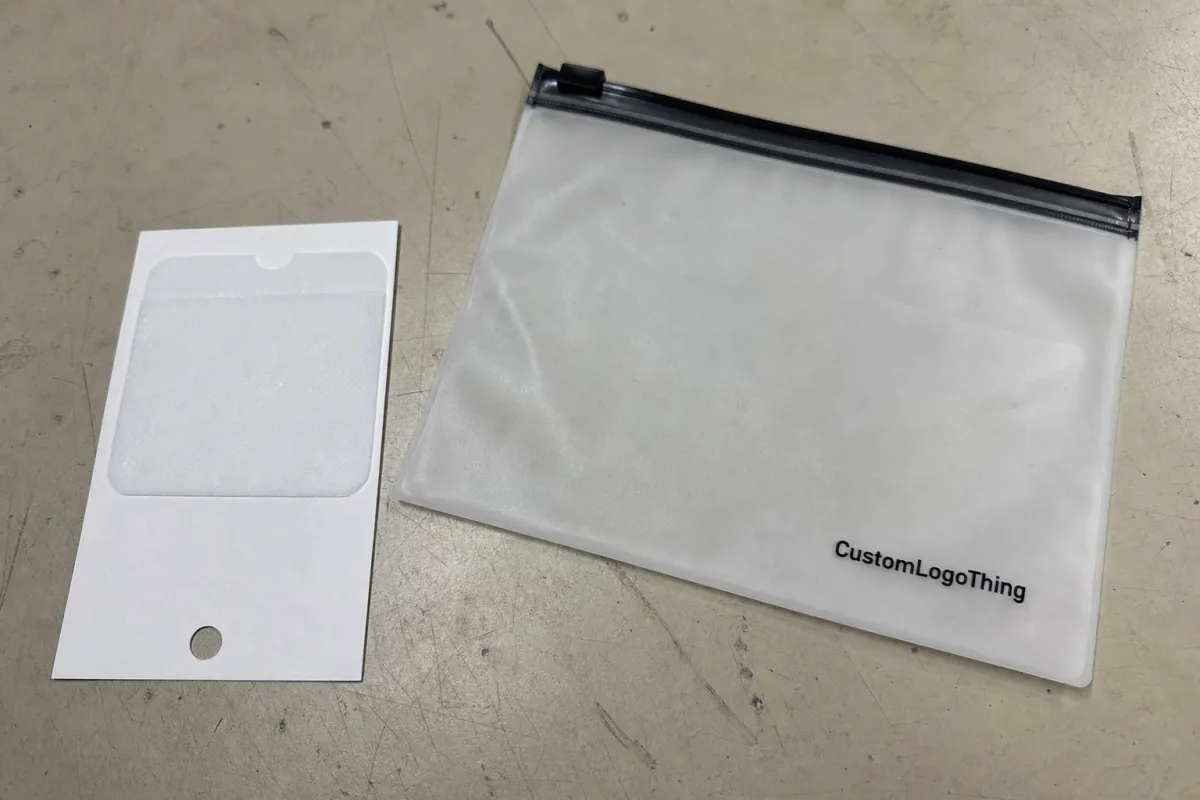
Material and finish matter just as much as structure. Clear PE shows the garment and helps with size verification in fulfillment. Frosted matte film gives a cleaner boutique look and hides light scuffing. Opaque white or colored film adds privacy and branding, but it can make product checking harder if the pouch is also used in warehouses.
Recycled-content and mono-material films can support sustainability goals, but claims should be checked carefully. A pouch with recycled content is not automatically recyclable everywhere. Mixed laminates can complicate recycling language, so confirm the structure before using any consumer-facing claim. For general recycling guidance, the EPA recycling resources are a useful baseline.
The main mistake is overbuilding the bag. A lightweight tee does not need the same film thickness or zipper strength as a heavy fleece hoodie. Spec only what the use case actually requires.
Specifications That Move the Price Up or Down
Size is the first cost driver. Larger width, height, or gusset dimensions use more film, increase carton volume, and often raise freight. A bag that is one or two inches larger than needed may not look expensive on paper, but it compounds across thousands of units.
Measure the folded garment first, then allow only enough room for easy insertion and closure. Check the pouch against the real use case: mailer, retail shelf, warehouse bin, 3PL carton, or return flow. A proof on screen is not enough. Use the actual garment folded the way production will fold it.
Thickness affects feel, durability, and failure rate. Light film may be fine for dust protection and simple e-commerce packing. Mid-weight film is better for retail presentation and warehouse handling. Thicker film is useful for heavy garments, returns, and reusable storage. Too thin fails. Too thick wastes money.
Material influences clarity, stiffness, handfeel, and how the pouch can be described in a spec sheet. LDPE is soft and flexible. HDPE blends feel crisper. CPP and laminated structures can create a more premium appearance or higher clarity, but they may complicate recyclability language if sustainability messaging matters.
Printing changes the quote quickly. One-color logos are usually the most efficient. Additional colors add setup, ink use, proofing, and registration control. Heavy flood coverage looks polished, but it can hide the garment, interfere with labels, and increase scrap if color tolerance is tight.
Placement also affects cost and usability. Logos near the zipper can distort if the seal area shifts. Small reversed text can fill in. Barcodes need a clear scan zone. Compliance copy should still be readable after the garment is packed.
- Lower-cost specs: standard size, clear PE, press-to-close zipper, one-color print, moderate thickness.
- Mid-range specs: custom size, frosted film, two-color print, warning text, barcode area.
- Higher-cost specs: gusseted structure, slider zipper, opaque film, heavy ink coverage, specialty finish.
Each specification should earn its place. If it does not protect, sell, organize, support returns, or satisfy compliance, it probably does not belong in the quote.
Zipper Pouches for Apparel Unit Cost Breakdown
A real Unit Cost Breakdown should include film, zipper, printing, setup or plate fees, labor, waste allowance, inspection, packing, inland freight, ocean or air freight, duty if applicable, and final delivery. Buyers should also ask what is included, what is estimated, and what could change after artwork or freight confirmation.
Directional pricing is easiest to understand by pouch style. Exact quotes depend on size, thickness, quantity, print coverage, destination, and timing.
| Apparel Pouch Type | Typical Use | Common Cost Range | Main Cost Drivers |
|---|---|---|---|
| Clear flat zipper pouch | T-shirts, socks, light apparel | $0.08-$0.18 per unit at higher custom quantities | Size, film thickness, one-color print, MOQ |
| Frosted custom printed pouch | Boutique apparel, product kits, subscription drops | $0.14-$0.32 per unit depending on coverage | Matte finish, print colors, setup charges |
| Gusseted zipper pouch | Hoodies, sets, bulky garments | $0.22-$0.55 per unit depending on depth | Gusset size, film usage, carton volume, freight |
| Slider or reusable pouch | Premium kits, travel storage, return programs | $0.35-$0.90+ per unit based on size and zipper | Slider hardware, thicker film, durability testing |
Those ranges are directional, not guaranteed. A 5,000-piece order with one logo and standard film will price differently from a 50,000-piece program with multiple sizes, heavier print coverage, and retail requirements. Higher volume usually lowers unit cost because setup, waste, and tooling are spread across more units.
MOQ affects the math. Small runs reduce inventory risk, but setup cost lands on fewer bags. Larger runs lower the piece price, but they tie up cash and warehouse space. If demand is not proven, a lower unit price may still be the wrong business decision.
Hidden costs are easy to miss: samples, pre-production approval, rush freight, storage, repacking labor, label application, and changes after proofing. If the packaging will move through distribution testing, ISTA guidance is useful for drop, vibration, and transit expectations.
The cleanest quote comes from clean inputs: size, thickness target, quantity, print colors, material preference, destination, and delivery deadline.
MOQ, Quote Inputs, and Price Breaks Buyers Should Ask For
MOQ exists because material sourcing, setup, and machine time are not efficient at tiny volumes. A 500-piece custom run may be possible, but the unit price can be hard to justify. Orders at 5,000 or 10,000 pieces usually create a more realistic custom price.
Ask for tiered pricing instead of a single number. Compare 2,500, 5,000, and 10,000 pieces for the same pouch size and print spec. That shows where the per-unit cost drops and where the savings start to flatten.
To get an apples-to-apples quote, send the supplier the folded garment dimensions, target pouch size, film thickness, zipper type, material finish, print colors, artwork files, packing requirements, delivery address, and target in-hand date. If the product will go to a 3PL, include carton labeling rules, pallet requirements, and receiving constraints.
Multi-SKU apparel programs add complexity. One pouch size can simplify inventory and packing, but it may not fit every garment well. Multiple sizes improve fit, but they add forecasting work and create room for pack errors. The best answer depends on the line mix, not on convenience alone.
Artwork also changes the quote. A single logo is the easiest path. Seasonal graphics, retailer-specific copy, multiple warning formats, and SKU-specific designs can trigger extra setup and proofing. Vector art is best. Low-resolution artwork usually creates delays.
For early-stage programs, start with a pouch spec that can cover multiple SKUs if possible. Tighten the spec later, after demand and handling patterns are real instead of assumed.
Production Steps, Lead Time, and Turnaround Expectations
The usual sequence is quote review, spec confirmation, artwork check, digital proof, sample or pre-production approval if needed, material prep, printing, converting, inspection, packing, and shipping. Skipping any of those steps does not remove risk; it only moves the problem to a later, more expensive stage.
Stock-size custom print jobs usually move faster because the base structure is already defined. Fully custom pouch sizes, specialty films, matte finishes, gussets, or slider zippers require more planning. Standard custom production often takes 12-25 business days after proof approval, with longer timelines once freight and customs are included.
Digital proofs help confirm layout, zipper placement, warning text, and barcode zones. They do not show handfeel or fit. Physical samples take longer, but they are worth it when the pouch has to fit a bulky hoodie, a set, or a retail display. A fit sample can prevent a lot of waste.
Approval delays are common: missing PMS values, unclear artwork, last-minute size changes, or late shipping address updates. Every revision can add time. The fewer open questions at proof stage, the faster the order moves.
Shipping choice matters. Air freight is fast but expensive. Ocean freight is slower but better for larger volumes. Domestic inventory programs can help repeat buyers avoid panic ordering. Work backward from the in-hand date, not from the production start date.
Inspection should cover zipper function, seal strength, print registration, film clarity, thickness tolerance, size accuracy, carton labeling, and random pull tests. If the pouch includes claims, warnings, or retailer-required copy, check that text before mass production.
Common Buying Mistakes That Inflate Apparel Pouch Costs
Oversizing is the most common mistake. A pouch that is too large wastes material, adds freight volume, and lets the garment slide around. If a folded tee fits a 10 x 13 inch pouch, moving up to 12 x 15 inches just to feel safer can quietly raise cost across the whole run.
Under-specifying thickness creates a different problem. Too thin can tear at the zipper, side seals, or corners, especially for heavy garments. Too thick can be unnecessary for light apparel. The right balance depends on garment weight, handling, reuse expectations, and whether the pouch is consumer-facing.
Another mistake is comparing quotes without matching specs. A lower price may simply mean thinner film, smaller dimensions, fewer colors, weaker zipper construction, or excluded freight. If the quote is not built on the same spec, it is not the same product.
Artwork can drive cost up fast. Full flood print, tiny reversed text, too many colors, and no clear barcode zone all create extra risk. Keep labels scannable and compliance copy readable. Make the print intentional, not decorative clutter.
Compliance gaps are expensive after production. Suffocation warnings, recycling claims, retailer rules, and country-specific labeling should be checked before bags are made. If the program uses paper inserts or claims around certified materials, confirm current guidance from FSC before using the language on packaging or sell sheets.
Storage and fulfillment need to be considered early. Bulky pouches take space. Inconsistent sizes slow packing. Unmarked cartons waste time. If the pouch has to support protection, presentation, reuse, returns, or compliance, define that role before ordering.
How to Get a Clean Custom Pouch Quote
Start with the basics: garment type, folded dimensions, target pouch size, estimated quantity, print requirements, material preference, delivery destination, and deadline. A complete request moves quickly. A vague one triggers back-and-forth.
Send a sample photo or a current pouch if you have one. That helps compare size, clarity, thickness, zipper style, and finish. If the current pouch splits, feels cloudy, or makes packing slow, say so directly. The fix may be a different film, a better zipper, a smaller size, or simply less overstuffing.
Ask for at least two quantity tiers and one alternate material or thickness option. Compare the unit price at 5,000 versus 10,000 pieces, then compare clear PE versus frosted film. That gives you a cleaner view of cost, presentation, and inventory risk.
Confirm whether the quote includes sampling, artwork setup, plate fees, packing, freight, and delivery terms. Ask whether the price is factory, port, warehouse, or door delivery if that is not clear. A quote should not hide half the cost in the fine print.
Fit test before mass production if the program is new or the garment is bulky. One sample can prevent a large wrong order. The best pouch spec is the one that fits the garment, survives handling, supports the sales channel, and stays inside the margin target.
FAQ
What is included in a zipper pouch unit cost breakdown for apparel?
A proper breakdown includes film material, pouch size, thickness, zipper type, printing, setup charges or plate fees, production labor, packing, quality control, freight, and sampling if required. The biggest cost movers are usually size, thickness, print coverage, order quantity, and shipping method.
How do I lower the cost of custom zipper pouches for clothing?
Use the smallest practical size, limit print colors, choose a standard press-to-close zipper, order higher quantities only after demand is proven, and avoid unnecessary finishes. Do not cut thickness too far if the pouch holds bulky apparel. Cheap and broken is not a savings strategy.
What MOQ should I expect for custom apparel zipper bags?
MOQ depends on size, material, printing method, and customization level. Simple printed pouches usually have lower MOQs than fully custom sizes, specialty films, slider zippers, or multi-design orders. Ask for tiered pricing so you can compare inventory risk against bulk savings.
How long does production take for printed zipper pouches for apparel?
Timeline depends on artwork approval, sampling, material availability, print complexity, production queue, and freight method. Standard-size bags with simple logo printing move faster than custom size, specialty finish, gusseted, or slider zipper programs.
What details do I need to get an accurate quote for apparel zipper pouches?
Send folded garment dimensions, target pouch size, order quantity, film thickness preference, zipper style, print colors, artwork files, delivery address, and deadline. If you are unsure about size or thickness, ask for recommendations based on whether the pouch is for retail, fulfillment, reuse, or returns.

