A slider can cost more than buyers expect. For small and mid-size custom runs, a Slider Lock Clothing Bags unit cost breakdown often shows that the closure system, insertion labor, and setup work affect price almost as much as the plastic film itself. That surprises people who are comparing the bag against a plain poly mailer, lip-and-tape sleeve, or basic flap bag.
When a Bag Closure Costs More Than the Film
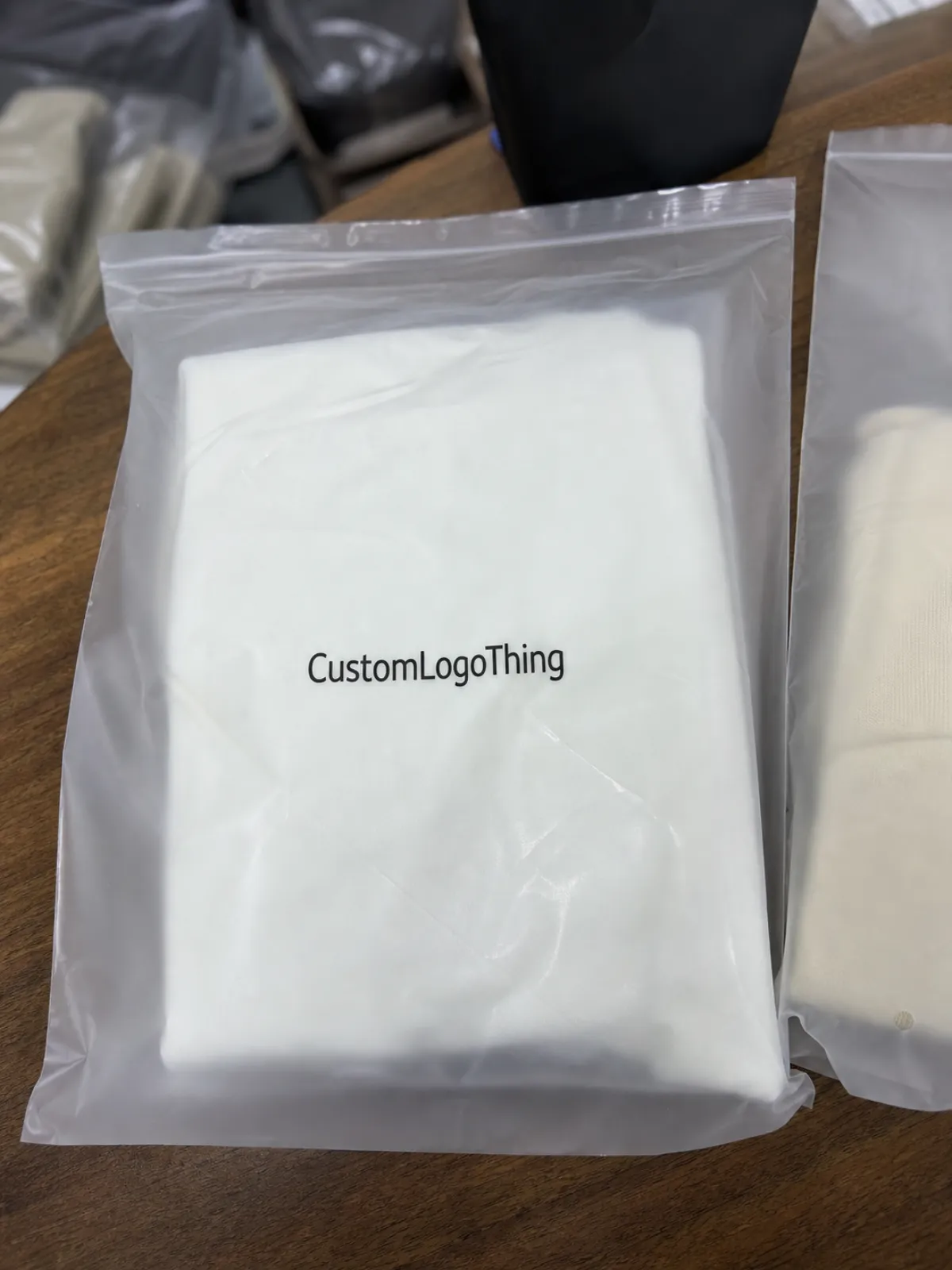
Apparel brands, uniform suppliers, subscription clothing programs, and fulfillment teams use Slider Lock Clothing Bags for practical reasons. The garment can be opened and closed more than once. Dust protection is better than an open sleeve. Presentation looks cleaner on a warehouse shelf, in a retail-ready kit, or inside an e-commerce shipment. Returns teams also appreciate a bag that can be reused without fighting a torn adhesive strip.
Here is the part many quotes hide: the bag is not just film. It includes resin, extrusion or sourced rollstock, zipper track, slider tab, sealing control, cutting accuracy, inspection, packing, cartons, and freight. Add printing, and the cost picture also includes artwork review, plate or setup charges, ink, registration control, and waste allowance.
The cheapest piece price is not always the cheapest operating cost. A bag that tears at the zipper track, wrinkles badly after carton packing, prints with muddy logo edges, or forces packers to wrestle with undersized dimensions can burn money in labor and replacements. I would rather see a buyer specify a bag half an inch wider and choose a sensible gauge than save a fraction of a cent and slow a packing line all season. Glamorous? No. Useful? Very.
Practical buying rule: price the bag as a finished package, not as a sheet of plastic. Closure function, print clarity, packing speed, carton cube, and delivered freight all belong in the same comparison.
The real quote drivers are predictable once the bag is broken apart: material structure, slider and zipper choices, print coverage, bag size, thickness, MOQ, tooling or setup fees, packing format, freight method, lead time, and approval requirements. Miss one, and the quote starts looking cheaper than it really is.
Slider Lock Clothing Bags Unit Cost Breakdown for Buyers
A useful slider lock clothing bags unit cost breakdown starts with cost buckets. The largest ones are usually plastic film, zipper profile, slider mechanism, cutting and sealing, print setup, ink coverage, quality inspection, inner packing, master cartons, and freight. Depending on the order, artwork preparation, pre-production samples, palletizing, duties, and destination charges may also be part of the delivered unit cost.
Film cost is driven by resin type, thickness, bag size, and waste allowance. A 10 x 13 inch bag in a lighter gauge uses far less material than a 14 x 18 inch bag built for hoodies or denim. Wider bags also create more shipping cube once packed into cartons, so the unit cost can move in two places: material consumed during production and freight charged after packing.
The slider lock is its own cost driver. The zipper track has to align cleanly with the bag mouth, and the slider must move without popping off, jamming, or weakening the top seal. That takes compatible components, controlled heat sealing, and enough inspection to catch poor slider movement before cartons ship.
| Cost Driver | Typical Effect on Unit Cost | Buyer Decision |
|---|---|---|
| Film gauge | Higher gauge increases resin use and carton bulk | Match thickness to garment weight and handling |
| Slider and zipper | Adds component cost, setup, and inspection time | Choose standard colors unless brand matching is needed |
| Print colors | More colors usually mean more setup and registration control | Use one or two colors if the brand system allows it |
| Order quantity | Higher quantities spread setup charges across more bags | Compare test, reorder, and bulk pricing levels |
| Freight method | Bulky cartons can trigger dimensional weight | Compare delivered cost per piece, not factory price only |
Printing adds another layer. Number of colors, one-side versus two-side print, solid ink coverage, repeat length, logo size, and production method can all move the quote. Flexographic printing is common for custom plastic bags, but artwork with tight registration, very fine type, or heavy coverage needs extra review because film behaves differently than paperboard. It stretches. It shifts. It does not care that the mockup looked perfect on a monitor.
Quantity matters because calibration, setup, administration, and quality checks are spread across more units. A run of 5,000 pieces may carry a much higher setup share per bag than 25,000 pieces, even when the physical bag is identical. Still, freight and storage can offset part of the savings. Large slider lock clothing bags are light, but cartons can be bulky, so compare the delivered unit cost instead of factory unit price alone.
Material, Gauge, and Closure Details That Change the Quote
Most clothing bags use polyethylene structures. LDPE is common because it has soft clarity, flexibility, and a familiar hand feel for apparel packaging. LLDPE blends can improve puncture resistance and stretch performance, which helps with folded garments that create pressure points at corners. Frosted or matte films often cost more, but they can give a cleaner presentation for premium apparel, uniforms, accessories, and subscription kits.
Gauge selection should follow the garment, not a guess copied from a previous bag. Lightweight scarves, tees, and children’s garments may work in a lighter structure. Hoodies, denim, workwear, outerwear, and items handled repeatedly in warehouses usually justify more thickness. As a practical range, many apparel poly bags sit around 2 mil to 4 mil depending on size, garment weight, and expected reuse, though the right answer depends on the pack-out.
The zipper track and slider tab deserve separate attention. A smooth slider depends on compatible profiles, consistent bag mouth alignment, and controlled seal temperature. If the track is too light for the slider, the bag feels cheap and may skip during opening. If the seal area is stressed by a bulky garment, the closure can fail during packing, storage, or returns.
Standard slider colors usually cost less and move faster through production. Clear, white, and black are common starting points, although availability depends on the supplier’s current component stock and production schedule. Custom color matching may be possible, but it can raise minimums or add time. Matching a slider to a brand color sounds simple until someone has to source the component, approve the shade, and run it through production without delaying the whole order.
Optional features can be useful, but each one needs a reason. Vent holes help release trapped air during packing. Hang holes support retail display. Suffocation warnings may be required depending on bag size, destination, and customer policy. Write-on panels, opaque privacy film, recycled-content film where available, carton-specific labels, and barcode placement can all affect setup, print layout, or inspection.
Exact garment dimensions matter. A bag needs enough width and length for easy insertion, but oversizing increases film cost, shipping cube, and loose presentation. Measure the folded garment at its widest point, then account for thickness and the space needed to close the slider without forcing the zipper track. A quarter-inch mistake near the opening can feel much larger to the person packing 1,000 garments in a shift.
For sustainability claims, ask direct questions about recycled content, recyclability markings, and material availability. Do not treat a recycling symbol as a full environmental plan. General guidance from the U.S. Environmental Protection Agency can help frame recycling discussions, but local collection rules and film composition still matter.
Print Specifications and Artwork Choices That Affect Pricing
Logo placement changes production more than many mockups suggest. A small one-color mark in the lower corner is usually simpler than full-face artwork, edge-to-edge graphics, or heavy ink panels. A clean custom logo on clear film can look sharp without turning the entire bag into an ink project.
Flexographic printing is widely used for custom plastic bags because it suits roll-fed film and repeat production. Some specialty effects may require different equipment, higher minimums, or added setup charges. A practical cost breakdown should separate print assumptions from material assumptions so you can see whether the price is driven by the bag itself or by the artwork.
Prepare vector logo files, Pantone or brand color references, print size, print location, safety margins, and the number of bag sizes using the same design. If three sizes share the same logo but use different print positions, the quote may need separate proofing or setup detail. If a QR code, small care text, or registration-heavy design is included, ask for a technical review before approval.
Plastic film can stretch slightly during printing and conversion. Fine lines, tiny reverse type, and tight borders near the zipper track deserve caution. White ink or an underbase layer may be needed on tinted, frosted, or dark films so the logo stays visible. That adds cost, but it often improves the finished result enough to justify the spend.
Heavy print coverage is another place buyers accidentally add cost. Solid panels can increase ink use, drying sensitivity, scuff risk, and rejection rates if the design is unforgiving. On apparel packaging, the garment is already doing some of the visual work through the clear or frosted film. Let it.
A marked proof is not a formality. It should show bag orientation, open end, zipper and slider position, vent holes, hang holes, logo placement, warning copy, and any folded-garment bulge that could interfere with the art. For outside references on packaging performance and distribution testing, buyers can also review resources from ISTA, especially if filled bags are packed into cartons for parcel networks.
MOQ, Pricing Tiers, and What We Need for a Quote
MOQ is influenced by film sourcing, print setup, zipper and slider availability, machine setup time, and whether the buyer needs a standard size or a fully custom dimension. A standard clear bag with a common slider color may price very differently from a custom matte bag with opaque film, two-color printing, special labeling, and multiple sizes.
Pricing tiers usually work the way buyers expect, but the reason matters. Lower quantities carry more setup cost per bag. Higher quantities reduce the unit share of setup and may allow more efficient material purchasing. Bulk pricing can help, but only if the buyer has room to store the cartons and enough garment volume to use the inventory before branding, size mix, or compliance language changes.
To quote accurately, Custom Logo Things needs the following inputs:
- Bag size: width, length, and whether dimensions are inside usable space or outside cut size.
- Material: clear, frosted, matte, opaque, recycled-content option where available, and target gauge.
- Closure: slider color, zipper style, hang hole, vent holes, or other functional details.
- Print: number of colors, one-side or two-side print, artwork file, logo size, and color references.
- Order details: quantity, packing preference, destination, required warnings, carton labeling, and deadline.
Ask for two or three price levels. A useful set might include a test quantity, a practical reorder quantity, and a bulk quantity that matches storage capacity and sales velocity. Comparing 5,000, 10,000, and 25,000 pieces often gives a clearer picture than asking for one number and guessing whether the next tier would be better.
A realistic quote should identify what is included and excluded: artwork review, proofing, tooling fees, sample fees, duties where applicable, cartons, pallets, and freight. If you have a target budget, share it. The same visual goal may be reached through different combinations of film gauge, print coverage, slider color, and quantity.
Also clarify how the bags will be packed. Bulk-packed bags may cost less to prepare, but they can slow the packing station if workers have to untangle or sort them. Inner bundles, labeled cartons, or size-specific packing can add small costs that save time later. Buyers tend to notice this only after the shipment arrives. Convenient timing, as always.
Production Steps, Lead Time, and Approval Timeline
The production path is straightforward, but every step protects the final bag. It usually runs through specification review, artwork check, quote confirmation, deposit or purchase order, proof preparation, material scheduling, print setup, bag conversion, slider application, inspection, packing, and shipment.
Lead time depends on order complexity, material availability, print requirements, sample approval, production queue, and shipping method. Custom printed Slider Lock Bags generally require more planning than stock unprinted bags because the print and closure must both land correctly. In many custom packaging programs, production may take several business weeks after proof approval, with added time for sampling or ocean freight if those are selected. That range is not a promise; it depends on the exact specification and current schedule.
The approval stage should be handled with care. Check dimensions, logo position, color references, closure style, warning copy, carton labels, barcode placement, and retail requirements before authorizing production. If the bag feeds into a packing line, confirm the open-end orientation and the direction staff will insert the garment.
Physical pre-production samples can be helpful for new sizes or new film structures. They add time, but they may prevent a larger problem if fit, hand feel, or slider function must be verified before bulk production. For a new apparel program, one sample round can be cheaper than discovering that a folded hoodie strains the zipper after the full order arrives.
Quality checkpoints should cover seal strength, slider movement, print clarity, cut consistency, film cleanliness, carton count accuracy, and packing condition. For slider bags specifically, the closure should open and close smoothly without catching at the ends of the track. Random carton checks are better than assuming the first acceptable bag represents the whole run.
Buyers with launch dates should build in approval time and freight time instead of treating production days as the full calendar from Quote to Delivery. Proof revisions, delayed artwork, unclear warning language, and last-minute size changes are common schedule killers. Production can only move as fast as the approved specification allows.
Common Buying Mistakes That Raise the Delivered Cost
The first mistake is sizing from garment length alone. Folded thickness, hand insertion, zipper clearance, and slider travel all need room. If the bag is too tight at the top, packers may force the closure and damage the track. If the bag is too large, the garment floats inside and the presentation looks loose.
The second mistake is chasing the thinnest film. Thin material may work for light garments, but it can backfire when warehouse teams rip bags during packing, customers receive wrinkled items, or returns become harder to process because the closure fails after repeated use. A small material upgrade can protect the labor already invested in folding, tagging, packing, and shipping the garment.
Overprinting is another cost trap. Heavy ink coverage may look premium on a screen, but it can increase print cost, dry time, handling complexity, and quality control sensitivity. A bold one-color logo, placed well, often gives a sharper brand impression than a full panel that fights the film and zipper details.
Freight is the quiet budget problem. Large clothing bags with slider closures can create bulky cartons even when the shipment is not heavy. A quote that looks low at the factory can lose its advantage after dimensional weight, pallet space, or split shipments are added. Request delivered cost per piece whenever freight can be estimated.
Skipping proof review can be expensive. Logo misplacement near the zipper track, missing suffocation warnings, incorrect orientation, and wrong open-end placement are all preventable if the proof is read like a production document rather than a picture. The proof is not there for decoration.
Order quantity also needs discipline. Do not chase the lowest unit price at a volume that strains cash flow or fills storage racks for too long. Apparel packaging can become obsolete when a logo changes, a warning requirement changes, a size mix shifts, or a product line gets discontinued. A lower unit cost is not helpful if half the order sits in cartons for two years.
Next Steps to Lock In the Right Bag Before Ordering
Start with the garment. Measure the folded width, folded length, and thickness, then decide how much room packers need to insert the item without fighting the slider. Choose the target film feel: clear and soft, frosted and premium, opaque for privacy, or heavier for repeated handling.
Next, decide how many print colors are truly needed. Confirm whether the slider should match a brand color or remain a standard color such as clear, white, or black, depending on availability. Gather the delivery destination, quantity targets, and carton labeling requirements before requesting a quote.
If you already have a bag that works, send a sample or a clear photo with dimensions. Matching a known package is often faster than describing hand feel from scratch. If the existing bag fails, point out the problem: torn top seal, weak slider, cloudy film, poor print, difficult insertion, or excessive carton bulk.
Ask for a quote that separates the major cost assumptions: quantity, gauge, print colors, slider style, proofing, cartons, and freight. Request one meaningful alternate, such as a different quantity or one material change. Asking for ten unrelated versions can slow the process and make the decision harder instead of clearer.
A good cost breakdown gives buyers control before production starts. Custom Logo Things prices custom plastic clothing bags against real variables, not vague assumptions, so the quote can be built around the actual film, closure, printing, packing, and freight details that shape the final cost per piece.
FAQ
What is usually included in a slider lock clothing bag cost breakdown?
A useful breakdown should account for film material, gauge, bag size, slider and zipper components, printing, setup charges, quality checks, packing, cartons, and freight. For custom printed bags, artwork complexity and print colors can change the price as much as small material adjustments. Delivered unit cost is often more useful than factory unit cost because bulky cartons can affect shipping.
How does MOQ affect slider lock apparel bag pricing?
MOQ helps cover machine setup, print setup, material scheduling, and slider component preparation. Higher quantities usually lower the unit cost because fixed production work is spread across more bags. The best quantity is not always the biggest order; it should match storage space, reorder timing, and garment sales volume.
What details do I need to request an accurate unit cost for custom slider clothing bags?
Provide bag width, length, film type, thickness, print colors, logo file, slider preference, order quantity, delivery destination, and any required warnings or labels. If the garment is already packed in a similar bag, share a sample or clear photo with measurements. Include whether the bags are for retail display, warehouse storage, e-commerce prep, or returns handling.
Does thicker plastic always make slider lock clothing bags better?
Not always. Thicker film can improve strength and presentation, but it also raises material cost and carton bulk. Light garments may not need heavy film, while denim, outerwear, or repeated handling often benefit from extra gauge. The right choice balances garment weight, customer presentation, packing speed, and budget.
How long does production take after approving a slider lock clothing bag quote?
Timeline depends on artwork approval, material availability, print complexity, quantity, production queue, and shipping method. Custom printed Slider Lock Bags usually need more planning than unprinted stock poly bags because printing and closure alignment must be controlled. Buyers with firm launch dates should allow time for proof review, production, inspection, packing, and freight.

