A 10,000-piece apparel shipment can lose more perceived value from wrinkled, cloudy, mismatched packaging than from a small fabric flaw. For a custom Zipper Pouches for Apparel bulk order, the pouch is not filler. It is the first quality signal a buyer, warehouse team, or end customer sees before they touch the garment.
That signal has to hold up in the real chain. Apparel gets folded, packed, cartoned, inspected, shelved, repacked, and returned. A resealable zipper pouch protects the item, keeps SKU details visible, speeds handling, and makes the product look ready for sale instead of rushed through a bagging table five minutes before cutoff.
The packaging choice also affects freight, storage, and labor. A pouch that works on the packing line but collapses in transit is not a win. Neither is a beautiful package that slows down receiving because nobody can tell the size or style without opening it. Apparel packaging lives or dies on boring details. That is usually where the money is.
Why Custom Zipper Pouches for Apparel Bulk Order Buyers Use Them
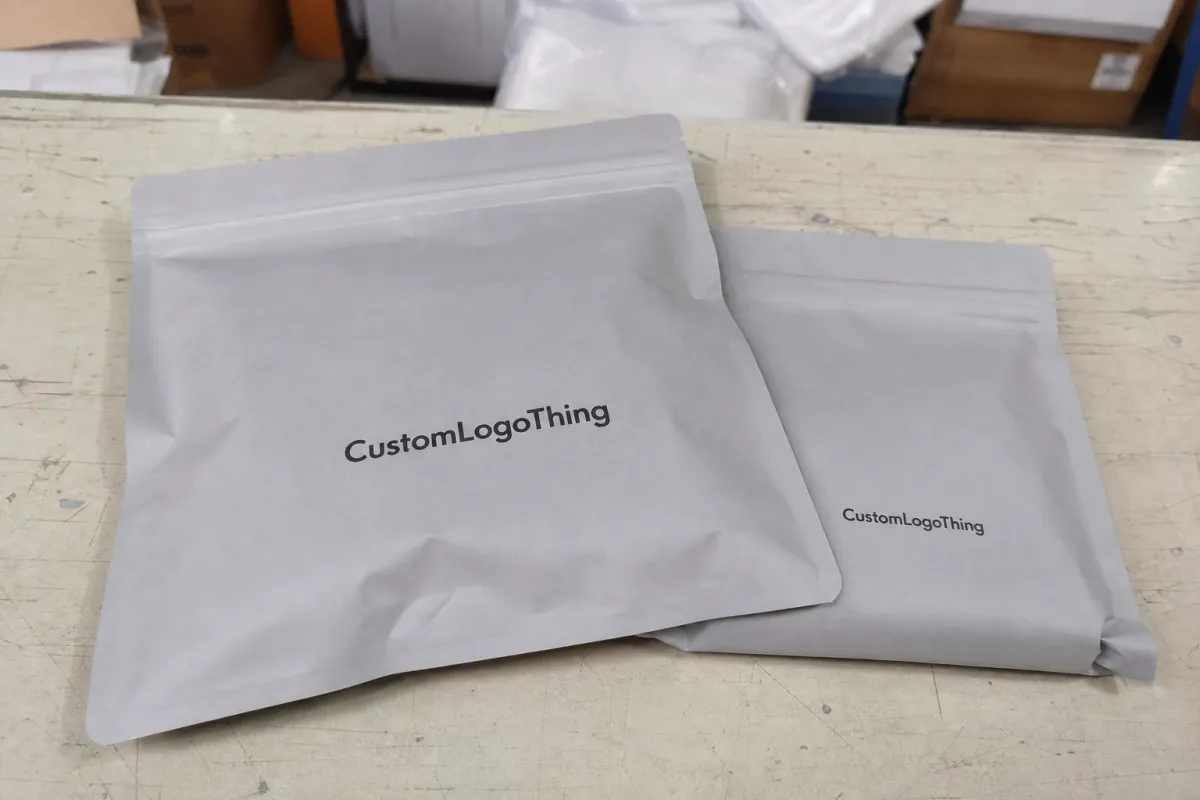
From a packaging buyer's point of view, zipper pouches solve three jobs at once: protection, presentation, and handling. Loose poly bags protect from dust, but they rarely feel intentional. Paper sleeves look clean until they meet moisture or repeated handling. Rigid boxes look premium, then freight charges show up and ruin the mood.
Custom zipper pouches sit in the middle. They are light, resealable, and more reusable than adhesive flap bags. A typical apparel zipper pouch may weigh only a few grams, while a rigid retail box can weigh many times more depending on board grade, insert structure, and finish. Across thousands of units, that difference changes the shipping quote faster than most teams expect.
The zipper also gives the package a second life. Buyers can inspect garments, check sizes, photograph product, reseal returns, or repack inventory without destroying the bag. That matters for subscription drops, uniforms, activewear, swimwear, underwear, socks, baby apparel, and accessories that move through more than one channel.
Buyer reality: Packaging that survives inspection, returns, and repacking usually saves more than a cheaper pouch that only looks good on the first pass.
For brands comparing pouches with Custom Packaging Products such as custom printed boxes, the decision usually comes down to weight, shelf impact, and reuse. Boxes win for gift presentation. Zipper pouches win for apparel lines that need clean branding, SKU visibility, and efficient packing across cartons and 3PL lanes.
Material Choices That Change Protection, Feel, and Shelf Impact
Material choice is not cosmetic. It changes clarity, hand feel, tear resistance, print behavior, and how premium the package feels when the customer opens it. A custom Zipper Pouches for Apparel bulk order should start with the garment, not with the logo.
| Material Option | Typical Use | Buyer Notes |
|---|---|---|
| Clear PE | T-shirts, socks, underwear, basic apparel | Good visibility, economical, common for warehouse sorting and size checks. |
| Frosted PE or CPE | Streetwear, activewear, influencer kits | Softer hand feel, semi-opaque finish, stronger branded packaging impression. |
| EVA | Swimwear, gymwear, accessories | Flexible, smooth, often selected for a thicker reusable feel. |
| Laminated film | Premium retail packaging | Better print depth and structure, but higher unit cost and more complex material claims. |
| Biodegradable blends | Brands with stated material goals | Claims must be verified; performance and shelf life vary by formulation. |
Clear PE works well when warehouse staff need to see color, size, or folded style without opening the pouch. Frosted CPE is common for premium apparel because it softens the visual effect and hides minor wrinkles. Thicker matte films suit swimwear and gymwear, where moisture resistance and reuse matter more than full transparency.
Zipper selection changes the experience too. Press-to-close zippers are common and cost-effective. Slider zippers are easier to open repeatedly, especially on thicker pouches, but they add material and assembly cost. Double zippers can help with heavier garments or bags that need a more confident seal. Child-resistant styles exist, though they are rarely needed for standard apparel unless the sales channel asks for them.
Compliance should be handled early, not after proofs are approved and the clock is already rude. Many retailers require suffocation warning text above certain bag openings, recycling marks, material declarations, or marketplace-specific wording. ASTM standards can guide film testing, and the International Safe Transit Association publishes transit resources that help packaging teams think beyond the pouch itself. Recycled or compostable claims need documentation. Hope is not a spec sheet.
Sizes, Thickness, Printing, and Apparel Fit Specifications
Guessing pouch size from a garment size chart is one of the fastest ways to create extra labor. Measure the garment after folding. Then add room for insertion, zipper clearance, and any compression that happens once the item goes into the pouch. A bag that looks only a little tight on a desk can slow down a packing line once workers handle hundreds of pieces per hour.
Starting points help, but they are not substitutes for samples. Small accessories often fit pouches around 100 x 150 mm. Socks and underwear commonly land around 150 x 220 mm. Folded T-shirts usually need 220 x 300 mm to 280 x 350 mm. Leggings and swimwear vary widely, often 200 x 280 mm to 300 x 380 mm. Hoodies may need 350 x 450 mm or larger, and sometimes a gusset. Children's clothing can be smaller, but multi-piece sets need testing.
Thickness is usually discussed in microns or mils. Lightweight single-tee pouches may sit around 50-70 microns. Retail-ready or reusable apparel pouches often run 80-120 microns. Heavier premium bags can go beyond that, but more thickness is not automatically better. If the pouch gets too stiff, insertion slows, carton cube worsens, and the line starts losing time for no good reason.
Print choice should match the role of the package. A one-color logo is usually the most economical. Multi-color screen or gravure printing improves shelf impact, but it may require plates, longer setup, and tighter artwork approval. Digital print can help short runs or complex designs, though unit cost is often higher. Matte finish, frosted film, clear windows, hang holes, barcode zones, and size stickers all affect production planning.
Operational details decide whether the pouch works in the real system. Confirm zipper orientation. Specify vent holes if garments need compression. Decide inner pack count per carton. Separate SKUs if warehouse receiving needs it. If the bags must run through a manual table line or semi-automated pack station, test opening width and film stiffness before approving bulk production. A spec that looks fine in PDF can still be annoying in a real line.
Pricing, MOQ, and Unit Cost Drivers for Bulk Apparel Pouches
Pricing for a custom Zipper Pouches for Apparel bulk order depends on size, film type, thickness, zipper style, print method, number of colors, order volume, finishing, packing method, and shipping destination. A simple clear PE pouch with one-color printing behaves very differently from a frosted, thick, multi-color retail pouch with a slider zipper and custom carton labels. The quote needs to reflect that reality, not pretend all bags are cousins.
As a practical buying range, simple logo zipper pouches may fall around $0.08-$0.18 per unit at larger quantities, while thicker frosted or custom printed pouches can run closer to $0.18-$0.40 per unit depending on size and print coverage. Smaller orders sit higher because artwork setup, plates, sampling, and production changeover get spread across fewer pieces. That is not a markup conspiracy. It is just math with tooling.
MOQ is also specification-driven. Stock-size customization with a simple logo can sometimes start lower. Fully custom dimensions, custom film color, heavier thickness, specialty zippers, or multi-color graphics usually require higher minimum quantities. Ask for quantity breaks at 5,000, 10,000, and 25,000 pieces where relevant, because setup costs often flatten as volume rises.
| Order Scenario | Likely Cost Behavior | Questions to Ask Before Approval |
|---|---|---|
| Standard size, one-color logo | Lowest setup complexity and faster quoting | Is the size truly stock, and is print area limited? |
| Custom size, frosted film | Higher MOQ and material planning needed | What thickness, tolerance, and sample timeline apply? |
| Multi-color full-surface print | Plate or setup charges can lift small-run cost | Are Pantone targets, proofs, and print registration standards included? |
| Retail or 3PL direct shipment | Carton labeling and split shipments may add cost | Are carton marks, pallet rules, and delivery terms quoted? |
Hidden variables matter. Artwork setup, printing plates, sample fees, Pantone matching, freight, duties, rush production, carton labels, split shipments, and inspection requirements can all change landed cost. A lower unit price can still lose if it excludes freight or uses thinner film than the competing quote. Procurement teams see this all the time, and it never gets less irritating.
For a faster quote, send pouch dimensions, material preference, target thickness, quantity tiers, artwork, delivery ZIP code or port, target date, and any retailer compliance requirements. If your apparel program includes several SKUs, ask about Wholesale Programs so pricing can reflect total volume rather than one isolated pouch size.
Process, Lead Time, and Production Steps From Artwork to Cartons
The production path is predictable if the specifications are clean. First comes requirement review: garment type, folded size, order volume, material direction, print level, compliance text, and delivery deadline. Then the supplier confirms pouch size, recommends film and thickness, prepares artwork proofing, and issues a quote.
After quote approval, the buyer may approve a digital proof, a physical sample, or a pre-production swatch. Bulk production follows, then quality inspection, packing, carton labeling, and shipping. Straightforward orders can move quickly after proof approval. More complex orders slow down because every change touches print, material, or setup.
Sample timelines and bulk timelines should not be lumped together. A sample may take several business days after artwork and size confirmation, while bulk production may take 12-20 business days after proof approval for many standard custom pouch programs. That depends on material availability, order size, print complexity, factory workload, and shipping method. Air freight changes arrival speed but can distort the cost model. Ocean freight protects unit economics but needs more planning.
Quality checkpoints are practical. Film thickness should be checked against the spec. Zipper closures should be opened and closed repeatedly. Print registration should be reviewed, especially for small logos, QR codes, and barcode zones. Color should be compared against approved references. Size tolerance should be measured because a few millimeters can affect fit. Carton labels should match the warehouse receiving rules. None of that is glamorous. All of it matters.
Apparel launches need packaging earlier than many teams plan. If garment packing starts on Monday, pouches should not be arriving that same week. Build in reorder buffer, especially for fast-moving sizes. Confirm whether cartons ship to a factory, 3PL, retailer, or brand warehouse because each route can require different labels and packing lists.
Artwork, Branding, and Compliance Details Buyers Should Lock Early
Artwork is not decoration. It controls print method, color count, proofing speed, and cost. It also decides whether the pouch acts as true retail packaging or just a protective sleeve. Good package branding can make a low-bulk item, such as socks or swimwear, feel more deliberate without forcing the line into a box it does not need.
Send vector logo files whenever possible, usually AI, EPS, or editable PDF. Include Pantone or CMYK color references, print placement, size marks, barcode or QR code requirements, warning text, recycling icons, and retailer-specific wording. Low-resolution PNG files slow everything down because they usually need to be redrawn before production artwork can be approved.
Brand presentation has a real effect on packaging design. A centered logo on frosted film communicates minimal, premium apparel. Full-surface graphics suit seasonal drops and streetwear releases. Transparent panels help warehouse teams verify color without opening the pouch. Matte or frosted film reduces glare for photography and gives the package a softer hand feel.
Compliance language needs discipline. Suffocation warnings may be required based on bag dimensions and sales channel. Material claims need support. Recycled-content, biodegradable, compostable, or plastic-free statements should not be used unless documentation backs them. The U.S. Environmental Protection Agency provides background on materials management and recycling principles at epa.gov/recycle, but supplier declarations and local regulations still decide what can go on the bag.
For larger programs, approve a physical sample or production swatch before mass production. Digital proofs help with layout, but they do not fully show opacity, film softness, zipper force, or exact print behavior on a textured matte surface. Skipping the sample might save a few days. It can also buy you a headache no one asked for.
Common Ordering Mistakes That Raise Cost or Delay Delivery
The mistakes repeat because the pressure repeats: launch date fixed, garments nearly ready, packaging treated like a late accessory. A custom Zipper Pouches for Apparel bulk order punishes that sequence. Small errors scale badly.
The first mistake is sizing from a flat garment chart instead of a packed sample. Fabric thickness, fold method, hangtag placement, and tissue insert all change the required pouch. A pouch 10 mm too narrow may force workers to refold product, pull harder against the zipper, or reject bags during packing. Across 10,000 units, that turns into labor cost fast.
The second mistake is choosing film too thin for the handling route. A 50-micron pouch may work for a single lightweight tee shipped inside another mailer. It may not hold up for a retail-ready hoodie pouch handled through multiple cartons. The third mistake is artwork quality. Blurry logos, late color changes, and revised placement after proof approval can trigger new proofs, new plates, or missed production slots.
Operational misses show up late. Carton dimensions may exceed warehouse preferences. SKUs may arrive mixed when the receiving team needs separation. Barcode zones may land across a zipper or wrinkle point. Zipper direction may conflict with packing-line flow. Retailer routing guides may require carton labels that were never included in the quote.
Price comparison creates another trap. Two quotes are not equal unless they match material, thickness, size tolerance, print area, freight terms, inspection level, and packing method. A cheap pouch can become expensive if it fails closure tests or ships in cartons that a 3PL rejects.
- Confirm fit: test pouch size with the actual folded garment, hangtag, and insert.
- Approve artwork: lock logo, color, warning text, barcode zones, and print placement before production.
- Verify economics: compare MOQ, quantity breaks, setup fees, freight, and duties.
- Review timing: separate sample approval time from bulk production and transit time.
- Check dispatch: request carton photos, label confirmation, or inspection notes before shipment.
Next Steps to Place a Factory-Ready Apparel Pouch Order
A factory-ready order starts with evidence, not adjectives. Gather garment samples or folded dimensions. Decide whether the pouch should be clear for warehouse visibility, frosted for a premium feel, thicker for reuse, or economical for high-volume basics. Choose press-to-close or slider zipper. Select one-color logo, multi-color graphics, or a retail-facing design with barcode and warning areas.
Then prepare the quote pack. Send pouch size or folded garment dimensions, quantity, film type or desired look, thickness target, artwork file, print colors, delivery ZIP code or port, deadline, and compliance needs. If the material or size is uncertain, send the garment details and ask for a recommendation instead of guessing. Guessing looks cheap until the sample arrives and proves otherwise.
Ask for two or three quantity breaks. The difference between 5,000 and 10,000 pieces may be meaningful because setup costs are spread across more units. The difference between 10,000 and 25,000 pieces may be even stronger if material purchasing, print setup, and packing efficiency improve. Procurement needs landed cost, not just unit price.
Request a sample for first-time orders, premium launches, retailer programs, new pouch sizes, unusual materials, or color-critical branding. If the order supports a broader product packaging program with custom printed boxes, mailers, or inserts, review the full packaging mix together. The FAQ can help with common artwork and production questions before the quote stage.
For a custom zipper pouches for apparel bulk order, send specifications first so pricing, lead time, and production feasibility can be checked before artwork or launch dates are locked. That one habit cuts rework, protects the ship date, and gives the pouch a real job to do: protect the garment, carry the brand, and move cleanly through the supply chain.
FAQ
What information do I need for a custom apparel zipper pouch bulk order quote?
Provide pouch dimensions or folded garment dimensions, quantity, material preference, thickness, zipper style, artwork, number of print colors, delivery location, target date, and any compliance or warehouse labeling requirements. Photos of the folded garment and current packaging also reduce sizing errors.
What is the MOQ for custom zipper bags for clothing?
MOQ depends on size, material, and print method. Simple logo printing on standard sizes can often start lower, while fully custom dimensions, custom film colors, thicker gauges, and multi-color printing usually require higher bulk quantities.
How do I choose the right size zipper pouch for apparel?
Measure the garment after it is folded for packing, then add space for easy insertion, zipper clearance, and any gusset or compression needs. Testing with an actual garment sample is the safest method because fabric thickness and fold style change the fit.
How long does production take for bulk custom zipper pouches?
Lead time depends on artwork approval, sampling needs, material availability, print complexity, order volume, and shipping method. Approving artwork and samples quickly is the best way to protect the timeline, since buyer-side approval delays often move the ship date more than production itself.
Can custom zipper pouches include logos, barcodes, and warning labels?
Yes. Logo printing, size marks, QR codes, barcodes, recycling icons, suffocation warnings, and retailer-specific text can be added when artwork files and placement instructions are supplied before proofing. Keep barcode areas clean and flat so scanning remains reliable after packing.

