A garment sample can look ready for sign-off and still get slowed down by the packet around it. Missing size labels, a stale revision sheet, or a loose trim card can turn a straightforward review into a scavenger hunt. That is why zipper pouches for apparel Sample Approval Checklist deserve more attention than they usually get.
The pouch is not decoration. It is a control point. If it holds the sample, the spec sheet, the revision history, the color reference, and the sign-off form in one place, the review becomes faster and the approval trail becomes easier to trust. For brands and factories that handle multiple rounds, that kind of order prevents a lot of preventable confusion.
Why zipper pouches for apparel sample approval checklist catch issues early
The first problem with sample review is rarely the sample itself. More often, it is the paperwork around the sample. If the reviewer cannot quickly confirm whether they are looking at the right version, the meeting shifts from quality review to version control. A structured pouch keeps that from happening.
Think about a sample that looks perfect on the hanger but arrives with no revision number or color card. Someone will stop the process to ask which round it belongs to, and that delay often costs more than the pouch ever will. A consistent packaging system keeps the team focused on fit, stitching, fabric hand, shade accuracy, and trim placement instead of chasing missing information.
A practical sample approval pouch for apparel usually contains:
- The garment sample, folded or hung in the same way each round
- A checklist with style code, revision number, and date
- Fabric swatches, print references, or trim cards
- The spec sheet or measurement sheet
- Care label copy and any substitute material notes
That list is plain on purpose. The fewer decisions people have to make while opening the package, the less likely they are to miss something important. Buyers like the traceability. Production teams like the fewer re-sends. Pattern teams like not having to explain why a sign-off happened on the wrong round.
"The best pouch is the one that disappears into the process. It makes the right details easy to see and the wrong details hard to ignore."
There is also a direct cost angle. A missing card can trigger a second shipment. A mixed-up revision can add another sample round. A misplaced trim note can send a team back to confirm the same detail twice. Even a small packaging choice can quietly remove friction from a launch schedule, which is why zipper pouches for apparel Sample Approval Checklist are often more useful than they look on a spreadsheet.
How the approval pouch workflow keeps sample reviews organized
The workflow works best when it is treated like a repeatable process, not a one-off fix. Pack the garment, add the checklist, insert the supporting cards, and route the pouch in the same order every time. That sounds basic, but basic systems are the ones that survive busy seasons.
Version control is the real payoff. Keep pre-production, revised, and final-approved samples in separate pouches so no one mistakes an older shade for the current one. If multiple sizes or colorways are moving at once, a pouch becomes the boundary that keeps each decision set intact.
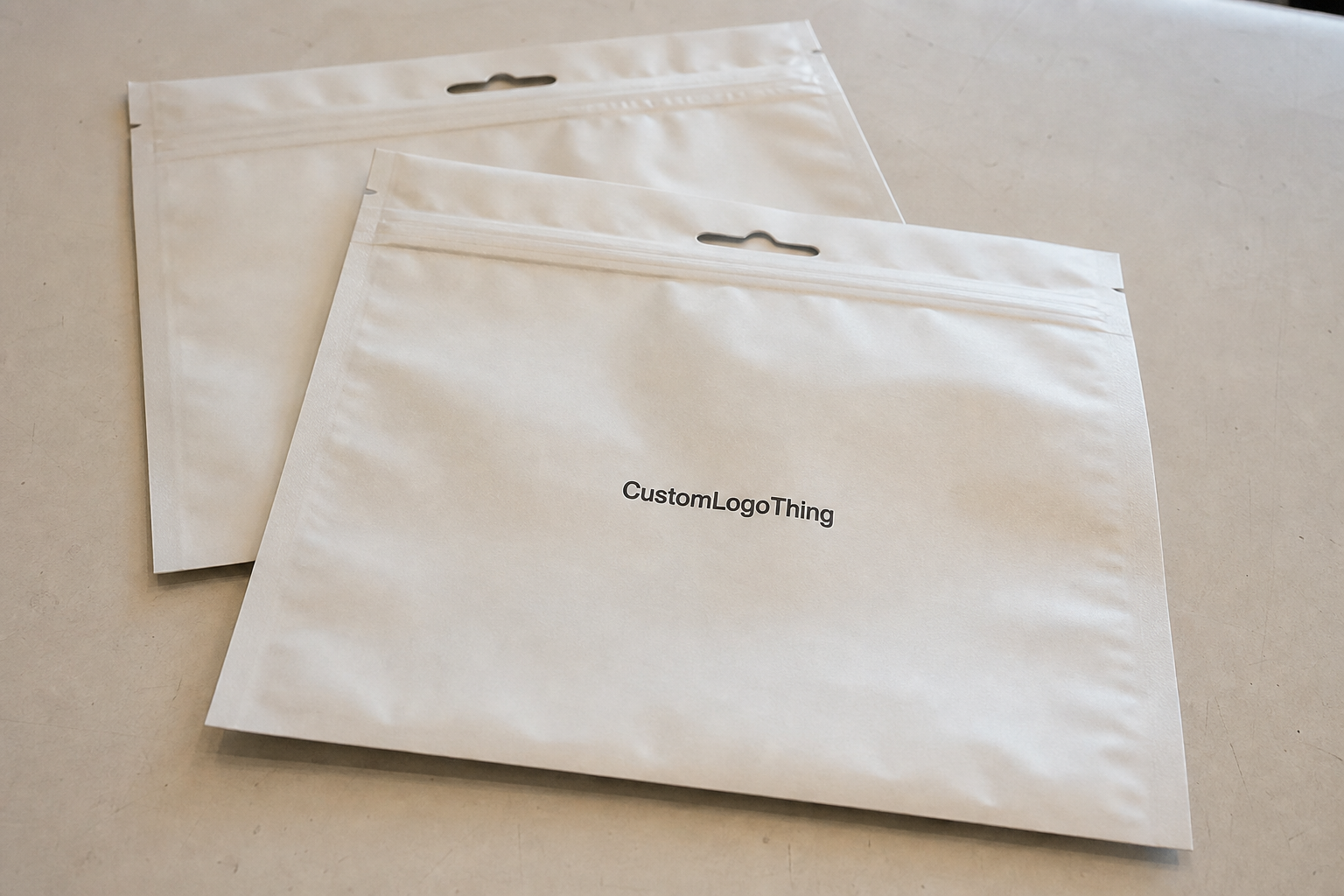
Clear pouches are popular because reviewers can inspect the garment without unpacking everything. Frosted or opaque versions make more sense when a team wants extra privacy, a more premium presentation, or less distraction from notes and labels. The right choice depends on the review style, the sensitivity of the product, and how much visibility the team needs during inspection.
Uniform pouch sizing helps behind the scenes as well. A consistent footprint is easier to carton, easier to stack, and less likely to crush inserts or wrinkle a sample. Loose stickers and swatches stay where they belong instead of sliding around during transit. If the sample has to pass through more than one office or warehouse, that stability matters more than most teams expect.
The physical pouch should still connect to digital records. It is a handoff point, not the whole system. Every checklist needs to map back to the same artwork file, measurement sheet, and buyer comments. When the paper packet and the digital record match, the team spends less time asking which file is current and more time deciding whether the sample actually meets the brief.
A few buyers also use barcodes or QR codes on the pouch to tie the sample to a shared tracker. That can help when a style is moving between merchandising, sourcing, and production review, especially if the same design appears in several colors or size ranges. It is a small detail, but it reduces the number of times someone has to open the pouch just to confirm the style ID.
Cost, pricing, and MOQ factors for custom sample pouches
Price usually comes down to a handful of variables: film material, thickness, pouch size, zipper style, print coverage, and whether the pouch needs special cuts or inserts. Stock clear pouches are the lowest-cost route. Custom printed versions cost more because setup and proofing get added to the run. That is normal, and there is nothing mysterious about it once the spec is clear.
MOQ has a direct effect on unit price. Small sample-only orders tend to carry a higher per-piece cost because artwork setup, plate work, and packing labor are spread across fewer units. For buyers comparing suppliers, the most useful question is not, "What is your cheapest pouch?" It is, "How does pricing change at 1,000, 3,000, and 5,000 pieces?" That makes the hidden setup costs visible.
Here is a practical comparison point for common programs:
| Pouch option | Typical use | Approx. unit cost | Best fit for |
|---|---|---|---|
| Stock clear zipper pouch | Basic sample handling | $0.08-$0.16 | Fast internal approvals |
| Custom printed clear pouch | Branded sample presentation | $0.14-$0.28 | Buyer-facing reviews and retail programs |
| Heavy-gauge premium pouch | Delicate or bulky garments | $0.22-$0.40 | Outerwear, denim, knitwear, accessory sets |
Those ranges are directional, not a guarantee. A stronger zipper, larger print area, tighter color match, or custom insert card can push the cost higher. Packing labor matters too. If the pouch needs labeling, kitting, or hand insertion of cards, that cost belongs in the comparison even if it does not show up on the unit price line.
Material choice affects both cost and presentation. Clear PVC is common because it is inexpensive and very transparent. PE and EVA are softer and often lighter. PET resists scuffing better, which helps when pouches are reused across several review rounds. TPU can feel more premium, but it is usually harder to justify unless the sample set needs a higher-end presentation.
For recurring programs, it helps to ask for a quote that separates size, gauge, print method, zipper style, and carton count. A low headline price can disappear once art changes or custom dimensions get added. Buyers sourcing zipper pouches for apparel Sample Approval Checklist usually save more by comparing the full spec than by chasing the cheapest quote.
Process and lead time from artwork to approved sample delivery
The cleanest production path starts with dimensions. Confirm the pouch size, closure style, print area, and insert needs before artwork is prepared. If the sample is larger than expected or carries multiple cards, that decision should be made early. A late size change is one of the fastest ways to delay a run.
A typical path looks like this: approve the dimensions, prepare the artwork, review the digital proof, make a pre-production sample if the design is unusual, run the order, then pack and ship. Each handoff is small on its own. Together, they decide whether the package lands on time.
Common lead-time pressure points are predictable. Artwork approval stalls. The zipper color changes after proofing. The pouch needs to be resized because the garment sample was reworked. A label gets updated at the last minute. None of that is rare, which is why experienced buyers build in buffer time rather than planning right up to the edge.
Stock-sized pouches usually move faster than custom ones. A simple stock order may be ready in a few working days once artwork is confirmed. Custom printed pouches often take two to four weeks after proof approval, and more complex builds can take longer if new dimensions, special film, or a custom zipper are involved. If a supplier promises unusually fast custom work, ask which steps are being skipped.
Transit time deserves the same attention as production time. A sample pouch may be finished, but if the carton gets crushed or the outer package is not labeled well, the approval pack still arrives in poor shape. Many teams use carton-performance references such as ISTA 3A or ASTM D4169 when shipping samples that need to survive repeated handling. The idea is simple: a good inner pouch cannot rescue a badly protected shipment.
For teams that want a broader packaging reference, the Packaging & Processing Technologies Association and ISTA both offer useful context on shipping and handling expectations.
Material, size, and closure specs that affect approval quality
Film clarity changes how a sample is judged. A pouch can look clear in one lighting setup and hazy in another, especially under warehouse lights. If reviewers need to inspect print edges, seam alignment, or shade variation, the film should stay visually neutral and resist clouding. Anything that distorts the view makes the garment harder to evaluate.
Thickness matters almost as much as clarity. Thin film works for flat tops, cards, and light sample packs. Heavier knitwear, denim, outerwear, and accessory sets usually need more structure. A pouch that wrinkles too easily can distract from the presentation. One that is too stiff can be awkward to reuse when the sample moves through several rounds.
Size should fit the sample without compression. Overstuffing is common because teams try to fit the garment, inserts, and notes into one pouch. That can crease fabric, twist a sleeve, or distort the way the sample lays. The resulting issue looks like a garment problem, but the real fault is packaging.
Closure feel also affects handling. A smooth zipper is easier to open and close across multiple review cycles, and it gives the packet a more controlled feel. A rough slider or weak track slows the user down, which sounds minor until the same pouch has to be handled a dozen times in a week. Small friction points add up fast.
Useful details include write-on panels, hang holes, tear notches, and barcode placement. Write-on areas help teams mark revisions without cluttering the front of the pack. Hang holes can make showroom display easier. Barcodes and QR codes help track samples when they move between departments, storage areas, or factories. If the program includes sustainability claims, FSC-certified paper inserts or labels can support that effort; the FSC framework explains the certification side clearly.
For teams trying to reduce plastic content, recycled PE or lower-gauge film can work well, but there is a tradeoff. Recycled material may be slightly less crystal-clear or a bit softer in hand. That does not make it unusable. It just means the finish should be tested with the actual garment and lighting conditions before the full run is approved.
Common mistakes that slow down apparel sample sign-off
The easiest mistake to avoid is also one of the most common: sending a pouch without a clear revision number. Once that happens, reviewers start guessing whether the sample is current, and the approval meeting loses focus. A label system is not a nice-to-have. It is operational.
Mixing unrelated pieces in one pouch creates a different problem. A stray trim card, an extra size label, or a second colorway can make it unclear what is actually being approved. The more clutter inside the pouch, the more likely someone is to sign off on the wrong item or ask for a recheck that should never have been needed.
Poor label placement can also weaken trust. If the style code, season, and size do not match the garment inside, the reviewer starts questioning the whole packet. The sample may be fine, but the packaging tells them the process is loose. That is a hard impression to reverse.
Material mismatch is another quiet delay. A buyer may expect a clear, presentation-grade pouch and receive a cloudy, soft, or scratch-prone film instead. The sample may still be acceptable, but the pack feels unfinished. That can trigger unnecessary comments, and once comments start piling up, the schedule usually slips.
Storage and movement matter too. If the pouch format does not fit the way the team shelves or cartons samples, items get bent, labels peel, and staff repack the set more than once. That is how a small packaging choice becomes a recurring process tax. It is not dramatic, but it is expensive over time.
For companies using zipper pouches for apparel Sample Approval Checklist across several factories or buying offices, standardization is the best fix. Lock the pouch size, the field names, the label position, and the revision rules. Fewer variations mean fewer mistakes, and fewer mistakes mean fewer delays.
Expert tips and next steps for smoother sample approval
Start with a master checklist that travels with every pouch. Keep it short enough that people will actually use it, but specific enough that no one has to guess what the sample represents. A solid checklist should cover style code, revision number, garment count, size, color reference, care label copy, and sign-off space. It should not try to do everything.
Match pouch dimensions to garment category. Tops, bottoms, outerwear, and accessories behave differently in packaging, so they should not all be squeezed into one generic format. A category-based system is faster to pack and easier to read at a glance. Receiving teams know what they are opening before they unzip the pouch.
Before the approval pack ships, run a final pre-flight check. Confirm the art file, test the zipper, compare the physical sample against the tech pack, and make sure the insert cards match the current round. That extra pass catches the mistakes that are easiest to miss when people are moving quickly.
After each run, review what slowed the process. Maybe the label area was too small. Maybe the film was clear enough, but it scuffed too easily. Maybe the zipper felt fine on day one and awkward after a few open-close cycles. Capture those notes while they are fresh, then update the spec for the next round instead of carrying the same problem forward.
One practical way to build a better system is to treat the pouch spec like part of the tech pack, not a separate purchase. If the sample pack is tied to the same style record, the same revision logic, and the same approval path, future rounds get easier to manage. That matters more than it sounds because the second or third sample cycle is where process discipline starts to pay off.
- Choose the pouch style based on how the sample will be reviewed.
- Set checklist fields and revision rules before ordering.
- Request quotes by size, thickness, print method, and quantity.
- Test one real approval pack before scaling the full run.
- Archive the final version so the next program starts from a proven reference.
That archive step is easy to skip and hard to regret later. Teams that keep a clean reference usually move faster on the next style, because they are not rebuilding the process from scratch. For apparel programs that need less confusion, fewer resends, and a more reliable path to sign-off, zipper pouches for apparel Sample Approval Checklist are a small packaging change with an outsized operational return.
What belongs on a zipper pouch for apparel sample approval?
Include the garment sample, style code, revision number, size, color reference, and the approval checklist in the same pouch. Add trim cards, care label copies, and sign-off notes so reviewers do not have to search through separate packets.
Do zipper pouches help with sample approvals for multiple apparel sizes?
Yes. Separate pouches for each size or fit stage reduce mix-ups when teams are reviewing graded sample sets. Consistent labels and color cues make it easier to compare size runs without opening unrelated packages.
How does pouch material affect apparel sample approval?
Clear, stable film makes visual inspection easier, while thicker material protects delicate garments and keeps the package looking controlled. The wrong finish can haze, scratch, or wrinkle, which makes color and construction details harder to judge accurately.
What is a typical MOQ for custom zipper pouches used in sample approval?
MOQ depends on size, print coverage, and whether the pouch is stock or fully custom, but smaller sample-focused orders often carry a higher per-piece cost. Ask for quotes by pouch size and print method so you can compare minimums without hidden setup costs.
How long does production usually take for custom apparel sample pouches?
Lead time depends on artwork approval, custom dimensions, print method, and whether a pre-production sample is required. Simple stock-style orders move faster, while branded or fully custom pouches need more time for proofing and production steps.