For bulk headwear, apparel custom promotional Hats Unit Cost is rarely driven by the blank cap alone. Setup, decoration method, freight, and packaging can move the final number more than buyers expect. A quote that looks lean on paper can turn expensive once artwork changes, proof revisions, and shipping details enter the picture.
That matters because hat programs usually sit inside a broader branded launch. Marketing wants a piece that looks deliberate, procurement wants a clean landed cost, and operations wants a shipment that arrives without crushed brims or mismatched cartons. Those goals are compatible, but only if the spec is tight and the quoting is honest.
Why a Small Cost Shift Can Change the Whole Hat Program
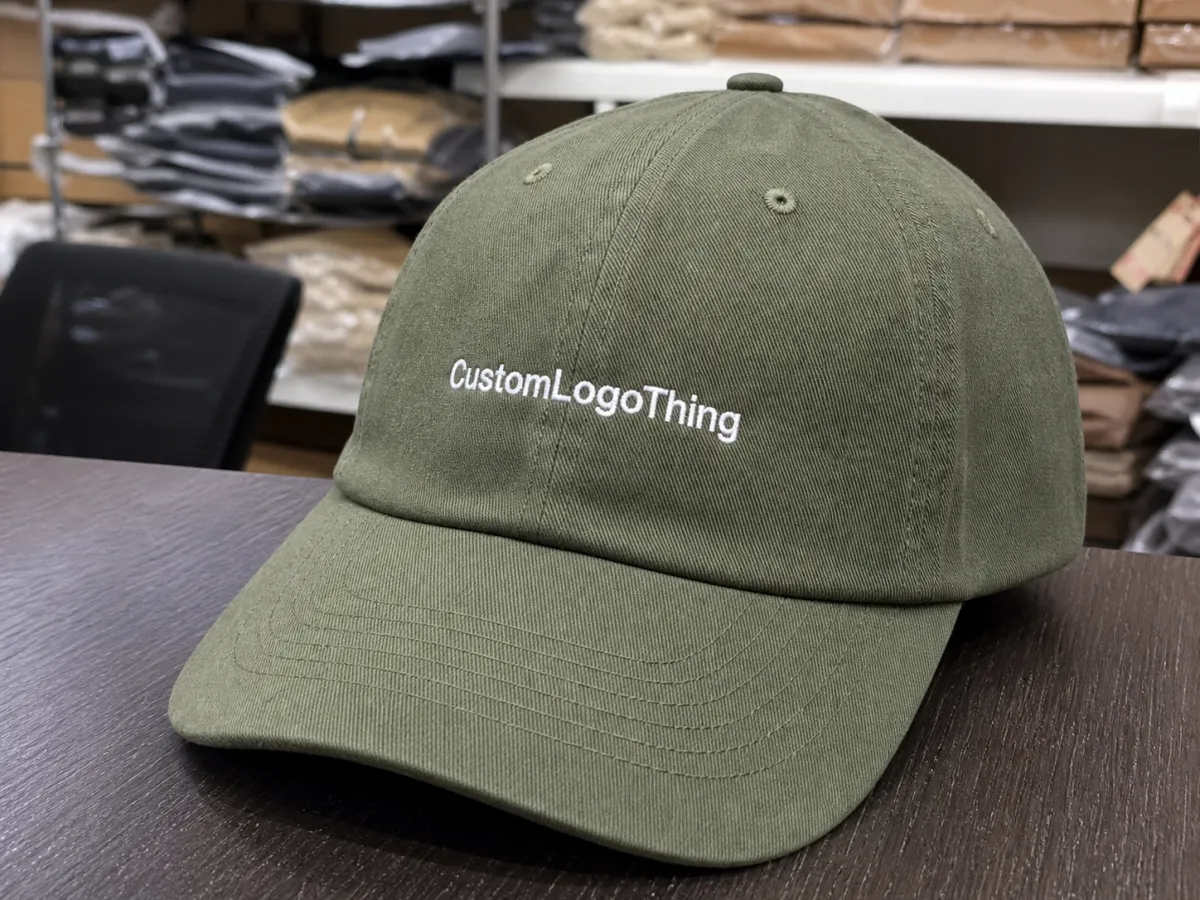
The blank cap is only one line in the calculation. The larger swings usually come from decoration setup, digitizing, patch construction, trim choices, and freight class. A one-color embroidery on a stock cap sits in a different cost lane from a woven patch with a merrowed edge, a custom label, and individual polybagging. The hats may look similar on a presentation board, but the production path is not.
Small design changes can have outsized pricing effects. Increase the logo width by half an inch and stitch count rises. Add a second thread color and machine time climbs. Swap a flat embroidery hit for a PVC patch and you introduce tooling plus another production step. None of that sounds dramatic; all of it affects apparel custom promotional Hats Unit Cost.
Volume changes the math too. A 5,000-piece order can beat a 1,000-piece run by a wide margin, but only if the order stays disciplined: stock colors, one decoration method, standard packaging, and no late revisions. Once the brief starts drifting, the savings compress fast. Buyers often try to negotiate the factory price harder when the real win comes from reducing complexity before quoting starts.
Think in terms of cost control, not just price hunting. The right question is not “What is the lowest number?” It is “What will keep the landed unit cost stable from proof to delivery?” Clear artwork, limited color counts, a realistic MOQ, and a supplier that shows every charge are usually more valuable than a discount that disappears in the next revision.
Choose the Right Cap Style, Crown, and Decoration Method
Style affects both appearance and cost. A structured six-panel snapback holds shape well and reads as more premium. An unstructured dad cap feels softer and more casual. Trucker caps use mesh back panels that reduce fabric weight and often work well for outdoor promotions. Performance caps suit golf, fitness, and field teams, but they usually require tighter fabric sourcing and more careful decoration planning.
Decoration method should match the use case. Embroidery remains the durability benchmark for most promotional headwear because it stands up to handling and wash cycles better than many print options. Woven patches add texture and can make small logos read more clearly from a distance. Print may lower cost on simple art, but it is not always the best choice for long-term brand presentation. Mixed decoration, such as embroidery plus a woven patch, can look premium, yet it also adds labor and risk.
The tradeoffs are not only visual. High-profile crowns make larger logos easier to read, but they can look boxy if the brand wants a softer retail feel. Curved brims feel familiar on everyday apparel, while a flat brim leans more modern. Mesh backs help breathability, though they reduce the amount of clean, solid surface available for branding. Buyers who choose style first and budget second often spend more fixing the mismatch later.
| Cap style | Typical use | Decoration fit | Cost impact |
|---|---|---|---|
| Structured snapback | Trade shows, retail-style giveaways | Embroidery, patches, woven labels | Moderate blank cost, strong brand presence |
| Dad cap | Lifestyle merch, staff uniforms | Small embroidery, understated patch work | Often lower blank cost, softer visual impact |
| Trucker cap | Outdoor events, sports promotions | Center-front embroidery or patch | Usually efficient for bulk orders |
| Performance cap | Golf, fitness, active field teams | Low-profile embroidery, heat-sensitive print | Higher fabric cost, more spec control needed |
If the goal is a polished launch, match the hat to the use case before the budget discussion starts. A cap that fits the audience, the setting, and the decoration method usually delivers better value than a cheaper style that feels off-brand on arrival.
Specs That Protect Fit, Finish, and Brand Accuracy
The best quotes begin with a better spec sheet. Buyers should lock down panel count, closure type, crown height, brim shape, fabric weight, and decoration placement before asking for pricing. A six-panel cap with a metal clasp does not price or fit the same way as a five-panel cap with a plastic snap. Small details matter because they determine the blank, the labor, and the assembly path.
Color control deserves special attention. Pantone references help with logo inks and patch references, but thread charts still matter for embroidery, and backing material matters for woven or printed patches. A logo that looks dead-on in a PDF can drift in production if the thread palette is loose or the patch substrate gets substituted. That is one reason repeat orders go sideways when the original spec was vague.
Fit details protect the brand as much as the decoration does. Sweatband material affects comfort. Seam quality affects how the cap sits on the head. Packaging affects whether hats arrive crushed, flat, or retail-ready. If the order supports event distribution, club retail, or employee onboarding, spell that out early. If the hats sit inside Custom Packaging Products, the carton and insert spec should be aligned with the cap spec rather than treated as an afterthought.
For teams that ship kits, the connection is even tighter. The hat is the hero item, but the box, insert card, and shipping carton shape the first impression before the cap is ever worn. A clean packaging design reduces extra handling, and that can cut damage claims and rework. Precise spec work is not administrative filler. It is a control system.
Brands that distribute through multiple locations should also think about shipping standards. If cartons need to survive parcel networks or inter-facility transfers, many operations use ISTA testing logic before launch. For paper-based inserts or cartons, FSC certification may matter if the brief includes sustainability claims. Those choices do not lower apparel Custom Promotional Hats Unit cost directly, but they can reduce surprises in the broader program.
Apparel Custom Promotional Hats Unit Cost, MOQ, and Volume Breakpoints
This is where the quote usually gets decided. Apparel custom promotional hats unit cost is built from five parts: the blank cap, decoration setup, decoration labor, packaging, and freight. If one of those pieces changes, the whole number moves. That is why buyers should request tiered pricing, not just one polished figure.
MOQ matters because fixed costs have to land somewhere. A digitizing fee of $25-$60, a patch plate or mold fee of $40-$150, or a setup charge of $35-$95 looks manageable on a 1,000-piece run. On a 100-piece run, the same charges can distort the per-unit price quickly. Smaller orders do not cost more only because a supplier wants them to. They cost more because setup work has fewer units to absorb it.
Volume breakpoints deserve attention. A jump from 250 to 500 units can drop the unit price more than another jump from 500 to 750, depending on how the factory nests production, orders materials, and schedules decoration. The smart buyer asks for quotes at several levels, then compares the step-downs. That makes the real unit cost visible instead of guessed.
| Order size | Typical setup burden | Example decorated unit cost | Best for |
|---|---|---|---|
| 100 units | High on a per-piece basis | $9.50-$15.00 | Small team drops, pilots, test merch |
| 250 units | Moderate | $6.75-$10.50 | Events, regional launches, internal programs |
| 500 units | Better setup absorption | $5.25-$8.25 | Mid-size promotions, dealer networks |
| 1,000 units | Low per-piece setup burden | $4.10-$6.80 | National campaigns, repeatable programs |
Those figures are directional, not a promise. A one-color embroidery on a stock hat will usually sit below a multi-step patch build, and a simple cap with standard polybagging will price differently from a retail presentation pack. Freight can also swing the landed number, especially on rush orders or dense cartons. Still, the pattern holds: the bigger the run, the easier it is to control apparel custom promotional hats unit cost.
Ask for quotes in the same language each time. Give the cap style, decoration method, quantity breaks, packaging need, and delivery location. Then compare the landed price, not just the factory price. That keeps the discussion grounded in actual spend, which is what procurement needs and what marketing sometimes forgets until the schedule gets tight.
Production Steps, Proofs, and Turnaround Timing
The order flow should be simple enough to explain in one sentence: quote review, artwork check, proof approval, production, inspection, shipment. If a supplier cannot map that sequence clearly, the project usually slows later. The biggest delays are almost always preventable: missing vector art, vague logo placement, late color sign-off, or changes after proof approval.
Turnaround depends on complexity. Stock styles with single-location embroidery often move faster than custom builds with patching, mixed decoration, or special closures. In practice, a straightforward decorated cap order may run in roughly 10-15 business days after approval, while a more complex build can extend beyond that. If the schedule is tied to a launch date, ask for the realistic window up front rather than a hopeful one.
Quality checks deserve time in the schedule. A pre-production proof is not a formality; it is the point where the buyer can still correct thread color, logo size, or placement before the run starts. Once production begins, corrections cost more. That is true in apparel, and it is just as true in branded packaging. Rework is expensive because it compounds labor, material, and time losses together.
Shipping should be treated like a production step, not a separate afterthought. If hats ship in master cartons to several locations, carton count, carton labeling, and pallet assumptions should be clear before approval. For programs that move through multiple nodes or need parcel resistance, many teams use ISTA-style expectations to reduce in-transit damage and claim risk. A small planning step can prevent a large replacement order.
The proof itself should be read like a production document, not a design mood board. Check logo width against the crown, confirm stitch direction, verify thread and patch colors, and inspect the closure hardware if it matters to the brand. Photo proofs help, but a physical sample is better when the logo is small, detailed, or placed near a seam. Hats are less forgiving than flat print pieces because curvature changes how the art reads.
What to Look for in a Supplier Before You Order
Transparent quoting is the first filter. A good supplier shows setup, decoration, freight, and packaging separately so the buyer can see where the money goes. Hidden line items usually show up later as change orders, and those are harder to defend internally than a clean initial quote. If a supplier is vague on the numbers, the purchase order will be vague too.
In-house or tightly managed decoration capability matters more than most sales decks admit. It is not just a production preference; it affects accountability. When proofing and production oversight sit close together, a misread logo or thread mismatch can be caught earlier. That usually reduces rework and keeps the schedule tighter. For bulk apparel programs, that control often matters more than a small difference in base price.
Ask for photos of finished samples, pre-production proof images, and reorder history. A supplier that can show repeat consistency gives a much better signal than one that can only show a polished mockup. For brands that also order custom printed boxes or other packaging design elements, the same supplier discipline is useful across the launch kit. Consistency is not flashy, but it protects margin.
The cheapest quote is often the one that leaves out setup, rush handling, or packaging details. Buyers usually do better with a supplier that explains the cost structure clearly and stands behind the proof.
Service quality matters too. Fast replies are nice, but they are not the same as useful replies. The better test is whether the supplier can interpret artwork, recommend a cleaner decoration method, and explain why a certain MOQ or cap style makes sense for the order. That is where a transactional project becomes manageable instead of chaotic.
If a supplier can also support other branded packaging needs, the relationship gets stronger. A launch rarely involves only one item, and a vendor who understands both promotional headwear and product packaging is usually better at aligning the whole kit. That does not mean every supplier must do everything. It means the ones that understand the full picture tend to make fewer expensive mistakes.
Next Steps for a Faster Quote and Cleaner Launch
Send the brief like a production buyer, not like a brainstorm. Include the hat style, decoration method, quantity tier, delivery ZIP or postal code, deadline, logo file format, and any packaging requirement. If the team wants multiple options, ask for them at the start: embroidery versus patch, stock color versus custom color, polybag versus retail-ready pack.
Then ask for tiered pricing. A quote at 100, 250, 500, and 1,000 units shows the real breakpoints and makes internal approval easier. It also exposes where apparel custom promotional hats unit cost falls sharply, which is usually where the strongest buying decision lives. If the order needs speed, say so early. If it needs a premium finish, say that too. Silence creates the most expensive assumptions.
Before approval, confirm four things in writing: the final unit cost, the MOQ, the proof schedule, and the ship date. Those four items prevent most last-minute disputes. Everything else is detail, and detail is manageable when the core terms are locked.
From a buyer’s point of view, the best hat program is not the flashiest one. It is the one that arrives on time, looks exactly like the proof, and lands at a unit cost the finance team can defend. That is why apparel custom promotional hats unit cost should be treated as a controlled outcome, not a guess.
How do I estimate apparel custom promotional hats unit cost for a small order?
Start with the blank hat price, then add decoration setup, shipping, and any packaging upgrades. Smaller quantities usually carry a higher per-piece cost because fixed setup is spread across fewer units, so a 100-piece run often looks very different from a 500-piece run.
Which decoration method usually lowers promotional hat unit cost the most?
Simple embroidery or a single-color patch often keeps costs more predictable than multi-step decoration. The lowest-cost option still depends on logo complexity, placement, and whether the style needs special materials or extra setup.
What MOQ should I expect for custom promotional hats?
MOQ varies by cap style and decoration method, but standard decorated runs often start in the low hundreds. More complex builds or multiple colorways usually require a higher minimum to stay efficient.
How long does production usually take after proof approval?
Simple stock styles can move faster, while custom builds with special materials or detailed decoration take longer. Lead time depends on proof approval speed, material availability, and current production load, so asking for a written schedule is the safest move.
What information do I need for an accurate hat quote?
Provide the hat style, quantity, logo file, decoration location, shipping ZIP or postal code, and target delivery date. If you want accurate pricing, include color requirements, packaging needs, and any budget limit up front so the first quote is close to final. That is the cleanest way to protect apparel custom promotional hats unit cost.

