If you need an apparel Pom Pom Beanies quote, start with the build, not the color name. A beanie can look simple until the pom type, knit gauge, label method, or packaging changes the cost. Those details move pricing faster than shade matching.
For Custom Logo Things, the point is to return a quote that can actually be used for planning. Winter promos, retail drops, team apparel, and event merch all need a number that holds once production starts. A useful quote shows what drives unit cost, where the minimum sits, what can be simplified, and where quality starts to drop if the spec is too thin.
A good quote explains the price. A weak one just hands over a number and leaves the buyer to discover the missing pieces later.
Why the First Quote Should Start With the Pom, Not the Color
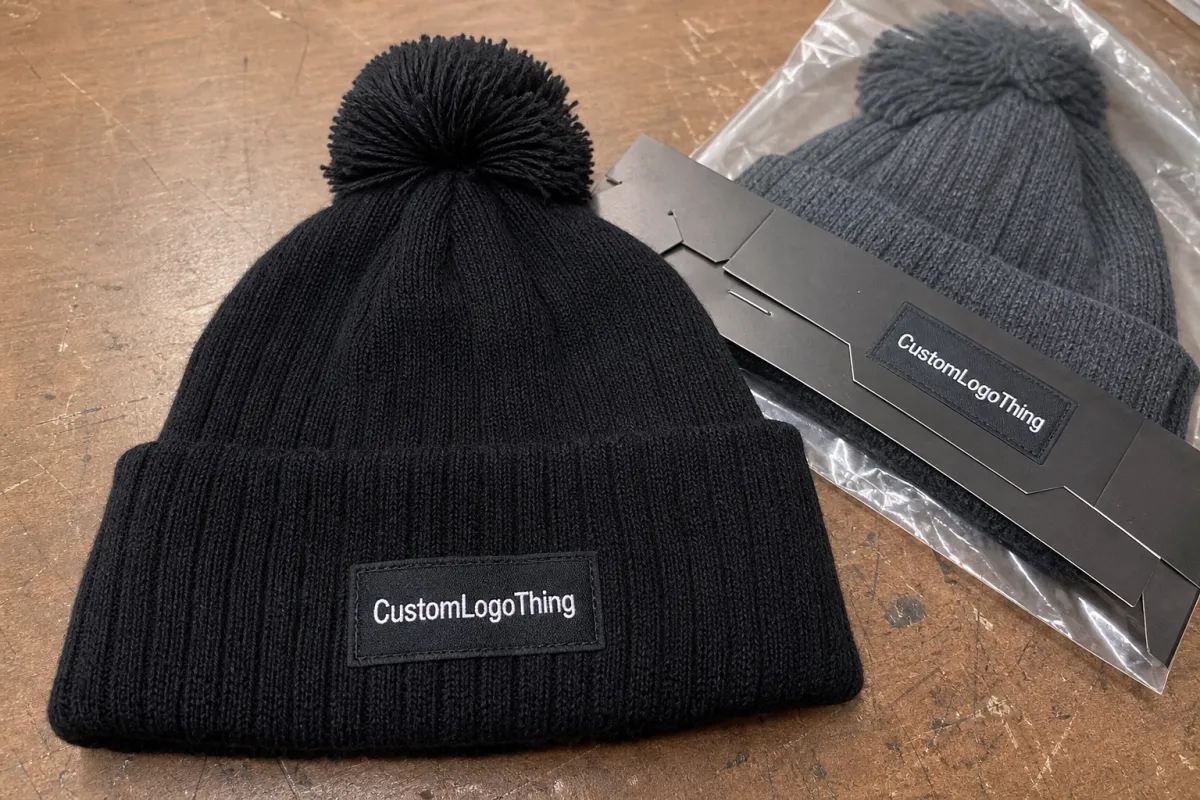
The pom is not decorative fluff. It is a material choice, a labor choice, and sometimes a durability choice. Yarn poms, faux-fur poms, detachable poms, and color-matched poms behave differently in quoting. A dyed-to-match yarn pom on a basic acrylic cuffed beanie is one cost profile. A dense faux-fur pom with a reinforced attachment point is another. The knit body matters too. A looser 5-gauge beanie uses less yarn and machine time than a tighter 7-gauge version, so the same visual design can land at a very different price.
That is why an apparel Pom Pom Beanies quote should begin with construction, not the mood board. Color is often the easiest part. The build is where the real cost moves. If the pom detail is missing, the supplier usually has to send a provisional number and revise it once the spec arrives. That slows comparison and creates avoidable follow-up.
These orders usually fall into a few practical buckets:
- Team apparel: schools, clubs, and staff gifts usually want dependable warmth and straightforward branding.
- Retail drops: finish matters more, so buyers tend to prioritize better yarn, cleaner labels, and presentation details.
- Promotional campaigns: the budget is tighter, so the spec needs to stay efficient without looking flimsy.
- Event merch: speed matters, which makes spec clarity more valuable than a polished mockup.
One trap buyers run into: a beanie that looks simple can become expensive because the pom is oversized, the knit is dense, the label is custom, or the decoration method needs more handwork than expected. A woven patch is not the same as embroidery. A sewn leather patch is not the same as a heat-applied label. If the quote does not reflect those differences, it is not really a quote.
Build Choices That Change Fit, Feel, and Decoration Options
Start with the body style. Cuffed beanies remain the workhorse option because the fold gives you structure and a clean branding area. Uncuffed styles look softer and more fashion-driven, but the usable decoration space is smaller. Single-layer beanies are lighter and usually cheaper. Double-layer beanies feel warmer, hold their shape better, and use more yarn and machine time.
Material changes the experience more than buyers expect. Acrylic is still the baseline for most custom headwear because it is predictable, easy to color match, and cost-efficient. Wool blends feel warmer and more premium, but they can raise cost and create care concerns. If the order is headed to retail or frequent wear, ask how the yarn behaves after washing, storage, and repeated folding. A beanie that pills early or loses shape after a couple of washes is a poor trade even if the front-end price looks good.
Pom construction changes the silhouette and the quote:
- Yarn pom: common and usually least expensive; good for giveaways and broad-use merch.
- Faux-fur pom: fuller, softer, and more premium-looking; often chosen for retail or higher-margin product.
- Detachable pom: flexible for style, but hardware and assembly add cost and inspection time.
- Matched-color pom: straightforward in concept, though color matching can add setup effort.
Decoration should match the product purpose. Embroidery is durable and dependable for simple logos with limited colors. Woven patches handle small text and finer detail better than embroidery when the artwork gets tight. Leather patches feel premium but are not right for every brand or budget. Woven labels are clean and low-profile, though the branding area is smaller. Jacquard knit works best when the artwork is designed to live in the fabric itself.
Fit matters more than many buyers realize. Head circumference, cuff height, and stretch recovery all affect how the beanie wears in real life. A cuff that is too shallow makes the logo zone feel cramped. A beanie that stretches too easily looks tired after only a few wears. A sample can feel soft in hand and still fail on the head if recovery is weak.
Specifications to Lock Before You Ask for Pricing
If you want a clean quote, send clean inputs. A logo file is not enough. A supplier needs the design file, target quantity, beanie style, pom type, color references, decoration method, and any packaging requirements. If you already know the label style or whether the order needs retail folding, include that too. Every missing detail turns the pricing into an assumption.
Here is the minimum spec set I would lock before asking for pricing:
- Artwork: vector logo file, preferably AI, EPS, or PDF.
- Color targets: Pantone values or clear brand references.
- Quantity: one target quantity is useful; three tiers are better.
- Beanie style: cuffed, uncuffed, single-layer, or double-layer.
- Pom detail: yarn, faux-fur, detachable, or matched color.
- Decoration: embroidery, woven patch, leather patch, label, or knit-in artwork.
- Packaging: bulk packed, polybagged, hangtagged, or retail-ready.
- Deadline: need-by date and shipping destination.
That last item gets forgotten more often than it should. A quote without destination and deadline is only half a quote. Freight can change landed cost enough to alter the decision, especially for smaller runs. If the supplier has to guess the ship-to location, the pricing will be soft.
If your brand is strict about color, say so. If substitutions are acceptable, say that too. If they are not acceptable, say that clearly. Ask for the logo size on the beanie panel, not just the patch or embroidery size in isolation. That sounds minor until the sample arrives and the logo feels either balanced or crowded.
A short buyer checklist keeps revision rounds down:
- Confirm Pantone targets or acceptable color tolerance.
- Approve logo placement and finished size.
- State whether a sample is required before bulk production.
- Clarify whether packaging must be retail-ready.
- Set rules on substitutions before the quote is issued.
Apparel Pom Pom Beanies Quote: Pricing, MOQ, and Unit Cost
Price depends on quantity, decoration complexity, pom style, knit density, packaging, and the amount of setup required. The first order usually carries the heaviest setup burden. Lower quantities spread that setup across fewer pieces, so the unit cost looks higher. Larger runs bring the price down, sometimes a lot.
For a simple custom beanie with a single embroidery location, many buyers see pricing in the rough range of $3.20-$5.50 per unit at 500 pieces, depending on yarn type, stitch count, and packaging. A more premium build with a faux-fur pom, woven patch, and retail folding can land closer to $5.80-$9.50 per unit. Custom-knit or multi-color styles can climb further, especially if the artwork requires more machine changes or a slower run.
MOQ is different by construction. Simple decorated stock beanies can often begin around 100-250 pieces, while custom-knit styles often need 300-500 pieces or more to keep the price workable. If a supplier offers a very low MOQ on a complex knit, ask what changed. The answer is usually a higher unit price, less flexibility on artwork, or a more limited build.
| Option | Typical MOQ | Indicative Unit Range | Best For | Notes |
|---|---|---|---|---|
| Stock acrylic beanie + embroidery | 100-250 pcs | $3.20-$5.50 | Promotions, team gifts, fast-turn merch | Lowest setup burden; clean logo work |
| Cuffed beanie + woven patch + yarn pom | 250-500 pcs | $4.80-$7.20 | Retail, school stores, seasonal drops | Good balance of look and cost |
| Custom-knit + faux-fur pom + label pack | 300-500+ pcs | $5.80-$9.50+ | Premium merch, fashion retail, branded collections | Higher setup and longer lead time |
Ask for tiered pricing every time. One quantity is not enough. You want to see 250, 500, and 1,000 pieces if possible, plus sample fees and freight. That gives you the actual comparison. A quote that leaves out shipping, packaging, or setup fees is not helpful; it simply moves the surprise to the invoice.
Also ask how the supplier splits setup charges from the per-piece price. That matters because the first order usually carries the heaviest burden. If the product will be reordered, a slightly higher first run can still make sense if repeat orders drop nicely. If the order is a one-time event, the landed cost is the number that matters.
Production Steps, Proofing, and Turnaround Timing
A standard order moves through a familiar sequence: brief, quote, mockup, sample or pre-production proof, approval, bulk production, inspection, packing, and shipping. The order is predictable. The timing is not always. A buyer who sends complete specs gets moving faster than one who keeps changing the pom style after the mockup is already in motion.
Use realistic timing ranges. A quote can often come back in one to three business days if the inputs are complete. Sampling may take 7-14 business days, depending on the build. Bulk production for standard custom beanies often lands around 12-25 business days after approval. Custom-knit or heavily decorated orders can take longer. Shipping time is separate, and it deserves its own buffer.
Delays usually come from the same places:
- Artwork files that need cleanup before mockup work starts.
- Color changes after sample approval.
- Packaging edits after production has already begun.
- Missing delivery information that slows freight booking.
- Slow internal approvals when too many people weigh in at once.
Plan backward from the real need-by date, then add time for approvals and freight. If the beanies are tied to a seasonal launch, a retail reset, or an event date, do not schedule production as if everything will go right the first time. A week of approval buffer is sensible. A few extra shipping days are sensible too, especially if the order needs to clear customs or pass through a busy warehouse.
For a more durable shipping check, ask whether the supplier references carton drop standards or testing tied to ISTA. If the order includes inserts, tags, or retail cartons, ask whether paper components can be sourced with FSC-certified stock. Those details are not flashy, but they do affect how polished the final product feels.
Quality Checks, Packaging, and Vendor Comparison
The cheapest quote is not always the best quote. What matters is whether the supplier documents the build and checks the finished goods against the spec. For Pom Pom Beanies, the basic quality points are stitch consistency, pom attachment strength, logo placement, color match, and stretch recovery after folding and packing. If those are weak, the product will show it immediately.
Packaging changes the buyer experience more than many people expect. Bulk packed is the lowest-cost route. Polybagging protects the surface and improves retail presentation. Size stickers help warehouse handling. Hangtags help with branding if the beanies go to shelves or gift sets. Master carton packing keeps shipping tidy, but it does not improve presentation. The right package depends on whether the order is for giveaways, staff use, or retail sale.
Use this comparison lens when reviewing suppliers:
- Response speed: do they answer with actual details or just a vague price?
- Quote clarity: are setup, sample, and freight separated?
- QC standard: do they explain what gets checked before shipment?
- Sample quality: does the proof match the promised build?
- Defect handling: do they state what happens if the run misses spec?
Also compare whether the vendor can quote multiple builds side by side. A useful supplier can show line items for embroidery, woven patch, label choice, and packaging. A weak one gives a single number and hopes you do not ask how it was built.
There is also a quiet production issue that gets overlooked: pom poms can flatten in cartons if they are packed too tightly or stored under pressure. Faux-fur poms may need a quick fluff before retail display. Yarn poms can lose roundness if the attachment is loose or if the knit body is overstuffed. Those are not dealbreakers, but they are worth checking in advance because they affect how the product lands with the end user.
What to Send Next for a Fast, Accurate Quote
If you want a usable quote, send a clean package: logo file, quantity, preferred beanie style, pom preference, color references, packaging choice, and delivery deadline. If sample requirements matter, include those too. The clearer the brief, the faster the answer.
Then ask for three things back:
- Line-item pricing so the setup, product, and packaging costs are visible.
- Sample timing so the proof schedule is realistic.
- Estimated production window so the shipping plan is based on actual capacity.
That makes comparisons fair. If one supplier quotes 500 units and another gives pricing at 250, 500, and 1,000, the second quote is more useful even if the first number looks lower. Buyers usually get burned by incomplete comparison, not by the product itself.
For a final sanity check, make sure the quote answers these four questions: what is being made, how is it decorated, how long will it take, and what happens if the spec changes. If those answers are clear, the quote is probably usable. If they are not, it is still a draft.
What do I need to request a pom pom beanie quote?
Send quantity, logo art, beanie style, pom type, color references, packaging needs, and the delivery destination. If you have a deadline, include it up front so the supplier can quote a realistic production and shipping window.
What is a typical MOQ for custom pom pom beanies?
Simple decorated styles can often start at lower quantities, while custom-knit builds usually need a higher minimum. Ask for price breaks at several quantities so you can see where the unit cost starts to make sense.
Does the pom type change the price much?
Yes. Yarn poms, faux-fur poms, and detachable poms do not cost the same to make or assemble. The attachment method and color matching also affect setup and labor, which changes the final quote.
How long does production usually take after approval?
Quote turnaround can be quick, but samples and bulk production take longer, especially on custom knit or multi-color jobs. Plan for approval time and shipping time separately so your deadline is based on reality, not hope.
Can I get a sample before placing a bulk order?
Yes, and you should if the logo placement, pom style, or color match matters to the final purchase. Ask whether the sample fee is credited later and confirm that bulk production will follow the approved sample specs.

