A trade show Pom Pom Beanies material guide sounds narrow until you price one for a real event. Then the details multiply. Yarn choice affects hand feel, but it also changes stitch definition, shipping weight, logo clarity, packing volume, and the chance that someone wears the piece after the show instead of dropping it into the first tote bag they can find. That last part matters more than most teams expect. A beanie that stays on a head keeps the brand in circulation; one that never leaves the convention center is just inventory with a logo.
The practical question is not whether a beanie looks attractive in a mockup. It is whether the item feels good on a real person, holds up through repeated wear, and still reads clearly from a few feet away. That is a materials decision, not a design flourish. Fiber content, knit density, cuff construction, pom size, and decoration method all shape how the giveaway performs once it leaves the sample table.
There is also a quiet budget lesson here. Buyers often compare unit prices first and discover later that the cheapest option produced a weak first impression, while the slightly better spec delivered more use and fewer complaints. Promotional knitwear is one of those categories where a small material upgrade can change the item's lifespan by weeks. On a trade show floor, that difference can be the gap between forgettable swag and a piece people keep reaching for.
Why Pom Pom Beanie Material Changes Booth Performance
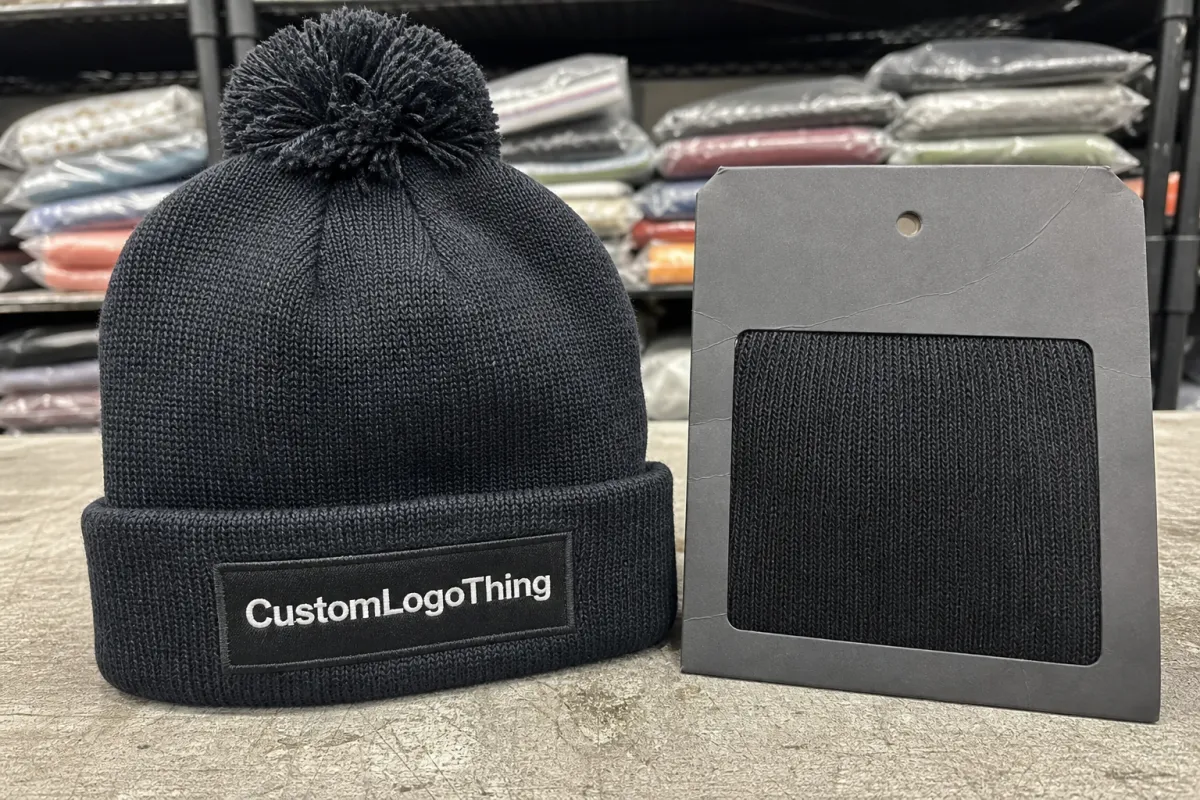
A pom pom beanie does more than cover hair in cold weather. At a booth, it acts like a wearable billboard, a comfort item, and a small status signal all at once. If the knit is scratchy, thin, or stiff, the attendee usually takes the item politely and moves on. If the beanie feels substantial, the interaction changes. People try it on, hold onto it, and often wear it immediately.
That behavior is worth studying because it tells you how material influences engagement. Softer yarns tend to feel more premium, but that does not always make them the best choice for a broad giveaway. A lighter acrylic cap may be less luxurious in the hand, yet it packs smaller, costs less to ship, and moves faster through distribution. For a high-traffic event, that practical edge can matter more than a rich hand feel.
Warmth is another variable. If the show is in a cold city and attendees are walking between halls, a denser knit or a lined cap earns its keep quickly. If the event is more style-driven than weather-driven, visual balance becomes more important. A beanie that fits well, keeps its shape, and shows the logo without distortion usually wins over a heavier piece that looks bulky or overbuilt.
There is a simple buyer rule hiding inside all of this: the best material is the one that matches the actual use case. A VIP gift, a mass giveaway, and a booth handout for a winter sports brand are not the same purchase, even if they share the same silhouette. The audience, climate, and expected wear pattern should guide the spec.
Trade Show Pom Pom Beanies Material Guide: Fiber Options Compared
Acrylic remains the standard for custom Pom Pom Beanies because it gives buyers a manageable balance of softness, color control, and price. It accepts dyes well, holds bright brand colors consistently, and usually produces the most predictable result across larger runs. For teams ordering thousands of units, that predictability is valuable. Fewer surprises mean fewer sample rounds and fewer delays.
Acrylic is not perfect. It can feel synthetic if the knit is too loose or the yarn quality is low. But in the right construction, it performs well for event wear. Many suppliers use acrylic as the baseline because it is easier to source at scale and less sensitive to fluctuation than natural fibers.
Wool changes the feel immediately. It reads warmer and more premium, and it usually gives the cap a more authentic cold-weather character. The tradeoff is cost, care, and comfort variability. Some wearers love wool's warmth; others find it itchy or too structured. A wool blend can soften that edge while keeping the cap from looking flimsy. For a premium audience, that middle ground often makes more sense than pure wool.
Recycled polyester and recycled blends matter when the brand story calls for lower-waste positioning. They can support sustainability messaging without forcing the item into an eco-friendly aesthetic that feels disconnected from the event. If the packaging also uses FSC certified paper, kraft paper sleeves, or biodegradable packaging, the overall presentation becomes more coherent. The caution is claims accuracy. Ask for fiber documentation that matches the order, not just a catalog description. If the marketing team plans to mention recycled content, the paperwork should support it.
Knit structure often matters as much as fiber. Tighter gauges hold embroidery better and keep logos cleaner. Looser knits can feel softer, but they stretch more and may distort fine artwork. A cuffed construction usually improves front-panel visibility, while a slouchier body can make the hat feel more fashion-led. That may be fine for some events, but it can also reduce readability from a distance.
Liners deserve more attention than they usually get. A fleece or thermal lining adds warmth and can improve comfort in harsher weather. It also adds weight, cost, and another production step. Once a lining is introduced, lead time often stretches because there is more assembly involved and more room for quality issues. A lined cap is not automatically better; it is just a different tool.
| Material | Typical Feel | Approx. Unit Cost at 500-1,000 pcs | Best Use Case |
|---|---|---|---|
| Acrylic | Soft, consistent, easy to color match | $2.10-$3.80 | Mass giveaways, strong brand color control |
| Acrylic blend | Moderately soft with better drape | $2.80-$4.90 | Programs that need a better hand feel without a sharp cost jump |
| Wool blend | Warmer, more premium, slightly more structured | $4.80-$7.50 | VIP drops, retail-style gifting, colder events |
| Recycled blend | Varies by fiber mix; often similar to acrylic | $3.10-$5.60 | Sustainability-led campaigns and eco messaging |
Packaging should be considered alongside the knit, not after. If the beanies are compressed into weak cartons, the pom can flatten and the cuff can lose shape before they ever reach the venue. A clean packout in corrugated cardboard cartons protects the product better than loose stuffing. For transit discipline, the ISTA framework is useful because it forces a buyer to think about the journey, not just the finished piece.
Cost, Pricing, and MOQ Tradeoffs That Shape the Order
Unit price is shaped by more than fiber. Knit complexity, pom construction, decoration method, liner choice, labels, and packaging all contribute. A straightforward acrylic beanie with a single embroidery location may land in a lower price band, while a wool blend with a custom pom, woven label, and retail-style sleeve climbs quickly. Buyers who focus only on the quote line often miss the landed cost until freight and setup appear.
MOQ changes the economics fast. Lower quantities usually carry a higher unit price because sampling, machine setup, and labor are spread across fewer pieces. Larger runs reduce that pressure, but they increase inventory risk if the event size changes or if the product does not move after the show. The right order size is not just a math exercise. It is a judgment call about how much stock the brand can realistically use.
A rough pricing lens helps sort the options:
- Entry level: Acrylic knit, single embroidery point, standard pom, minimal packaging.
- Mid range: Acrylic blend or recycled blend, woven label or patch, upgraded cuff structure, printed kraft paper sleeve.
- Premium: Wool blend, custom pom color, liner option, retail-style packaging, tighter quality control.
Freight can change the comparison more than people expect. A lighter beanie in a larger carton may ship differently than a denser cap packed flat. Add liners, hang tags, or premium sleeves and the carton count shifts again. A program that looks economical at the factory can feel less attractive once shipping, domestic handling, and repacking are included. That is especially true when the event window is tight and the order needs faster transport.
Material choice also affects perceived value. A beanie that costs a little more but looks cleaner and wears better often outperforms a cheaper item that feels disposable. In promotions, the least expensive product is not always the lowest-cost outcome. If the item gets worn several times, the brand earns more impressions from the same unit. That is a better return than saving a few cents on a cap no one uses.
Production Steps and Lead Time From Sample to Shipment
Production should start with a complete spec sheet, not with a rough idea. Fiber content, logo placement, color references, pom size, lining, label type, and packaging all need to be decided before sampling begins. Changes after a sample is approved usually cost time and sometimes create avoidable mistakes. A supplier can knit almost anything; the issue is whether the buyer has clarified what "finished" should actually mean.
Sampling is where many delays begin. If artwork is not final, the sample gets pushed back. If the yarn color looks right on screen but not in daylight, the team often asks for a second round. Pom shape can create unexpected problems too. Too sparse, and it looks flat. Too dense, and it can throw off the balance of the hat. A simple-looking top detail can absorb more revision time than the rest of the cap.
For straightforward acrylic beanies, a realistic lead time is often 12-15 business days after sample approval, plus shipping time. More complex builds, such as wool blends, lined styles, or special packaging, can move into the 15-25 business day range. Peak season matters. If the order is tied to a winter event calendar, factory schedules tighten quickly and courier space becomes harder to secure. Buyers who wait until booth materials are nearly finalized often pay for speed rather than control.
Shipping and packing should be reviewed with the same care as decoration. Ask how the caps will be packed, how many fit per carton, and whether the internal arrangement protects the pom and cuff. If the beanies are being shipped with inserts or multiple components, check that the packout still holds shape after transit. A sample can look excellent on a table and still arrive compressed if the carton plan is weak.
One practical habit helps: review the sample under more than one light source. Knitwear can look warmer under office lighting, cooler by a window, and different again in a warehouse. Color shifts do not always mean the product is wrong, but they can reveal how much flexibility the brand has in the final approval.
Branding Details That Make the Beanie Wearable
Decoration choice affects comfort as much as appearance. Embroidery is durable and familiar, and it works well on tighter knits. The risk is buildup: too much stitch density can make the front panel stiff and heavy. On a soft beanie, that can ruin the drape. Woven labels sit flatter and often look cleaner on a lighter knit. Patches add dimension, but they need to be sized carefully so the front does not feel like a badge pinned to fabric.
Logo size deserves restraint. Tiny artwork tends to disappear into dense knit texture, especially on dark yarn. Oversized art can look loud on a small cuff. The best solution is usually somewhere in the middle, with enough contrast to read from a distance and enough open space to avoid warping as the fabric stretches. A mockup can hide these problems. A physical sample exposes them immediately.
The pom is not decorative fluff; it changes the silhouette. A larger pom can make the beanie feel more retail-like and playful. A smaller one often looks cleaner and is easier to wear outside the event context. Color contrast can help or hurt. A brand-colored pom can reinforce recognition, but a clashing top can make the cap look busy. Dense poms hold shape better after packing. Sparse poms collapse faster and can make the cap look tired before it is even handed out.
Fit is another quiet quality marker. A cuff that is too shallow loses presence on the head. A cuff that is too deep can hide the logo or make the hat feel awkward. Stretch recovery matters because a cap that loosens after a few wears starts to look worn out quickly. Crown shaping matters for the same reason. If the top pinches or collapses, the beanie loses its value fast, no matter how good the yarn looked in the sample.
The most useful branding spec is the one that survives use, not the one that photographs well for five seconds.
That sentence sounds simple, but it captures a lot of failed programs. The beanie has to work as an accessory first. Branding should support that function, not compete with it.
Common Material Mistakes That Hurt Comfort and Margins
The most common mistake is chasing the lowest price without checking the hand feel. A scratchy yarn might technically meet the brief, yet people will stop wearing it. That is a direct hit to impression value. A few cents saved on the quote can become the most expensive decision in the project if the giveaway ends up unused.
Another mistake is treating all knits as if they behave the same. They do not. A loose knit stretches differently from a tight one. A dense knit holds embroidery better but may feel warmer and less airy. If the logo is too close to the cuff, the stretch can distort it during wear. If the artwork is too small, it gets lost in the pattern. These are not abstract design concerns; they are production realities that show up only after the sample is in hand.
Color approval deserves more discipline than digital mockups usually get. Yarn dye lots can vary enough to change the tone. Screen brightness and office lighting can make the same swatch look different from one review meeting to the next. If the brand follows strict color standards, compare physical swatches in daylight before signing off. A woven accessory has a texture that can alter perception even when the Pantone reference is technically close.
Packing can quietly break the budget. A heavier yarn, a lined cap, or a larger pom increases shipping weight. Add retail-style packaging and the carton count shifts again. If sustainability claims are part of the order, it helps to align the packaging with the message using recycled cartons, kraft paper inserts, or reduced plastic. If the order mentions FSC certified materials, the document trail should support that claim. Good packaging protects the product and the credibility of the campaign.
One more caution: do not approve a beanie based only on a flat lay image. A cap can look clean in a photograph and still sit oddly once stretched over a head. Real wear changes everything. The sample should be checked for softness, stretch recovery, logo alignment, pom balance, and seam finish. If any one of those fails, the item may not survive daily use.
Next Steps: Shortlist Specs, Request Samples, Approve the Build
The fastest way to move a custom program forward is to reduce the number of unknowns. Pick two fiber options, one decoration method, and one backup colorway before requesting pricing. That gives buyers cleaner quotes and makes internal decision-making much easier. It also keeps the conversation focused on tradeoffs that matter: warmth versus budget, premium feel versus quantity, speed versus finish.
Request a physical sample whenever the order size justifies it. On a pom pom beanie, touch reveals what the screen cannot. Softness, stretch recovery, pom density, cuff structure, and logo clarity all show up differently in hand. Review the sample under daylight and indoor lighting. Compare it with the approved swatch. Check the seam finish, because a loose thread or uneven top can signal weak production control later.
A short approval sheet helps more than a long thread of emails. Capture the fiber content, color, logo size, pom type, packaging spec, MOQ, unit price, and delivery date. If the packing includes corrugated cartons, recycled materials, or a printed sleeve, list those too. The fewer gaps in the written spec, the lower the chance of a costly interpretation error during production.
The useful outcome is not a flashy accessory. It is a beanie people actually wear, a product that fits the audience, survives the event, and keeps carrying the brand after the show ends. That is the point of a trade show Pom Pom Beanies Material guide: make the material choice practical enough to protect budget, polished enough to support the brand, and durable enough to earn a second wearing.
What is the best material for trade show pom pom beanies if I need warmth and value?
Acrylic is usually the best starting point because it balances warmth, softness, and cost. Acrylic blends can improve comfort if the audience is sensitive to a synthetic hand feel. Wool makes sense only when the premium finish justifies the higher price and care expectations.
How do I choose between acrylic and wool blends for custom beanies?
Choose acrylic for consistent color, lower budget risk, and simpler production. Choose wool blends if the audience expects a more retail-style accessory and the event justifies the higher unit price. Always compare physical swatches before approving the final build.
What affects the unit cost of pom pom beanies the most?
Fiber content, knit complexity, and decoration method usually move the price the most. MOQ changes the unit rate too, but only if the full order will actually be used. Freight, setup, liners, and packaging should be included in landed cost from the start.
How long does a custom pom pom beanie order usually take?
Simple acrylic programs often need 12-15 business days after sample approval, plus shipping time. More complex builds with wool, liners, or special packaging can run 15-25 business days or longer. Peak season and artwork revisions can stretch that timeline.
What should I check before approving a beanie sample?
Check softness, stretch recovery, pom balance, logo placement, and seam finish. Confirm color in natural light, not only on screen. Make sure the written spec matches the physical sample so production does not drift during bulk manufacturing.


