Event Merch Pom Pom Beanies Lead Time: What Actually Drives the Schedule
If you are trying to pin down event merch Pom Pom Beanies lead time, the first thing to understand is that the delay is rarely the knit itself. The slowdowns usually happen around the knit: artwork that is not final, yarn colors that keep changing, a label decision that arrives after the quote, or shipping that gets treated as an afterthought. A pom beanie looks simple on a table. Inside production, it is a stack of small decisions that either line up cleanly or start eating days one by one.
That is why these orders can feel deceptively easy. A beanie is only a beanie until it becomes custom. Add a yarn color match, a woven patch, a branded loop label, or event packaging, and the schedule becomes a chain reaction. One link slips, and the rest follow. On a tight event calendar, that matters more than most buyers expect.
The good news: the timing is predictable once you know where the pressure points are. A plain stock-color beanie with a simple patch can move fairly quickly. A fully custom build with specific yarn, private labeling, special packaging, and international freight needs a wider lane. The difference between those two orders is not subtle. It can be the difference between a comfortable buffer and a last-minute freight bill that makes everyone regret the word “rush.”
The surprising reason pom pom beanies miss event deadlines
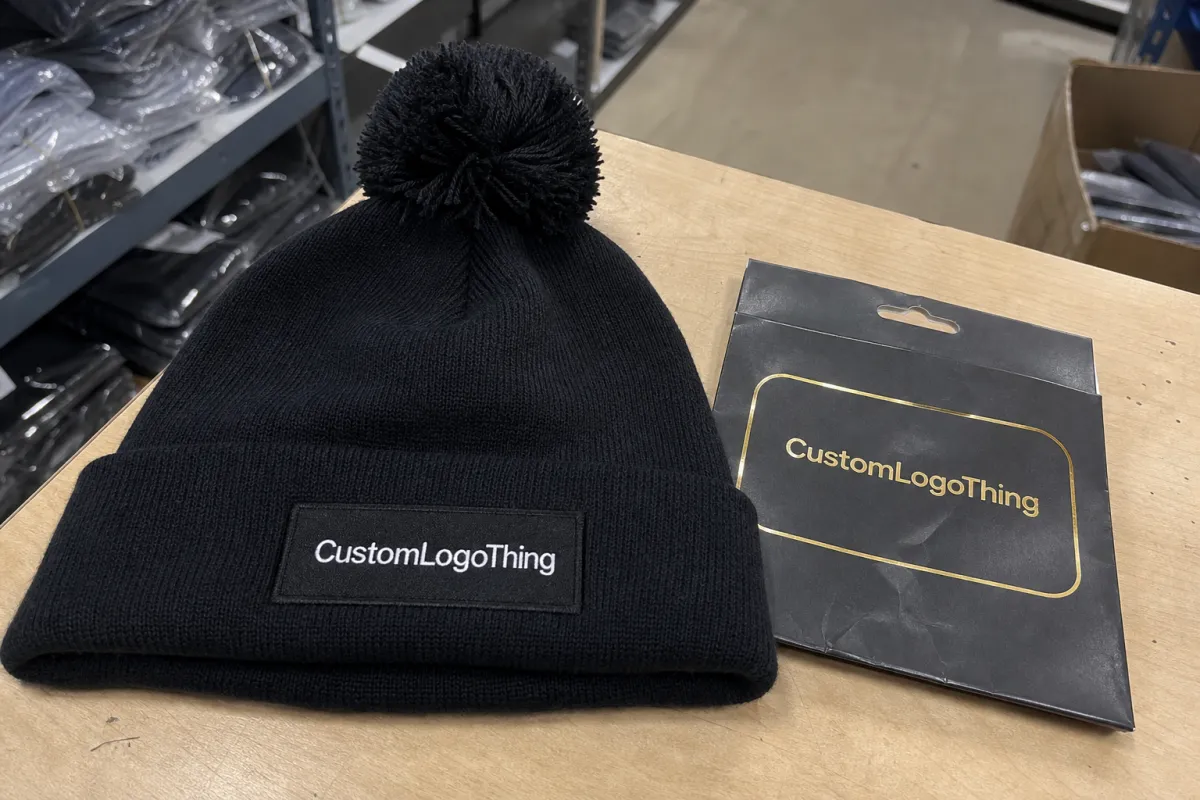
The surprising part is how often the production line is ready before the buyer is. Factories can knit a hat. What slows the job down is the waiting: waiting for a logo file that can actually be used, waiting for a color decision, waiting for one more stakeholder to approve the mockup, waiting for shipping instructions that should have been decided before the proof was signed.
That pattern shows up constantly in event merch. A sponsor wants winter giveaways for a conference or stadium activation, and the initial request sounds simple enough: black beanies, white logo, maybe a patch. Then the questions start. Should the pom be solid or mixed? Should the label be woven or printed? Should the logo sit front center or on the cuff? Does the client want the packaging to feel retail-ready or just protected in transit? Those choices do not merely affect appearance. They affect setup time, sampling, and whether the order can stay in a standard production lane.
There is also a common mismatch between perceived complexity and actual complexity. Buyers see a knit hat and think in units. Suppliers think in materials, machine setup, decoration method, finishing, and freight. Those are not the same lens. A one-color hat can be straightforward. A two-color jacquard knit with a custom pom and a patch sounds small, but each part adds another chance for delay.
If the mockup is still moving, the schedule is still moving. That is the part teams often ignore until the calendar stops forgiving them.
That is the real reason deadlines slip. Not because knitwear is inherently slow, but because custom apparel projects accumulate small approvals and each approval has its own waiting period. The order is never late because of one dramatic mistake. It is late because six small decisions were allowed to drift.
How event merch pom pom beanies lead time works
A realistic event merch pom pom Beanies Lead Time follows a sequence, even if each supplier describes it differently. The details matter because they show where time can be saved and where it cannot.
- Quote and spec review - quantity, yarn type, color count, decoration method, packing format, and shipping lane are defined.
- Artwork translation - the logo is converted into a knit chart, embroidery file, woven patch layout, or label artwork.
- Proof approval - the buyer signs off on the visual and the build details.
- Sampling or pre-production check - used for sensitive colors, new decoration methods, or higher-risk orders.
- Production - yarn is knitted, trimmed, decorated, and assembled.
- Finishing and packing - folding, tagging, bagging, carton counts, and pallet prep happen here.
- Transit - air, ocean, or domestic freight carries the order to the event destination.
Those steps can overlap, but not all of them should. A supplier can sometimes source stock yarn while the proof is still under review. That saves time. A factory cannot safely guess at a final color or label placement without risking rework. That loses time. The line between smart overlap and dangerous guessing is narrower than it looks.
The materials themselves influence the calendar. Standard acrylic yarn is common because it is economical, durable, and available in a broad color range. That matters. A 100% acrylic beanie with a stock pom can usually move faster than a blend that requires special dye matching. If the knit pattern is simple and the decoration is a woven patch or a basic embroidery hit, the order usually stays more manageable. If the yarn count goes up, the pom style changes, or the branding needs a private label, the timeline stretches.
Lead time also depends on the form of decoration. A woven patch can be efficient if the art is straightforward and the patch spec is already approved. Direct embroidery can look clean on a limited area, but dense stitch counts can slow a production run and create distortion on a stretchy knit surface. Knit-in artwork gives a very integrated look, yet it may require more advanced setup than a buyer expects. Every decoration choice has a timing cost attached to it.
Shipping deserves its own sentence because it is often the real deadline killer. Domestic air can rescue an order that is already boxed. International air can still be reasonable on a small run if customs is prepared. Ocean freight is workable for larger quantities, but only if the event date has room to absorb the transit window and the possible handoff delays. A product that is finished but sitting on the wrong ship is not a finished product from the buyer’s perspective.
For packaging-heavy programs, the carton spec matters too. Retail-style kits, donation packs, or sponsor boxes need more than a label slapped on top. Carton strength, unit packing, and box count should be chosen with the product weight and event handling in mind. Groups that care about transit performance often use ISTA testing logic, and if sustainability claims are part of the brief, FSC-certified board is a sensible option for printed packaging. Those details sound secondary until a box arrives crushed and the “simple giveaway” suddenly looks careless.
Here is the practical range most buyers can use as a working estimate:
| Build | Typical MOQ | Rough Unit Cost | Typical Lead Time Shape | Best Fit |
|---|---|---|---|---|
| Stock knit color + embroidered patch | 100-250 | $4.50-$7.50 | Fastest path; fewer material decisions and usually fewer approval rounds | Tight deadlines, sponsor branding, simpler events |
| Two-color custom knit + woven label | 250-500 | $5.80-$9.50 | Moderate timing; more proofing, more color confirmation, more chance of revision | Event merch that needs a stronger custom identity |
| Fully custom colorway + patch + gift box | 500+ | $7.50-$12.00 | Longest path; every component has to be locked before production can run cleanly | VIP kits, premium drops, retail-style packaging |
The table is only useful if the quotes are compared on equal terms. Some suppliers include air freight. Some quote ex-factory pricing only. Some include packaging while others treat it as a separate line item. A cheaper quote with slow freight is not actually cheaper if the event is immovable. Full landed cost and arrival date are the two numbers that matter. Everything else is decoration.
What changes cost, pricing, MOQ, and unit cost fastest
Price and lead time move together, especially on custom cold-weather merch. The biggest levers are quantity, number of colors, decoration method, pom style, packaging, and whether the order uses stock materials or custom-sourced components. Buyers often focus on unit price alone, which is understandable. It is also incomplete.
MOQ is the first place where that incompleteness shows up. Setup costs do not disappear just because the order is small. If a supplier has to book knitting time, prepare color approvals, and run decoration or label work, those fixed steps get spread across fewer units. That is why a 100-piece run can look expensive per hat and a 1,000-piece order can look much cleaner on the quote. The production math is not dramatic; it is just unforgiving.
Decoration has a bigger effect than many buyers realize. A simple embroidered patch often keeps the order orderly because the patch can be approved separately and then applied in a standard finishing step. Woven labels are similar, though they still require artwork translation and a confirmation round. Direct embroidery can be fast in the right setup, but on knit surfaces it may require extra care to avoid puckering or misalignment. Knit-in graphics offer a more integrated look but usually come with more technical setup.
Poms add another layer. A stock yarn pom is usually easier than a custom mixed-color or faux-fur style. A larger or more elaborate pom changes the look, but it also changes sourcing and consistency checks. If the event merch brief calls for a very specific finish, the schedule will usually expand even if the hat itself remains simple.
Rush fees are not arbitrary. They reflect the cost of interrupting a production queue, reserving material sooner, compressing approvals, and moving freight faster than normal. A rush job can cost more even when the product is not more complex. That is not a penalty. It is the price of buying time.
One more trap is comparing a rush quote to a standard quote without matching the shipping method. A lower factory number can hide a more expensive freight plan. Likewise, a higher quote may include the practical shipping lane that actually gets the beanies to the venue before doors open. If the deadline is fixed, the quote should be judged on the entire path from approval to delivery, not just the item price.
Another cost driver is color count. A single-color knit with a stock pom is usually faster and cheaper than a multi-color jacquard build. Even within the same product category, each additional yarn color can increase setup complexity. The same applies to packaging. A plain polybag is simple. A folded insert card, hangtag, or individual gift box adds labor and, in some cases, a separate material lead time. Buyers often underestimate how much packaging can alter a project that looked “done” at the product stage.
Step-by-step ordering process for a deadline-sensitive drop
If the event date is fixed, the order should start with a hard brief, not a loose conversation. The supplier needs quantity, target delivery date, event date, logo files, color references, packaging requirements, and a budget ceiling. Not “around 500.” Not “as soon as possible.” Those phrases slow the project because they force extra clarification at the exact moment when clarity is most valuable.
The cleanest projects follow a short sequence. First, the build is locked. Then the artwork is checked. Then the proof is approved. Then production begins. Then finishing, packing, and freight happen in that order. Every time the order jumps backward for another revision, the schedule gets more fragile. The work is not complicated. The coordination is.
Sample decisions deserve more care than they usually get. A digital proof is often enough for a standard stock-color beanie with a simple patch or woven label. A pre-production sample makes more sense if the artwork is sensitive, the color match is critical, or the project is high-visibility enough that a mistake would be expensive. If time is short, a sample can still be worth it. It just needs to be chosen with eyes open, because sampling can add days or even a full production cycle if the project is complex.
Shipping should be booked before production starts, not after. That sounds obvious. It is also one of the most commonly missed steps. Transit time, customs clearance, and the practical buffer between landing and event handoff all need to be in the plan. Domestic air can move in a few business days. International air can take longer depending on customs and routing. Ocean freight can work on a bigger order, but only if the event schedule has room to carry it.
A simple buyer checklist helps:
- Lock the event date and the real delivery deadline.
- Confirm quantity and budget before design work drifts.
- Choose the decoration method before debating small visual edits.
- Approve one spec sheet, not multiple scattered email threads.
- Decide whether a sample is required or unnecessary.
- Match freight speed to the deadline instead of hoping it will be fine.
For longer runs, it helps to think in two phases: what needs to be perfect and what needs to be simply controlled. Color, logo placement, and packaging identity tend to matter most. Minor fold variation or a non-critical tag orientation usually matters less, unless the order is retail-facing. That hierarchy keeps the team from spending time on details that do not move the event outcome.
Common mistakes that stretch production and kill margin
The first mistake is incomplete artwork. Fuzzy files, missing vector art, vague color references, and no placement notes force the supplier to spend the earliest part of the job clarifying basics. That burns time before production even starts. If the file is not clean, the quote may still be issued, but the project will pay for the weakness later.
Last-minute color changes are another classic. A small adjustment can seem harmless until it forces a new proof, a material recheck, or a rebooking of yarn that was already reserved. If the yarn color or label type changes after approval, the project is no longer a small edit. It is a reopened order. Buyers feel the difference in the timeline even if the change looked tiny on screen.
Freight is where many teams lose control. They assume production completion is the finish line, then discover that transit and customs are the actual gatekeepers. The order is not useful until it arrives. If the event date is strict, freight planning is part of production planning, not a separate afterthought.
Another common problem is comparing quotes without matching the actual spec. A woven label order is not the same as a patch order. A stock-color beanie is not the same as a custom yarn program. A quote that includes packing, freight, and a realistic delivery schedule will often look different from one that does not. The lower number is not always the better value. Sometimes it is just the number that has omitted the inconvenient parts.
Never approve a deadline-sensitive beanie order on mockup alone if the spec sheet is still vague. Vague specs do not reduce risk; they hide it until the budget and calendar both feel it.
Packaging can create preventable damage too. If the beanies are going into donation packs, boxed giveaways, or retail-style kits, the folding method and carton strength should be chosen for transit, not just storage. A weak carton can crush the product presentation. An overpacked box can create wrinkling and handling delays. Neither issue is complicated. Both are expensive when they show up at the end.
Expert tips for cleaner approvals and fewer surprises
Lock the decoration method first. That one decision controls a surprising amount of the rest of the job. Moving from embroidery to a woven patch, or from a patch to direct knit artwork, changes setup, proofing, and sometimes even the usable area on the hat. The art discussion gets much easier once the method is fixed.
Use one decision-maker internally. A project with five approvers and no owner tends to stall in tiny increments. One person should control color, placement, packaging, and shipping sign-off. That does not mean nobody else can review. It means the supplier does not have to wait for a committee to settle every detail of a hat.
Keep a single confirmed spec sheet. It should list yarn type, color references, pom style, label or patch type, packing method, quantity, and delivery date. Email threads are useful for context, but they are bad for certainty. The spec sheet is the document that protects the timeline when memory gets fuzzy or people join the project late.
Ask for quality checkpoints that fit the build. On a standard order, that may mean color confirmation, logo placement verification, stitch or patch inspection, and carton count. On a more premium run, it may also include pull checks on the pom attachment, trim inspection, and review of the packed presentation. These are small controls, but they matter. A pom that is poorly attached or a patch that sits crooked is the sort of defect that customers notice immediately, even if they cannot explain why.
Material detail helps too. If the beanies are meant to be warm, durable, and cost-effective, a 100% acrylic build is common because it wears well and offers predictable color matching. If the brief wants a softer hand feel or a more premium touch, blends can be considered, but the tradeoff is usually cost and timing. There is no perfect material. There is only the material that fits the use case.
My practical advice is blunt: if the event date cannot move, stop revising the order after the build is approved. That discipline protects the calendar, keeps the quote honest, and prevents event merch Pom Pom Beanies lead time from turning into a late-stage scramble. Speed has a price. So do revisions. The cheapest project is the one that stops changing at the right moment.
FAQ
What is a realistic event merch pom pom beanies lead time?
For a straightforward custom order, several weeks from proof approval to delivery is a realistic planning window. Stock colors and simple decoration are faster. Custom yarn, private labeling, special packaging, and international freight all add time. If the event date is fixed, ask for a confirmed delivery window rather than a loose production estimate.
Can event merch pom pom beanies be rushed for a fixed event date?
Yes, if stock materials are available and the artwork is approved quickly. Rush work usually costs more because it compresses scheduling and often requires faster shipping. If the design is still under review, a rush fee will not solve the timing problem.
What MOQ is typical for custom pom pom beanies?
MOQ varies by supplier and decoration method, but smaller runs usually carry a higher unit cost because setup is spread across fewer pieces. If the quantity is small, keep the build simple and reduce custom components. Asking for two or three quantity tiers is usually the fastest way to see where the price starts to behave.
Do custom labels or embroidery affect lead time?
Yes. Labels, patches, and embroidery each add approval work and finishing steps. Some are quicker than others depending on the art and the base hat. The safe move is to confirm the decoration method early, before the deadline gets locked.
How should I plan artwork approval for event beanie orders?
Send clean vector art, final color references, and clear placement notes in the first round. Assign one approver so decisions do not get diluted across a group chat or a chain of half-answered emails. Every revision adds time, and custom production has very little patience for vague feedback.
Plan early, lock the spec, and treat shipping as part of the build rather than a last-minute add-on. That is the cleanest way to manage event merch Pom Pom Beanies lead time without inflating cost or gambling with the event date. The hat itself is only one piece of the timeline. The schedule lives in the decisions around it.


