Trade show Premium Cuffed Beanies Material Guide for Buyers starts with the parts that change how the product performs, not how it is described. Color is easy to compare, but it is rarely what decides whether a beanie gets kept, worn, or tossed after the event. Yarn quality, knit density, cuff recovery, and decoration compatibility matter more because they determine whether the beanie still looks clean after it has been folded, packed, worn, and unpacked.
For trade show use, the beanie has to survive handling and still support the logo. It is judged under harsh lighting, in warm venues, and after being compressed into bags or cartons. That makes the material spec more important than the sales pitch. Buyers usually get the best result when they evaluate softness, structure, price, and lead time together instead of treating them as separate decisions.
What Premium Really Means for Cuffed Beanies
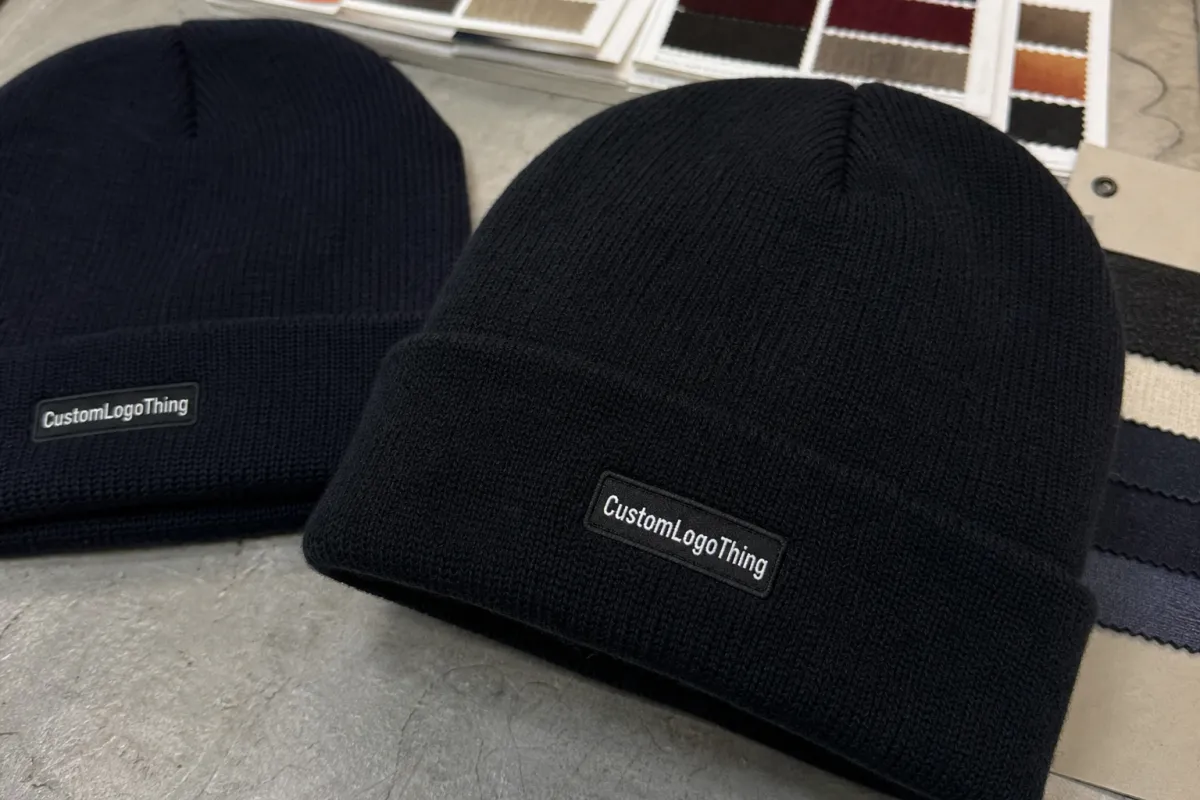
Premium does not just mean softer yarn or a higher unit price. In production terms, a premium cuffed beanie holds its shape, keeps the cuff flat, and gives decoration a stable surface. A beanie can feel nice in hand and still fail this test if it stretches out too easily or if the knit looks uneven once the cuff is folded.
Three features usually determine whether the item feels premium: yarn quality, knit density, and recovery. A compact knit with even tension tends to look more refined than a loose knit, even when both use the same fiber. Tight, consistent stitching also reduces edge curling, visible gaps, and puckering around embroidery or patches. Those flaws are small individually, but together they make a piece look lower grade than it should.
Use pattern matters too. Retail beanies can be looser or more fashion-led because they are usually judged as apparel. Trade show beanies are handled differently. They are carried, packed, and worn for long days, then folded again. If the cuff loosens or the crown slumps, the logo sits unevenly and the piece loses value fast.
- Shape retention: The cuff should spring back after stretching.
- Surface finish: The knit should be smooth enough for crisp branding.
- Handfeel: Soft matters, but not if the knit becomes thin or flimsy.
- Wear behavior: The beanie should still look tidy after packing and unpacking.
The practical question is not which sample feels nicest for ten seconds. It is which one still looks controlled after transport, booth traffic, and a full day of wear. That is usually the better filter for a trade show purchase.
How Knit Density Affects Warmth, Fit, and Artwork
Knit density affects almost every buyer-facing detail. A tighter knit usually feels cleaner in the hand, traps warmth more evenly, and gives embroidery or woven patches a flatter base. A looser knit can look relaxed, but it also moves more, which can distort the logo and make the cuff buckle after shipping.
Gauge is the key spec here. Fine-gauge and medium-gauge beanies generally read more polished because the stitches sit closer together. That reduces visual noise and gives the decoration a more stable foundation. On the cuff, that stability matters even more because the cuff acts like a display zone. If it stays flat, the logo is easier to read and less likely to wrinkle at the edges.
Stretch should be controlled, not extreme. Buyers often want a wide fit range, which is reasonable, but too much elasticity can leave the hat looking baggy by the end of the day. The better target is a knit that stretches comfortably and then returns to form instead of staying distorted.
Decoration method should influence the knit choice. Direct embroidery usually performs best on a dense knit that can hold stitches without puckering. Woven patches need enough cuff area to sit flat and stay visible from a few feet away. Woven labels are more forgiving, but if the artwork includes thin lines or small text, the knit still needs to be smooth enough to protect legibility.
For many event programs, a 1x1 rib cuff with a 12-gauge knit and medium body weight is a practical starting point. That spec usually gives enough stretch for broad sizing while keeping the surface tidy for branding. If the design leans more fashion-forward, a looser gauge can work, but the logo method usually needs to be simplified to match it.
Choosing Fibers for Softness, Durability, and Seasonal Use
Acrylic remains the most common option for promotional beanies because it keeps color consistent, supports large runs, and usually stays within budget. A good acrylic yarn can feel much better than buyers expect if the knit is tight and the finishing is controlled. A poor one can feel dry or fuzzy after one wear, so the grade of the yarn matters more than the label itself.
Wool blends offer a warmer hand and a more elevated first impression. They fit VIP kits, executive gifts, and colder-season events where the beanie is likely to be worn outdoors. The tradeoff is price and care. Wool costs more, and some wearers prefer not to have it directly against the skin. A moderate blend often balances warmth, comfort, and cost better than pure wool.
Recycled polyester works well when the campaign needs a recycled-material claim. The main issue is documentation. Post-consumer and pre-consumer feedstocks are not interchangeable, and the supplier should be able to show what the yarn actually contains. Performance can be strong if the yarn is spun cleanly enough to avoid a rough or fuzzy surface. If the yarn is inconsistent, the logo will show it.
Texture changes how the logo reads. Smooth yarns make small logos easier to read from booth distance. Heather effects, flecks, and brushed finishes add character, but they soften contrast. That is fine for bold artwork, but it can work against fine lettering or thin outlines.
Material choice by use case usually breaks down like this:
- Large giveaways: Acrylic or acrylic-rich blends for dependable color and lower cost.
- Premium gifts: Wool blends or higher-grade acrylic blends with smoother finishing.
- Eco-focused programs: Recycled polyester or recycled blends, with documentation in writing.
- Cold venues: Denser knits with strong recovery, regardless of blend.
A lower-cost beanie that keeps its shape often beats a more expensive one that sags after a day. For trade show planning, durability usually matters more than a short-lived first impression.
Cost, MOQ, and the Main Price Drivers
Pricing becomes easier to compare once it is broken into parts. Fiber choice matters, but so do knit gauge, cuff depth, logo method, packaging, color changes, and finishing. A simple acrylic beanie with a woven label sits in a very different cost bracket from a wool blend with a patch, custom hangtag, and presentation wrap.
MOQ is usually tied to knitting setup, decoration setup, and the point where a run becomes efficient enough to quote. Smaller runs can be done, but the unit price rises because those setup costs are spread over fewer pieces. Asking for pricing at two or three quantity levels is the fastest way to see where the break points are.
For a 5,000-piece order, these are common planning ranges before freight and special packaging are added:
| Material / Build | Typical Unit Range | Best Fit | Notes |
|---|---|---|---|
| Basic acrylic, simple decoration | $1.20-$1.80 | Large giveaways | Good color control and volume pricing |
| Acrylic blend with patch or embroidery | $1.60-$2.40 | General trade show use | Balanced feel and logo clarity |
| Recycled polyester blend | $1.70-$2.60 | Sustainability-led programs | Confirm fiber source and yarn photos |
| Wool blend with premium finishing | $2.50-$4.00 | VIP gifts and sales kits | Warmer handfeel and higher perceived value |
Those numbers only help if the quote is read as a landed cost. Freight, sampling, carton charges, overage tolerance, and rush fees can change the final spend more than the material itself. A low unit price with vague packing instructions often ends up more expensive than a cleaner quote.
Packaging should be treated as part of the spec, not an afterthought. A simple fold in a carton may be enough for some events. Others need kraft bands, recycled inserts, or a more retail-like presentation. That adds cost, but it also changes how the item is perceived at the booth. A neat presentation usually means the beanie is kept longer.
Production Flow and Lead Times
The best production starts with a clear spec sheet. Before quoting, the supplier should know fiber blend, knit density, cuff width, decoration method, quantity, packaging, and the target delivery date. If those details are vague, the sample can drift away from the real job and the quote will be less reliable.
Sampling is where most problems show up. A physical sample reveals handfeel, stretch, cuff recovery, stitch clarity, and how the decoration sits after the beanie has been folded and unfolded a few times. A render cannot show whether embroidery pulls on the knit or whether a patch feels too stiff for the cuff. If the order will travel, it also helps to test compression before approval.
The production sequence is usually yarn preparation, knitting, crown closure, decoration, trimming, inspection, folding, packing, and carton staging. Custom tags or inserts are usually added near the end so they stay clean. If the program needs a lighter footprint, recycled paper inserts or FSC-certified card stock can be used as long as the claim is documented properly.
Lead time depends on volume, season, and decoration complexity. After approval, many beanie runs take about 12 to 18 business days for production, plus a few days for packing. Shipping is the part that gets underestimated. Air freight can protect a fixed event date. Ocean freight can add several weeks. If the show date is hard, leave room for sample revisions, holiday congestion, port delays, and carton rework.
Package testing is worth checking for any order that will travel through multiple handoffs. ISTA publishes useful guidance at ista.org. For paper-based components, fsc.org provides certification information that helps verify whether cartons or inserts are actually FSC-certified, not just described that way in a quote.
Material Mistakes Buyers Still Make
The most common mistake is choosing yarn that feels soft at first but pills quickly or loosens after a few wears. That can happen with low-grade acrylic, poor spinning, or a knit that is too open for the intended decoration. The sample may look polished at first and then turn tired much faster than expected.
Another issue is approving decoration on a fabric that is too fluffy or too open for the artwork. Fine text gets blurred. Thin outlines disappear. Embroidery edges can look rough even when the art file is correct. The problem is often the ground, not the logo.
Color approval is another place where buyers get surprised. A sample viewed under office light can look different under convention hall LEDs or daylight near an entrance. If the beanie has to match a branded kit, review the swatch or decorated sample in lighting close to the final use case. That small step avoids a lot of post-delivery disappointment.
If the logo edge looks fuzzy on the sample, it will usually look worse once the beanie has been folded, handled, and lit by a busy show floor.
A few checks save time later:
- Keep logo detail proportional: Tiny text disappears quickly on knitwear.
- Match decoration to structure: Embroidery needs a tighter knit than a loose casual beanie.
- Test recovery: Stretch the cuff, then check whether it returns cleanly.
- Check fold behavior: A beanie should still look tidy after packing flat.
Packaging can also go wrong in subtle ways. Oversized cartons waste space. Fragile inserts crease. Plastic-heavy presentation can clash with a sustainability brief. If the campaign needs a cleaner environmental story, ask for simplified packaging, recycled paper components, and right-sized shippers. Often the better solution is not more material, but less unnecessary material.
How to Compare Samples Before You Approve
The fastest way to compare options is to build a one-page spec and keep it tight. List the fiber blend, knit density, cuff width, decoration method, quantity, target unit price, packaging choice, and delivery date. Then ask for two or three material options side by side. One should control budget, one should be the likely winner, and one can stretch quality a little higher so the tradeoff is obvious.
That side-by-side comparison is more revealing than isolated samples. Stretch them. Fold them. Set them next to the brochure, shirt, or other giveaway they will travel with. Put them under the lights you expect at the booth. If the beanie looks neat in the sample room but crowded beside the rest of the kit, it may need a different fiber, a firmer cuff, or a simpler logo treatment.
It also helps to examine the piece after handling, not just on arrival. Hold the cuff at both ends and see whether it twists. Press the crown into a loose fold and see how much shape it loses. Check the logo from a few feet away, then again at arm’s length. In practice, the second check often matters more than the first.
Timing should be handled honestly. If the show is close, a slightly simpler spec is usually the safer move because it reduces approval rounds and protects the schedule. If the beanie is meant to do a lot of branding work, spend the extra time on yarn quality, knit density, and finish consistency. That is where the value shows up.
Use this trade show Premium Cuffed Beanies material guide as a decision tool, not a slogan. Once swatches, quotes, and lead times agree, approval becomes easier and the final carton looks like part of the campaign instead of an afterthought.
What materials work best for trade show premium cuffed beanies?
Acrylic is usually the easiest starting point because it handles color well and gives consistent production results. Wool blends feel warmer and more elevated, while recycled polyester works well when the sustainability story is documented clearly. For logo clarity, a smoother yarn and tighter knit usually produce the best result.
Is an acrylic blend or wool blend better for premium cuffed beanies?
Acrylic blends usually win on cost control, color consistency, and easier care for large giveaway runs. Wool blends usually win on warmth, handfeel, and a more giftable first impression. The better choice depends on whether the program needs volume or a more polished presentation.
How much do trade show premium cuffed beanies usually cost?
Price depends on fiber content, knit density, cuff size, decoration method, packaging, and order quantity. Larger quantities usually lower the unit price, while premium yarns and more detailed logos push it upward. Compare the quote against the total landed cost, not just the base unit price.
How long does production take for custom cuffed beanies?
Sampling often takes longer than buyers expect because fit, stitch quality, and logo placement need real approval. After approval, bulk production depends on yarn availability, decoration complexity, and the factory schedule. Shipping time should be added early, especially if the event date is fixed.
What should I confirm before approving a beanie order?
Check handfeel, cuff recovery, logo size, stitch clarity, and overall shape after stretching and folding. Confirm color match, packaging details, quantity tolerance, and delivery window before final approval. A careful sample review now is much cheaper than correcting a problem after cartons are already moving.


