Fitness premium cuffed beanies unit cost often looks better than buyers expect because the product is compact, one-size, and easier to decorate than apparel with a size curve. That does not make it cheap; it makes the economics simpler to control.
For gym brands, training studios, and membership programs, the beanie also has strong utility. It shows up in cold-weather commutes, outdoor training, and winter merch drops, which raises the chance that the item gets worn instead of stored. That matters because a useful accessory is easier to defend internally than a larger piece with more fit risk.
The real buying question is not whether a cuffed beanie can be branded. It is whether the spec, decoration, and packaging line up with the intended audience and price point.
Why a Cuffed Beanie Can Outperform Bigger Gym Merch
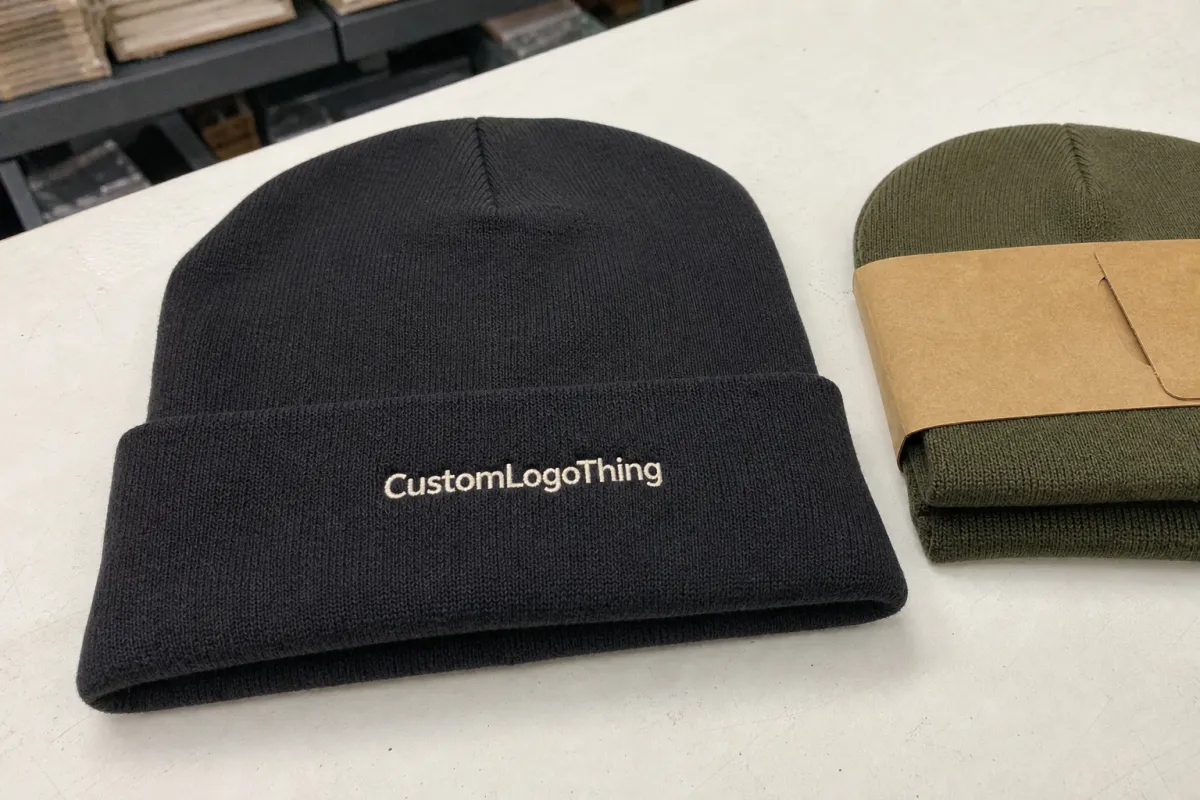
Tees and hoodies look attractive on a quote sheet, but they bring size runs, returns, and more inventory risk. A cuffed beanie removes most of that friction. One size fits most, the brand area is predictable, and the item packs small, so freight and storage are easier to manage.
That simplicity makes beanies useful in multiple programs. They can support welcome kits, retail drops, member rewards, and seasonal promotions without forcing a separate size matrix. For buyers, that means fewer approval cycles and a clearer path to reorder.
The best orders balance warmth, branding space, and repeatability. If the factory can reproduce the same fit and logo placement on later runs, the product becomes much easier to scale than a more complex apparel item.
Packaging is part of that equation. A cuffed beanie folds well and can ship in polybags, branded sleeves, or belly bands instead of oversized cartons. If paper inserts are part of the plan, FSC-certified stock can support sourcing claims without complicating production. For transit-heavy programs, basic packaging checks from ISTA help reduce crushed presentation on arrival.
That is the practical value of fitness Premium Cuffed Beanies unit cost: the product is inexpensive to move, easy to size, and straightforward to brand if the spec stays disciplined.
Choosing the Knit, Cuff, and Branding Details That Matter
Many buyers start with the logo and overlook the knit structure. That is backward. Yarn type, stitch density, cuff height, stretch recovery, and body depth all affect how the beanie wears and how premium it feels. A looser knit can feel softer but may lose shape faster. A denser knit reads more substantial but can feel firmer.
Common premium cuffed beanie builds include acrylic, acrylic-wool blend, recycled polyester blend, and heavier rib-knit constructions. Acrylic keeps pricing accessible and color matching consistent. Blends usually cost more, but they can improve hand feel and support a higher-end brand story.
Decoration choice matters just as much. Direct embroidery is often the cleanest option for short wordmarks and simple logos. Woven patches work better when the design needs sharper edge detail or finer type. Sewn labels are subtle and suit minimal branding. Each method changes both appearance and unit cost.
| Decoration method | Typical unit cost impact | Look and feel | Best use case |
|---|---|---|---|
| Direct embroidery | Low to moderate; often the most efficient for simple logos | Classic, tactile, slightly raised | Short wordmarks, icons, membership merch |
| Woven patch | Moderate; patch setup can add tooling fees | Crisp edges, better for fine detail | Detailed logos, badge-style branding |
| Sewn label | Low on decoration, but placement labor still matters | Subtle, clean, understated | Minimal branding, retail basics, premium basics |
Color strategy also affects the final result. Solid dye lots are easiest to repeat. Heathered yarns add texture and can hide wear. Contrast cuffs improve logo readability from a distance, which helps in streetwear and event settings. Busy marl patterns should be avoided if the logo is small.
The fastest way to make a premium beanie look average is to overload it with decoration. A sharp knit, a disciplined cuff, and one clear brand mark usually beat three embellishments fighting for attention.
Specs to Lock Before You Request Samples
Sampling goes faster when the spec sheet is complete. Before the first sample is made, lock the target fit, cuff depth, logo size, placement, and decoration method. A sample is not useful if the buyer is still deciding whether the logo should sit centered, offset, or on the folded cuff.
Artwork should be ready too. Send vector files, Pantone references where color matching matters, and a clear note on logo clear space. If the plan is embroidery, thread colors need to be mapped early because screen color and thread color rarely match perfectly. If the plan is a woven patch, ask for a proof that shows edge thickness, background fill, and border detail.
- Fit target: snug, average, or relaxed crown depth
- Cuff depth: shallow for a clean retail look, deeper for larger logos
- Logo placement: center cuff, side cuff, or body knit
- Packaging: folded, banded, bagged, or boxed for kits
- Labeling: woven label, size tag, care tag, or retail hang tag
Packaging affects both presentation and handling. A retail shelf program may need a crisp fold and belly band. A membership kit may need individual bagging with a branded insert. A bulk promotion may need carton packing only. If paper components are included, FSC-certified stock can support the sourcing story without adding complexity.
The audience question matters here too. A thicker, softer knit fits a premium club launch differently than a firmer beanie for outdoor runners. The factory can steer yarn weight, stitch density, and cuff structure more accurately when the use case is clear.
Clean inputs save time, reduce sample rounds, and make the final quote easier to defend.
Fitness Premium Cuffed Beanies Unit Cost: What Drives the Quote
Fitness Premium Cuffed Beanies unit cost moves in predictable ways once the spec is fixed. Quantity matters first. Setup work for knitting, digitizing, patch preparation, or label application is spread across more units as the run grows, so the per-piece cost usually falls with volume.
Material quality is the second lever. Standard acrylic keeps quotes competitive. Heavier yarns, recycled blends, or wool content usually add cost, but they can improve hand feel and color depth. Decoration complexity comes next: one-color embroidery is cheaper than a multi-color graphic, and a woven patch with fine borders can cost more than a simple stitched mark because it takes more labor and precision.
Here is a practical way to think about a standard quote:
- Sample fees: often $20-$60 depending on whether the factory is making a true pre-production sample or modifying an existing blank
- Setup charges: embroidery digitizing or label preparation can run $25-$120, depending on complexity
- Tooling fees: uncommon for basic knit beanies, but patch or custom label builds can add one-time charges
- Unit cost: commonly around $2.60-$7.80 per piece depending on volume, yarn, and branding
- Freight: separate from unit pricing; air and sea rates should be compared against the same delivery deadline
That range is wide because the spec changes the economics. A plain rib-knit beanie with a small embroidered mark at 3,000 pieces can sit near the lower end. A premium blend, deeper cuff, woven patch, and retail bag can sit near the top. Quotes are only comparable when sample fees, setup charges, unit cost, and freight are separated.
| Run size | Likely price shape | What usually helps | Watch-outs |
|---|---|---|---|
| 100-300 pcs | Higher cost per piece, more sensitive to setup | Simple logo, standard yarn, fewer color changes | MOQ pressure, limited flexibility on custom details |
| 500-1,000 pcs | Middle ground; often the sweet spot for branded winter drops | One-color embroidery, standard cuff, basic bagging | Extra colors or premium labels can move the quote quickly |
| 2,000+ pcs | Best bulk pricing, lower cost per piece | Repeatable spec, simple packaging, stable color count | Longer lead planning, larger cash commitment |
The cheapest quote is rarely the best order if the embroidery distorts, the cuff loses shape, or the packaging looks like an afterthought.
Ask for an itemized quote. A line-by-line sheet makes it easier to see where the savings come from and whether they are real. If one supplier is lower because they removed packing inserts, changed yarn weight, or simplified the logo without saying so, the quotes are not comparable.
Cost is also tied to shipping and rework risk. A lower quote can become more expensive if the order needs a second round because the presentation, labeling, or carton pack does not survive transit. That is why transit testing standards from ISTA matter even for soft goods.
Production Steps, Lead Time, and Delivery Windows
The production path is usually straightforward if the buyer gives the factory enough detail early. A normal run moves through inquiry, spec review, artwork proof, sample approval, production, inspection, packing, and shipment. Each step has its own delay risk, and most delays come from incomplete inputs rather than production failure.
Lead time depends on yarn availability, decoration method, and approval speed. Standard orders often land in the 12-18 business day range from final approval to completion, though more complex projects or larger batches can take longer. Freight adds another clock. Air moves quickly but costs more; ocean is cheaper for larger programs but needs much more planning.
Buyers can compress the timeline without cutting corners by sending clean vector artwork, confirming the final color list before sampling, and approving the sample promptly. The order quantity, packaging method, and delivery date should also match the same quote.
Seasonality matters. Cold-weather promotions do not wait for internal schedules, and knitting capacity tightens as winter approaches. Buyers who place orders early usually get better date certainty, less rush freight, and fewer compromises on packaging.
If the order will ship in retail cartons or membership packs, ask how cartons are packed and labeled. A beanie may be soft, but the box around it is not. Crush resistance, carton fill, and label placement still affect arrival condition.
What Steady-Batch Suppliers Do to Reduce Reorder Risk
Experienced buyers rarely choose a supplier on price alone. They look for batch stability. If a factory can keep color matching, stitch density, and logo placement consistent across repeats, the brand spends less time fixing problems on later runs.
Quality control should be visible, not implied. On cuffed beanies, the key checkpoints are size tolerance, edge finish, embroidery alignment, label placement, and stretch recovery after folding. A cuff that twists or a logo that lands too low changes how the product reads on the head and on the shelf.
Reliable suppliers also separate the real variables from the noise. They explain whether a requested change affects the knit program, the sample path, or only the artwork proof. That clarity shortens review cycles and reduces back-and-forth.
Here are the signs that a supplier is built for repeat work:
- Stable specs: same cuff depth, same yarn weight, same logo placement on reorders
- Line-item quotes: unit cost, setup charges, sample fees, and freight shown separately
- Proof discipline: artwork and placement confirmed before sampling starts
- Inspection habits: size checks, stitch review, and packaging verification before shipment
- Clear minimums: MOQ explained up front so the buyer can plan the next run
Fewer surprises mean fewer replacements and less rush work. Better line-item visibility makes internal approval easier. That is a direct cost-control advantage when the order is tied to a launch date or retail drop.
Packaging still matters here. Even a premium knit accessory benefits from clean cartons, accurate labeling, and consistent folding. When a supplier treats those details as part of production, reorder risk drops.
Next Steps to Lock Specs, Compare Quotes, and Place the Order
Before requesting quotes, gather the essentials: quantity, target delivery date, logo files, preferred decoration method, cuff color, and any retail or kit packaging needs. That makes the first round of pricing much more useful, and it keeps each supplier working from the same brief.
Then ask for a side-by-side quote that separates the real cost buckets. The cleanest comparison shows unit cost, setup charges, sample fees, freight, and packaging add-ons on different lines. That is the only way to tell whether one supplier is truly cheaper or just less transparent.
When the sample arrives, inspect it under normal use conditions, not just under showroom lighting. Check cuff shape after unfolding, logo legibility at arm's length, color accuracy against the approved reference, and stretch recovery after a few pulls. If the beanie still looks sharp after that, the production spec is probably sound.
Do not wait for cold weather to force the schedule. Winter merch is won by teams that approve early, not teams that hope the calendar will stretch. The best result comes from matching the same spec across the quote, the sample, and the production order.
That is the cleanest way to judge fitness Premium Cuffed Beanies unit cost with confidence. The number only makes sense when the yarn, decoration, packaging, and delivery window all belong to the same order.
Frequently Asked Questions
What affects premium cuffed beanie unit cost the most?
Quantity, yarn quality, and decoration method usually move the price more than small design tweaks. Extra colors, custom labels, and complex embroidery also add labor and setup time.
What MOQ should I expect for custom cuffed beanies?
MOQ depends on the factory, but buyers should usually ask for the lowest viable run for their artwork and color count. Higher customization often raises the minimum because setup work is spread across fewer pieces.
How long does production take after sample approval?
Lead time depends on yarn sourcing, decoration complexity, and shipping method. Ask for a dated production schedule that separates proof approval, manufacturing, inspection, and transit.
Can I lower the quote without hurting quality?
Yes, by simplifying the logo build, reducing color changes, and choosing a decoration method that matches the design. You can also improve unit cost by increasing quantity or removing nonessential packaging extras.
What should I send for the fastest custom quote?
Send logo artwork, target quantity, preferred colors, placement notes, and the delivery deadline. Include any packaging or labeling requirements so the quote reflects the real finished product.


