Approve snapback samples before they turn into expensive bulk problems. A snapback caps Sample Approval Checklist is not paperwork for the sake of paperwork. It is the point where a cap that looks correct on a screen gets judged as a physical product with weight, structure, stitching tension, and a closure that either feels right or does not. A crown that sits 4 mm taller than intended, a visor that bends too softly, or a logo that drifts a few millimeters off center can all pass in a render and fail in hand. That gap is where avoidable cost lives.
The sample is the only stage where you can still catch a shape issue before dozens or hundreds of units repeat it. Once bulk fabric is cut and decoration starts, a mistake stops being a design problem and becomes a production problem. For retail programs, promo orders, and resale lines, that shift matters more than the sample fee itself.
This checklist is built for buyers who want a disciplined sign-off process. It covers structure, decoration, price, timing, and the handoff into production, with enough detail to help you make a decision that is based on measurements and material behavior, not just on how the cap photographs.
Snapback caps sample approval checklist: what catches problems early
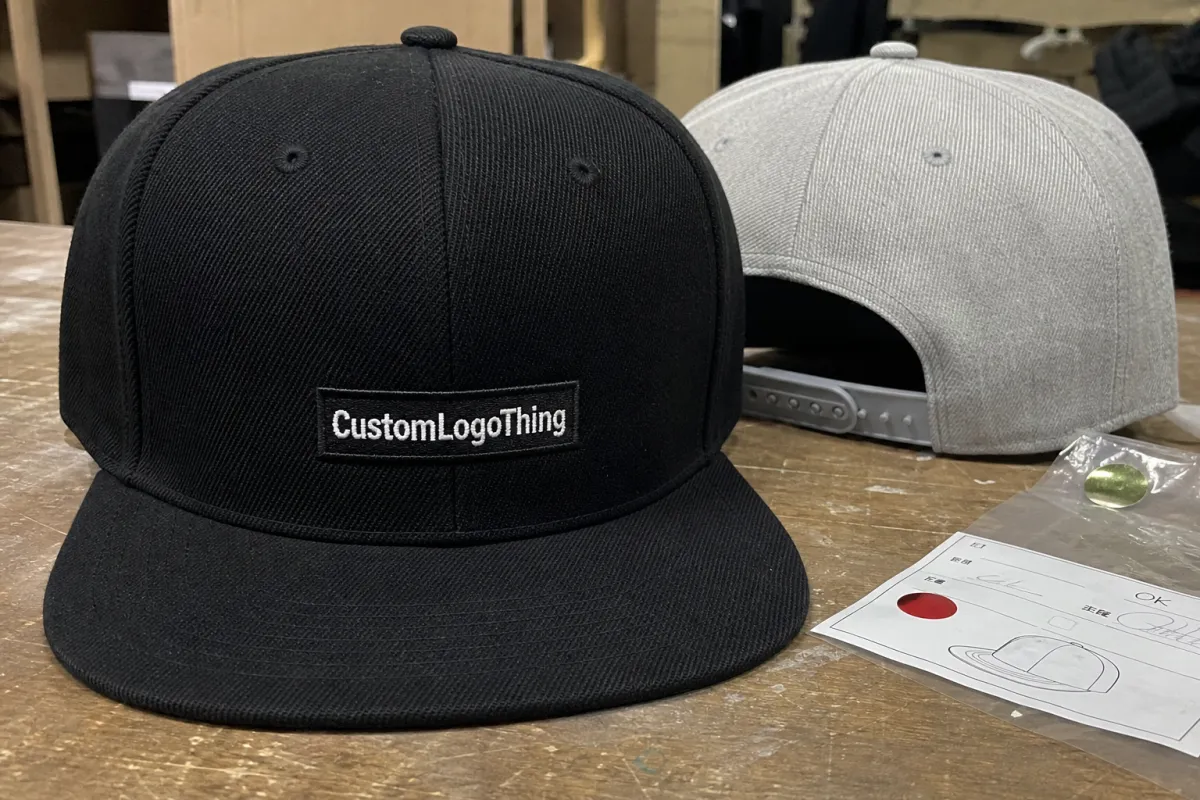
Most sample issues are not dramatic defects. They are small deviations that only become obvious when you compare the sample with the tech pack or with another approved unit. A crown that rises slightly too high changes the silhouette more than most buyers expect. A front panel that is too soft can make embroidery sink and warp. A logo placed a touch low starts to feel crowded against the visor. The snapback caps Sample Approval Checklist exists to catch those details before they are multiplied.
On a snapback, fit is less about numeric size and more about geometry. Crown depth, panel angle, visor curve, back opening, and closure tension all shape how the cap wears and how it sits on a shelf. Two caps can share the same nominal measurements and still feel completely different if one uses a stiffer buckram and the other uses a softer front interface.
“A sample that is almost right still creates the same correction work as a bad one once bulk starts.”
Before you approve anything, ask a few practical questions:
- Does the crown height match the intended profile?
- Is the visor curve firm, even, and consistent from side to side?
- Is the logo centered relative to the panel seams, not only the front panel midpoint?
- Do the seams, eyelets, and sweatband finish look clean inside and out?
- Does the snap closure open and close with normal hand pressure?
If one of those answers is off, the issue is usually easier to fix before the order enters bulk. That is the real value of a snapback Caps Sample Approval Checklist: it reduces judgment calls and turns vague impressions into repeatable checks.
How the sample approval process and timeline usually work
A typical sample path starts with artwork, a spec sheet, and a clear note on decoration method. After that, the factory builds a prototype, the buyer reviews it, comments come back, and a revised sample may follow if anything important changed. The process sounds simple. In practice, it is the missing details that slow it down.
Embroidery, woven patch, puff print, applique, and direct print do not behave the same way. A 3D puff logo may need more height allowance than a flat embroidery mark. A patch may require edge finishing that changes the visible size. A heat-applied transfer may look clean on a flat sample but fail if the panel structure is too curved. If the artwork file and placement notes are vague, the sample stage stretches out quickly.
Reasonable timing is usually 7-15 business days for a straightforward decorated sample after artwork confirmation. More involved builds, such as custom patch construction, unusual fabric, or multiple placement checks, often take 10-20 business days. Shipping adds another layer, and international courier timing can vary enough to matter when a buying calendar is tight.
The projects that move fastest usually have three things in common: complete input, one decision-maker, and quick feedback. A short list sent up front does more than a long comment chain later:
- Cap size, fit target, and crown profile
- Fabric type and color reference
- Closure style, such as standard plastic snap or reinforced snap tab
- Decoration method, artwork files, and placement dimensions
- Packaging requirements, if they affect fold, bagging, or retail presentation
That structure does not eliminate revisions, but it makes them smaller and less expensive. Without it, the sample stage becomes a guess-and-correct cycle, which is exactly what a snapback caps sample approval checklist is meant to prevent.
Cost, pricing, MOQ, and revision limits that change the decision
Sample fees usually include more than the cap blank. You are paying for setup, handling, decoration labor, and, in some cases, small-batch material sourcing or thread matching. Shipping is often separate. For a basic embroidered snapback, sample pricing commonly falls around $35-$85. More complex decorated prototypes often land in the $90-$180 range, especially if they involve custom patches, multiple logo placements, special trims, or nonstandard fabric.
That range is useful because it puts the decision in context. A slightly higher sample fee can be cheaper than discovering a bad logo proportion after 1,000 units have been decorated. The cost of one wrong bulk run is not just the remake charge; it also includes lost time, extra freight, storage, and the risk of missing a sales window. The sample is the cheapest place to spend attention.
MOQ changes the equation too. A small minimum order, say 100 to 300 pieces, gives less room to absorb experimentation. A larger MOQ can sometimes justify a more involved approval sequence because the production savings are spread across more units. Either way, the buyer should know whether the sample fee is refundable, credited against bulk, or fully separate.
| Sample option | Typical fee | What it usually includes | Best fit |
|---|---|---|---|
| Basic visual sample | $35-$75 | Blank cap plus one simple decoration method | Simple logos and standard fabric colors |
| Full decorated prototype | $60-$140 | Embroidery or patch setup, placement review, one comment round | Most custom retail and promo orders |
| Special trim sample | $90-$180 | Custom fabric, edge details, multi-placement decoration | Higher-risk styles with more visual variables |
| Refundable sample fee | Varies by order | Fee credited back after bulk approval | Buyers ready to place production quickly |
Revision limits matter because each round has a cost. Some suppliers build in one revision. Others allow two if the changes are minor and the tooling stays the same. Once a buyer asks for a new patch shape, a different fabric weight, or a fresh placement line, the sample can turn into a second prototype rather than a revision. That is normal, but it should be understood before approval gets emotional.
Packaging can also affect the quote. If cartons, hang tags, inserts, or retail mailers are part of the order, they should be discussed during the sample stage, not after approval. Transit testing logic from ISTA is more useful than a quick visual check if the caps need to survive distribution or e-commerce handling. For paper inserts or retail tags, FSC-certified paper gives you a cleaner material story. Those details do not belong in every quote, but they do belong in the approval record.
Fit, structure, and decoration checks that matter most
Snapback fit is not just a matter of size because the closure can adjust. The more useful questions are about structure: how deep the crown feels, how the front panel stands, how much flex the visor has, and whether the back opening closes without distortion. A cap can meet the size spec and still feel wrong if the front buckram is weak or the visor curve is too shallow.
Material choice changes the result in measurable ways. Cotton twill usually feels softer and more breathable. Polyester often holds color better and shrinks less in humid shipping conditions. Wool blends can give a richer hand feel, but they also behave differently in sewing and pressing. Most buyers do not need a fabric lecture. They do need to know that a 280 gsm twill and a 340 gsm twill will not hang the same way, even if the color is matched perfectly.
Decoration deserves equal attention. Embroidery density should be even, but not so tight that the fabric puckers. Patch edges should be clean, with no lift at the corners or fuzzy cut lines. Printed graphics need solid coverage and sharp borders. A centered logo should line up with seam references, not just the middle of the front panel. The snapback caps sample approval checklist should force each of those checks to happen separately, because one good detail can hide another weak one if you review too casually.
Color deserves a slower inspection than most teams give it. Underbill color, sweatband shade, thread tone, and fabric finish can all shift how the cap reads under daylight versus warehouse lighting. A dark charcoal cap with a warm underbill may look fine in a phone photo and noticeably off in person. Compare the sample against the spec sheet or physical standard, not just memory or a screen.
The most reliable review sequence is straightforward:
- Confirm silhouette, crown height, and visor curve from a few angles.
- Measure key points against the tech pack or approved reference unit.
- Inspect seams, stitch spacing, sweatband attachment, and internal finishing.
- Check logo size, placement, spacing, and alignment to seam lines.
- Test the snap closure, back opening, and overall comfort.
- Photograph the front, side, back, and underbill for the approval record.
That record matters more than people think. A clean photo set and written notes make revision conversations faster, especially if there are multiple stakeholders or a later dispute over what was approved.
Step-by-step review before you sign off the sample
Start with the outside view. Hold the cap at arm’s length and judge the silhouette first. That is the view most end customers notice before they touch the cap, and it is the fastest way to catch a shape that does not match the brief. If the crown looks too tall, the visor feels too flat, or the side panels seem uneven, mark it immediately.
Then move into construction. Check stitch tension, seam consistency, and whether any decorated area has puckering around it. Turn the cap inside out if needed and inspect the sweatband, seam finish, and loose threads near the back opening. A neat exterior can hide rough internal work, and rough internal work often predicts how the cap will age after wear and handling.
After that, verify branding placement against the spec sheet:
- Logo width and height
- Distance from visor seam
- Center alignment
- Spacing from panel edges
- Relationship between logo and eyelets, if relevant
Then test the cap like a product, not a sample sheet. Open and close the snap several times. Check whether the closure lands cleanly or pushes the back opening out of shape. Put it on if you can and feel the sweatband pressure, especially along the forehead and temple area. Fold the bill lightly to see whether the structure holds or becomes too soft. A cap is supposed to work on a head; it should not only look correct on a table.
One rule improves approval quality more than most buying teams realize: every comment should reference a measurement, a photo, or a spec line. “Raise the logo 4 mm” is actionable. “Make it feel a little better” is not. Exact comments lower the chance of a second round that solves one issue and introduces another. They also make the snapback caps sample approval checklist useful after the sample is gone, because the approval trail remains intelligible.
Common mistakes that trigger delays or redos
The biggest mistake is approving too quickly. A cap can look acceptable in one front-facing image and still miss the approved measurement by enough to matter. A quick glance is not a review. Measure the sample, compare it to the spec sheet, and test the closure before you say yes.
Another common problem is vague feedback. Comments like “make it stronger” or “move the logo a little higher” force the factory to interpret intent. Three people reading that line may imagine three different outcomes. Specific notes are faster and safer: “Raise the logo 5 mm, keep the width unchanged, and preserve the same stitch count.”
Color approval deserves its own caution. Screen images shift by device, brightness, and white balance. A fabric shade can look richer in a controlled photo and flatter in daylight. If color is critical, approve from the physical sample whenever possible. If the sample has to be judged by photos, ask for daylight shots, close-ups, and written measurement confirmation before final sign-off.
Cost surprises are another quiet failure point. A small change to patch shape, stitch density, or underbill color can alter labor and setup enough to move the quote. That is why the snapback caps sample approval checklist should include a cost review, not just a visual one. If a change touches tooling, decoration, or packaging, confirm whether pricing and timing still hold.
Recordkeeping matters too. Keep sample photos, revision notes, and the approved spec sheet together. If bulk units later arrive with a different crown height or logo position, a clean approval file makes the problem easier to resolve. It is not glamorous work, but it is the difference between a controlled process and a memory contest.
Next steps after approval: lock specs and move to production
Once the sample is approved, the work shifts from evaluation to control. Lock the final spec sheet, archive the approved photos, and send a written approval note that repeats the accepted details. That note should cover color, decoration method, logo placement, closure type, packaging, and any exceptions that were agreed during review. One source of truth prevents a lot of misread instructions later.
It also helps to confirm the production-side details before the bulk order starts. Ask about carton marks, pack-out method, folding instructions, and shipping schedule. If the caps need to be bagged a certain way or tagged in a certain place, write it down now. Once production is underway, these become disruptive changes rather than simple preferences.
If the order includes inserts, display cards, or retail cartons, freeze those specs at the same time. Paper stock, fold lines, and carton dimensions are easy to ignore because they do not show up in the cap itself, but they can still delay shipment. Buyers who treat sample approval as a disciplined checkpoint usually get better bulk consistency and fewer last-minute corrections.
That is why the snapback caps sample approval checklist matters beyond the sample itself. It creates a clean handoff from design intent to production instructions. If the shape, stitching, logo placement, closure, cost, and lead time all line up, the factory gets a clear brief and the buyer gets a lot less guesswork.
How many sample rounds are normal when using a snapback caps sample approval checklist?
One to two sample rounds is common when the spec sheet is clear and the decoration is straightforward. More involved builds, especially those using custom patches, puff embroidery, or unusual fabric, may need an extra round if the first prototype reveals a fit or placement issue. Clean artwork, exact measurements, and fast feedback usually reduce the number of revisions.
What should I inspect first on a snapback cap sample?
Start with the silhouette. Crown height, visor curve, and panel balance are the fastest visual checks and often the hardest problems to ignore later. After that, inspect logo placement, stitch quality, color accuracy, and closure function against the spec sheet or approved reference.
How do sample fees work for custom snapback caps?
Sample fees usually cover setup, decoration, and labor, while shipping and extra revision work may be billed separately. Some suppliers credit the sample cost back to bulk production, but that should be confirmed in writing before approval. If the first sample needs major changes, expect added cost because materials or decoration setup may need to be redone.
How long does snapback cap sample approval usually take?
A simple sample can move through the process in about 7-15 business days once artwork is confirmed. More complex styles often take 10-20 business days because patch construction, special fabrics, or multiple decoration checks extend the timeline. Faster approvals usually come from complete specs and quick responses to revision questions.
Can I approve a snapback cap sample from photos only?
Photos are useful for progress updates, but they should not replace a physical sample when fit, structure, and material feel matter. Lighting and screen settings can hide seam issues, change the color perception, and flatten the crown shape. If photos are the only option, ask for close-ups, daylight images, and written measurements before final approval.


