Use a Five Panel Caps sample approval checklist before bulk production, and you catch the faults that never show up in a polished supplier photo. A cap can look clean on screen and still sit crooked, pinch at the crown, or bury a logo that is a few millimeters off. That is why a sample is not a formality. It is the last low-cost point to protect fit, decoration, finish, and Unit Cost Before the order becomes expensive.
From a buyer's perspective, the job is straightforward: compare the sample against the tech pack, get the right people to sign off the same version, and keep a record production can actually follow. The Five Panel Caps sample approval checklist should work like a control document, not a document that exists because someone requested one. A good approval round saves time later. A sloppy one just moves the problem downstream.
Why one sample can save the whole cap run
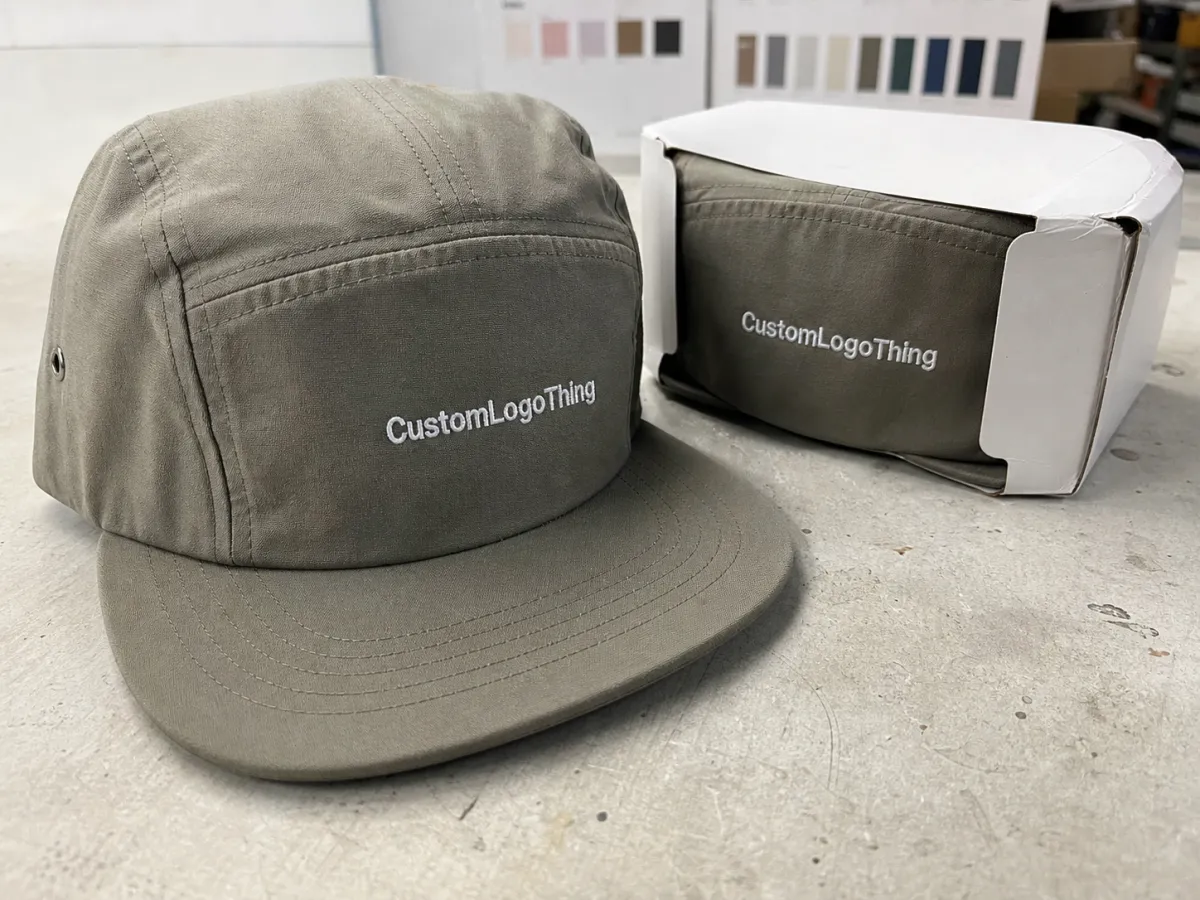
A five-panel cap is less forgiving than it looks. The front panel can appear crisp on a table, then collapse on a real head because the crown is shallow, the brim curve is wrong, or the fabric has more body than expected. That is where the sample earns its keep. It is a risk-control tool, not paperwork theater.
One approved sample can protect an entire run because it locks in the expensive-to-fix details: pattern shape, decoration placement, material hand-feel, and closure behavior. If the sample is wrong and the buyer approves it anyway, bulk production repeats the same error 500 or 5,000 times. That is not speed. That is just a larger mistake.
The approval process works best when buyer, merchandiser, decorator, and production lead review the same physical sample with the same notes. Different files, different screenshots, and different recollections are how "approved" products end up looking slightly different from the sign-off version. Slightly different is often enough to trigger rejects in retail, sports licensing, or corporate branding programs.
- Buyer: checks spec compliance, cost impact, and final use case.
- Merchandiser: confirms the sample matches the agreed tech pack and delivery schedule.
- Decorator: verifies logo size, stitch density, patch placement, and color accuracy.
- Production lead: checks whether the build can be repeated at scale without shortcuts.
"If it is not written down, it is not approved." That sounds blunt because it is true.
A sample also reveals how well the supplier communicates. If the factory already missed a seam note, changed a closure, or shifted the front panel depth without flagging it, those issues usually get worse in bulk. The sample is there to surface that early, while the correction is still cheap.
Sample approval process and lead time
A clean approval path usually moves in a simple sequence: tech pack, prototype, physical sample or sample photos, revision if needed, then final sign-off. Real projects rarely stay that tidy. Artwork changes, fabric sourcing delays, and internal review bottlenecks can turn a two-week sample into a month of small headaches. A disciplined approval checklist keeps each handoff visible so nobody pretends the clock started later than it did.
Timing depends on decoration and material complexity. A blank proto often lands in about 7-10 business days. An embroidered or patch sample usually needs 10-15 business days because artwork setup, stitch testing, and alignment checks take longer. If the first version needs changes, another 5-8 business days is common for the revision, plus courier time if the sample crosses borders. That is before anyone in your company says, "Can we see one more option?"
What slows approvals down most? Usually not the factory. It is the internal review chain. Someone compares the sample to memory instead of the marked-up spec. Someone else wants a "better" logo but never says whether that means larger, cleaner, or moved upward by 3 mm. A useful approval process shuts those arguments down with measurable notes.
If the sample is close but not acceptable, ask for a revised sample. If the remaining issues are cosmetic, documented, and low risk, written approval may be enough to move forward. The trick is separating a detail that changes the product from a detail that only changes the mood of the meeting.
For projects that will ship in cartons or retail packs, ask how the product will be packed and handled in transit. If the supplier claims the cartons are tested, a basic reference to [ISTA](https://ista.org) standards is a useful sanity check, even on smaller programs. It is cheaper to ask about damage risk before production than to discover crushed brims after arrival.
Fit, structure, and decoration checks that matter
Five-panel caps usually fail on shape before they fail on style. That means the first job is checking the structure, not staring at the logo. Look at crown height, visor curve, front panel tension, and closure range. A cap that looks right in a flat lay can still ride too high, sit too loose, or pinch once a head goes in it.
Most buyers should test the sample on at least three heads with different sizes or hair types. If the adjustable range is meant to cover roughly 54-62 cm, confirm it does not max out too early or leave the smallest wearer swimming in slack. The front panel should hold shape without folding like paper. The visor should curve evenly, not twist to one side under light pressure.
- Crown depth: check whether the cap sits mid-profile, low-profile, or deeper than expected.
- Panel tension: confirm the front panel is firm enough for decoration without looking stiff.
- Visor shape: compare the curve on both sides and check the seam line.
- Closure range: test the last notch, not just the comfortable middle.
- Inside finish: feel the sweatband, seam tape, and edge binding for rough spots.
Decoration needs the same discipline. Measure embroidery size, patch centering, print sharpness, thread match, and seam alignment under real light. A 50 mm logo can look perfect on screen and drift off center by 2 or 3 mm on the actual cap, which is enough to feel wrong to a merchandiser who knows the spec. The Five Panel Caps sample approval checklist should always compare the sample against the approved artwork file, not the version somebody resent two weeks later.
Construction details deserve attention too. Stitch density matters because loose stitching looks cheap and can unravel faster. Eyelet placement matters because crooked vent holes make the cap look tired before it has been worn. Sweatband comfort matters because nobody wants a hot forehead after 20 minutes outside. If the sample uses a softer fabric hand than the bulk fabric, ask for that difference to be stated in writing.
For fiber-based extras like inserts, hang tags, or sleeve cards, ask for FSC-certified board if your customer requires it. If certification is part of the brand promise, do not leave that detail buried in email. The material should be stated on the approval record, just like the cap itself. [FSC](https://fsc.org) is a useful reference if you need to confirm the certification path for paper-based components.
Pricing, MOQ, and unit cost checks
Sample approval is not only about appearance. It is also where cost drift shows up. A seller may quote a basic cap at one price, then quietly raise the number because the sample used thicker fabric, a better buckle, or a more complex logo treatment. If pricing is not reviewed during sample approval, it is easy to approve a cap that looks right and still miss the margin target.
Sample fees often live in a different world from production pricing. A plain pre-production sample may cost about $20-$45. An embroidered sample often lands around $45-$120 depending on stitch count and setup. Patch or woven label samples can run $60-$180 because the artwork and attachment method take more effort. Rush courier can add another $15-$60, depending on the route. None of that tells you the full production cost.
| Option | Typical sample fee | Production impact | Best use |
|---|---|---|---|
| Blank proto | $20-$45 | Minimal | Checking fit, panel shape, and visor curve |
| Embroidery sample | $45-$120 | +$0.20-$0.60 per unit at modest volume | Testing logo size, stitch density, and thread match |
| Patch or woven label sample | $60-$180 | +$0.25-$0.90 per unit depending on materials | Checking centered branding and edge finish |
| Rush revision sample | $30-$90 plus freight | Can raise per-unit cost if the spec changes again | Fixing urgent issues before bulk release |
MOQ matters because small runs can make a cap look more expensive than it really is. A supplier might quote 100 pieces, but the unit price at that level can be far higher than at 500 or 1,000 pieces. In practice, a custom five-panel cap with standard decoration might sit roughly in the $2.10-$4.80 ex-factory range at 500-1,000 pieces, while more complex builds can push higher. Add freight, duty, packaging, and import handling, and a landed unit cost of $3.40-$6.50 is not unusual for a decorated order. That range depends on destination, fabric, and decoration. There is no magic number, despite what some sales sheets imply.
Ask for landed unit cost, not only ex-factory price. If the order includes polybags, carton labels, hang tags, or insert cards, those should be counted too. Small packaging details can add $0.08-$0.35 per unit, which sounds tiny until it is multiplied by several thousand. The buyer who checks that math early is the one who stays out of finance meetings later.
Five panel caps sample approval checklist
Use the five panel caps Sample Approval Checklist as a controlled comparison, not a casual conversation. A cap sample should be reviewed against the tech pack line by line. If the sample is "close enough," that usually means somebody will discover the problem after the order is already in motion.
-
Compare the sample to the tech pack.
Check every stated detail: crown height, panel count, visor length, closure type, fabric, lining, and logo placement. Mark every deviation, even if it feels small. A 3 mm shift in embroidery position can matter more than people expect because it changes how the front panel reads on the head.
-
Fit it on real heads.
Do not approve a cap only because it sits well on a table. Test it on different head sizes, hair types, and closure settings. A five-panel cap should feel balanced at the front and secure at the back without clamping down like a vice.
-
Inspect under natural light.
Warehouse lighting hides thread mismatch and fabric tone differences. Daylight is less forgiving, which is exactly why it is useful. Check stitch tension, panel symmetry, color match, and the way the logo sits across seams.
-
Document the approval.
Save dated photos, written notes, and the final "approved for production" message in one place. If a dispute comes up later, nobody should be hunting through a messy inbox to find which version was actually signed off.
That is the point of the five panel caps sample approval checklist: a clear, repeatable way to say yes only after the important questions are answered. If fit, build, decoration, and pricing all line up, approval is easy. If one of those areas is still fuzzy, the factory needs another round of clarification, not a polite shrug.
Keep the approval record boring. Boring records are usually the ones that save money.
Common mistakes that cause rework and delays
The most common mistake is approving from a photo instead of a physical sample. Photos help, but they cannot tell you whether the crown feels stiff enough, whether the brim curves evenly, or whether the cap pinches at the temples. Fit and hand-feel need a real sample in hand. Anything less is optimism with a deadline.
Another mistake is fixing one issue and ignoring the rest because the sample is "close." Maybe the embroidery looks good, but the closure changed from the agreed buckle to a cheaper snap. Maybe the front panel shape is right, but the sweatband switched from cotton to polyester and now feels rough. The sample approval process needs a full review, not a one-item victory lap.
- Single-photo approval: risky for shape, fabric texture, and stitching.
- Loose spec control: dangerous when a factory interprets "similar" as "different but acceptable."
- Missing BOM review: how a closure, lining, or label gets swapped without notice.
- Scattered sign-off: one email here, one message there, and nobody can prove what was approved.
The bill of materials deserves special attention. If the sample uses a metal clasp, make sure the bulk order does not quietly move to plastic. If the sample has reinforced front panels, confirm that interlining stays the same. If the sample includes a woven label and the bulk order is supposed to use embroidery only, both cost and appearance change. That is exactly the kind of mistake that turns a decent order into a complaint.
Storage matters too. A cap sample, the notes on it, and the approval email should live together in one folder or one physical file. If they are split across three inboxes and a desk drawer, nobody has a clean reference when production starts. That is how small memory errors become expensive production errors.
Expert tips and next steps after approval
Once the sample is approved, do not treat the job as finished. Treat it as locked. Save the approved measurements, decoration details, materials, cost, and timeline in one file, then send that file back to the supplier with a clear production release note. The more explicit the sign-off, the less room there is for creative interpretation later.
Keep the approved cap with its annotated photos. If a supplier or internal team asks what the right version was, the answer should be one folder, not a scavenger hunt. Production teams work faster when they are matching against a clean reference instead of trying to decode a chain of old messages.
Here is the practical handoff list I would use:
- Send the final approved sample photos with date stamps.
- Confirm the approved measurements and decoration placement in writing.
- Lock the materials list, including fabric, closure, labels, and packaging.
- Ask for a written production lead time and shipping window.
- Keep one physical sample if the order is high value or repeatable.
If anything still feels unclear, ask for one more revised sample instead of hoping the supplier reads your mind. Notes are cheaper. Rework is not. The most reliable buyers use the five panel caps sample approval checklist to cut back-and-forth, protect margin, and keep the order moving without surprises in bulk.
FAQ
What should a five panel cap sample approval checklist include?
Confirm crown depth, panel count, visor shape, closure type, and logo placement. Compare the sample against the tech pack, not memory or a mood board. Save dated photos and written sign-off so the factory has one clear reference.
How many sample rounds are normal for five panel caps?
One round is possible for simple blank caps; decorated caps often need two. Allow extra time for fabric matching, patch approval, or embroidery size changes. More than two rounds usually means the specs were too loose at the start.
What measurements matter most before I approve the cap sample?
Check crown height, front panel width, visor length and curve, and closure range. Fit the cap on real heads instead of judging it from a tape measure alone. Verify left-right symmetry so the cap sits straight when worn.
How do I check decoration quality on a five panel cap sample?
Inspect centering, stitch density, edge clean-up, and color match in daylight. Look at the back side of embroidery or patch attachment for loose threads or weak bonding. Confirm the artwork size matches the approved file, not an older revision.
When should I approve a five panel cap sample if the timeline is tight?
Approve only after the must-fix items are resolved; do not trade structure problems for speed. If time is short, prioritize fit, decoration placement, and bill of materials over minor cosmetic tweaks. Ask the supplier for a revised lead time in writing before you give final sign-off.
What should I do if the sample is close but not perfect?
List the exact changes, rank them by impact, and ask for a revised sample if any issue affects fit, branding, or cost. A close sample is useful only if the remaining differences are documented and accepted. The five panel caps sample approval checklist works best when "close enough" is not the decision rule.