Bakery woven label beanies unit cost review: what drives the price
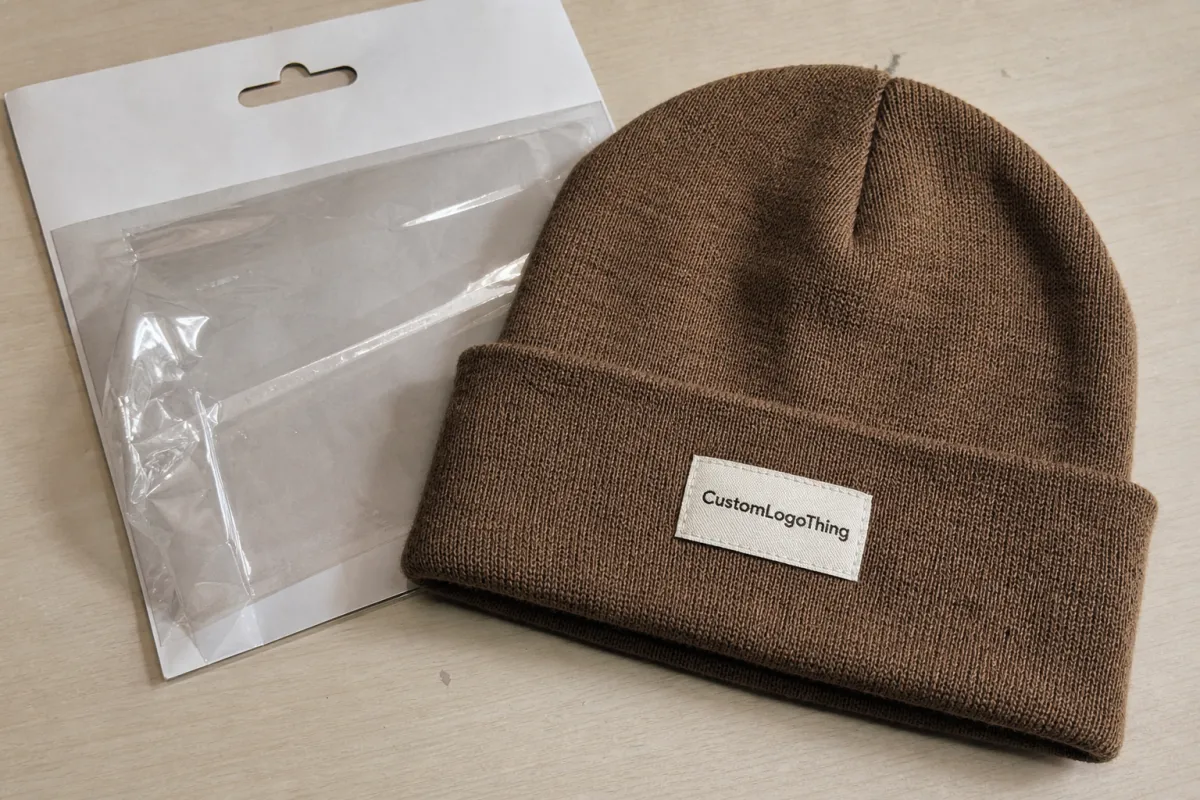
A bakery Woven Label Beanies unit cost review sounds narrow. It is not. Once the hat is branded, the cost is shaped by the knit, the label, the sewing method, the pack-out, and how picky the buyer is about finish. The woven label is often the most visible part of the product, so a cheap body with a bad label can still look expensive in the wrong way.
That is the part many teams miss. A beanie is not just headwear. For a bakery brand, it sits beside pastry boxes, coffee cups, apron programs, holiday bundles, and staff gifts. The item has to look intentional in a retail photo, not just pass a spreadsheet test.
Unit cost usually moves on a few predictable levers: yarn type, gauge, cuff construction, label color count, label size, stitching time, packaging, freight, and whether the supplier is quoting true landed cost or only factory price. If a quote looks unusually low, one of those pieces is probably missing.
For this category, the most common mistake is overspending on decoration and under-specifying the base. A clean 1x1 rib cuffed beanie with a centered woven label often performs better than a fancier knit with awkward placement. Simple is not lazy. Simple is easier to produce, easier to photograph, and easier to reorder without drama.
A woven label that reads cleanly at arm's length usually does more for perceived value than an extra color in the knit body. Customers notice the logo first. They touch the handfeel second.
- Base yarn: acrylic is usually the cheapest stable option, cotton blends feel softer, wool blends feel warmer, recycled yarns add story but can vary more in hand.
- Label complexity: more thread colors, finer type, and tighter detail increase cost and sample time.
- Attachment method: standard sew-on is usually the lowest-risk choice; patch-style and specialty finishes take more labor.
- Packaging: individual polybags, paper bands, hang tags, and retail cartons all add to the real unit cost.
- Order size: low MOQ runs nearly always carry a higher per-piece price, even when the spec is simple.
For bakery merch, the right question is not "How cheap can I make it?" It is "How do I make the item look good enough to sell or gift without paying for unnecessary extras?" That question tends to produce better buying decisions than chasing the lowest line item in isolation.
Beanie structures and label placement that actually work
Cuffed, slouch, and fisherman beanies behave differently once a woven label is attached. A cuffed beanie gives the cleanest front panel and the easiest reading angle. A slouch beanie usually needs more restraint because the fabric drape pulls attention away from the front. Fisherman styles are tighter and more minimal, which means a smaller label often looks more believable than a large branded patch.
Placement changes both the look and the labor. Center-front on the cuff is the most merch-friendly. It photographs well. It is also the easiest to standardize across a run. A side-seam label can feel more premium and quieter, which suits a bakery brand that wants a tasteful retail item instead of a loud promo cap. The trade-off is consistency. Small placement shifts become obvious fast on a knit surface.
The knit structure itself matters more than buyers expect. A tighter gauge gives the label a flatter base, so the logo reads more cleanly. Loose knits are softer and more relaxed, but the surface can distort under the label if the sewing tension is off. That creates puckering. Puckering is the enemy. It makes even good artwork look rushed.
For bakery use, the safest design is often a cuffed rib knit with a restrained woven label on the front cuff or just off center. It feels polished without trying too hard. That matters in a gift set or staff merch program, where the hat needs to sit comfortably beside branded packaging rather than fight it.
Fit still counts. If the beanies are meant for retail sale or bundled gifts, check the stretch recovery, seam comfort, and cuff depth. A label that scratches, curls, or twists after a few wears will cost more than it saved. Not directly, but in repeat demand. And that is the real bill.
If the beanie is part of a broader branded kit, keep artwork rules consistent across packaging and accessories through Custom Labels & Tags. A unified spec saves time later when different products need the same logo treatment.
Specs to lock before sampling: yarn, knit, label, and finish
Sampling goes faster when the spec is boring. That is a compliment. Boring specs are clear specs. Clear specs get cleaner quotes and fewer revision loops.
Start with the yarn. Acrylic remains the most common cost-controlled option because it holds color well, ships predictably, and does not punish the buyer on price. Cotton blends feel more natural and usually have a softer hand. Wool blends feel warmer and more premium, but the cost rises, and so does the risk of texture variation if the lot mix is not tight. Recycled yarn is a decent fit for brands that want a lower-impact story, though it can be less uniform from one mill run to the next.
Then lock the knit direction. A 1x1 rib is common because it stretches cleanly and looks familiar in retail. A denser gauge usually supports a cleaner label seat. If the knit is too loose, the label can sit unevenly or show the backing through the surface. That is not a disaster. It is just the kind of thing that becomes visible the moment a product hits a shelf under warm light.
The woven label should not be left vague. Confirm size, color count, backing or fold style, edge treatment, and thread density. If the logo includes tiny text, thin rules, or a fine icon, expect some simplification. Woven labels have limits. They are threads, not a print file pretending to be threads.
- Size: 25 x 40 mm, 30 x 50 mm, or custom proportions depending on the visible area.
- Color count: one or two colors usually keep costs down; three or more colors can make the label look busy if the art is already dense.
- Edge finish: merrowed edges feel durable and classic; folded or laser-cut edges can look cleaner on more minimal designs.
- Attachment: sew-on is still the most common method because it is durable and easy to inspect.
- Placement sketch: never skip it. A good sketch saves more time than another email thread ever will.
Finishing choices can move the quote more than people expect. A folded label sits flatter. A merrowed edge can add visual weight. A patch-style finish can create a stronger brand read, but it also adds labor and can make the beanie feel less soft against the hand if the placement is too aggressive.
Approve samples in the same light you expect the product to live in. Bakery lighting is usually warmer than office light, and that changes how colors read. A navy label can look sharp in a studio and muddy next to a dark box under amber retail lighting. That is a real problem, and it is easy to catch early if the sample is judged in context.
One more practical point: do not rely on color names like "cream" or "red." Use PMS values, pantone references, or physical chips whenever possible. Names invite interpretation. Interpretation costs money.
For buyers who want a label-heavy product system, the safest route is to think in components. The hat, label, and outer packaging should all be spec'd together. That reduces mismatch and makes reorders easier when the item becomes more than a one-off promotion.
How MOQ and bulk pricing change the unit cost
This is where a bakery Woven Label Beanies unit cost review becomes useful instead of decorative. MOQ changes everything. A small run often carries the pain of setup, sampling, and labor without the benefit of scale. The per-piece price looks worse because it is worse. That is normal.
The important part is knowing where the price breaks happen. A 300-unit order may be perfectly reasonable for a seasonal test, but a 500-unit or 1,000-unit run often gets much better bulk pricing if the design is stable and the label setup does not need special handling. If the supplier is not willing to show those breakpoints, the quote is incomplete.
| Order tier | Typical build | Approx. unit cost | Common setup charges | Buyer note |
|---|---|---|---|---|
| 300 units | Acrylic cuffed beanie, 1-color woven label, sew-on finish | $4.20-$5.80 | $45-$90 | Useful for seasonal tests, staff merch, or a short retail run |
| 500 units | Acrylic or cotton-blend body, 2-color label, standard packing | $3.40-$4.60 | $35-$70 | Usually the best balance between flexibility and price |
| 1,000 units | Recycled acrylic or wool blend, woven label, branded polybag | $2.65-$3.75 | $0-$40 | Better for repeat retail programs or multi-season planning |
Those numbers are planning ranges, not a promise. Yarn source, labor market, label detail, freight mode, and the supplier's queue all move the final figure. But the pattern is reliable: more volume lowers unit cost, and more complexity raises it.
Setup charges are not a red flag by themselves. A new woven label often needs loom setup, artwork preparation, or cutting preparation. That fee should be called out early and explained once. The problem is surprise. A supplier who hides the fee until the last quote revision is telling you how the rest of the process will go.
Freight belongs in the cost review from the beginning. A quote that looks fine ex-factory can become poor once cartons, domestic delivery, and shipping method are added. Air is fast. It is also expensive. Sea is cheaper. It is also slower. No one gets to ignore that trade-off.
A smart buying move is to request three prices: a minimum order scenario, a target order scenario, and a scale scenario where the product gets meaningfully cheaper. That gives merchandising and finance a shared view of where the economics start to improve.
If packaging is part of the order, include it in the same comparison. A branded polybag or insert card can add little on paper and a lot once you hit the full run. The total should be judged as a system, not as isolated pieces pretending to be separate.
Production flow, turnaround, and the approval points that matter
The production path is straightforward on paper: brief, mockup, sample, approval, bulk knitting, label attachment, inspection, packing, shipment. In real life, the slow part is usually the handoff between those steps.
Artwork feedback comes back late. Color decisions get revisited after the sample arrives. Packaging gets added after the run is already priced. That is how a six-step process turns into a twelve-email delay.
Simple orders are faster. A standard cuffed beanie with a one-color woven label and basic packing can move quickly once the art is approved. More detailed runs need more time because every extra color, fold, or attachment step adds risk. For planning, smaller orders often land in the 12-15 business day range after final approval, while larger or more customized orders can take longer depending on factory load and seasonal demand.
- Approve artwork: confirm logo shape, proportions, label size, and placement before the sample is made.
- Confirm color references: use PMS values or physical swatches instead of loose descriptions.
- Review the sample: check readability, seam feel, stretch recovery, and label alignment in real lighting.
- Lock packaging: decide on polybags, paper bands, inserts, or cartons before bulk starts.
- Release production: do not keep changing specs after the factory has started knitting or attaching labels.
Bakery promotions usually have a seasonal clock attached to them. Holiday drops, staff gifting, and event merch do not wait for late approvals. The order needs a backward schedule. If the launch date is fixed, the sample window is the real deadline. Miss that, and the rest of the timeline shrinks fast.
There is also a practical reason to freeze the spec early: reorders become much easier. If the first run is documented cleanly, the second run usually gets closer to the same result with less back-and-forth. That is worth more than a tiny upfront saving that creates chaos later.
For buyers shipping bundled merchandise or boxed gift sets, transit testing and carton strength deserve attention. The transit-test resources at ISTA are useful when the beanies are packed with other items and need to survive distribution without ugly crush marks. If the outer packaging uses paperboard or fiber-based materials, FSC standards help frame the sourcing conversation without drifting into vague sustainability talk.
Quality control a supplier should be able to show
A good quote is useful. A repeatable product is better. The easiest way to judge a supplier is to ask what they inspect and how they handle mistakes.
For woven-label beanies, the obvious checks are label alignment, color consistency, stitch strength, sizing, and packing accuracy. The less obvious ones matter too: does the label curl after sewing, does the knit twist under tension, and does the cuff sit flat when folded? These are small defects. They still change how premium the item feels.
Ask for plain evidence. Production photos. Close-ups of the label edge. Notes on whether the bulk batch matched the approved sample. A supplier that can explain the delta between sample and bulk is usually easier to trust than one that replies with polished generalities and no detail.
Price behavior matters as much as QC. If a quote keeps changing, the process is probably still fuzzy. Good suppliers separate one-time charges from recurring charges, which makes reorders cleaner. Bad suppliers hide fees in a way that forces comparison work on the buyer. That is not efficient. It is just annoying.
For bakery brands that plan more than one merch drop, standardization is the quiet win. Keep one knit body and change only the woven label artwork by season or campaign. That keeps the product family coherent and usually protects the cost structure. If the artwork system needs to travel across several products, keep the master files tied to Custom Labels & Tags so the same logic applies everywhere.
One more caveat. Not every supplier is set up for the same level of detail. Some are great at fast, simple, high-volume runs. Others handle small, detailed work better. Matching the supplier to the spec matters more than finding the cheapest name in the inbox.
Quote-ready brief and sample comparison
The cleanest way to get a useful quote is to send a brief that removes guessing. Include the logo file, beanie style, cuff preference, woven label size, color references, quantity tiers, packaging requirement, and delivery target. If the product is for retail, gifting, or promotion, say so. The use case changes the pack-out and sometimes the finish.
Ask for at least two quote paths. One should reflect the smallest workable MOQ. The other should reflect the quantity you actually expect to buy. That comparison shows where the real cost per piece starts improving, and it keeps everyone honest about what scale can and cannot do.
Sample review should happen in context. Place the beanie next to the bakery box, the apron, or the gift set it will ship with. Do not judge it only against a white desk and a screen. The product has to work in the environment where customers will see it.
Check three things first: readability, comfort, and finish. If the label is hard to read at a normal distance, the design is probably too busy. If the seam feels scratchy, customers will remember that faster than the logo. If the label sits crooked or puckered, the piece reads as rushed, no matter what the mockup looked like.
That is the real value of a bakery woven label beanies Unit Cost Review. It turns a fuzzy branded-merch decision into a practical buying decision. Confirm the spec. Confirm the cost. Confirm the timing. The order gets much easier after that.
Frequently asked questions
What drives the unit cost in a bakery woven label beanies order?
Material choice, knit density, label detail, attachment method, and order size usually move the price most. Packaging and freight can matter just as much as the hat itself once the order is fully landed. If a quote skips setup or shipping, it is not a full comparison.
What MOQ is typical for custom bakery woven label beanies?
MOQ varies by supplier and by how detailed the label is. Smaller runs are possible, but they usually carry a higher unit cost because setup gets spread across fewer pieces. Ask for both entry-level and target-volume pricing so the breakpoints are obvious.
How long does production usually take after approval?
Simple orders can move quickly after artwork and sample approval, while more customized runs take longer because of label preparation, sewing, and packing. A reasonable planning range for smaller orders is often around 12-15 business days after approval, but queue time and seasonality can extend that. Final timing depends on how fast the spec is frozen.
Can bakery colors be matched on the knit and woven label?
Yes, but exact matching depends on yarn and thread availability. PMS references or physical swatches are much more reliable than color names. The safest check is a sample reviewed in the same light where the product will actually be seen.
What should I send for an accurate quote on woven label beanies?
Send artwork, quantity tiers, beanie style, label size, color references, packaging details, and your delivery target. Include whether the order is for retail, gifting, or promotional use, because that changes the specification and the packing method. Clear briefs get cleaner quotes.


