If you are buying beanies for staff, clients, or event kits, the real question is not “how thick should they be?” It is whether the hat feels intentional in someone’s hand and still works as a wearable piece of branding. That is the whole point of a corporate gifting Woven Label Beanies Material thickness guide: pick a knit weight that looks premium, packs well, and survives real-world use without turning into a bulky winter brick.
Thicker is not automatically better. A loose heavy knit can look sloppier than a midweight beanie with a flat cuff and a clean woven label. The label, yarn, stitch density, cuff depth, and lining all affect the final result. Ignore one of them and the beanie starts fighting itself.
A good branded beanie should get worn twice, not admired once and forgotten in a drawer.
Corporate Gifting Woven Label Beanies Material Thickness Guide
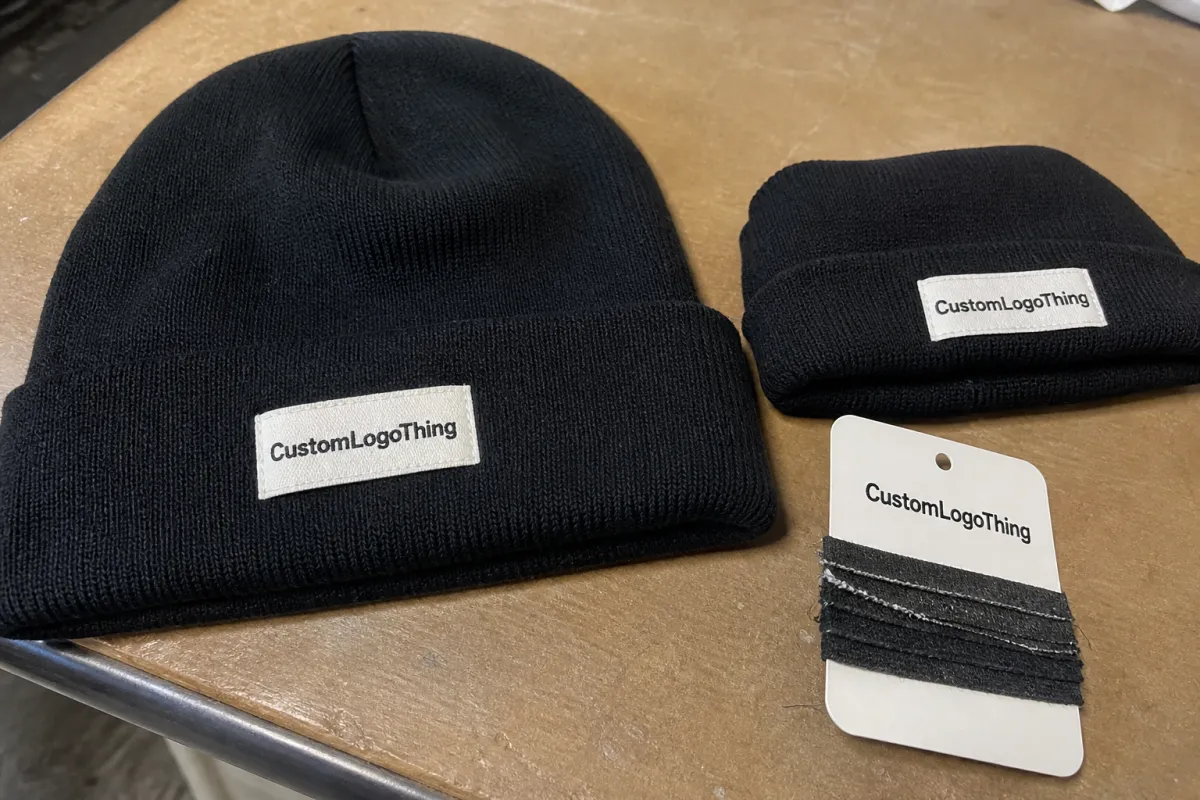
Thickness sounds simple until you try to buy at scale. The number on a spec sheet matters, but it does not tell you everything. A 70-90g beanie can look sharper than a 140g one if the knit is tight, the crown shape is stable, and the woven label sits flat. That is why the corporate gifting woven label Beanies Material Thickness guide works better as a set of tradeoffs than a one-number rule.
In corporate gifting, people judge fast. They open the box, feel the fabric, check the logo, and make a decision in seconds. If the beanie collapses, twists, or feels oddly stiff around the cuff, the gift loses value before anyone wears it. The hat is not a technical cold-weather product for most recipients. It is a brand object. That means it has to look easy, even when the construction behind it is not.
The safest rule is usually this: choose the lightest or midweight option that still holds shape, warms the ears, and gives the woven label a stable surface. For many programs, that lands in the 90-120g range. Heavyweight styles have their place, especially for colder regions or winter field teams, but they should be a deliberate choice rather than a default. More fabric does not rescue weak design.
One more thing buyers often miss: knit weight and bulk are not the same. A beanie can be dense without feeling oversized, or thick without feeling warm in a useful way. If the knit is loose, the hat may stretch too much. If it is too tight, it can feel restrictive and bring out every tiny flaw in the label placement. The best sample feels balanced before it looks impressive.
How Woven Labels Affect Knit Density and Comfort
A woven label is small, but it changes how the beanie behaves. It adds a touch of stiffness wherever it is sewn, especially on soft acrylic or low-gauge knits. Put a larger label on a thin cuff and the edge can ripple. Put a tiny label on a chunky rib and it disappears completely. Neither is ideal.
Label construction matters more than most people expect. Damask labels usually give the best detail for logos, type, and small lines. Satin labels have a smoother surface and can look dressier, but they do not always hold tiny text as clearly. Folded labels are flexible to sew. Merrowed-edge labels feel more finished on thicker knits, though they also add visual weight. The same artwork can work beautifully on one base fabric and look clumsy on another.
Placement matters too. Front-cuff placement is the obvious choice because it is visible, but visible does not always mean best. On softer beanies, a side-seam label or slightly lower cuff placement can keep the hat wearable instead of overbranded. That becomes even more important when the label is wider than 40-50 mm. At that scale, the cuff needs enough structure to stop the fabric from slumping.
Fine-gauge beanies support more detailed graphics because the knit surface is tighter and more even. Chunkier knits work better with bold lettering, stronger contrast, and simpler marks. If a design depends on tiny text, it may look crisp in artwork and fuzzy in reality once the beanie stretches on a head. That is not a print problem. It is a fabric problem.
Good label setup also depends on attachment quality. Loose stitching, puckered corners, or a label that was trimmed too close can all make a premium knit look careless. Buyers do not need the sewing terminology. They just need to know whether the label sits flush, stays centered, and survives stretching without curling. That is what a physical sample is for.
If you are still sorting trim specs, a dedicated label reference helps keep the artwork and placement from drifting during quoting. For sewn-in branding and tag options, Custom Labels & Tags is the kind of internal anchor that keeps production notes from turning into a guessing game.
Material Choices That Change Warmth, Shape, and Feel
Material choice is where most of the wear experience gets decided. A plain acrylic beanie, especially in the 90-110g range, is still the workhorse for corporate gifting. It is predictable, easy to color match, and usually friendly to the budget. Not glamorous. Very useful. There is a reason those two things keep showing up together.
Wool and wool-blend beanies feel more premium right away. They usually hold warmth better and recover shape cleanly after wear. The tradeoff is cost and comfort. Pure wool can itch, and even good blends need clearer care instructions than acrylic. A 70/30 wool-acrylic blend often hits the practical middle: warmer and more refined than plain acrylic, but less temperamental than full wool.
Recycled fibers also deserve a serious look, especially if the gift program already has sustainability requirements. Recycled polyester and recycled acrylic can work well, but the hand feel depends on fiber quality and knit density. Recycled does not automatically mean soft or premium. It means the base material was sourced differently. That is a useful distinction.
Lined beanies are a different category. Fleece lining adds warmth and a more finished feel, but it also adds volume and can tighten the fit. That matters for mixed audiences. If recipients are mostly outdoors, the extra warmth may be worth the tradeoff. If the beanie is part of a welcome box for office staff or event attendees, a lighter knit often gets more wear because it is easier to throw on.
| Style | Typical Weight | Feel and Fit | Approx. Unit Cost at 500 pcs | Best Use |
|---|---|---|---|---|
| Lightweight acrylic | 70-90g | Soft, packable, less structure | $1.10-$1.80 | Indoor events, mild climates, large giveaways |
| Midweight acrylic or blend | 90-120g | Balanced warmth, better cuff shape | $1.35-$2.20 | Most corporate gifting orders |
| Heavyweight or lined | 120g+ | Warmer, bulkier, more structured | $1.80-$3.20 | Cold-weather campaigns, premium winter kits |
Midweight usually wins for gift programs. It gives the label enough structure to sit neatly and still feels practical on real heads. That is more useful than a beanie that is technically warm but so heavy that nobody wants to wear it indoors.
Packaging can shift the perception too. If the beanie ships in corrugated cardboard mailers, kraft sleeves, or retail-style inserts, the presentation feels more deliberate. If the outer pack uses FSC certified paperboard or recycled content, the sustainability story becomes easier to explain. For broader references, fsc.org and epa.gov/recycle are better starting points than empty marketing claims.
Cost, MOQ, and Unit Price: What Drives the Quote
Price usually moves in ways you can predict. Heavier yarn uses more material. Tighter knit density takes more machine time. Lining adds assembly steps. Larger woven labels increase trim cost and sewing time. Once you know those levers, the quote stops feeling random.
MOQ matters because setup costs do not disappear when the order gets smaller. A 100-piece order may require the same artwork prep, label development, and sampling work as a 1,000-piece order. Spread across fewer units, that cost hurts more. That is not a supplier trying to be clever. It is simple math.
If budget is tight, keep the first spec restrained. One main yarn color, one label size, one cuff construction. That is often enough to deliver a polished result without pushing the quote into silly territory. Complexity should earn its keep. If it does not add value that the recipient will notice, it is probably extra.
Ask for pricing at multiple quantities. Sometimes the jump from 300 to 500 pieces is minor, then the 1,000-piece tier improves noticeably. Other times a label change, color change, or packaging change eats the savings. It helps to compare like with like instead of comparing a neat midweight sample to a heavily customized spec that only sounds similar on paper.
If the beanies are part of a gift set, ask how the whole kit is packed. Outer cartons, inserts, and sleeves affect landed cost and also affect how the product arrives. For shipping, it is worth checking whether the box or master carton should follow an ISTA test profile. Nobody wants a crushed box and a creased beanie on arrival. That kind of surprise is memorable for the wrong reason.
One practical caveat: yarn pricing can move, and so can freight. A clean quote should separate product cost, sampling, packaging, and shipping wherever possible. Bundled numbers are convenient until you need to compare suppliers. Then they become fuzzy very quickly.
Production Steps and Lead Time: From Sample to Shipment
The production path should be plain and boring. Spec sheet, mockup, sample, approval, bulk knitting, label sewing, QC, packing, shipment. If any of those steps are vague, the schedule gets vague with them. And vague schedules always become expensive later.
Typical timing is easy to estimate. Sample development often takes 5-10 business days. Bulk production often takes 15-30 business days, depending on factory load, knit complexity, and how many revisions the label artwork needs. Shipping adds its own timeline, which can swing widely by destination and season. International freight is never in a hurry unless you are paying for it.
Lead time stretches when the build gets more complicated. Thick knits can take longer to stabilize. Custom yarn colors may need matching. Lined beanies add assembly work. Even a small label revision can trigger another proof. If the event date is fixed, plan backward and leave room for approval delays. The fastest way to create an expedite fee is to discover your “final” artwork was not actually final.
Ask what happens after approval. Some teams talk about knitting and forget the part where the beanies are packed. If the product is going into gift kits, confirm whether they ship flat, folded, polybagged, or boxed. The packing format changes presentation, carton density, and how much the hat wrinkles in transit. A beanie can be perfectly made and still arrive looking tired if the packing was lazy.
Natural-light sample photos are worth requesting. Mockups hide a lot. Real knit texture, label contrast, and cuff balance shift depending on yarn shade and stitch density. A photo of the final sample in daylight usually tells you more than three pages of polite email optimism.
One more production detail that buyers tend to skip: confirm the acceptance point. Is approval based on the digital mockup, the physical sample, or the pre-production photo? That answer matters when something subtle changes between stages. If nobody defines it early, everybody gets annoyed later.
Thickness Mistakes That Drag Down Gift Value
The first mistake is overbuying warmth. A heavy beanie sounds premium, but if the audience lives in mixed climates or wears the hat mostly between buildings, it becomes a drawer item. Utility drives wear. Wear drives brand impressions. That chain is boring, but it is real.
The second mistake is ignoring the balance between label size and fabric strength. A large woven label on a thin cuff can distort the knit and make the front look overworked. A tiny label on a chunky beanie can disappear entirely, which makes the branding feel timid. Neither result does the product any favors.
The third mistake is approving from mockups alone. Thread sheen, texture, and color contrast all change in real light. Navy on charcoal can look sleek on screen and vanish in person. Bright white can feel too loud on a ribbed knit once it is actually sewn in. If the order is a premium client gift, that difference matters.
Fit also gets overlooked. Beanies stretch, but not infinitely. Too tight, and they feel unpleasant after a short wear. Too loose, and they slump or lose their shape after one use. A good sample should stretch comfortably over different head sizes and recover without getting wavy. That is not a luxury detail. That is the basic job of the product.
Practical QC test: have someone wear the sample for 20 minutes, remove it, and inspect the cuff, crown, and label edge. If the cuff stays flat and the label does not curl, you are close. If the crown bags out or the label starts lifting, the thickness or construction needs another pass.
Another detail worth checking is stitching tension around the label. If the seam is too tight, the knit can pucker. Too loose, and the label can shift after wear. That is the kind of defect that slips through on a screen but shows immediately once the beanie is handled. It is also exactly why a single close-up sample photo is not enough.
Order Checklist for Samples, Sizes, and Approval
Before asking for a quote, lock the basics. Quantity, budget, recipient climate, event date, and packaging format should already be defined. Otherwise suppliers are guessing, and guessed specs make bad comparisons.
Build a simple side-by-side review with lightweight, midweight, and heavyweight options. Put the weight, feel, label size, unit price, and turnaround next to each other. That makes the choice concrete. A beanie does not need to “feel premium” in a vague sense. It needs to hold shape, wear comfortably, and carry the logo without drama.
For samples, request one of three things: a physical sample, a flat-lay photo with a ruler, or a close-up of the woven label on the cuff. The ruler shot is underrated. It makes label scale and cuff depth much easier to judge. If the supplier can also show the beanie next to the intended packaging, even better. Presentation should be visible, not assumed.
- Confirm the weight range: 70-90g, 90-120g, or 120g+.
- Confirm label specs: damask or satin, size, fold, and placement.
- Confirm materials: acrylic, wool blend, recycled fiber, or lined build.
- Confirm packaging: polybag, kraft sleeve, insert, or gift box.
- Confirm proofing: mockup, sample photo, and final approval point.
If the beanies are part of a larger branded kit, the trim and packaging should match the rest of the set. A clean woven label looks better when the boxes, sleeves, and inserts use similar paper quality and finishing. The details do not need to shout. They just need to agree.
Use the corporate gifting Woven Label Beanies material thickness guide as the final filter: comfort, logo clarity, cost, and lead time all have to line up. If one of those four feels off, keep adjusting. That is how you avoid ordering a pile of beanies that look fine in a spreadsheet and ordinary in the hand.
What thickness is best for corporate gifting woven label beanies?
Midweight is usually the safest choice. It feels substantial without becoming bulky or too climate-specific. In practice, 90-120g works well for many corporate programs because it gives the cuff enough structure for the woven label to sit flat.
Does a woven label make a beanie feel thicker?
Yes, but mostly at the attachment point. The effect is stronger on soft or thin knits and smaller on dense, structured beanies. Label size, backing, and placement matter more than most buyers expect, which is why a sample is worth the wait.
How does thickness affect price and MOQ for custom beanies?
Thicker yarn, tighter knit density, and lining increase material use and labor, so unit cost rises. Lower quantities also spread setup costs over fewer pieces, which pushes the price up. Simpler specs usually keep MOQ and pricing more predictable than highly customized builds.
What lead time should I plan for woven label beanie orders?
Plan for sample development, then bulk production, then shipping. Sample work often takes 5-10 business days, while bulk production often lands around 15-30 business days. Add buffer for revisions, holidays, and freight delays.
What should I include when requesting a quote for beanie thickness options?
Send quantity, target budget, recipient climate, and event date first. Then add material preference, approximate weight or gauge, label size, label placement, and packaging details. Asking for pricing at multiple quantity tiers makes the unit-cost breakpoints much easier to see.
That is the cleanest way to buy custom headwear without overpaying for warmth nobody needs. If the thickness, label, and packaging all support each other, the final gift feels considered instead of generic. Small difference. Big effect.


