Baseball Caps for Retail Resale: Buy the Right Stock
Baseball caps for retail resale are won or lost on consistency, not on the mockup alone. A cap can look polished in a product render and still fail the moment it reaches a receiving dock with a bent brim, a loose closure, or a crown that collapses after handling. Once that happens, the problem is no longer the unit price. It is the labor, the markdowns, and the lost confidence that follow.
Retail buyers usually need a cap that photographs cleanly, sits well on shelf, and can be reordered without changing the customer experience. That sounds simple, but the details add up fast. Stitching density, panel shape, fabric weight, closure style, carton pack-out, and even how the cap is folded or stored in transit all affect the result. A cap that performs in a store fixture for weeks has already done more work than a promotional cap ever had to do.
Packaging is part of the product, not an accessory to it. The carton, polybag, insert, hang tag, and case pack all shape what the retailer receives, how the warehouse handles the shipment, and how much time the store spends recovering shape. If those pieces are ignored, the cap may still sell, but it will sell with friction.
What Baseball Caps for Retail Resale Really Means
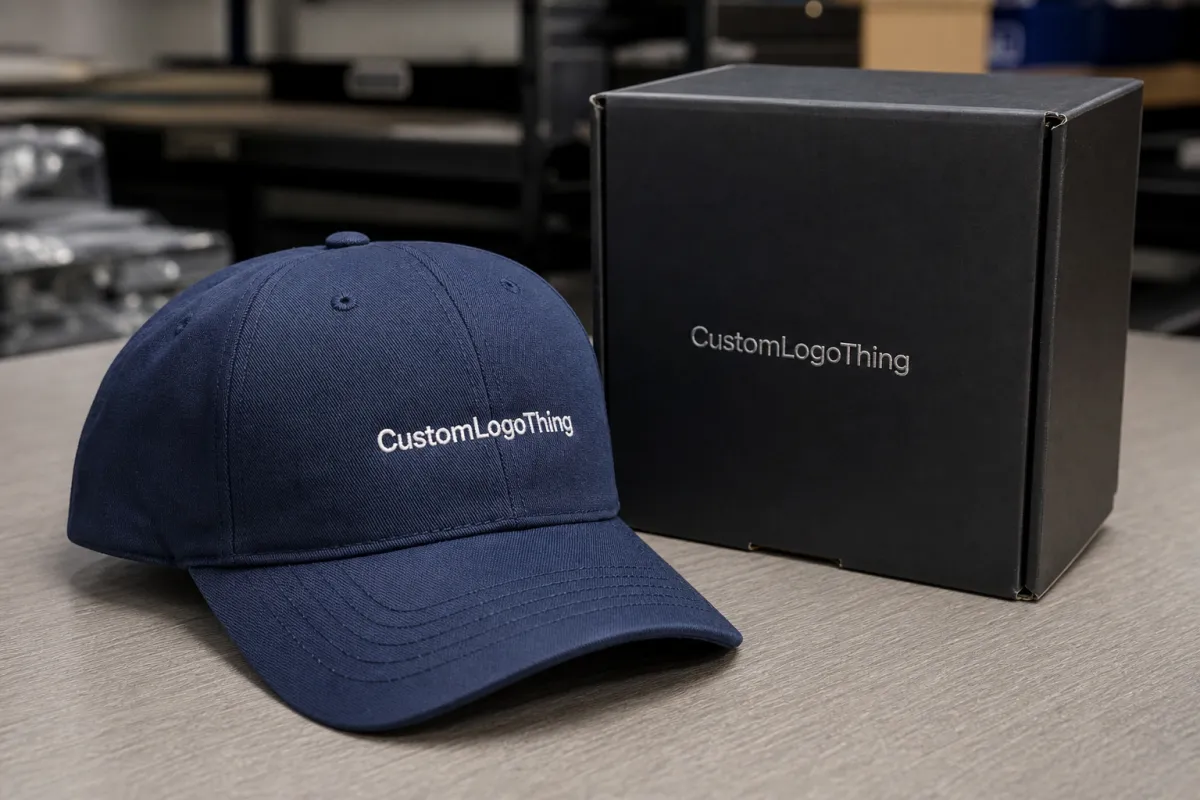
In a retail setting, baseball caps for retail resale usually refers to a finished SKU that can live on shelf as part of a repeatable assortment. It is not just a blank hat waiting for decoration. It needs to feel complete the moment it is unpacked. That means the crown should hold structure, the brim should keep its curve, the decoration should be positioned correctly, and the packaging should protect the product through transit and stocking.
Shoppers may not describe the defect, but they feel it immediately. A front panel that buckles, a visor that sits unevenly, or a closure that feels flimsy can drag down the whole impression of the item. A slightly higher landed cost often makes sense if it avoids those issues. In accessories, small differences in quality can create large differences in sell-through.
Retail buyers also need to think differently from promotional buyers. Promotional orders often favor speed and volume. Retail resale needs repeatability, cleaner construction, and packaging that supports merchandising. The cap has to hold up under store lighting, repeated handling, and a long enough display period that customers notice any weakness. That is why the spec matters as much as the logo.
A practical way to judge the category is to ask one question: Can this exact cap be sold again six months later without surprising the customer or the warehouse? If the answer is uncertain, the program needs a tighter specification before any bulk order is released.
For shipments that will move through several handling points, transit performance should be measured rather than assumed. Industry testing references such as ISTA are useful for defining what “arrives intact” should mean in physical terms.
How Retail Sourcing and Reordering Works
There are three common sourcing paths for baseball Caps for Retail Resale: stock blanks, private-label programs, and fully custom builds. Each one serves a different business model, and the wrong choice can tie up cash in inventory that does not move quickly enough.
- Stock blanks are the fastest route. They are useful for testing a new category, filling a short-term need, or decorating a simple logo on a style that already exists.
- Private-label programs give more control over color, labeling, and packaging while still using an established silhouette. They usually require firmer minimums and a little more lead time.
- Fully custom runs provide the most control over the finished product, but they also ask for the most planning. Artwork approval, trim selection, and packaging instructions all need to be locked early.
Assortment planning should start before the quote request, not after. The strongest retail programs usually begin with one core silhouette, one or two closure types, and a tight color palette. That keeps inventory easier to manage and makes the first reorder simpler. A broad launch can look exciting on paper and still underperform if every color is spread too thin.
Sample review should happen in a sequence. First approve the blank or base style. Then review the decorated pre-production sample. Then check the final packaging and case pack. If those steps are compressed, the bulk order tends to inherit small mistakes that become expensive later. A carton label, an insert size, or a case count may seem minor until the warehouse is trying to receive hundreds of units quickly.
Retail ordering also depends on the handoff between supplier and warehouse. Purchase order timing, delivery windows, pallet instructions, and receiving labels should match the store launch schedule. Mixed cartons, unclear case packs, or late changes to labeling usually create labor for the retailer. That labor cost rarely appears in the supplier quote, but it still lands on the margin.
Cost, MOQ, and Unit Economics
Unit price only tells part of the story. The real cost of baseball caps for retail resale includes decoration, hang tags, packaging, freight, duty, inspection, warehouse handling, and occasional spoilage from damage or mispackout. A cap quoted at $2.80 can land closer to $4.10 once those items are added. That is still workable in many programs, but only if the shelf price leaves room for margin and markdowns.
MOQ should be treated as a planning tool, not a barrier to entry. A higher Minimum Order Quantity can improve the unit price, yet it also increases inventory risk and reduces flexibility if demand shifts. A lower MOQ makes it easier to test a style, but the landed cost may be less attractive. The right answer depends on how quickly the category sells and how much assortment risk the retailer can carry.
| Program type | Typical unit range | Lead time | Best fit |
|---|---|---|---|
| Blank stock + decoration | $1.80-$3.50 | 1-3 weeks | Fast tests, seasonal drops, smaller color runs |
| Private-label cap | $2.90-$5.25 | 3-6 weeks | Repeatable retail programs with branded packaging |
| Fully custom build | $4.50-$8.50+ | 6-10 weeks | Premium positioning, tighter spec control, larger commitments |
These ranges move with fabric choice, decoration type, country of origin, and order size. They are planning figures, not promises. Even so, they reveal something useful: a lower source price is not automatically a better buy. If a cheap cap arrives with poor shape retention or inconsistent decoration, the margin disappears in markdowns and store handling.
Retail buyers should model gross margin, expected sell-through, and markdown exposure together. If the target margin is 60 percent and the category regularly discounts 10 to 15 percent, the shelf price has to be set with enough room to absorb that reality. Pricing only off the first landed-cost number usually creates problems later.
There is another hidden variable: the shape of the replenishment curve. A style that sells steadily over twelve weeks can justify a different cost structure than one that spikes fast and then stalls. That difference matters because a reorder-ready product is worth more than a one-time seller, even at the same unit price.
Production Steps and Turnaround for Store-Ready Orders
Production starts with a spec sheet, not with a logo file. A useful spec sheet defines crown height, brim curve, panel count, fabric weight, closure type, stitch density, label placement, decoration size, and packaging instructions. If those details are left open, the supplier will fill in the blanks, and the blanks are usually where inconsistency begins.
The usual path is straightforward: spec confirmation, sample development, sample approval, bulk production, inspection, and final packing. Delays most often show up in artwork revisions, fabric substitutions, trim approvals, or late changes to carton labels and pack-out instructions. Manufacturing itself is only part of the timeline. Decision speed matters just as much.
Lead time should always be separated into production time and shipping time. A domestic order may produce in two to four weeks and ship quickly. An overseas order may need four to eight weeks for production, then another one to four weeks depending on transit mode and customs timing. Rush freight can shorten the calendar, but it also raises landed cost in a very direct way.
That is why packaging testing deserves attention early. A cap that arrives perfectly formed is easier to sell than one that needs to be reshaped at receiving. If cartons will move through a distribution center, packaging should be checked against transit conditions, stacking pressure, and handling vibration. References from groups such as Packaging School and Packaging Association resources can help frame the right testing expectations. The goal is simple: protect the cap’s silhouette, not just the carton.
“A cap that arrives clean and structured sells faster than one that asks the store team for rescue.”
There is also a practical reason to be strict about final approvals. Small changes in thread color, logo scale, or seam placement can alter the whole read of the product once it is on shelf. A buyer may accept a variation in a sample room and regret it once the order is in the store. That is why the final proof should reflect the retail environment, not just the sample table.
Materials, Fit, and Decoration Specs That Drive Sell-Through
Shoppers judge a cap in seconds. Crown height, front panel structure, brim curve, and closure type all change the first impression. A mid-profile structured cap reads differently from a low-profile unstructured cap, even if the logo is identical. Retail resale lives or dies on those small shape decisions because customers usually make the purchase based on feel as much as on decoration.
Fabric choice affects both perception and wear. Cotton twill feels familiar and durable. Washed cotton feels softer and more relaxed. Polyester and blended fabrics often work well in sport-oriented assortments because they manage moisture better and keep a cleaner look, though they can feel less premium if the finish is too glossy. There is no single right answer. The best material is the one that matches the customer, the price point, and the rest of the assortment.
Decoration needs the same level of discipline. Embroidery still carries strong value in many retail settings because it looks permanent and substantial. Woven patches can feel more modern and branded. Printed graphics work for bolder designs, but they need careful control so they do not crack, fade, or look thin under store lighting. In a lot of retail programs, a restrained woven label paired with clean embroidery produces a better result than oversized decoration ever does.
Fit is often underestimated. A cap that sits too shallow can feel small, while one with too much crown height may feel awkward on a narrow rack or head shape. Closure selection also matters. Snapbacks offer quick adjustability, strapbacks can feel a bit more refined, and fitted styles create a cleaner profile but reduce flexibility. For a broad retail audience, adjustability usually lowers fit risk.
Packaging should support the product instead of compressing it. Polybags protect from dust but can flatten structure if they are too tight. Inserts help preserve shape. Hang tags communicate the story, but they should be placed so they do not interfere with handling. A clean master carton with clear case-pack labeling keeps the warehouse moving. If sustainability claims matter to the customer base, paperboard inserts or tags made with FSC-certified stock can support documentation at fsc.org.
A useful rule applies here: if the item would not look acceptable after a few hours on a shelf, it should not ship in that form.
Step-by-Step Buying Workflow for Retail Teams
The cleanest buying workflow is disciplined and a little unglamorous. Start with a SKU map. Define silhouette, color range, target cost, shelf price, and margin goal before asking for quotes. If those numbers change halfway through, every supplier conversation becomes harder and price comparisons lose value.
- Lock the product brief. Decide on silhouette, fabric, closure, and decoration before requesting pricing.
- Quote apples to apples. Send the same spec sheet to each supplier so differences reflect real cost, not hidden assumptions.
- Review samples in hand. Check stitching, panel shape, fabric feel, closure quality, and carton condition.
- Confirm pack-out. Verify label placement, case pack, master carton count, and warehouse receiving instructions.
- Approve the production proof. Release bulk only after all retail-facing details are locked.
Retail teams often focus on the cap and forget the receiving process. That mistake is expensive. If the warehouse needs twelve-piece inner packs and the supplier ships loose dozens, labor cost shows up immediately. If the buyer wants side labels and the supplier assumes hang tags only, the store team ends up doing work that should have been handled at packing.
Reorder planning belongs in the first order discussion, not after the shipment lands. Ask who keeps the approved sample, how revisions are logged, and whether the supplier can repeat the same spec six months later without rebuilding the entire program. A supplier with a clean record of repeatability is worth more than one with a lower quote and weak documentation.
It also helps to request pack-out photos and carton counts before shipment leaves the facility. Those records are useful for receiving, but they also give the buyer a baseline if anything arrives off-spec. The earlier a mismatch is caught, the cheaper it is to correct.
Common Mistakes That Shrink Margin and Slow Reorders
The first mistake is over-assorting too early. Too many colorways split demand and leave each SKU underpowered. Retailers often assume more choice will improve conversion, yet a tight core assortment usually performs better because it creates clearer inventory depth and cleaner merchandising.
The second mistake is skipping packaging review. A cap that ships flat or crushed may still be technically usable, but it rarely looks ready for retail. That often leads to extra labor, returns, or markdowns. The issue can hide during quoting and appear only after the first carton is opened.
The third mistake is forgetting freight, duty, inspection, and storage. These are not side costs. They are part of landed cost, and they should be in the pricing model before any purchase order is approved. A decent source price can turn into a weak retail bet once inbound freight and handling are added properly.
The fourth mistake is approving a sample because it photographs well. A screen will not reveal seam puckering, stitch tension, or how the closure feels after repeated adjustments. In-hand review catches the things pictures hide. That is especially true for caps with structured front panels, where small defects stand out once the product is worn or displayed.
The fifth mistake is ignoring future availability. A style that cannot be repeated with the same fabric, panel shape, and trim is hard to grow into a lasting category. If the program may need a reorder, the supplier should document the approved spec in a way that can be repeated without guesswork.
If several suppliers are being compared, use the same photo angles, the same packaging format, and the same carton spec. Otherwise, the comparison is more presentation than product.
- Check fit in hand. Does the crown keep its shape after handling?
- Inspect the brim. Is the curve consistent from cap to cap?
- Test the closure. Does it feel secure and repeatable?
- Review the carton. Did the sample survive shipping without flattening?
Expert Tips and Next Steps for the First Order
Start smaller than your instincts may suggest. A focused test order with two or three colorways usually teaches more than a broad launch spread across too many SKUs. The data are cleaner, the inventory is easier to read, and the reorder decision becomes more grounded.
Build the reorder plan before the first shipment lands. Decide what sell-through percentage triggers replenishment, how much markdown risk is acceptable, and whether the second round should widen the color range or stay tight. That keeps the category from drifting and reduces the chance of chasing styles that do not deserve more depth.
Ask for final pack-out photos, carton counts, and label proofs. Those records are not paperwork for its own sake. They give the receiving team a reference point and make issues easier to isolate if something arrives wrong. A well-documented first order is much easier to scale than a fast one.
The best way to treat baseball caps for retail resale is as a repeatable retail system. The cap matters, but so do the packaging, the timing, the reorder path, and the margin model behind it. If the first order proves the system, the category can grow without becoming chaotic. If it does not, the weak point is usually visible in the spec long before the first carton ships.
What MOQ is typical for baseball caps for retail resale?
MOQ varies by decoration method and supplier, but many retail programs start around a few dozen to a few hundred units per style or color. Ask whether the MOQ applies per SKU, per color, or per design so you can compare quotes accurately.
Are blank caps or decorated caps better for retail resale?
Blank caps move faster when you need speed and flexibility, while decorated caps usually support higher perceived value and stronger shelf presence. The better choice depends on whether the store wins on price, brand story, or presentation.
How do I price baseball caps for retail resale without guessing?
Start with landed cost, then apply your target gross margin and an allowance for markdowns. Make sure packaging, freight, duty, and inspection are included before you set the shelf price.
How long does production usually take for retail cap orders?
Lead time depends on sampling, decoration, and shipping method, but many orders run from a few weeks to a couple of months. Build in extra time if you need custom packaging, multiple colorways, or a new supplier relationship.
What should I verify before placing a first retail resale order?
Confirm fit, fabric, decoration quality, carton pack-out, labeling, and the supplier's reorder process. Always approve a physical sample or production proof before releasing the bulk order.