A cuff looks like a small design choice until it reaches a shelf. Then it starts doing real work. On cuffed Beanies for Retail resale, that fold changes how the hat reads from a distance, how it photographs, where branding sits, and whether the piece feels like an intentional retail item or a generic knit pulled from a bulk carton.
Buyers usually feel that difference before they can explain it. A cuffed style feels more finished, more giftable, and easier to merchandise across boutiques, outdoor shops, campus stores, seasonal pop-ups, and gift programs. It also gives more room to control the shape of the product, which matters if the beanie has to sit in a stack, hang on a peg, or survive repeated handling by shoppers who want a quick, tactile read.
The practical side is just as important. Retail buyers have to think about markup, freight, packaging, inventory risk, and how much hand-finishing the item needs before it hits the floor. A beanie that looks good only after steaming and re-folding is not really retail-ready. A good cuffed style should arrive close to shelf condition, with clean knit tension, consistent sizing, and branding that is easy to place without crowding the face of the product.
Cuffed Beanies for Retail Resale: What They Signal on Shelf
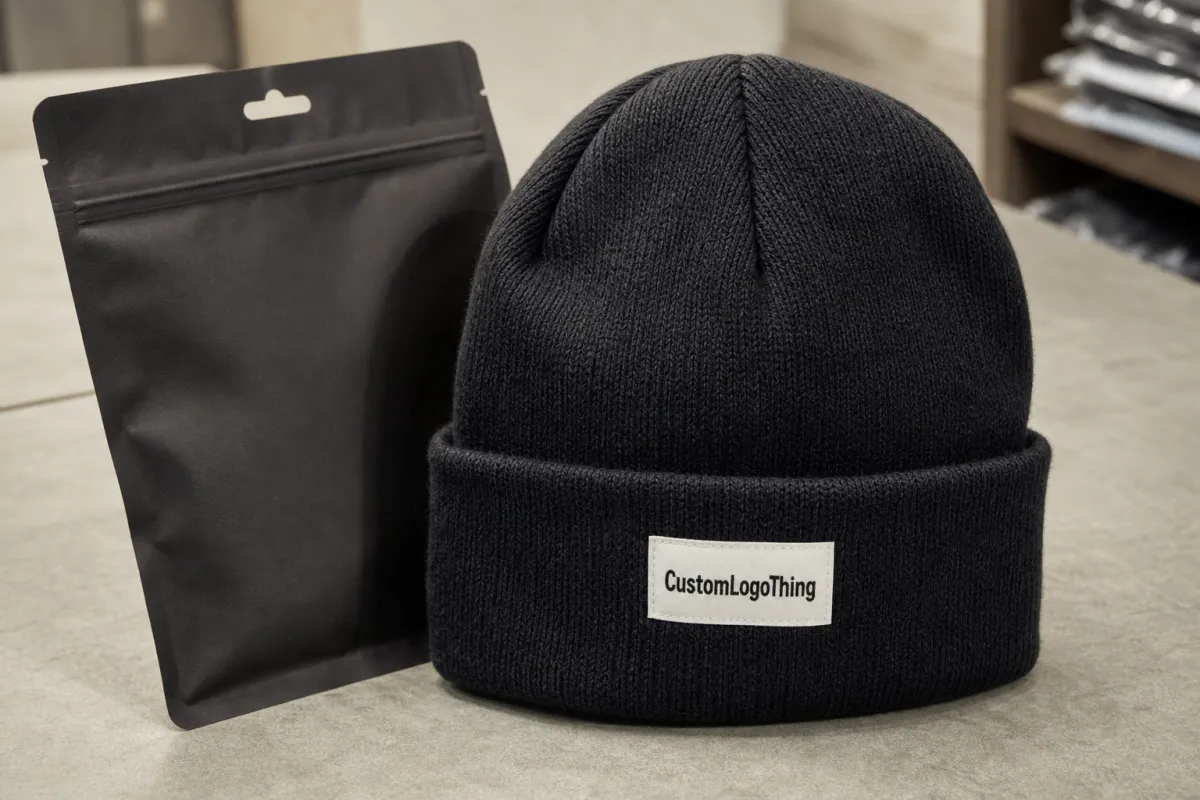
A cuff changes the visual balance of a beanie. A plain knit cap can feel casual to the point of forgettable, while a cuffed version gives the shape a border and a sense of completion. That extra structure often makes the piece read as higher value, especially when the knit is tight enough to hold its form and the fold stays even after packing.
That matters because the retail shelf is not a place for deep explanation. The customer sees color, texture, silhouette, and branding placement almost all at once. Cuffed Beanies for Retail resale tend to perform well in that environment because the cuff creates a built-in zone for logos, woven labels, or patch placement. It is a simple advantage, but a meaningful one.
A clean cuff can push the same knit into a higher price perception, especially when the logo sits flat and the color palette stays disciplined.
The cuff also helps the buyer tell a cleaner story. It suggests there was a design decision, not just a factory order. That subtle distinction matters in gift and specialty retail, where shoppers often choose the item that looks like it was selected, not merely stocked. A well-proportioned cuff can make even a basic acrylic style feel more considered.
There is another advantage that is easy to miss: consistency. Retail assortments work best when products repeat well. Cuffed styles usually hold their shape better from sample to bulk production, and they are easier to align across color runs. If one unit arrives slightly off, the cuff can hide minor variation better than a fully flat knit cap.
That does not mean every cuffed beanie is a good buy. A fold that is too shallow can make branding feel cramped. A fold that is too deep can make the hat look heavy or boxy. The best styles sit in the middle: enough cuff to frame the product, not so much that the beanie loses proportion.
How Buyers Judge Fit, Trim, and Display Value
Before the conversation reaches price, experienced buyers look at fit and finish. Does the crown sit at a reasonable height? Does the cuff collapse when handled? Is the knit dense enough to feel substantial, but soft enough that the fabric does not fight the head shape? The best styles look deliberate before they are decorated, and that is a strong sign they will sell more easily once branded.
Four details usually drive the decision:
- Cuff depth: It needs enough space for a logo or label without swallowing the front panel.
- Yarn thickness: Thicker yarn can signal warmth and comfort, but if it is uneven it can distort embroidery.
- Stitch density: Tight enough to hold shape, open enough to stay wearable and not overly stiff.
- Trim finish: Even tension, clean seams, and no loose threads around the fold or side seam.
Decoration changes how the style behaves. Embroidery is usually strongest on a cuff with firm structure. Woven labels are cleaner when the fabric stays flat. Patches can bring a more streetwear look, but they need a cuff that will not ripple once the patch is applied. If the knit is too soft, decoration can pull the beanie off balance and create a lopsided front view.
Display value should be treated as part of product design, not an afterthought. The most useful retail beanies stack neatly, hang straight, and keep their cuff line after being unpacked, refolded, and restocked. That reduces the amount of handwork store teams need to do. It also keeps the shelf looking consistent, which matters more than most suppliers admit.
Online presentation adds another layer. A style that photographs well in a neat stack can still fail if the front panel looks unclear in a hero shot. Buyers often want beanies that read cleanly in both formats: close-up detail and broad, shelf-style presentation. If the product needs pins, steaming, or shape correction to look right in photos, the bulk run will probably need the same kind of attention in stores.
Fit is equally practical. A beanie can have a beautiful cuff and still fail if the stretch range is too narrow. One common issue is a hat that looks great on one head form but sits oddly on others. That becomes a problem quickly because customers rarely compare sizing charts for a knit cap. They just try it on, or judge it by touch, and move on if the fit feels off.
Cost and Pricing: What Moves Unit Cost, MOQ, and Margin
Price looks simple on the first quote and much less simple once the pieces are broken apart. For cuffed Beanies for Retail resale, the major cost drivers are yarn blend, knit gauge, cuff construction, decoration method, packaging format, and whether the product is being prepared as a private label program. A basic acrylic beanie with a woven label can be economical; a wool blend with embroidery, custom folding, and retail tagging costs more and usually takes more control to produce well.
As a rough buying range, a simple blank cuffed beanie at 1,000-3,000 units might land around $1.90-$3.20 per unit ex-factory. Add woven labels, embroidery, or retail folding and the price often moves into the $2.70-$5.50 range, sometimes higher if the design is more detailed or the order is small. Freight, sampling, and packaging can move the real number again. The quote is not the whole story; landed cost is what matters.
| Build type | Typical unit price range | MOQ behavior | Best use |
|---|---|---|---|
| Blank acrylic cuffed knit | $1.90-$3.20 | Lower MOQ, easier to test | Color testing, broad retail trials |
| Woven label + folding | $2.30-$3.80 | Moderate MOQ, good for core styles | Boutiques, gift shops, private label basics |
| Embroidery on cuff | $2.70-$4.90 | Often higher MOQ per design | Logo programs, sports, campus, brand merch |
| Patch or chenille detail | $3.40-$5.50+ | Tighter control on art, stitch, and setup | Streetwear, premium retail, specialty assortments |
MOQ changes the risk profile. A supplier may offer better pricing at 3,000 pieces than at 500, but the lower unit cost only helps if the style sells through. If not, the buyer has simply bought more inventory at a lower unit cost, which is not much comfort when storage, markdowns, and seasonality start to bite. A smaller first order is often smarter than a larger one built on confidence alone.
There are hidden costs that can be easy to miss. Sampling usually runs $20-$80 per sample depending on complexity, and shipping may add more if the sample is moving internationally. Rush production can increase cost by 10%-20% or more. Custom Hang Tags, barcode stickers, folding rules, polybags, and carton markings all add labor somewhere in the chain. If the order needs retail-ready presentation, those details should be priced up front.
One good practice is to standardize the quote sheet. Ask every supplier to price the same yarn blend, cuff height, decoration method, packaging style, and carton count. If one quote includes folding and another does not, the comparison is useless. The cleanest way to compare suppliers is to remove all the little variables that make one number look better than it really is.
For packaging-heavy programs, transit testing matters too. Retail buyers sometimes assume soft goods are immune to shipping damage, but a beanie can still arrive flattened, scuffed, or poorly packed if the carton design is weak. A basic reference like the ISTA framework can help teams think about vibration, compression, and handling in a more disciplined way. If hang tags or retail cards need responsibly sourced paper, FSC certification is often part of the conversation.
Process and Timeline: From Sample Approval to Store Delivery
Most delays come from vague briefs, late artwork changes, or skipping the physical sample step. A straightforward process for cuffed beanies for retail resale usually runs through concept, sample, revision, approval, bulk production, quality check, packing, and shipping. The order looks simple on paper. In practice, the timeline depends on how quickly decisions are locked.
Sample lead time and bulk lead time are not the same. A basic sample may take 7-12 business days. Bulk production often runs 12-20 business days after approval, though that can stretch if yarn is not in stock, if embroidery needs extra setup, or if the order is larger than the factory normally handles in one run. Freight adds its own clock. Air is fast but expensive. Ocean freight is more cost-efficient on larger programs, but it needs more buffer for customs, port handling, and warehouse receiving.
Where schedules slip
- Late artwork edits: A small logo move can trigger a fresh sample and a new approval cycle.
- Unclear fit specs: If cuff depth, crown height, or stretch range is not defined, the factory may make a reasonable guess that is still wrong.
- Packaging decisions made too late: Hang tags, fold direction, barcode placement, and bagging rules should be set before bulk starts.
- No freight buffer: A style can be well made and still miss the selling window if transport is underestimated.
The best purchase orders are usually the quietest ones. That is not a knock on creativity; it is a sign that the brief was clear enough to avoid unnecessary back-and-forth. When the spec sheet is tight, the sample gets approved faster, the factory spends less time clarifying basic questions, and the final goods are more likely to match the buyer’s expectations.
Packaging detail matters at this stage. If the product is meant to be sold folded, it should be packed folded. If the barcode must face a warehouse receiver, say that plainly. If care labels are supposed to be visible or hidden, define it in writing. These may seem like small choices, but they save time, reduce rework, and make the product easier to move once it arrives.
One more practical issue: color consistency. Knit goods can vary slightly from one dye lot to another, especially across repeat orders. If a style is likely to become a core item, keep a reference sample, a written color standard, and clear approval photos. That gives both sides a better chance of matching future reorders without guesswork.
Key Factors That Separate Fast Movers from Dead Stock
Fast movers are rarely the loudest style on the rack. They are the easiest to understand, easiest to wear, and easiest to buy in multiples. Neutral colors tend to outperform scattered color lists because they work across more wardrobes and more store formats. Black, charcoal, navy, oatmeal, and deep green often move faster than trend colors that look exciting in a sample board but harder to repeat in real retail conditions.
Material choice sends a strong value signal. Acrylic remains common because it is affordable, holds color well, and feels soft enough for everyday retail. Wool blends usually feel more premium and can support a higher ticket, but they need careful checking for itch, weight, and recovery after stretching. Recycled yarns can help tell a sustainability story, though the hand feel and finish still have to meet the buyer's standard. A responsible material story helps only if the product performs first.
Presentation details can tip the scale. Clean hang tags, readable care labels, tidy fold lines, and a barcode placed where receiving teams can see it all make the product feel easier to stock. That lowers friction for store teams. It also keeps the item from looking like a bulk commodity the moment it reaches the floor.
Assortment discipline matters more than many teams expect. A tight run of three or four colors often performs better than a broad palette of eight or ten shades. Extra options can spread demand too thin and create dead inventory that has to be discounted later. Retailers usually need a strong core, not an entire color encyclopedia.
What usually sells first
The styles that move fastest often share three traits: a balanced cuff, a comfortable stretch range, and a shape that works for different head sizes. If the beanie only looks right on one fit profile, returns and slow sell-through become more likely. Customers do not think in technical terms, but they do respond quickly when a hat feels tight, shallow, or oddly tall.
That is why some buyers ask for fit photos on multiple head forms during sampling. It is a small step that can prevent a large problem. If the product is going to be sold broadly, it should not rely on a narrow fit lane to work.
Common Mistakes Retailers Make Before Reorder
The first mistake is chasing the lowest quote without checking hand feel or stitch quality. A beanie can look fine in a picture and still disappoint after a few wears. If the knit opens up too much, the cuff rolls badly, or the fabric pills quickly, the savings disappear. Low price is helpful only if the product survives real use.
The second mistake is buying too many colors. That can feel safer on paper, but it often weakens the line. A few core shades usually generate the bulk of sell-through, while the fringe colors linger. A retailer does not need every possible option. It needs the right ones in enough quantity to replenish demand.
The third mistake is ignoring sell-through data. Reorders should be based on what actually moved, not on what looked promising in a sample room. If black and oatmeal cleared quickly while a novelty color stayed behind, the next order should reflect that. The shelf tells the story if someone is willing to read it.
A reorder should reward evidence, not enthusiasm.
The fourth mistake is weak communication around packing and labeling. If one team expects folded-in labels and another expects carton-packed extras, the result is rework. If barcode placement is not fixed early, receiving delays can show up later in the chain. These are small misses individually, but together they eat time and margin.
There is also a margin trap that shows up often: comparing wholesale potential against factory price without adding freight, duty, packaging, and handling. That can make a style look more profitable than it really is. Once all costs are included, the real margin can be much tighter. A landed-cost sheet is not a luxury; it is the only way to see the actual business.
Another common issue is treating a reorder like a new style. If the first run worked, preserve the specs that made it work. Keep the same cuff depth, same yarn standard, same decoration placement, and same folding method unless there is a specific reason to change. Small unnecessary edits are a frequent source of avoidable mistakes.
Expert Tips and Next Steps for Your Next Purchase Order
A test buy usually beats a big launch. For cuffed beanies for retail resale, that might mean 300-1,000 units across a limited color set, then a second order only after the first batch shows real sell-through. The smaller start protects cash and gives the buyer real data instead of a hope-driven forecast.
Before requesting quotes, set a margin floor. Decide the retail price, subtract the target gross margin, and work backward to a landed-cost ceiling. That gives every supplier the same target and keeps the conversation grounded. Without that discipline, price comparisons tend to drift toward the cheapest number instead of the best total value.
Ask for physical samples rather than trusting renders alone. A digital mockup cannot tell you how the cuff behaves, how the yarn feels in hand, or whether the logo sits flat after pressing. Confirm packaging details during sampling too. If the beanie will be sold with a hang tag, barcode, or retail fold, those details need to be visible before bulk approval.
Keep the purchase order simple and specific. The cleaner the instructions, the fewer assumptions the factory has to make. A good PO should answer the questions that tend to cause delays or quality drift.
- Approve the base sample and confirm fit.
- Compare landed cost, not just unit price.
- Lock decoration placement and label details.
- Confirm MOQ, production lead time, and freight method.
- Place the first order as a test run.
- Set a reorder trigger based on actual sell-through.
That process is not flashy, but it keeps the product honest. It gives retail teams room to learn without overcommitting, and it gives suppliers a clear target without endless revisions. Most of all, it raises the odds that the final item feels ready for the shelf the moment it comes out of the carton.
If you are sourcing cuffed beanies for retail resale, keep your attention on what moves, not just what photographs well. The cuff should help the product feel more premium, more giftable, and easier to merchandise. If it does that while staying inside your margin target and production schedule, it is a style worth repeating.
How many cuffed beanies should I order for retail resale?
Start with a test buy sized to your channel, store count, or expected first-season demand instead of guessing at a large launch order. Use sell-through data from similar cold-weather accessories to decide whether a small core run or a wider color set makes sense. Leave room for a reorder if the style moves quickly, because a second buy is often safer than overcommitting on the first one.
What is a realistic MOQ for cuffed beanies for retail resale?
MOQ depends on customization level, yarn type, and decoration method, so a simple blank beanie usually has a lower threshold than a fully branded one. Ask whether the MOQ applies per color, per design, or per total order, since that changes the real buying commitment. Compare MOQ against your margin and storage limits, not just the supplier's minimum number.
How do I compare cuffed beanie pricing from different suppliers?
Compare landed cost, not just the quote, because freight, packaging, setup, and sampling can change the final number. Check what is included in the unit price: label application, hang tags, folding, bagging, or decoration can all move the total. Use the same spec sheet for every supplier so you are comparing like-for-like products.
How long does production usually take for retail-ready beanies?
Separate sample time from bulk production time, because approval delays often matter as much as factory output. Build in extra time for freight, customs, and store receiving, especially if the product needs to hit a seasonal window. If the order has custom packaging or labeling, expect the schedule to stretch beyond a basic blank knit order.
What packaging details help cuffed beanies sell faster on shelves?
Clear sizing, clean hang tags, and visible barcode placement make the product easier for stores to handle and replenish. Simple, well-placed branding usually works better than cluttered packaging because shoppers need to read the value fast. If the beanie ships folded the same way it will be displayed, it tends to feel more retail-ready at first touch.