Trucker Caps for Retail Resale: Buy, Price, and Restock
Trucker caps for retail resale work because the product is understood almost instantly. Mesh back, structured front, adjustable closure, clean silhouette. A shopper sees the shape from across a rack and already knows roughly how it will wear, which makes the buying decision faster than it is for many other accessories. That speed matters. Items that are easy to read usually move faster than pieces that need a long explanation at the counter.
The cap has to do more than carry a logo. It needs to hold margin, sit well on a shelf, survive handling, and still feel worth the price after freight, labeling, and packaging are counted in. That is the real test for trucker caps for retail resale: not whether the mockup looks good, but whether the finished piece can be bought, displayed, and reordered without creating dead stock.
Why trucker caps move on shelves
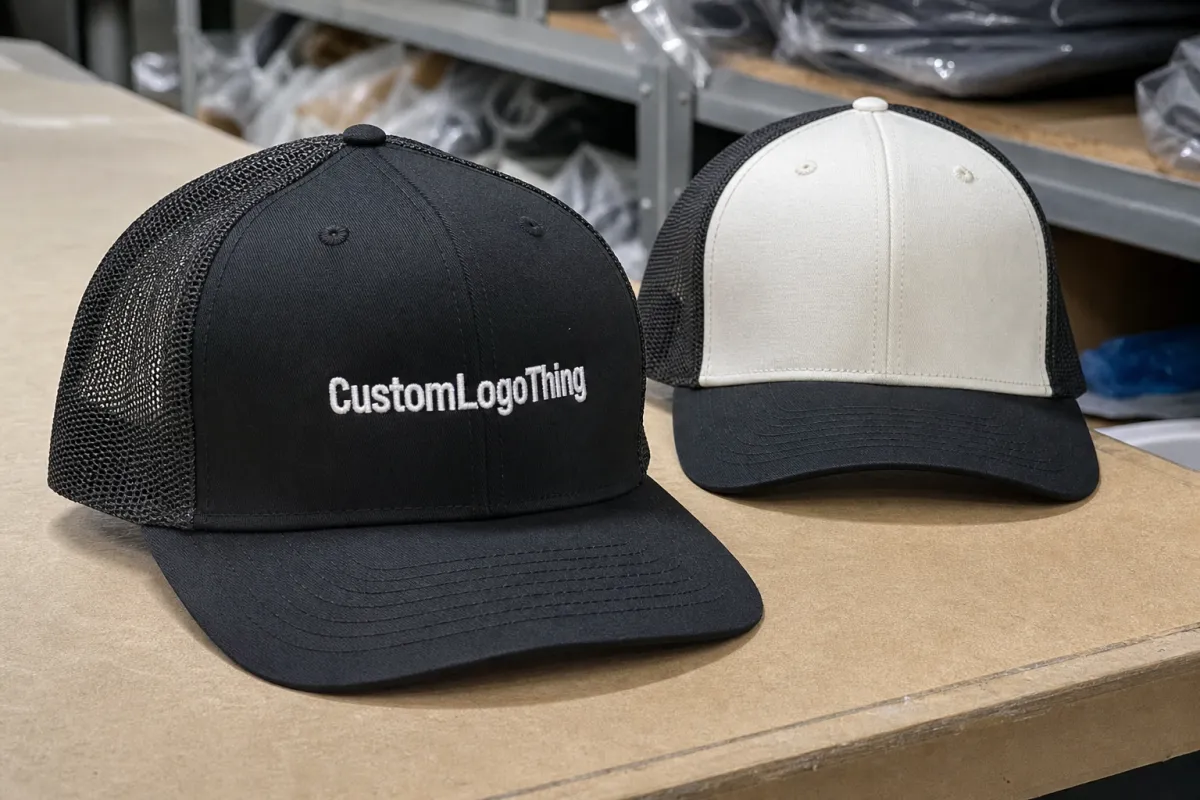
The reason trucker caps keep showing up in retail programs is simple: the silhouette does a lot of work before the decoration even enters the picture. The high crown creates presence, the mesh back signals breathability, and the front panel gives a clear field for branding. That combination makes the product easy to understand and easy to style. A shopper does not need a long pitch to decide whether it belongs in their rotation.
Retail buyers like items that can be merchandised quickly. They want products that look good in a lineup, photograph well for online listings, and do not require constant explanation from store staff. Trucker Caps Fit that rhythm better than many specialty hats because the form is familiar and the wear case is obvious. A good cap is not trying to be clever. It is trying to look right, fit right, and sell at a price that feels justified.
There is also a practical selling advantage in how these caps read from a distance. A flat, crowded graphic may look interesting on a screen but become muddy on a rack. A clean front panel with one patch, one line of embroidery, or a restrained print tends to hold its shape visually. That makes the cap easier to Merchandise in Bulk, which matters if a buyer needs to fill a shelf or a wall without creating visual clutter.
The strongest retail cap usually looks obvious before it looks special.
That does not mean plain. It means disciplined. If the build, color, and decoration are pulling in the same direction, the cap feels intentional. If they are all competing for attention, sell-through slows.
Choosing the right cap build for retail buyers
Start with structure. A structured six-panel trucker is usually the safest retail choice because it keeps its shape, takes branding cleanly, and looks finished even before it goes on display. It is the version most buyers can place into a general assortment without worrying that the silhouette will feel too niche. Unstructured caps have their place, but they read softer and less defined, which can reduce shelf impact unless the brand identity is already strong.
Panel count matters too. Five-panel caps offer a broader front surface, which is useful for larger patches or bolder artwork. Six-panel caps feel more traditional and often fit a wider range of customer tastes. Foam-front truckers lean into a retro look and can sell well in the right channel, but they are more style-specific. Cotton twill or brushed front panels tend to feel a bit more premium than basic foam, although the cost usually rises with that upgrade.
Closure choice has real retail consequences. Snapback remains the easiest sell because shoppers recognize it immediately and the fit range is forgiving. Fabric straps and metal buckles can look better in fashion-led assortments, but they add another decision point for shoppers and sometimes slow conversion. Velcro is practical, though it often feels less finished. Adjustable sizing matters because it reduces returns and makes the product less risky for stores that serve a broad customer base.
Construction details are worth checking before you approve a sample:
- Front panel firmness so embroidery or patches do not collapse the shape.
- Mesh quality because cheap mesh can feel rough, thin, or overly shiny.
- Sweatband material since a scratchy band can turn into a return.
- Stitch density on seams and decoration so the cap holds up under handling.
- Closure stability to avoid caps that loosen after a few wears.
A cap can look strong in a mockup and still fail in hand. The crown may sit too tall. The front panel may wrinkle under decoration. The band may feel stiff in a way that is hard to ignore once the customer puts it on. Those are small problems, but small problems reduce repeat orders.
| Cap build | Typical landed cost range | Best use | Tradeoff |
|---|---|---|---|
| Structured 6-panel snapback | $3.20-$6.50 | Core retail, boutiques, general merch | Can feel generic if the design lacks a clear point of view |
| 5-panel flat front | $3.40-$7.25 | Streetwear, larger logos, patch programs | Narrower appeal if the brand is not already style-led |
| Foam-front trucker | $2.80-$5.80 | Retro, novelty, event-driven assortments | Can look less premium without strong artwork or packaging |
| Cotton twill front trucker | $3.50-$7.80 | Premium branding, lifestyle retail | Higher cost, so margin needs more discipline |
For broader context on packaging and transit expectations, the Packaging Machinery Manufacturers Institute at packaging.org is a useful reference, and ista.org is a practical source for shipping test standards if the caps will move through distribution instead of going straight to a single shelf.
Cost, pricing, and MOQ
Factory price is only one line in the spreadsheet. The number that matters is landed cost, because that is the real cost of getting a finished cap ready to sell. Freight, duty, carton charges, decoration, labels, packaging, and inland delivery all need to be counted. A cap that looks cheap on a quote can become uncomfortably expensive once it is sitting in a warehouse ready for distribution.
For trucker caps for retail resale, it helps to model three numbers before ordering anything: factory unit cost, landed unit cost, and your intended selling price. If you skip the landed figure, you are guessing. Guessing is usually where inventory mistakes begin.
MOQ changes the economics quickly. A run of 50 to 100 units is a reasonable test for a smaller brand if the supplier allows it. The unit price may be higher, but the risk is manageable. At 300 to 500 units, pricing improves, yet the buyer is committing to more color and size exposure. At 1,000 units and above, the per-piece cost can drop again, but only if the demand is already real or the distribution plan is solid. Lower unit price does not help if the extra stock sits for months.
A useful rule of thumb for retail math:
- Wholesale: roughly 2x landed cost is a common starting point.
- Retail keystone: many stores still expect about 2x wholesale, though category and channel can shift that.
- DTC pricing: there needs to be room for ad spend, processing fees, and returns.
If a cap lands at $4.25, a wholesale range around $8.50 to $10.00 can work, and a retail range around $18 to $28 is realistic depending on brand strength, decoration, and packaging. That is not a rule. It is a working range. A cleaner patch, better hand feel, or more polished presentation can justify the higher end, but only if the finished product looks worth the ask.
Packaging can shift price perception more than some buyers expect. A well-placed hang tag, a clean barcode, or a simple insert card can make a cap feel more deliberate. Small costs add up, so it helps to keep the add-ons simple and consistent. If you are making claims about paper sourcing, check fsc.org rather than assuming a recycled look equals certification.
Process and lead time
The production process should be plain and controlled. Quote, sample, approval, bulk production, inspection, packing, shipment. That is the sequence you want. Every skipped step tends to show up later as a delay or a quality complaint, and hats have a way of exposing weak process quickly because fit and shape are so easy for buyers to judge.
A sample is not a formality. It is the first real check on crown height, mesh feel, front panel firmness, stitching quality, closure behavior, and the way the cap sits on an average head. If the decoration is embroidered or patch-based, the sample should also show whether the front panel bends, ripples, or loses its structure. A clean sample matters more than a polished mockup.
Common delay points are easy to predict: artwork revisions, uncertain Pantone matching, custom labels, special trims, and last-minute changes after approval. Stock materials move faster. Custom colors and uncommon patch styles move slower. If timing matters, lock the spec early and stop adjusting details unless the change is genuinely worth the delay.
Typical lead times vary with the build, but a reasonable planning window looks like this:
- Stock-based programs: often around 12-18 business days after proof approval if materials are ready.
- Custom runs: usually 20-35 business days before freight when special colors, patches, or packaging are involved.
- International shipping: adds more time, especially if the shipment goes through multiple handoffs.
Ask for a production schedule before you approve the job, not after. The schedule should show sample completion, bulk start, packing, and dispatch. If the timeline is vague, that is a warning sign. Retail buyers need predictability, and the supply chain should be able to provide it.
Packaging and carton decisions matter just as much as the cap itself. Ask how many pieces go into a master carton, what the outer carton strength is, and whether the product stays upright or gets compressed in transit. If the caps are headed into distribution, it is smart to ask for transit expectations similar to ISTA-style checks so the discussion stays tied to shipping behavior instead of assumptions.
Trucker caps for retail resale can turn quickly, but only if the production path is disciplined. Once the process becomes loose, the product starts to behave like a calendar problem instead of a simple item.
Decoration, colorways, and packaging
Decoration should support the cap, not overpower it. Flat embroidery is durable and usually looks clean from a distance. Woven patches add texture and a slightly more premium feel. Leather patches can work for outdoor, heritage, or workwear-inspired branding, though they can feel forced if the rest of the product is too lightweight. Printed graphics are fine when the artwork is sharp and the placement is restrained. Oversized decoration can age poorly if the cap is handled constantly.
Color range should stay tight unless there is a clear reason to expand it. Black, navy, charcoal, khaki, olive, and washed neutrals do most of the commercial work. They are easy to place, easy to photograph, and less likely to feel trendy in a way that expires quickly. Bright colors can work for seasonal stories or youth-driven assortments, but each one needs to justify its place in the line. A long color chart looks impressive on paper and awkward on a shelf.
Color also affects perceived value. Dark neutrals often feel more stable and more wearable. Lighter or brighter shades can attract attention, but they usually need stronger branding or a clearer trend reason to earn the same price point. If one color exists only because someone liked it in a meeting, it is probably not the right inventory risk.
Retail packaging should be useful before it is decorative:
- Hang tags should be easy to read and easy to scan.
- Internal labels help stores sort and restock quickly.
- Polybags are useful in some channels but can feel cheap in others.
- Carton packing should preserve the bill shape and make counting simple.
For boutique retail, the small details matter. A neat fold, a clean tag, and packaging that opens without a mess can make the cap feel more expensive before anyone tries it on. That is not cosmetic fluff. Presentation affects the price a buyer feels comfortable paying, and that directly affects sell-through.
How to place a smart first order
Start narrow. One silhouette, three to five colors, one decoration method. That is enough to learn whether the cap earns space. The fastest way to create inventory risk is to launch too many versions before the market has given any feedback.
The right order plan depends on the channel. A skate shop, a tourist shop, a men’s boutique, and a branded merchandise account all want different things from the same cap family. One wants attitude. One wants impulse pricing. One wants finish quality. One wants repeatability. The cap can be the same shape and still need different color, decoration, and price decisions.
Use real demand signals whenever possible. Preorders help. Buyer conversations help. Small placements help. A waiting list helps less than real transactions, but it still says something. What does not help is assuming every colorway will sell because the render looked strong on a screen. Mockups often flatter products that are harder to move in person.
A practical first-order framework:
- Choose one core silhouette with the lowest return risk.
- Select three neutral colors and one accent only if there is a real reason.
- Confirm landed cost before approving decoration.
- Set a target retail price and a margin floor in advance.
- Decide the reorder trigger before the shipment leaves production.
If you are unsure about volume, a test order in the 50-100 unit range can be sensible for a smaller brand, assuming the factory can support it without a large surcharge. For a retail buyer with real distribution, 200-300 units can still be cautious if the color range is tight and the design is stable. The goal is not to stay tiny forever. The goal is to learn before inventory gets expensive.
Do not let a low per-unit quote push you into a larger buy than the channel can absorb. That mistake is common. The price looks efficient, so the order grows. Then the caps arrive, the shelf space is smaller than expected, and the margin starts getting eaten by storage and time.
Common mistakes that cut resale margin
The first mistake is buying on factory cost alone. That number is useful, but it is not the business. Freight, duty, packaging, labeling, spoilage, and handling all change the result. A cap that saves a few cents at the source can still cost more once it reaches a warehouse ready to ship.
The second mistake is over-customizing. Too many trims. Too many patch variations. Too many colorways. Each added detail creates more work and more points of failure, and not every extra detail improves sell-through. A cap can look expensive on paper and still be hard to move if the customer cannot immediately tell why it costs more.
The third mistake is choosing decoration that does not age well. Oversized prints crack, cheap patches curl, and dense embroidery can distort the front panel. That matters because caps get touched, tried on, and restocked repeatedly. Retail buyers are not looking for something delicate. They want product that still looks decent after handling.
The fourth mistake is weak operations. Late art files. Vague specs. No reorder plan. No spare labels. No backup carton count. Those are the things that make buyers nervous. Once confidence drops, future orders become harder to win.
The fifth mistake is treating trucker caps for retail resale like a one-time print job instead of a repeatable line. If the product has any chance of working, it needs continuity: stable fit, stable decoration, stable packing, and a restock path that does not force the buyer to re-approve everything from scratch.
Keep the program tight. Keep the numbers honest. That alone puts a cap line ahead of a lot of crowded, underplanned assortments.
Next steps: test, restock, and scale
Turn the first buy into a controlled test. Decide the margin now. Decide the top styles now. Decide the launch window now. Decide the reorder trigger now. Waiting until stock is already moving is too late to plan the next buy cleanly.
Track sell-through by color, style, and channel. A shade that performs in a boutique may not perform online. A cap that works well in DTC may not fit wholesale expectations. Use that data to repeat what sold, remove what stalled, and put the stronger combinations back into production with as little disruption as possible.
Trucker caps for retail resale work best when restock is built into the product plan from the start. That means keeping artwork files organized, specs consistent, and packaging decisions stable enough to repeat without confusion. It also means knowing which details buyers actually care about and which ones only make internal review longer.
Before the next order, request samples, confirm landed cost, and place the smallest order that still teaches you something useful. That is the practical way to build a cap program that protects margin, supports retail placement, and grows without turning into a storage problem.
What is a realistic MOQ for trucker cap resale if I'm testing a new line?
A test order often works best in the 50 to 100 unit range if the supplier allows it. If the MOQ is higher, compare the next price break against your actual sell-through expectations before you commit. A lower unit cost is not helpful if the color or silhouette has not been proven in the channel.
How much markup do trucker caps for retail resale usually need?
Most retail programs need enough margin to cover landed cost, not just factory cost. A rough 2x landed-cost relationship is a common starting point, with higher room needed for DTC because of fees, ads, and returns. Premium materials or decoration can support a higher ticket only if the product looks and feels worth it in person.
Which decoration method works best for trucker cap resale?
Flat embroidery and well-made patches usually hold up well and present cleanly on shelf. They balance durability with visibility, which is why they are so common in retail assortments. Avoid decoration that is fragile, overly shiny, or too large for the front panel if the cap will be handled often.
How long does production take for trucker caps for retail resale?
Stock-based programs can move relatively quickly, while custom colors, patches, or packaging add time. Planning for sample approval, artwork changes, and freight keeps the launch date realistic. Ask for a production schedule before approval so you know when the caps will actually be ready.
Should I choose structured or unstructured trucker caps for resale?
Structured six-panel caps are usually the safer starting point because they hold shape well and look more retail-ready. Unstructured styles can work, but they are more dependent on the brand aesthetic and the buyer’s taste. If the goal is broad appeal and fewer fit complaints, a structured adjustable cap is generally the better bet.