Custom Clear Garment Bags wholesale pricing for apparel brands only makes sense when the buyer looks past the unit price and checks the full handling cost. The bag has to protect the garment, fit the hanger system, survive warehouse movement, and keep presentation clean without creating extra labor. A cheaper bag that triggers rebagging, steaming, or damage is not really cheaper.
Clear Garment Bags are best treated as operating tools, not decorative packaging. They support visibility, reduce touchpoints, and help teams move inventory faster during receiving, storage, showroom prep, and shipping. The right spec keeps product protected while making it easier to inspect, sort, and deliver without opening every piece.
Why Clear Garment Bags Reduce Returns and Rebagging
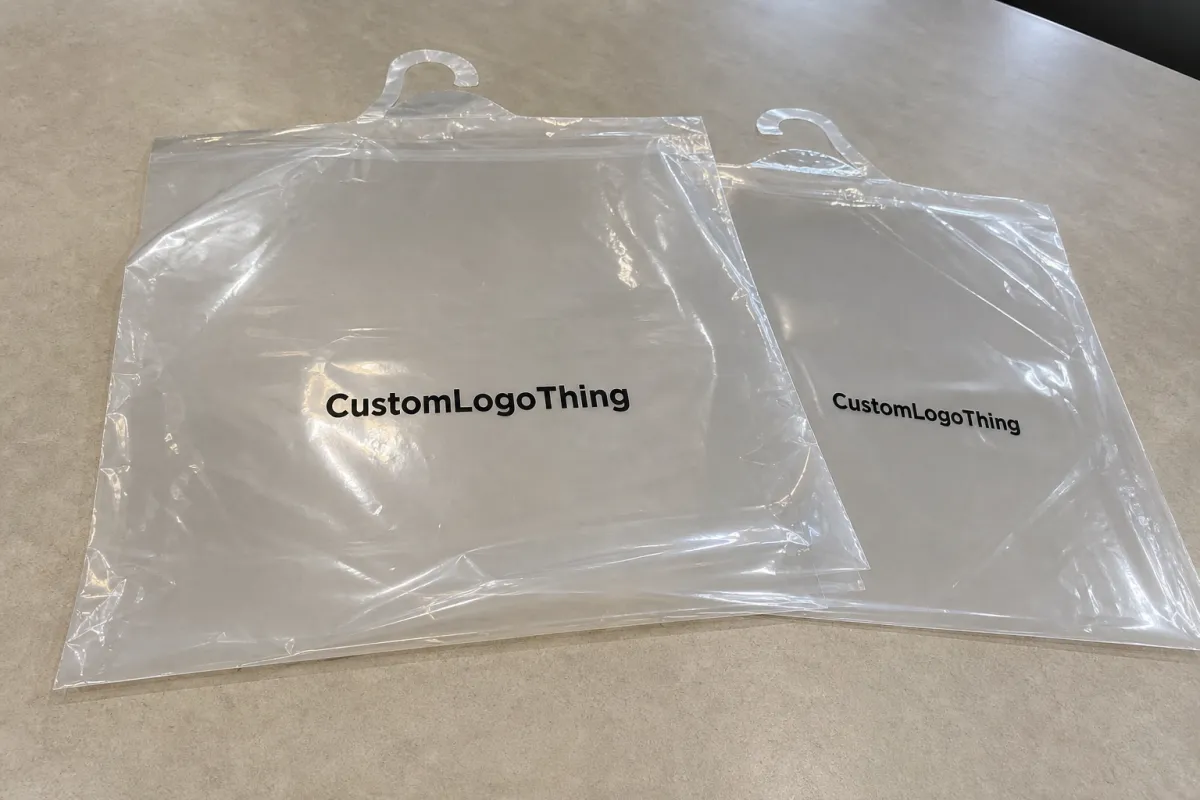
Visibility is the main advantage. A clear bag lets staff confirm style, color, and size at a glance, which reduces unnecessary opening in the warehouse and showroom. That saves time, but it also protects fabric, hang tags, embellishment, and pressed finishes from repeated handling.
The practical payoff is lower rework. Garments exposed to dust or friction often need another steam before they can be sold, and each extra touch increases the chance of mix-ups. For buyers comparing packaging options, the real question is whether the bag lowers total handling cost, not just the per-piece spend.
Clear packaging also helps with audit and storage control. Teams can identify items faster, check counts without breaking seals, and keep mixed-size shipments organized. For brands that move product through wholesale and direct channels, that visibility often prevents small errors from becoming avoidable delays.
“A bag that prevents one re-steam and one rebagging cycle can offset a higher quote faster than expected.”
Custom Clear Garment Bags Wholesale Pricing for Apparel Brands
Most pricing changes come from five variables: film gauge, dimensions, closure style, print coverage, and carton pack-out. Each one affects material use, setup time, and production efficiency. The simplest way to manage custom Clear Garment Bags Wholesale pricing for apparel brands is to standardize anything that does not improve fit or protection.
For planning, many stock-size unprinted bags fall around $0.10 to $0.18 per unit. Custom sizing, heavier film, or printing often moves pricing into the $0.18 to $0.40 range. Smaller orders can run higher because fixed setup charges are spread across fewer bags. That is why two quotes with the same headline price can produce very different landed costs.
MOQ matters because it changes how much of the setup cost is absorbed by volume. A 3,000-piece run may carry the same proofing, cutting, and packing steps as a much larger order, so the unit price stays elevated unless the quantity is high enough to spread those costs. Buyers should always request tiered pricing instead of relying on one number.
| Option | Typical Use | Indicative Unit Price | Buyer Note |
|---|---|---|---|
| Stock-size, unprinted clear bag | Dust protection, storage, simple wholesale packing | $0.10-$0.18 | Lowest setup cost, fastest approval path |
| Custom size, unprinted | Better garment fit, less wasted film | $0.14-$0.24 | Useful if one size is too short or too wide |
| Custom size with one-color print | Branded packaging, retail presentation | $0.18-$0.32 | Ask about artwork prep and plate fees |
| Heavy-duty clear bag with zipper | Outerwear, repeated warehouse handling | $0.25-$0.40+ | Higher material use, better durability |
Several costs sit outside the piece price: artwork prep, freight, rush production, split shipments, and revised carton counts. A quote that looks lean can become expensive if it excludes delivery to multiple sites or adds a second packing pass. Compare like with like: same spec, same quantity, same terms.
To keep pricing clean, send garment measurements, target volume, closure preference, and destination before asking for a quote. If the supplier also handles Wholesale Programs and Custom Packaging Products, use the same discipline across all line items so the numbers stay comparable.
Film Gauge, Closure, and Size Specs That Protect Product
Film thickness should match handling conditions. A lighter film around 1.25 to 1.5 mil can work for dust coverage or short-term storage. For standard warehouse handling, many brands move to 2 mil. Repeated handling, dense embellishment, or sharp hardware may justify 3 mil or more. Thicker film costs more, but it also reduces tears and replacement labor.
Closure style changes how the bag performs in daily use. Open-top bags are simple and low-cost for garments that stay on a hanger in controlled storage. Zipper closures are better when items are accessed repeatedly or held for longer periods. Adhesive strip and self-seal styles speed packing, but they only work well when size and workflow are already correct.
Size is where many orders go wrong. Buyers often estimate from category instead of measuring the actual garment on its hanger. That can lead to short sleeves, compressed shoulders, or hems that bunch against the carton. A bag should preserve the silhouette, not force the garment into a compromise.
Useful spec checks include:
- Hanger holes that match standard hangers and do not tear under load.
- Gussets for coats, layered garments, and structured pieces with more volume.
- Venting where airflow helps reduce moisture buildup in storage.
- Clarity consistency so the bag does not vary noticeably from batch to batch.
- Print placement that supports branding without blocking product visibility.
Some buyers ask for testing aligned with ASTM-style tensile checks or transit practices similar to ISTA guidance. That is especially useful if the bags will be handled many times or moved through parcel networks. If the broader packaging program includes paper components, an FSC claim may still matter for the non-plastic parts.
How to Match Bag Formats to Dresses, Suits, and Sets
One format rarely fits every garment category. Dresses need length, suits need shoulder space, outerwear needs width, and sets need room so separate pieces do not press into each other. The bag should protect the silhouette the brand already paid to develop.
For dresses and gowns, longer bags help keep hems from dragging and reduce contact with carton walls. For suits and blazers, wider cuts and correct hanger-hole placement preserve shoulder shape. For coats and puffers, the bag should avoid compressing loft or forcing hardware against fabric. Buyers comparing Custom Clear Garment bags wholesale pricing for apparel brands should match the bag to the garment class, not to a generic chart.
Channel also affects the spec. Retail floor storage values visibility and quick access. Direct-to-consumer fulfillment favors compact pack-out and fewer handling steps. Showroom use usually prioritizes appearance and easy pulling. That is why a single apparel line may need more than one format.
Comparison helps narrow the choice:
- Dresses and gowns: longer length, gentle closure, clear front panel for easy identification.
- Suits and blazers: moderate width, reinforced hanger area, enough shoulder room to hold shape.
- Outerwear: wider cut, heavier film, more room for bulk and hardware.
- Folded sets: compact format, efficient carton packing, consistent labeling.
The common thread is control. The bag affects how the garment arrives, how fast it gets processed, and how often staff have to touch it before sale.
Lead Time and Production Steps From Proof to Delivery
A disciplined ordering process saves more money than rush fees usually do. The normal path is spec review, proof or sample approval, production, quality control, and shipment. If the buyer sends accurate dimensions and artwork up front, the quote stage moves faster and the proof stage has fewer corrections.
Standard timing is usually predictable enough to plan around. Quoting and spec review may take a few business days. Proof approval can take another few days if artwork is clean. Production often runs around 12 to 20 business days after approval for a standard custom order, though larger runs or more complex print setups can take longer. Freight is separate, and seasonal demand should always include a buffer.
Delays usually come from the same places: unclear sizing, missing carton counts, late artwork, or a change to print coverage after proof approval. Once the cutter or press is set, revisions create rework. Locking the spec before production starts is the easiest way to avoid a simple order turning into a rushed reorder.
Brands that manage multiple packaging categories, including garment bags and custom printed boxes, often use the same approval rhythm across items. That keeps procurement organized and makes cost tracking easier across the broader packaging program.
What a Reliable Wholesale Supplier Should Prove Before You Order
Price matters, but consistency decides whether the order works. A reliable supplier should show stable material sourcing, repeatable print quality, clear communication, and the ability to reproduce the same bag on the next run without drifting on size or clarity. Those are basic requirements, not extras.
Sample turnaround is a useful signal. If a supplier cannot move a sample or proof quickly, a repeat order is unlikely to be faster. Documentation matters too. Buyers should ask what the bag is made from, how print is checked, how cartons are packed, and what happens if the first run misses spec. The answer should be specific, not vague.
Do not compare vendors on unit price alone. One low quote can disappear if the bags arrive cloudy, undersized, or packed in cartons that crush in transit. A better comparison includes defect risk, sample policy, communication quality, and production capacity.
Strong suppliers usually support a wider packaging system. If they also publish Case Studies, that can show how they solve repeat packaging problems. If they have a clear Wholesale Programs structure, even better. And if they can pair garment bags with other Custom Packaging Products, the buyer may get a cleaner specification process across the board.
Common Buying Mistakes That Raise Costs or Cause Damage
The first mistake is ordering the wrong size. Buyers often estimate from the garment category instead of measuring the actual piece on a hanger. A bag that is too short or too narrow can crease fabric, compress shoulders, or force staff to rebag items by hand.
The second mistake is choosing film that is too thin for the use case. A light dust-cover bag can work for storage, but not for repeated handling or transit. If the bag tears, the brand pays twice: once for the bag and again for replacement packaging and labor.
Third, buyers underestimate freight and packing. A quote can look attractive per unit and still become expensive if carton counts are high, pallets are oversized, or the order has to split between locations. Landed cost is the number that matters.
Fourth, last-minute artwork changes often trigger extra fees and delay production. Even a small shift in logo placement can require another proof cycle. If the launch date is fixed, that delay can cost more than the original change.
Finally, underordering usually raises unit cost and creates a fast reorder at the worst possible time. If the brand has a reliable forecast, it should use that number to negotiate better tiers instead of guessing low.
Next Steps to Request an Accurate Wholesale Quote
If the goal is a quote that holds up, the request needs the details that actually change price. Send garment measurements, quantity, closure preference, print needs, and delivery destination. Add photos if the item has embellishment, an unusual hanger point, or a structured silhouette. That one step often removes days of back-and-forth.
A solid quote packet should also include:
- MOQ expectations so tiered pricing can be compared properly.
- Sample policy and any sample charges.
- Production time after proof approval.
- Freight terms and whether delivery is to one site or several.
- Reprint rules if the first run misses the approved spec.
For apparel brands that want a cleaner buying cycle, the best result comes from clear specs, realistic quantities, and a delivery plan that matches the launch calendar. Then the request for custom Clear Garment Bags wholesale pricing for apparel brands becomes a usable production quote instead of a rough guess.
What drives custom clear garment bags wholesale pricing for apparel brands?
The main drivers are film gauge, bag size, closure style, printing, and carton pack-out. MOQ also affects unit cost because setup fees spread across more pieces at higher volumes. Freight, sample requests, and rush production can change the landed price even more than buyers expect.
What MOQ should apparel brands expect for custom clear garment bags?
MOQ varies by factory and by whether the bag is stock-size or fully custom. Custom sizing and printed branding usually need a higher minimum than plain clear bags. Buyers should ask for tiered pricing so they can see how unit cost changes as volume rises.
Which thickness is best for wholesale clear garment bags?
Lightweight bags work for dust protection and short-term storage. Heavier gauges are better for shipping, repeated handling, and garments with hardware or embellishment. The best choice depends on how the garments move through packing, transit, and display.
How long does production usually take after approval?
Lead time depends on customization level, order size, and current factory load. Standard runs move faster than printed or custom-sized programs. Plan extra time for artwork changes, freight booking, and seasonal demand spikes.
Can I add printing or custom sizing without pushing costs too high?
Yes, but every added spec should tie to a real operational need. Printing, special dimensions, and extra features usually increase setup and material costs. The best savings come from standardizing the specs that do not change the bag's function.

