Wine Club Unstructured Dad Hats Bulk Order Planning: What Actually Matters
Most wine club merch fails for a dull reason: the hat feels too stiff, too promotional, or too loud. That is why wine club unstructured dad hats Bulk Order Planning usually works better than people expect. The style is relaxed, easy to wear, and much less fussy about fit than a structured cap. In practice, that means fewer dead boxes sitting in storage and more hats actually leaving the tasting room.
Think about where these hats get used. Pickup weekends. Release events. Staff wear in the vineyard. Member gifts that need to feel like a perk, not a billable item with a logo slapped on it. A good dad hat should look like something a member keeps on during lunch, not something they throw into the car and forget. That is the real test.
For clubs trying apparel for the first time, this is a smart starting point. Unstructured caps are easier to size than beanies, less risky than fitted headwear, and more forgiving on artwork placement than more rigid styles. They also sit in a price band that makes sense for retail add-ons, tiered membership gifts, and event bundles. If the program works, great. If it does not, the inventory exposure stays manageable.
Good planning starts with the end use. Are these for premium members, tasting-room retail, staff uniforms, or event giveaways? A 100-piece club drop and a 500-piece retail program should not be quoted the same way. The goal is not just to print hats. It is to move them. That is the difference between a merch idea and an order plan.
Set the decoration limits early. Confirm color options, realistic minimums, and whether the logo needs one location or two. A buyer who understands those constraints before requesting a quote gets cleaner pricing and fewer surprises. That is the whole point of wine club Unstructured Dad Hats Bulk Order planning: fewer guesses, less waste, better sell-through.
Fabric, Fit, and Decoration Details That Affect Sell-Through
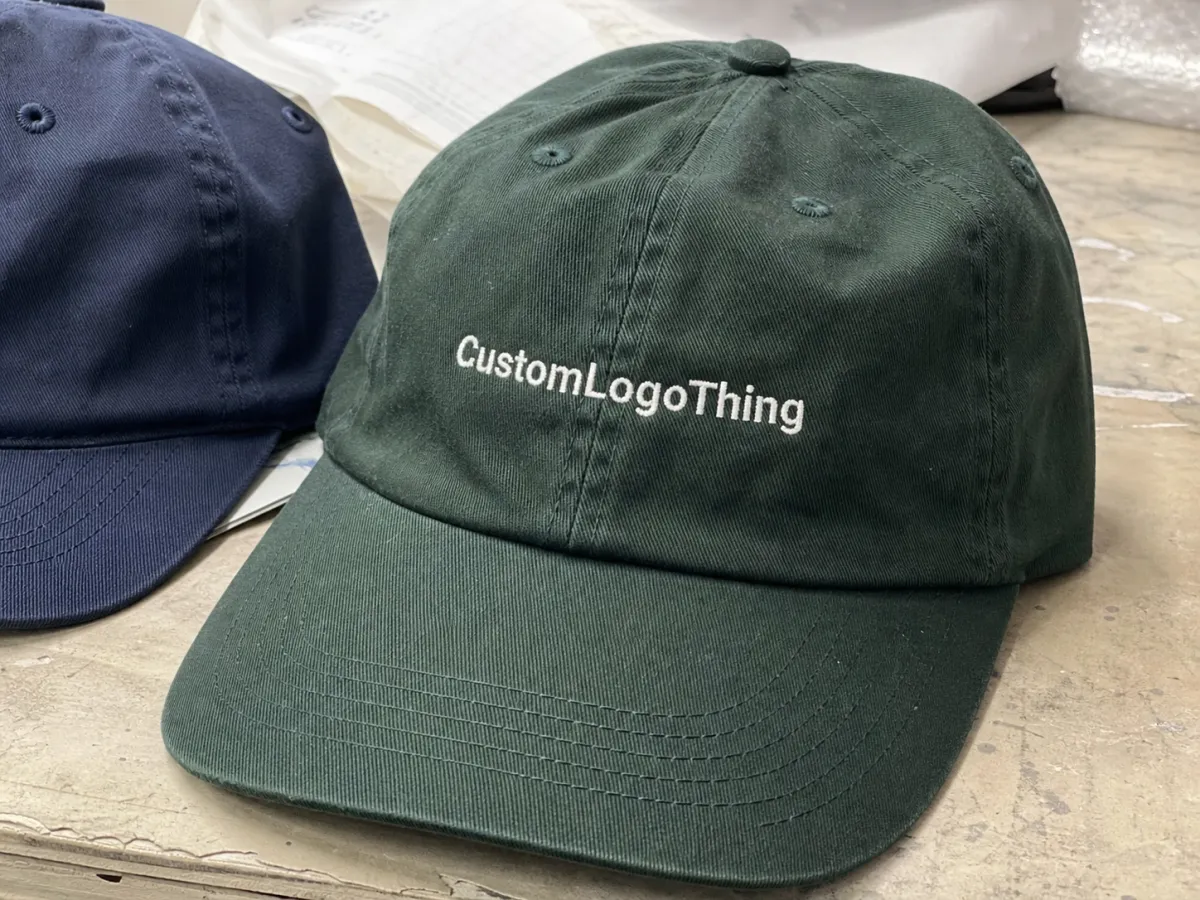
“Unstructured” sounds like jargon until you break it down. The front crown is softer, the profile sits lower, and the whole hat reads more casual than a rigid promotional cap. For a wine brand, that matters. The look should feel like an off-duty lifestyle item, not a trade show giveaway. Members can tell the difference, even if they do not call it that.
Fabric choice changes the feel immediately. Washed cotton twill gives a broken-in look. Brushed cotton feels a little cleaner. Polyester blends hold shape better and can run lower in cost, but they usually look less natural for a wine club audience. For most clubs, a cotton or cotton-rich blend is the safer choice because it fits the brand tone and photographs well in retail displays.
Closures are not glamorous, but they matter. A self-fabric strap with a brass buckle looks more premium. A metal slide closure is simple and adjustable. A fabric strap with a tuck-in hides neatly and tends to be comfortable for longer wear. If the goal is to keep unit cost cleaner, a basic closure is usually enough. If the hat is being sold as a premium add-on, the back closure is worth a closer look.
Decoration should match the artwork, not the ego of the buyer. Embroidery gives a classic, durable finish. Woven patches handle fine detail and layered artwork better than stitching alone. Printed patches are useful for tiny type, gradients, or multi-color logos that would get muddy in thread. A small vineyard illustration with a lot of thin lines? That may look beautiful on a screen and turn into a mess on a 2.5-inch front panel.
| Decoration method | Best use case | Typical cost impact | Notes |
|---|---|---|---|
| Flat embroidery | Simple logos, wordmarks, club names | Usually the cleanest base price | Strong premium look, but tiny text can disappear |
| 3D puff embroidery | Bolder lettering or initials | Often adds setup and stitch time | Less suitable for delicate artwork |
| Woven patch | Detailed art, thin lines, small text | Commonly higher than simple embroidery | Good for a polished, retail-friendly finish |
| Printed patch | Multi-color art, gradients, fine detail | Can be efficient for complex graphics | Needs careful proofing to keep colors accurate |
Color strategy is another place where clubs often overthink things. Neutral shades sell better because they work with casual apparel and do not fight the logo. Washed black, stone, olive, navy, and khaki are dependable. Loud colors can work for seasonal promotions, but they narrow the audience. From a buyer’s point of view, the safest choice is usually the color that looks good on the most heads and the fewest Instagram filters.
If you are comparing options for wine club unstructured dad hats Bulk Order Planning, keep one practical standard in mind: visibility on the front panel should hold up at arm’s length. If the logo only reads well in a close-up mockup, it is too busy for a cap. For material and packing standards, the Packaging Machinery Manufacturers Institute is useful for general packaging context, and the ISTA library is worth a look when hats are shipping with fragile club kits or boxed gift sets.
Specs to Lock Before You Request a Sample
Before a sample gets made, lock the spec sheet. Not “roughly this idea.” The actual decisions. Fabric weight, panel structure, closure type, logo size, thread colors, label method, and packaging preference all belong in the brief. If those items are vague, the sample becomes a guessing exercise instead of a useful approval step.
Sample approval is not just about liking the hat. It is the last chance to catch proportion issues, stitch density, color contrast, or a logo that sits too high on the front panel. A buyer may love the general look and still miss that the mark is too small for retail shelves or too large for member wear. That is why a sample should be judged against the target use, not just the mood board.
Measure what matters. Crown height. Brim curve. Head circumference range. Back closure adjustment range. Buyers do not need fashion school language. They need clarity on fit, because a hat that pinches or sits awkwardly gets returned to the back of the stockroom. If the club sells to a wide member base, a forgiving fit is more valuable than a fashion-forward profile that only suits a narrow audience.
Special requirements are common in wine club programs. You may need private-label labeling, a co-branded mark for a vineyard and distributor, or retail hang tags that explain the club tier. If the hats will be packed with bottles, inserts, or gift boxes, say that up front. Package design affects handling, and handling affects how clean the hat arrives. Simple truth, annoying in practice.
A clean spec sheet should include:
- Target quantity and any tiered quantity options
- Hat color or approved color range
- Decoration method and logo placement
- Artwork file format and number of colors
- Packaging preference and retail labeling needs
- Ship-to destination and target delivery window
That level of detail shortens the quote cycle. It also makes the conversation with your supplier more useful. If you need a broader sourcing overview, the Wholesale Programs page is a sensible place to start, and the FAQ can answer the basic ordering questions before the back-and-forth gets messy.
Cost, Pricing, MOQ, and Unit Cost Levers
Hat pricing usually comes down to quantity, decoration complexity, number of logo locations, and how custom the build is. A stock-style dad hat with one embroidery hit will usually price lower than a fully customized build with a patch, a side mark, and branded packaging. None of this is mysterious. It is just production math.
The biggest tradeoff is MOQ versus unit cost. Lower minimums help clubs test demand, but the per-hat price usually climbs. Once the order crosses a practical production threshold, unit cost can drop quickly. For a first run, that might mean comparing a 50-piece test order against a 200- or 300-piece program. For a larger club, it may mean pricing 250, 500, and 1,000 pieces so the cost curve is visible.
Watch the hidden line items. Digitizing. Setup. Label changes. Sample charges. Shipping. Special packaging. Sometimes the base hat looks cheap and the total invoice does not. That is not a scam. It is just how custom goods work. Ask for the full landed cost if you want a real comparison.
A practical pricing framework is better than fake precision. A 50-piece club trial might sit in one price band, while a 500-piece seasonal program lands in another, especially if the decoration uses a woven patch or multiple embroidery locations. For wine club unstructured dad hats Bulk Order Planning, the quote should show how the price changes at each tier. A single number is nice for a brochure. It is useless for decision-making.
| Order tier | Use case | Budget behavior | What to check |
|---|---|---|---|
| 50-100 pieces | Testing demand, small member gift run | Highest unit cost | Setup fees, sample charges, shipping |
| 150-300 pieces | Retail start, seasonal club bundle | Often the best balance of cost and risk | Decoration consistency, color availability |
| 500+ pieces | Established retail program, multiple drops | Lower unit cost, higher cash commitment | Reorder controls, packing, lead time stability |
The cleanest quote is one that gives you at least two or three quantity tiers. That lets the club compare the cost of caution versus the cost of scale. For a buyer, that is the difference between guessing and planning. And yes, that matters.
Production Steps, Timeline, and Reorder Windows
A sane production process should look boring. Brief. Artwork review. Mockup or sample approval. Material confirmation. Mass production. Quality check. Shipment. If your supplier cannot explain the path in that order, expect problems later. Visibility is underrated because it saves people from panicking over normal lead time.
Delays usually happen in the approval phase, not on the sewing line. Someone wants the logo a touch smaller. Someone changes the thread color after seeing the mockup on a different screen. Someone remembers the closure should match the patch backing. These are small changes individually and a headache together. The faster the decision loop, the cleaner the schedule.
Turnaround depends on how close the order stays to stock materials. A stock-adjacent build with a simple embroidery hit can move faster than a heavily customized cap with a special patch, custom lining, or branded insert. Rush jobs may be possible, but only if the materials and decoration method are already locked. Otherwise, the schedule gets expensive fast.
For most clubs, a realistic timeline is more useful than a promise. Sampling may take several business days, approval can take longer if multiple people weigh in, and production often runs in a moderate window after proof approval. Build in a buffer before release weekends, tasting events, and member shipments. The calendar does not care about optimism.
Reorder planning matters because wine clubs repeat events. Release weekends happen again. Member tiers renew. Retail shelves empty. Keeping the same spec on file protects color consistency and avoids re-approving the same logo placement every season. That is where a good supplier earns their keep: less rework, fewer surprises, cleaner restocks.
From an operations standpoint, wine club unstructured dad hats bulk order planning should always include a reorder window. If your first run moves faster than expected, a saved art file, saved bill of materials, and approved color references can shave days off the next cycle. Not magic. Just organized.
Why Clubs Keep Reordering the Same Hat Program
The best hat programs are repeatable. Once the club approves the design, the next order becomes a reorder instead of a new project. That matters because every fresh brief adds time and friction. A stable program is easier on purchasing, easier on marketing, and easier on the people trying to make the shelf look intentional.
Consistency is not glamorous, but premium brands care about it. Members notice when the thread color changes slightly, the logo shifts position, or the wash looks different from one batch to the next. Sometimes that variation is acceptable. Sometimes it makes the program look sloppy. A good supplier keeps that drift under control and flags it before it ships.
Presentation also influences perceived value. A hat folded neatly, tagged cleanly, and packed in a way that protects the brim feels worth more than the same hat tossed into a box. For club gifts and retail add-ons, that difference is real. Packaging does not need to be fancy. It needs to be intentional.
Support during the quote stage matters more than people admit. A supplier that asks about sell-through, event timing, and audience mix is usually trying to save the buyer from an expensive mismatch. A supplier that only asks for a logo and quantity is often selling a box, not solving a program.
"We do not want more merch. We want merch that leaves the building." That is the right attitude for a wine club hat program. If the order is built well, the hats do the work without constant babysitting.
Trust shows up in boring places: clear proofing, straightforward MOQ answers, and honest feedback when the logo is too detailed for the panel size. That honesty saves money. Usually, it saves time too.
Next Steps: Build the Order Plan and Request Pricing
If you are ready to move, gather the basics first: estimated quantity, target delivery date, logo file, preferred hat color, decoration method, and whether the order is for retail, member gifts, or staff use. A good brief turns a messy inquiry into a quote that can actually be compared across tiers.
Make a split plan. One quantity for testing demand. One for the full program. That gives you a real view of the tradeoff between caution and scale. It also helps the buyer and supplier discuss where the break point sits, instead of pretending one number fits every use case.
Decide now whether you need a sample, a mockup, or a production-only proof. Waiting until after the quote is approved slows everything down. If your logo has thin type, small vineyard details, or tight line work, a sample is usually worth the extra step. If the artwork is simple and the style is already proven, a proof may be enough.
Ask for pricing at more than one MOQ. That is how you compare the cost of testing versus the cost of scaling. It is also how you avoid getting cornered into a quantity that looks cheap per unit but makes no sense for inventory movement. For transactional buying, that is the whole game.
Send the spec sheet, confirm the decoration method, and Request a Quote built around wine club unstructured dad hats bulk order planning. That is the shortest path from idea to production. And yes, the details matter more than the mood board.
How many wine club dad hats should I order for a first run?
Start with a quantity tied to a real use case, such as member gifts, tasting-room retail, or event giveaways. If you are testing demand, ask for a smaller tier and a realistic reorder tier so you can compare unit cost. Do not guess based on hype. Order to inventory turns, not wishful thinking.
What decoration works best for unstructured dad hats in wine club merch?
Embroidery is the safest choice for a classic, premium look. Woven or printed patches work better when the logo has small details or multiple colors. Choose the method that matches the artwork, not the one that sounds fancier in a sales email.
What is the usual MOQ for bulk order planning on custom dad hats?
MOQ depends on the hat style, color availability, and decoration method. Lower MOQ usually means higher unit cost, so ask for tiered quotes. The best answer is the MOQ that fits your sell-through plan, not the biggest number a supplier can offer.
How long does production usually take for wine club unstructured dad hats?
Lead time depends on sample approval speed, material availability, and decoration complexity. Simple stock-style builds move faster than fully custom configurations. Build in buffer time before events because artwork delays are more common than stitching delays.
Can I reorder the same wine club hat later without rebuilding the artwork?
Yes, if the original specs, artwork files, and decoration setup are saved cleanly. Keep the same color references and logo placement to avoid variation. A good reorder starts with the old order number, not a fresh guessing game.