Buyer Fit Snapshot
| Best fit | packaging kpis for ecommerce metrics matter for packaging buyers comparing material specs, print proof, MOQ, unit cost, freight, and repeat-order risk where brand print, material, artwork control, and repeat-order consistency matter. |
|---|---|
| Quote inputs | Share finished size, material target, print colors, finish, packing count, annual reorder estimate, and delivery region. |
| Proofing check | Approve dieline scale, logo placement, barcode or warning zones, color tolerance, and any recyclable or compostable wording before bulk production. |
| Main risk | Vague material claims, crowded artwork, or missing packing details can create delays even when the unit price looks attractive. |
Fast answer: Packaging Kpis for Ecommerce Metrics Matter: Claims, Protection, MOQ, and Cost should be specified like a repeatable production item. The safest quote includes material, print method, finish, artwork proof, carton packing, and reorder notes in one written spec.
What to confirm before approving the packaging proof
Check the product dimensions against the actual filled item, not only the sales mockup. Ask for tolerance on folds, seals, hang holes, label areas, and retail display edges. If the package carries a logo, QR code, warning copy, or legal claim, reserve that space before decorative graphics fill the panel.
How to compare quotes without losing quality
Compare board or film grade, print process, finish, sampling route, tooling charges, carton quantity, and freight assumptions side by side. A lower quote is only useful if the supplier can repeat the same color, closure quality, and packing count on the next order.
Most stores watch freight spend and miss the packaging waste hiding inside each order. That blind spot gets expensive fast. It is how best packaging KPIs for ecommerce stay off the dashboard until damage claims, dimensional-weight charges, and re-ships start chewing through margin. From a packaging buyer's point of view, the numbers that matter are not the glamorous ones. They are the ones that show whether the box fits, the fill actually protects the product, and the parcel reaches the customer in one piece. Those packaging performance metrics only matter if they change how fulfillment works on the floor.
Fragile items, premium unboxing products, and high-volume consumables do not share the same KPI mix. A skincare brand shipping glass bottles needs a different dashboard than a snack subscription or a seller of heavy apparel. I learned that the hard way on a project where a perfectly acceptable mailer for one SKU family turned into a small disaster the moment we added a glass item to the same pack line. One week of clean reports, then a pile of broken product. The goal is not polished reporting. The goal is fewer replacements, lower dimensional weight, fewer customer complaints tied to packaging, and fewer damage claims that force a second shipment.
The short version is blunt: the best packaging KPIs for ecommerce are damage rate, packaging cost per order, cube utilization, void fill usage, and return rate tied to packing failure. Those five expose most of the leaks first. The rest of this review breaks down what each metric actually tells you, what it costs to track, and how to decide which numbers deserve space on the main screen.
What are the best packaging KPIs for ecommerce?
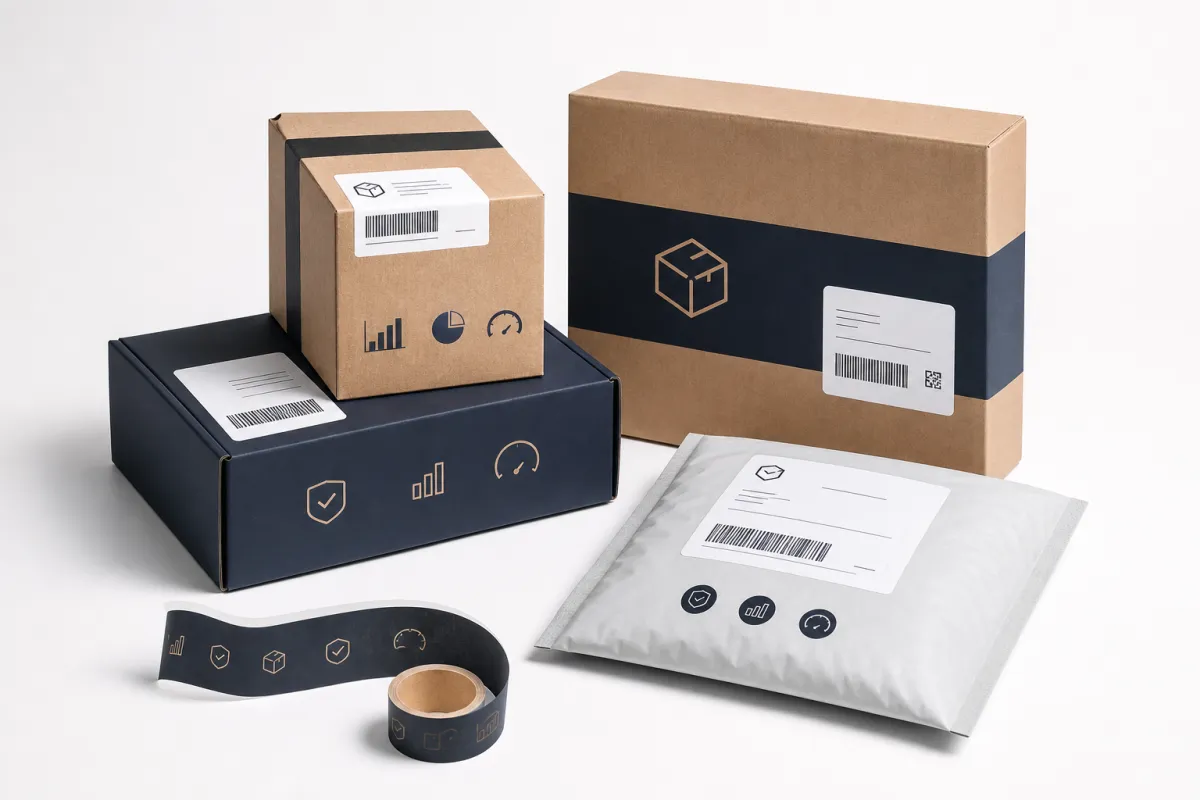
Tracking freight spend alone is a quick way to miss the real story. Freight matters, but it does not show the waste hiding in oversized cartons, sloppy packing stations, and the second shipment you pay for after a customer opens a crushed box. The best packaging KPIs for ecommerce connect packaging design to margin and customer experience, not just to the carrier invoice.
My short answer is straightforward: track damage rate to measure protection quality, packaging cost per order to measure margin pressure, cube utilization or dimensional weight efficiency to measure how much air you ship, void fill usage to catch overpacking or underpacking, and packaging-related return rate to see how often the system fails from the customer's side. Those are the best packaging KPIs for ecommerce because they line up with real dollars, not vanity reporting.
The right mix still depends on the product. A fragile candle line needs damage and complaint tracking. A low-margin apparel seller needs cube efficiency and packaging cost per order. A premium brand pushing branded packaging and Custom Printed Boxes needs consistency, presentation, and labor time, because package branding only matters if the order arrives intact and on time. Different businesses, different pain points. The metric stack should match the business, not the preferences of finance or operations.
There is also a commercial reality that gets ignored until the bill shows up. Cheap packaging is not cheap if it drives returns, replacement shipments, or a pile of support tickets. The best packaging KPIs for ecommerce put numbers on that tradeoff. They show whether a smaller mailer saves twelve cents or costs two dollars later. That is the difference between a cosmetic change and a real improvement.
Start with a narrow dashboard. The best packaging KPIs for ecommerce are usually four to six metrics, not twenty. If the team cannot explain what action each number triggers, it does not belong on the main screen. A useful KPI should answer one of three questions: do we protect the product, do we protect margin, or do we protect the customer experience?
Top best packaging KPIs for ecommerce compared side by side
Not every metric deserves equal attention. Some KPIs show damage quickly. Others move slower but tell you more about financial leakage. The best packaging KPIs for ecommerce need to cover protection, cost, efficiency, and consistency without turning the operation into a spreadsheet museum.
Here is the practical comparison I would use for a real packaging review. Damage rate is the cleanest protection metric. Packaging cost per order tells you how much each shipment spends on materials and rework. Dimensional weight efficiency shows whether you are paying to ship empty space. Right-size rate shows whether the carton matches the order profile. Void fill percentage shows whether the packing team is being too generous or too cautious. Packing labor time shows whether packaging choices slow the line. Packaging-related returns tie the whole system back to customer impact.
The tradeoff is simple and irritating: the cheapest package is often the wrong package. A lightweight carton may save a few cents, then trigger a broken product, another outbound shipment, and a customer complaint. That is why the best packaging KPIs for ecommerce need to be read together, not in isolation. A low packaging cost per order means very little if damage is rising at the same time.
Some metrics are easier to collect than others. Damage rate and returns can be pulled from customer service tickets, claims data, and order history. Packaging cost per order is straightforward if procurement and ops data are decent. Dimensional weight efficiency usually comes from carrier invoices and carton specs. Packing labor time is harder unless the WMS or workstation software captures timestamps. Right-size rate and void fill usage often need audits or sample checks. The best packaging KPIs for ecommerce are not always the easiest to measure, but they should still be manageable every week.
For most teams, I would keep the first dashboard to four numbers:
- Damage rate - tells you whether the pack-out actually protects the product.
- Packaging cost per order - captures boxes, mailers, inserts, tape, labels, dunnage, and rework.
- Dimensional weight efficiency - shows whether you are paying carrier charges on unused space.
- Packaging-related return rate - reveals customer-visible failures that slip past internal checks.
That list is enough to begin. Add void fill usage and packing labor time if the operation is large enough to justify the extra reporting. That is the sane version of the best packaging KPIs for ecommerce: a short list, clear definitions, and a direct link to a decision.
Detailed reviews of the best packaging KPIs for ecommerce
Damage rate is the KPI everyone talks about and half the teams measure badly. It should answer a plain question: what share of orders arrive broken, dented, crushed, leaking, or otherwise unacceptable? The hard part is separating packaging failure from carrier abuse and product defect. A cracked bottle that was packed in a weak mailer is a packaging problem. A pallet shift that crushes a carton because the outbound build was poor is still a packaging problem, even if the carrier gets the blame. The best packaging KPIs for ecommerce force that distinction instead of hiding behind vague "in transit" labels.
Damage rate is one of the most useful metrics because it ties directly to replacement cost, support time, and bad reviews. A rate below 1% can still hurt if the average order value is high or the margin is thin. Fragile goods teams often try to stay under 0.5% on regular routes and under 1% on tougher lanes, though that depends on product fragility, packaging design, and carrier mix. If the team is not sampling claims by SKU and lane, the number is mostly a comfort blanket. The best packaging KPIs for ecommerce expose what is failing, not what looks tidy in a meeting.
Packaging cost per order sounds basic because it is basic, and that is exactly why people get it wrong. Include the carton or mailer, insert, tape, labels, dunnage, and any repack or manual correction tied to the order. Leave out labor for exception handling and the KPI becomes fiction. Leave out void fill because "it is cheap" and the KPI is still fiction. The clean way to read this number is to compare it by SKU family and order profile, not as one blended average. That is how expensive orders hide inside a healthy-looking month.
Packaging design changes the math quickly. A more efficient custom box might cost a few cents more in material but save enough on labor and freight to pay for itself within a quarter. The best packaging KPIs for ecommerce should help you make that call, not just report that a box is expensive. If a company sells premium skincare, branded packaging may justify a higher per-order cost because it supports repeat purchase behavior. If the business sells commodity accessories, package branding should not blow up the unit economics. The math needs to fit the margin, not the mood board.
Cube utilization and dimensional weight efficiency make margin leaks visible. Shipping air is a luxury hobby, not a logistics strategy. If your average carton is 30% empty, you are paying for space twice: once in materials and again in carrier billing. Carriers price by dimensional weight because volume occupies their network, and they are not sentimental about padding choices. The best packaging KPIs for ecommerce show how much of each box is product versus void. A strong target is usually to keep empty space low enough that the carton protects the item without inflating the billed weight class.
Right-size rates help here. If orders keep falling into one oversized carton, the problem is usually not the carrier. It is packaging design, carton selection, or poor bin logic at the pack station. In practice, right-sizing may reduce cube by 10% to 25% on a mixed-SKU operation. On some channels, that kind of reduction can matter more than squeezing a cent off tape cost. The best packaging KPIs for ecommerce should make those tradeoffs visible.
Void fill usage is a sneaky KPI because it signals both Cost and Process control. Too much filler and you are wasting money on paper, air pillows, or kraft. Too little and the product shifts, which drives damage. The real issue is consistency. If one packer uses two full handfuls and another uses a single sheet, training is the problem, not the material. A stable pack-out should stay within a tight range by SKU. When it does not, the best packaging KPIs for ecommerce usually point to a missing standard operating procedure.
Packaging-related return rate and complaint rate are the customer-facing signals that keep the dashboard honest. A product can pass the warehouse and still fail in the customer's hands because of poor presentation, weak seals, hard-to-open inserts, or sloppy packing. Returns tied to packaging are especially useful for premium retail packaging and Subscription Brands That care about unboxing. If the box arrives fine but the experience feels cheap, package branding has missed the point. The best packaging KPIs for ecommerce should capture that, not just box crush.
One more point that buyers ignore at their own risk: use standards as a sanity check. If you are testing cartons or inserts, reference methods like ISTA transit testing and material standards from ASTM when appropriate. The International Safe Transit Association has useful guidance on test protocols at ista.org, and the Packaging School and similar industry resources often remind teams that a packaging change should be validated, not guessed. If your packaging supplier cannot explain how the pack-out performs against a realistic distribution cycle, that is a warning sign. The best packaging KPIs for ecommerce should eventually connect back to testable performance, not folklore.
Price comparison: what it costs to track packaging KPIs
Measurement has a price. Not a dramatic one, but a real one. The cheap path is a spreadsheet and manual reviews. The middle path is a WMS or ERP add-on with basic dashboards. The expensive path is a proper BI stack with structured data, exception alerts, and clean SKU-level reporting. The best packaging KPIs for ecommerce do not require a fortune, but they do require discipline.
The hidden cost is usually bad data entry. One sloppy category label like "damaged in transit" used for everything from crushed cartons to missing inserts can wreck the report. Another common failure is splitting the same problem across too many codes. If customer service, warehouse ops, and finance each use different definitions, the numbers will fight each other. Then everyone nods at the dashboard and ignores it. Very efficient, very useless. The best packaging KPIs for ecommerce only work if the data definitions are boring and consistent.
| Tracking method | Typical cost | Best for | Tradeoff |
|---|---|---|---|
| Spreadsheet plus order and return exports | $0-$150 per month in tools, plus internal labor | Small brands under about 500 orders per week | Cheap, but easy to break and hard to scale |
| WMS or ERP add-on dashboard | $200-$1,500 per month | Growing operations that need weekly KPI review | Better automation, but limited flexibility |
| BI dashboard with clean data models | $1,000-$5,000+ per month depending on setup | Multi-warehouse teams and high SKU counts | More powerful, but only if the data is clean |
| Audit program with sample checks and photo logging | $300-$2,000 per month in labor | Fragile product lines and premium packaging | Excellent insight, but adds manual work |
The practical buying advice is simple: do not pay for software first and ask questions later. Start by proving that a KPI changes a decision. If the metric cannot change carton choice, fill selection, SKU packaging, or pack-station rules, it is decoration. The best packaging KPIs for ecommerce should earn their place by showing a material problem, not because the dashboard looks polished.
There is also a cost to measuring too much. Audit programs are useful, but they can get expensive if every exception triggers a human review. Sample checks, photo logging, and carrier claim investigation all take time. A small operation might spend a few hundred dollars a month in labor to keep the data honest. A larger one might spend a few thousand. That is still worth it if the metrics reduce re-shipments or catch a bad carton before it hits 20,000 orders. The best packaging KPIs for ecommerce should justify that spend by saving more than they cost.
If you are redesigning the package itself, do not treat materials as a separate island. Internal product pages matter here. A team that needs packaging upgrades should look at Custom Packaging Products that match the actual shipping profile instead of forcing an oversized stock box into a tight product mix. If the packaging needs to do double duty as protection and presentation, then custom printed boxes can be worth the cost. That is especially true for branded packaging and package branding programs where the unboxing experience is part of the product.
Process and timeline for implementing packaging KPIs
Implementation usually takes longer than people expect, mostly because everyone wants the answer before the baseline exists. A practical rollout for the best packaging KPIs for ecommerce starts with a definition week, then two to three weeks of data collection, then a short validation period before the weekly review begins. If the team skips the baseline, they will spend the next month arguing over whether the problem is real.
Week one should define each KPI in plain language. What counts as damage? What counts as a packaging-related return? What counts in packaging cost per order? Leave no room for interpretation. Week two and three should collect data across different SKUs, pack stations, and carrier lanes. Averages from one month can hide more than they reveal. A few ugly lanes often explain most of the problem. The best packaging KPIs for ecommerce only work if the sample includes a real spread of orders, not just the easy ones.
Ownership matters. Operations owns pack-out behavior. Finance owns cost tracking. Customer service sees complaints and returns first. Procurement knows what materials are changing and when. If those groups do not agree on definitions, the report becomes political theater. That is a waste of everyone's time. A clean KPI process creates one version of the truth and a short action list. The best packaging KPIs for ecommerce are useful because they bring those teams into the same conversation.
Timing trips up a lot of teams. Packaging failures often show up weeks after the original shipment. A box may look fine at dispatch, then generate damage claims only after a longer carrier lane or a delayed customer return. If the team reviews metrics too quickly, it misses the lag. Weekly exception tracking and monthly trend reviews work well together for that reason. The best packaging KPIs for ecommerce should be watched on two clocks: fast enough to catch problems, slow enough to show patterns.
A useful operating rhythm looks like this:
- Weekly: review exceptions, claims spikes, and any SKU with unusual damage or return activity.
- Monthly: compare packaging cost per order, cube utilization, and damage by SKU family and lane.
- Quarterly: test one packaging change at a time, then compare before-and-after data.
That last point matters. Change one variable. Box size, void fill amount, insert type, sealing method, or carton grade. Not all five at once. Otherwise you will not know which change fixed the issue. The best packaging KPIs for ecommerce are only useful if they can point to a specific next move.
How to choose the best packaging KPIs for ecommerce operation
The right KPI set depends on the business model. A fragile goods brand should prioritize damage rate, packaging-related complaint rate, and test validation. A subscription brand should care about consistency, packing labor time, and right-size rate, because the unboxing process has to repeat cleanly every time. A low-margin seller should obsess over packaging cost per order and dimensional weight efficiency. The best packaging KPIs for ecommerce are the ones that match the risk profile of the business.
Order volume changes the method too. Smaller sellers can often track metrics manually with a disciplined spreadsheet and periodic audits. Larger teams need automated reporting and exception alerts because no one has time to eyeball thousands of orders. That said, even small brands need structure. A spreadsheet only works if the inputs are consistent. If they are not, the report turns into expensive guesswork. The best packaging KPIs for ecommerce do not require enterprise software on day one, but they do require clean definitions.
What should you avoid tracking first? Anything that sounds smart but does not lead to a packaging decision. A dashboard full of vague totals is a waste. You do not need 17 charts to know that an oversized box is wasting money. You need one or two numbers that prove it. That is the difference between reporting and action. The best packaging KPIs for ecommerce are decision tools, not trophies.
A simple decision framework works better than a giant scorecard:
- One protection KPI - usually damage rate.
- One cost KPI - usually packaging cost per order.
- One efficiency KPI - usually dimensional weight or cube utilization.
- One customer KPI - usually packaging-related returns or complaints.
That structure keeps the dashboard focused. It also forces the team to think about packaging as a system. The box, the fill, the insert, the sealing method, the pack station, and the carrier lane all interact. If the box changes and the fill changes but the KPI stays flat, the redesign probably did nothing useful. If the cost drops while the return rate rises, that is not a win. The best packaging KPIs for ecommerce should make those tradeoffs hard to ignore.
There is also a branding angle that should not be ignored. Premium product packaging and retail packaging are not just visual choices. They affect expectation, opening experience, and perceived quality. A clean, accurate pack-out supports branded packaging. A sloppy one makes even the nicest design look cheap. If you are investing in package branding, the KPI set should include enough customer feedback to show whether that branding survives transit and still feels intentional on arrival.
For businesses considering sustainable packaging shifts, a metric review should also account for material sourcing and compliance. Recycled content, paper-based dunnage, and FSC-certified materials can help, but not if they damage the product or raise freight cost too much. The FSC has solid information on responsible sourcing at fsc.org, and the EPA's packaging and waste resources at epa.gov are useful when teams want to reduce waste without pretending cost does not exist. The best packaging KPIs for ecommerce should give those choices a real business frame.
If I had to compress the decision into one sentence, it would be this: track the metrics that tell you whether the packaging protects the order, fits the order, and pays for itself. That is the whole job. The best packaging KPIs for ecommerce are not the prettiest ones. They are the ones that stop bad packaging from hiding behind average numbers.
Our recommendation and next steps for ecommerce teams
My starter stack is boring on purpose: damage rate, packaging cost per order, dimensional weight efficiency, and packaging-related return rate. Those four tell you whether the package protects the product, protects margin, and keeps shipping waste under control. If you want one extra metric, add void fill usage or right-size rate. That is enough for most teams. The best packaging KPIs for ecommerce do not need to be fancy to be effective.
Before benchmarking against peers, set your own thresholds. Without a target, the numbers are just expensive decoration. Decide what acceptable damage looks like by SKU family. Decide what packaging cost per order can live within margin. Decide what dimensional weight class you refuse to exceed unless the product truly needs it. That gives the dashboard teeth. The best packaging KPIs for ecommerce should trigger decisions, not applause.
Here is the rollout I would use in the real world:
- Audit 50 to 100 orders across the main SKU families, pack stations, and carrier lanes.
- Map failure modes by product type: crush, shift, leak, seal failure, missing insert, or oversized carton.
- Test one change at a time, such as carton size, void fill amount, insert design, or sealing method.
- Review results weekly for the first month, then monthly once the pattern stabilizes.
That sounds slow. It is slower than guessing, which is why it works. A packaging change that lowers cost but raises returns is not a win. A prettier box that inflates DIM weight is not a win. A lower-cost mailer that destroys the product is definitely not a win. The best packaging KPIs for ecommerce keep those false victories from slipping through. Kinda annoying? Sure. Also cheaper than paying for the same mistake twice.
If the data points toward a packaging redesign, do not stop at the carton. Review inserts, fillers, tape strength, carton grade, and the pack method itself. Sometimes the problem is the packaging design. Sometimes it is the workflow. Sometimes the pack station is set up so badly that even a decent box fails. A strong KPI system will tell you which one it is. The best packaging KPIs for ecommerce are supposed to uncover that kind of detail.
My final rule is simple: if a packaging change cuts cost but lifts breakage, complaints, or re-shipments, throw the "savings" out. Real savings survive the return cycle. That is the part too many teams miss. Review the best packaging KPIs for ecommerce weekly, compare trends by SKU and carrier, and lock in the changes that protect margin without making the customer pay for shortcuts. If the metric says the box is cheaper but the customer still gets a damaged order, the math is lying.
FAQ
What are the best packaging KPIs for ecommerce to track first?
Start with damage rate, packaging cost per order, dimensional weight efficiency, and packaging-related return rate. Those four tell you whether your packaging protects the product, protects margin, and keeps shipping waste under control. For most teams, that is enough to see the biggest problems without building a monster dashboard. The best packaging KPIs for ecommerce usually start there for a reason.
How do I measure packaging cost per order accurately?
Include every direct packaging material and any repack labor tied to the order. Do not leave out tape, inserts, void fill, labels, or special handling if you want a number that means anything. If you ignore labor or rework, the cost looks better than reality, which helps no one. That is why the best packaging KPIs for ecommerce need a strict cost definition.
Which packaging KPI best shows if my boxes are too big?
Dimensional weight efficiency and cube utilization are the clearest signals. If you are paying for a lot of empty space, those metrics will expose it fast. Right-size rate helps too, especially if your operation keeps falling back to one oversized carton. The best packaging KPIs for ecommerce should make oversized packaging impossible to hide.
How often should ecommerce teams review packaging KPIs?
Weekly for exceptions and monthly for trend review is the practical baseline for most teams. If you ship fragile or high-volume products, review faster when packaging or carrier conditions change. The important part is consistency. A KPI reviewed irregularly is just a number with a fancy label. The best packaging KPIs for ecommerce only work when someone actually looks at them.
Can small ecommerce brands track these KPIs without expensive software?
Yes, at small volume a spreadsheet plus order and return data can work surprisingly well. The catch is discipline: the process has to be consistent or the numbers turn into guesswork. Manual tracking is fine if the definitions are tight and the review cadence is regular. The best packaging KPIs for ecommerce do not require enterprise software on day one, but they do require attention.


