Book Kraft Paper Bags Quote Checklist: What Buyers Miss
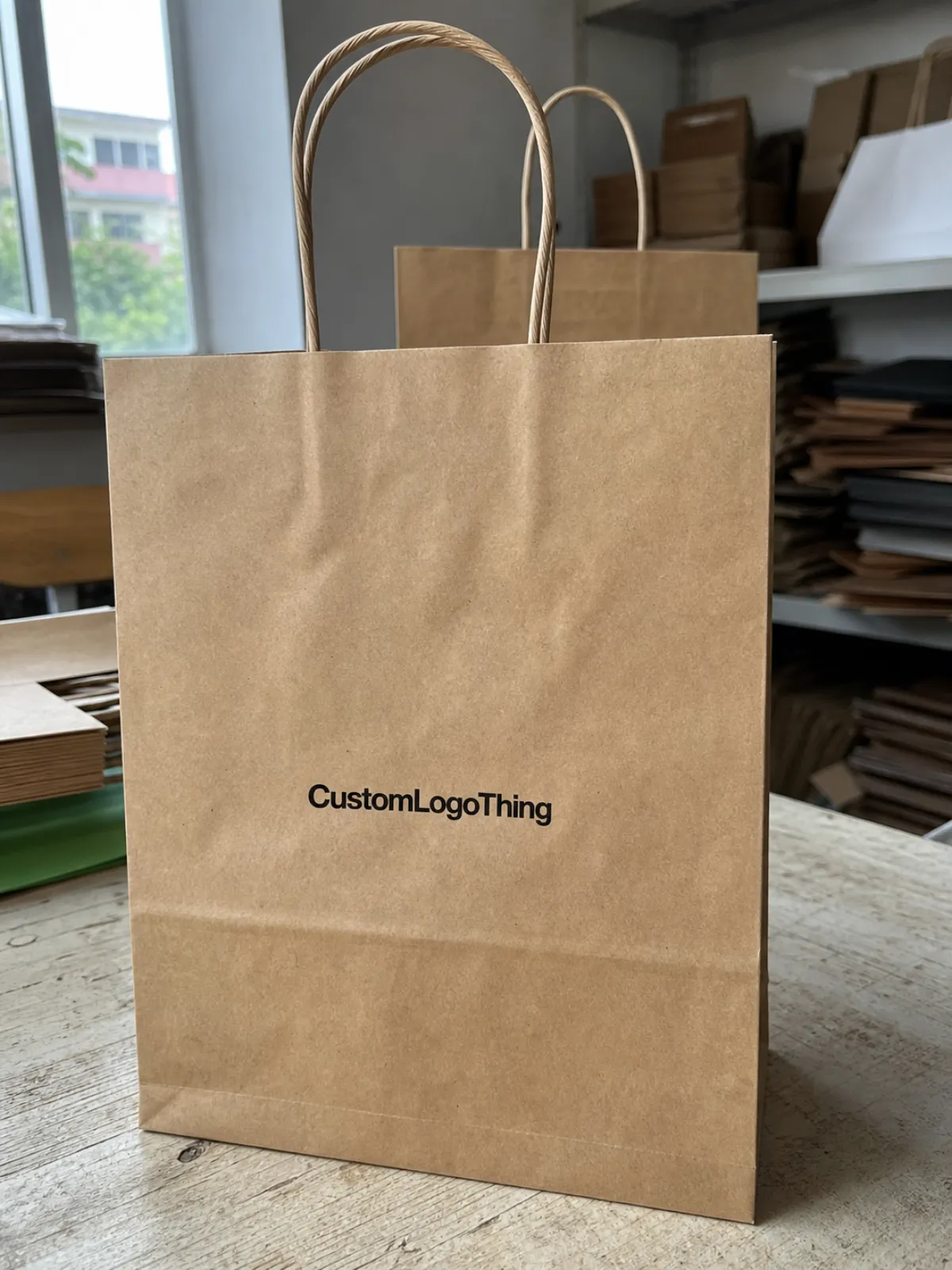
Bad bag quotes usually do not happen because suppliers are trying to be difficult. They happen because the request was thin on detail, and the supplier had to guess at size, weight, print coverage, and shipping conditions. That is where pricing starts to drift. A book Kraft Paper Bags quote checklist keeps the request specific enough to quote cleanly the first time, which saves everyone from the slow back-and-forth that tends to inflate cost and delay production.
Book Kraft Paper Bags look simple, especially when buyers are comparing flat product photos. In practice, they sit at the intersection of paper engineering, print setup, and retail handling. A bag for a single paperback, a bag for two hardcovers, and a bag for a book fair purchase that includes bookmarks and tissue all need different construction choices. The material can look right and still fail if the gusset is too tight, the handles are too light, or the paper weight was chosen for appearance instead of load.
Kraft Paper Bags are not one-size-fits-all. Paper weight, size, gusset depth, handle type, logo coverage, ink count, finish, packing method, carton count, and shipping terms all affect the final number. A small change, such as moving from one-sided one-color print to two-sided two-color print, can shift setup cost, proofing time, and the production schedule. Buyers who treat those details as optional usually end up revising the quote later.
If a supplier quotes custom book bags without asking about size, load weight, handle type, artwork, and delivery location, they are filling gaps with assumptions. Procurement should not depend on assumptions.
The goal is to compare like with like. A reinforced printed bag and a plain brown sack with a logo are not the same product, even if the front photo is convincing. Use this book Kraft Paper Bags quote checklist to prepare a request that reflects the bag you actually need.
Product Details That Change the Bag You Actually Receive
Book kraft paper bags are custom carry bags sized and reinforced for books, journals, notebooks, catalogs, and similar paper goods. Books are compact, dense, and awkward in the wrong packaging. That is why a bag can look fine on screen and still perform poorly if the gusset is too narrow, the adhesive line is weak, or the handle was chosen as if the contents were clothing instead of paperbacks and hardcovers.
Brown kraft gives a natural retail look and hides scuffs better than bright white paper. White kraft gives stronger contrast for logos and can make color printing read cleaner. Dyed kraft can work for brand campaigns or seasonal runs, but color availability, MOQ, and print behavior should be checked early rather than discovered after the quote is approved.
Handle choice matters more than many buyers expect. Twisted paper handles are common for everyday retail because they balance strength, appearance, and cost. Flat paper handles are often used for volume orders, school stores, and event handouts. Cotton rope handles feel more premium and suit special editions, gift packaging, or launch bags where the presentation matters. Die-cut handles can work for compact book fair bags, but the paper around the cutout needs enough strength to hold shape.
Bottom structure and gusset depth deserve real attention. A 4-inch gusset carries a small stack better than a narrow 2-inch gusset, but it also changes material use, shipping volume, and shelf storage. Books are dense, so a narrow bag with weak sidewalls can split or tilt when the load shifts. That kind of failure usually shows up at checkout or during carry-out, which is the worst possible time.
Reinforcement options include folded tops, bottom cards, thicker kraft stock, stronger glue lines, and reinforced handle patches. Printing options usually include flexographic printing for simple logos and larger volume runs, screen Printing for Bold spot colors, and offset or full-color printing when the artwork and budget call for it. Matte lamination, spot UV, embossing, foil stamping, and varnish can all be quoted, but each one adds cost and can affect recyclability or turnaround time.
Packing also belongs in the first request. Decide whether the bags should arrive flat packed in bundles of 50 or 100, retail-display ready, or cartoned for warehouse storage. That detail looks minor until freight charges or fulfillment labor start showing up in the landed cost.
Specifications to Prepare Before Requesting a Custom Bag Quote
A useful book kraft paper bags quote checklist starts with dimensions. Give the bag size as width x gusset x height. Do not send only the book size. A 7 x 10 inch book does not belong in a 7 x 10 inch bag unless you enjoy watching staff wrestle merchandise into packaging at the register.
Measure the largest common bundle, not the smallest product in the catalog. If customers often buy two paperbacks and one hardcover, quote for that load. If the bags need to carry journals, postcards, stickers, bookmarks, pens, or event merch, include those items in the sizing logic too. Clearance matters for loading speed, and loading speed matters more than people think in a busy shop or at a launch table.
Paper weight should match the use case. Lighter kraft can work for a single paperback, small notebooks, stationery, or low-load event handouts. Mid-weight stock is a better fit for standard retail book purchases. Heavier kraft makes sense for hardcovers, catalogs, multi-item orders, and premium bags that need a more substantial feel. In many bulk quote discussions, buyers look at ranges such as 100-120gsm for lighter carry bags, 130-150gsm for standard retail use, and 160gsm or higher for heavier loads, depending on bag size and structure.
Define the expected load in pounds or kilograms. A bag meant for 2 lb of paperbacks can use a different structure than one expected to carry 8-10 lb of hardcovers. Handle comfort changes too. Thin handles can dig into hands fast once the bag gets heavy, and that becomes a brand problem even if the bag itself survives.
Artwork details need to be specific: logo file type, print location, print size, number of colors, Pantone references if color matching matters, and whether printing is one side or two sides. Vector files such as AI, EPS, or editable PDF are preferred. A low-resolution logo pulled from a website is not production artwork.
Color tolerance should be addressed early. Kraft paper is not bright white art paper, and ink colors look warmer and more muted on brown stock. If exact color is critical, ask about white ink underbase, white kraft, or a printed sample. A buyer who expects the same visual result on brown kraft and coated white stock is setting up a surprise for themselves.
Add compliance and sustainability details before quoting. If you need recycled materials, FSC certified paper, post-consumer waste content, recyclable finishes, soy-based inks, or plastic-free packaging, say that upfront. Biodegradable claims should be checked against the actual material structure and finish, not just the marketing line on a spec sheet.
Pricing, MOQ, and Unit Cost Factors for Kraft Book Bags
Price is shaped by quantity, size, paper weight, handle type, print coverage, finish, packing method, and shipping destination. That sounds obvious until a buyer asks for a simple custom bag and then adds two-sided full-color printing, rope handles, foil, a custom size, and a rush date. The quote changes because the product changed.
Lower MOQs are usually easier for standard-size kraft paper bags with one-color logos. Custom sizes, premium handles, specialty finishes, heavier paper, full-color artwork, and unusual packing instructions tend to push quantities higher. Setup costs may include plates, screens, cutting dies, foil dies, sampling, and artwork handling. Some suppliers list those separately. Others fold them into the unit price. Ask how the quote is structured before comparing anything.
| Bag Option | Typical Use | Cost Direction | Buyer Tradeoff |
|---|---|---|---|
| Standard brown kraft, one-color logo | Bookstore checkout, school stores, event sales | Usually lowest | Lower setup cost, simpler artwork |
| White kraft, two-sided print | Publisher launches, boutique retail | Moderate | Cleaner logo contrast, higher print cost |
| Heavy kraft with reinforced bottom | Hardcovers, catalogs, multi-item purchases | Moderate to higher | Better strength, more paper and freight volume |
| Rope handle with foil or embossing | Premium gift bags, limited editions | Higher | Stronger presentation, longer setup and higher MOQ |
| Full-color custom print | Campaign bags, branded event packaging | Higher | More visual impact, tighter color control needed |
Unit cost usually drops as volume rises because fixed setup costs spread across more bags and machine time becomes more efficient. A simple one-color kraft bag may price much better at 5,000 pieces than at 1,000 pieces because the plates and press preparation stop dominating the math. Depending on size, print coverage, and shipping, broad unit ranges can move from under $0.30 for simple high-volume bags to well over $1.00 for premium reinforced bags with specialty finishes. Those are ranges, not guarantees.
Do not compare only the bag price. A low quote can become a poor buy once shipping, duties, carton packing, weak specs, or missing setup charges are added. Ask for itemized unit price, setup fees, sample fee, MOQ, price breaks, carton count, gross weight, shipping terms, and production lead time.
If the project is still early, a supplier should be able to price both a best-value version and a premium version. That gives buyers a clean way to compare tradeoffs instead of guessing which features matter most.
Process and Timeline From Artwork to Delivered Paper Bags
The standard process is quote request, spec confirmation, artwork review, digital proof, sample approval if needed, mass production, quality check, packing, and delivery. Nothing dramatic. Just a chain of small decisions that needs to stay in order.
What speeds things up? Final vector artwork, exact bag size, confirmed quantity, print color references, shipping address, and fast proof approval. A buyer who sends a complete book kraft paper bags quote checklist usually gets cleaner pricing faster because the supplier is not chasing missing information before the estimate is even stable.
What slows things down? Blurry logos, changing bag sizes after pricing, undecided handles, missing Pantone numbers, custom dies, specialty finishes, and last-minute address changes. The longest delays often happen before production begins, not inside the press room.
Simple printed kraft bag orders are usually faster than custom-size, full-color, foil-stamped, laminated, or heavily reinforced bags. A practical timeline may look like 1-3 business days for quote clarification, 1-2 business days for digital proofing after artwork is ready, several business days for sample handling if requested, and roughly 12-25 business days for production depending on complexity and quantity. Freight can add a few days or several weeks depending on method and destination.
Sample options vary. A digital proof confirms layout, logo placement, scale, and print sides. A stock sample helps check paper feel, handle style, size family, and structure. A pre-production sample checks the actual build before mass production, which matters for premium projects and high-quantity rollouts.
Skip a physical sample only when the risk is low: repeat orders, simple one-color logos, standard bag sizes, tight but realistic timelines, or budget-sensitive projects where speed matters more than touching the bag first. Do not skip a sample for premium bookstore launches, limited editions, unusual book weights, tight brand color requirements, or any order large enough that a wrong bag becomes an expensive mistake.
Common Quote Mistakes That Make Book Bags More Expensive
Mistake one: asking for the cheapest bag without defining load weight. Cheap and torn is not a strategy. If the expected load is 6 lb, say 6 lb. If customers carry the bags for a long walk after an event, say that too.
Mistake two: choosing a bag size that only fits the book when empty. Leave room for easy insertion, tissue, receipts, bookmarks, postcards, or multiple purchases. Staff should not need two hands and a lot of patience to pack one order.
Mistake three: assuming all kraft paper is identical. Recycled content, surface smoothness, stiffness, fiber quality, and print behavior vary. Brown kraft made from recycled fibers can look slightly different from virgin kraft or white kraft. That may be fine. It just should not be a surprise.
Mistake four: requesting full-color artwork on brown kraft without planning for muted color shifts or a white ink underbase. Rich blues, pale yellows, and skin tones can move noticeably on natural kraft. If brand color matters, use Pantone references and ask to see proofing.
Mistake five: ignoring handle comfort. Books are heavy compared with apparel or small cosmetics. Thin handles can dig into hands and make a decent bag feel cheap. Twisted paper, cotton rope, and reinforced handles each solve that problem differently, and each comes with its own cost profile.
Mistake six: comparing quotes without matching specs. One supplier may include reinforced bottoms, export cartons, proofing, and clear shipping terms. Another may quote a lower unit price and leave out half the build. Use the same book kraft paper bags quote checklist with every supplier or the comparison becomes noise.
Mistake seven: forgetting shipping volume. Paper bags are light but bulky, and carton size affects freight cost. A quote that looks strong before freight can lose ground once dimensional weight, delivery zone, and liftgate needs are added.
Mistake eight: waiting too long to lock decisions. Custom packaging is production work, not instant checkout. The sooner the specs are final, the cleaner the price and timeline tend to be.
What a Practical Supplier Should Check Before Quoting
A practical supplier should not just return a number. They should check whether the requested size actually fits the load, whether the paper weight suits the carry weight, whether the handle style matches the budget, and whether the artwork can be printed cleanly on the chosen kraft stock. That kind of review is not upselling. It is the difference between a useful quote and a quote that looks attractive until production starts.
Good quoting also means flagging weak points early. If the artwork needs cleanup, if the color will shift on brown kraft, if the chosen finish may add lead time, or if the quantity is too low for a complex build, that should be said up front. Buyers may not love every answer, but they usually prefer an honest constraint to a late-stage correction.
Quality control should cover structure, print placement, color consistency, carton packing, order quantity, and visible defects before shipment. For broader packaging performance principles, buyers can reference distribution testing resources from ISTA, especially if bags are part of a larger shipping or fulfillment system that uses corrugated cartons and mixed-product packing.
Good custom packaging is not magic. It is clear specs, suitable materials, printable artwork, and a supplier who reads the request closely enough to catch the problems before they become expensive.
Next Steps Before You Request Your Kraft Paper Bag Quote
Before asking for pricing, gather the details that actually decide the quote. Quantity. Bag dimensions. Paper color. Paper weight preference. Handle type. Print sides. Ink colors. Finish. Expected load weight. Delivery location. In-hand deadline. The list looks basic because it is basic, and missing any one of those items can create avoidable revisions.
Prepare artwork in vector format when possible, such as AI, EPS, or editable PDF. Include Pantone colors if brand matching matters. If you only have a PNG or JPG, send it anyway, but expect cleanup to affect timing or cost.
Include product details too: average book size, heaviest expected order, whether customers carry the bag around an event, and whether the bag needs to hold extras like journals, postcards, stickers, pens, catalogs, or merch. A bag that works for a single paperback may not hold a hardcover bundle plus a T-shirt.
Ask for two quote options: a best-value version and a premium version. That one comparison makes the tradeoffs visible. The standard kraft bag with twisted handles may be the right balance. The white kraft bag with foil and rope handles may be better for a gift edition. Either way, the decision is grounded in specs, not guesswork.
Request price breaks at sensible quantities such as 1,000, 2,500, 5,000, and 10,000 pieces if those volumes match your storage space and cash flow. Bigger orders can reduce unit cost, but inventory sitting in a back room is still inventory. Carton storage, cash tied up, and future design changes all matter.
Confirm your internal approval path before requesting samples. Slow approvals are one of the most ordinary ways to miss a launch date. A complete book kraft paper bags quote checklist keeps the conversation focused, helps buyers compare real pricing, and leads to a cleaner custom packaging quote.
FAQs
What should I include in a book kraft paper bags quote request?
Include quantity, bag size in width x gusset x height, paper color, paper weight, handle type, print colors, print sides, artwork files, finish, delivery address, and deadline. Add expected book weight or typical customer purchase size so the supplier can recommend the right reinforcement. Ask for setup fees, sample fees, MOQ, price breaks, carton details, shipping terms, and lead time in the same quote.
What MOQ should I expect for custom kraft paper book bags?
MOQ depends on size, printing, handle type, and whether the bag uses a standard structure or fully custom production. Simple one-color logo bags on standard kraft sizes usually have lower MOQs than custom-size bags with rope handles, foil, lamination, or full-color printing. Ask for price breaks at several quantities so you can compare unit cost against storage space and cash flow.
How much do printed kraft paper bags for books cost?
Cost depends on quantity, dimensions, paper weight, handle type, print coverage, number of ink colors, finishing, packing, and freight. Simple high-volume kraft bags may sit in a lower unit-cost range, while heavy paper, premium handles, two-sided printing, foil, or custom sizing moves the price up. The cheapest unit price is not always the lowest landed cost if shipping, weak materials, or missing setup charges are ignored.
What paper weight is best for kraft bags used for books?
Lightweight kraft can work for small paperbacks, stationery, or single-item purchases. Mid-weight and heavier kraft are better for hardcovers, catalogs, multiple books, and event use where customers carry bags longer. The right choice depends on bag size, gusset depth, handle type, and expected load weight, not just the paper number.
How long is the lead time for custom book kraft paper bags?
Lead time depends on artwork readiness, sample approval, quantity, print method, finishing, and shipping method. Simple one-color printed kraft bags are usually faster than custom-size bags with specialty handles, foil, lamination, or full-color artwork. To avoid delays, send final artwork, confirm specs early, approve proofs quickly, and avoid changing sizes after the quote is approved.

