A reader opens a mailer from an author shop and finds a pin, bookmark, sticker pack, or acrylic charm tucked inside a clear bag. Before the artwork lands, the package has already made a first impression. It looks either retail-ready or hurried. That is the real value of a book merch Brands OPP Header Bags Warning label guide: it helps small merch programs package products that look intentional, fit correctly, and carry the right safety text without turning the packing table into a guessing game.
Small merchandise has a habit of exposing every weak point in packaging. A pin may weigh almost nothing, yet it still needs scratch protection, a readable barcode area, a hang hole if it is going to a store, and warning language that does not vanish behind the artwork. A bookmark can be flat and light, but if the bag is cut too tight it wrinkles the piece, slows packing, and makes the whole line feel fussy. Good packaging does a few jobs at once. It protects the item, shows the art, supports display, and tells buyers the brand has handled the details.
Why Book Merch Brands Need OPP Header Bags With Clear Warning Labels
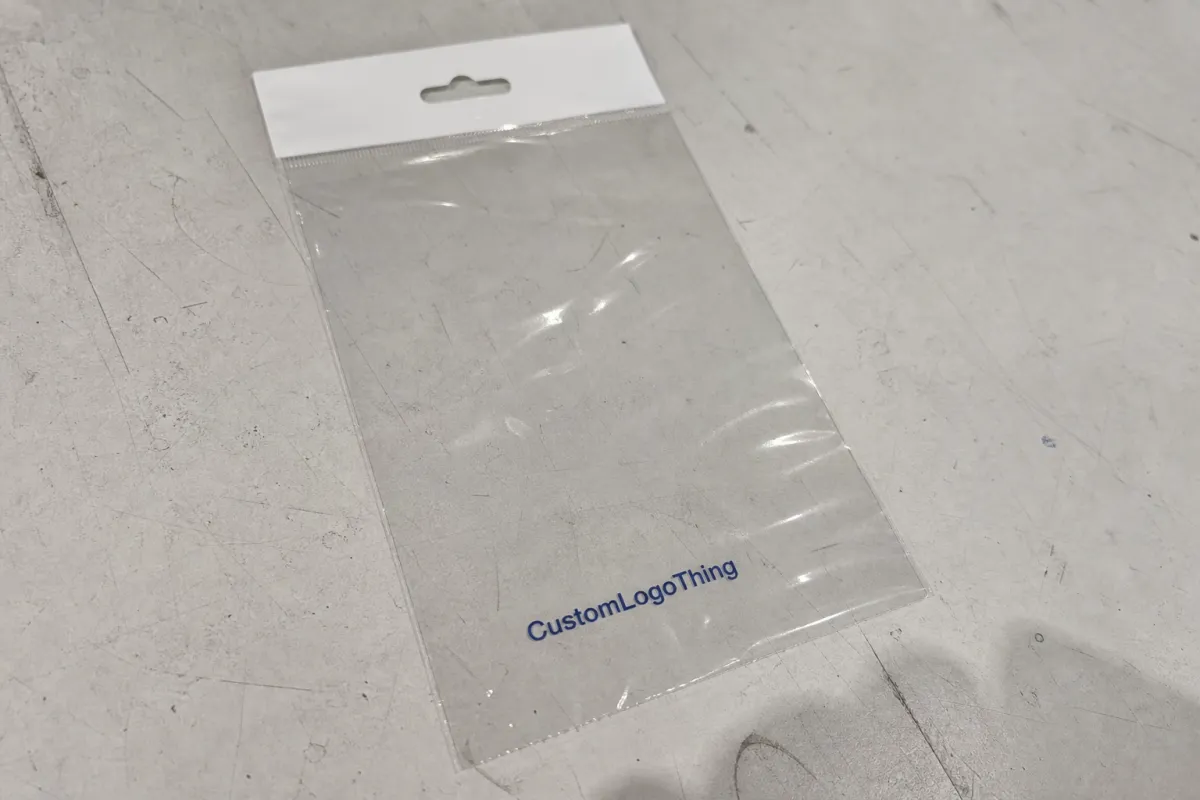
OPP header bags are made from oriented polypropylene film. In practical terms, that means a clear, glossy plastic bag with enough stiffness to hold shape better than a soft sleeve. The “header” is the top section above the product pocket, usually built for a hang hole, branding, barcode placement, and any warning copy that needs to stay visible in retail or fulfillment settings.
Book merch suits this format because the products are visual. Fans want to see the dragon pin, the foil bookmark, the quote sticker, or the charm before opening the package. Clear film keeps the art visible and cuts down on scuffing during mail fulfillment, bin storage, and peg-wall display. For small products, that clarity is not a luxury. It is the selling surface.
The warning-label side needs real attention early in the process. Depending on the item and sales channel, a brand may need suffocation language, choking hazard text, age grading, or country-of-origin information. A flat paper bookmark is not the same as a small metal charm with a jump ring. A direct-to-consumer shop may have different expectations than a bookstore chain or subscription box partner. Even if the product is modest, the pack needs to meet the standards of the channel that handles it.
Practical rule: treat warning text as part of the package design from the first proof, not as a sticker added after everything else is approved.
This is where growing merch brands often lose time. A safety label is not only a compliance item. It is part of the visual system. If it is too small, badly placed, or hidden behind a barcode, the bag looks unfinished. If it is planned with the backing card and product dimensions in mind, the whole unit feels more deliberate.
How OPP Header Bags Work for Pins, Bookmarks, Stickers, and Charms
An OPP header bag usually has a front panel, a back panel, side or bottom seals, and a header zone at the top. Some versions use an adhesive strip for resealing. Others are heat-sealed or built for one-time closure, which can be useful where tamper resistance matters more than convenience. Many header bags also include a die-cut hang hole so the package can sit on a peg or hook without extra hardware.
The usable pocket is smaller than the outside size. That catches people more than it should. A 6-inch-tall bag does not mean a 6-inch product will fit comfortably. Once the header, seal, and adhesive area are accounted for, the usable product pocket may be notably shorter. Add a thick pin back, a folded insert, or a chunky charm and the real clearance shrinks again. On paper, the fit can look easy. On the packing table, it is less forgiving.
OPP film has a crisp finish and strong clarity, which makes it a good match for printed backing cards and colorful merch art. It is not especially stretchy, though. That matters. If the product has sharp edges, metal posts, or uneven thickness, forcing it into an undersized bag can create punctures, wrinkles, or a bowed card face. For flat stickers and bookmarks, a lighter film can be enough. For enamel pins, charms, or mixed kits, a heavier gauge usually feels better in hand and survives packing pressure more reliably.
Warning labels can be handled in three basic ways: printed directly on the film, printed on the backing card, or applied as a separate label. Direct print usually gives the cleanest result on medium and larger runs because placement is consistent and the text is not dependent on hand application. Backing-card printing works well if the card has enough open space and the contrast is strong. Separate labels are useful for stock bags, small test runs, and product lines that are still changing.
Key Specs That Affect Safety Text, Fit, and Shelf Presentation
Start with the finished packed size, not the loose item. Measure the backing card if one is used, because for pins and charms the card often determines the final fit more than the product itself. Record the width, height, thickness, and any protruding hardware. If the merch includes an insert card, care card, or sticker sheet, include that too. Then add insertion clearance. For small flat goods, 1/8 to 1/4 inch of extra width is often a sane starting point, but thicker items may need more.
Film thickness is often listed in microns, mil, or gauge, depending on the supplier. For light paper goods like stickers or bookmarks, a thinner OPP bag in the 30–40 micron range may be adequate. For pins, charms, and multi-piece sets, 40–60 microns is a more comfortable working range, with heavier film used where edges, shipping pressure, or repeated handling are a concern. Those are not hard rules. Bag size, product weight, and how aggressively the item will be packed all matter.
| Merch Type | Common Bag Approach | Typical Film Range | Warning Label Concern |
|---|---|---|---|
| Sticker sheets | Flat OPP header bag or resealable flap bag | 30–40 microns | Keeping label clear over printed art |
| Bookmarks | Long narrow OPP bag, often with hang hole | 30–45 microns | Readable text without crowding the art |
| Enamel pins | Header bag with backing card and stronger seal | 40–60 microns | Small-parts language and puncture pressure |
| Acrylic charms | Header bag with extra clearance for hardware | 50–70 microns | Loose component control and choking hazard text |
Placement is as important as wording. A warning that sits under a barcode, hang hole, seal strip, or product edge may technically exist but still fail the practical test: can a buyer or retailer read it at a glance? Clear film over dark or busy artwork can also flatten contrast. A quick mockup helps. Print the warning at actual size, place it over the final card design, and read it from normal viewing distance under ordinary light. If it is hard to see there, it will be hard to see in a packing bin.
Retail channels add their own pressure. Bookstores may want a barcode that scans cleanly. Subscription box partners may need country-of-origin details on the unit pack or master carton. Some selling platforms and distributors expect plastic bag warnings once the opening exceeds a certain threshold. Standards bodies such as ISTA focus on distribution and transit performance, while paper components may involve certification preferences such as FSC if the backing card is part of a sustainability claim. The supplier can help with print execution, but the final responsibility for label text usually sits with the brand or importer.
Process and Timeline From Artwork Review to Finished Header Bags
A clean order starts with a specification sheet, even if it is simple. Confirm bag width, bag height, pocket height, header height, film thickness, closure style, hang hole shape, print colors, warning copy, carton quantity, and shipping destination. Those details stop the common mismatch where the quote is technically correct but the finished bag does not match how the item is packed.
Artwork should be prepared with production in mind. Vector logo files print more cleanly than flattened artwork. Barcodes need to be supplied at final size and checked for contrast. Warning text should be final, not placeholder language waiting on a later decision. If a dieline is available, the designer should respect the safe zones around the hole punch, seals, and adhesive strip. On a small bag, a tiny placement error makes the whole thing feel cramped.
The proof is the first serious checkpoint. It should show the bag outline, product pocket, header zone, print position, adhesive area, hang hole, and warning orientation. If the warning reads correctly only before the flap is folded, it needs another pass. If the barcode lands across a seam or curved area, scanning can suffer. A proof that looks fine in a browser window is not enough here. It needs to match real pack behavior.
Sampling helps more than many teams expect. A stock sample can confirm feel and size quickly. A custom printed sample takes longer and costs more, but it is worth considering before a larger branded run, especially if warning text, barcode placement, or a premium retail account is involved. One physical sample can reveal whether the product goes in smoothly, whether the seal grips correctly, whether the bag hangs straight, and whether the final presentation still looks clean after handling.
Timeline depends on quantity, print complexity, and freight. A plain stock bag with an applied label often moves faster than a custom printed OPP header bag. A custom order usually goes through quoting, artwork review, proof approval, plate or screen setup if needed, film printing, converting, quality checks, packing, and transit. Revisions to safety text can add days because the proof has to be updated and reapproved before production can move.
For preorder launches, packaging needs to be in the calendar early. The product, backing card, bag, labels, and cartons should arrive in the right order. If the pins land first and the card size changes later, the packing table slows down immediately. That kind of delay is rarely dramatic. It is just expensive in a very ordinary way.
Cost, MOQ, and Quote Details That Change Unit Price
Pricing depends on film usage, bag size, thickness, print coverage, number of print colors, closure type, setup work, and order quantity. A plain stock bag can cost only a few cents in bulk. A custom printed header bag with a hang hole, warning text, and one or two colors may land somewhere in the $0.08 to $0.22 per unit range on a 5,000-piece run, though small quantities, heavier film, specialty sizes, and rush freight can move that figure upward fast.
MOQ exists because the line has to be set up. Film rolls, printing, sealing, punching, counting, and carton packing all take labor and machine time. Very small runs are often better handled with stock OPP bags plus applied labels, especially for product testing or one-off launches. Once a merch line repeats across several SKUs, direct-printed bags usually become easier to manage and more consistent in presentation.
Freight can change the picture more than people expect. Bags are light, but they take up space because the real volume is air and film surface. Carton count, destination, shipping method, and deadline all shape landed cost. Air freight can save a launch, but it can erase the savings from a low unit quote. Ground or ocean movement is usually better for planned runs if the schedule allows.
| Packaging Option | Best Fit | Typical Advantage | Common Tradeoff |
|---|---|---|---|
| Stock OPP bag plus applied warning label | Small drops and urgent launches | Lower commitment and faster sourcing | More hand labor and less polished presentation |
| Custom printed OPP header bag | Repeat SKUs and retail programs | Consistent branding and warning placement | Higher setup effort and MOQ |
| Printed backing card with plain OPP bag | Art-led pins, charms, and collectibles | Strong visual identity with flexible bag sourcing | Warning text may compete with artwork or barcode |
A useful quote request includes item dimensions, backing card size, expected quantity, film thickness, closure style, print colors, warning copy, barcode needs, target delivery date, and shipping destination. Photos help. So do measurements from packaging that already works. If the brand sells across several product lines, it is worth standardizing a few formats instead of treating every SKU as a new puzzle. That keeps quoting cleaner and usually cuts waste in packing.
The cheapest option is not always the best one. A bag that is too tight adds repacking labor. A bag that hides the warning text can trigger retail issues. A unit price that looks attractive but arrives late is not a bargain. Landed cost matters, but fit and legibility matter just as much.
book merch brands opp header bags warning label guide: Step-by-Step Ordering
Here is the practical ordering sequence for a book merch Brands OPP Header Bags warning label guide review. It is plain, but it catches most of the mistakes that slow down small merch runs.
- Sort products by size and risk. Separate flat paper goods, sharp-backed pins, loose charms, bundled sets, and any product that needs age-related caution. A sticker pack and a charm with a detachable clasp should not share the same label plan by default.
- Measure the packed item, not just the loose item. Include backing card width, height, thickness, insert cards, barcode space, hang tab clearance, and any hardware that adds depth. Use a ruler or caliper, not memory.
- Choose the bag format. Standard header bag, resealable flap bag with header, peg-hole retail bag, or stock OPP bag with a separate label are the usual options.
- Draft warning copy for the product and region. Suffocation warnings, choking hazard language, small-parts statements, and age grading may differ by market. Confirm final wording before print approval.
- Place the warning where it stays readable. Test it against the final backing card artwork. Clear film only works if the background behind the text supports contrast.
- Request a proof at actual scale. Review dimensions, print placement, header height, seal areas, and hang-hole orientation. The person designing the merch and the person packing orders should both inspect it.
- Test a physical sample if one is available. Check insertion speed, seal grip, puncture risk, hang balance, and whether the package sits straight on a hook.
- Approve only after logistics are settled. Confirm quantity, carton labeling, delivery method, and receipt timing before production starts.
That last step sounds dull, but it saves real money. A carton-label mismatch or a late shipping decision can delay a shipment even when the bags themselves are perfect.
Common Mistakes That Cause Rework, Delays, or Retail Problems
The most common mistake is sizing the bag around the product and forgetting the backing card. A pin that looks tiny in the hand may still need a larger card to hold its place, and that card needs room to slide into the bag without bowing. If the fit is too tight, packers fight every unit and the finished package looks stressed before it leaves the table.
Another frequent problem is warning text that is too small or printed over busy art. Tiny black type over a dark fantasy illustration may technically exist, but nobody can read it. The same issue shows up when the warning lands beneath a barcode, hang hole, adhesive strip, or product edge. In a proof, the layout may look tidy. With the real item inside, the message can disappear.
Assuming one warning label fits every product is risky. A bookmark, an enamel pin set, an acrylic charm, and a mini accessory kit can carry different safety expectations. Even if the product is not aimed at children, retail partners may still ask how it is packaged and displayed. That is especially true for small parts and items with detachable pieces.
Film choice matters more than many buyers expect. Thin OPP is fine for flat paper goods, but it can wrinkle or puncture around metal posts and hard edges. Heavier charms can distort a light bag if there is not enough thickness allowance. For anything with a little weight, the backing card is doing structural work as well as branding work.
Late design changes create avoidable pain. If the backing card size changes after the bag is approved, warning placement, barcode position, seal fit, and hang-hole balance can all shift. Even a quarter-inch change can make an approved bag useless. That is why the packaging decision should be treated as one system rather than separate purchases.
Packing speed is another quiet issue. A bag that looks elegant in a proof may still be awkward if the opening is too narrow or the adhesive strip catches on the product. For a run of 500, that is annoying. For 10,000, it is a labor bill.
Next Steps Before You Approve a Book Merch Packaging Run
Before approving production, gather the final product sample, backing card dimensions, bag dimensions, film gauge, closure style, header height, hang hole shape, warning copy, barcode placement, and quantity. Put those details in one file. It does not need polish. It needs accuracy.
Lay the actual product on a full-scale proof or mockup. Check whether the logo, barcode, warning text, and artwork compete with one another. If the warning is printed on clear film, test it against the darkest and busiest parts of the backing card. If the package will hang on a peg, confirm that the hole is centered enough for the bag to sit straight.
If the brand has not used OPP header bags before, handle a sample before committing to a custom run. Open and close the adhesive strip. Insert the real product. Hang it if it will hang in retail. A ten-minute handling test can tell you more than a long chain of emails.
Keep the approved sizes on file for future merch drops. One standard size for bookmarks, one for pins, and one for charms can speed up quoting and reduce mistakes. New products then get checked against known formats instead of starting from scratch each time.
To have a cleaner conversation with a packaging supplier, send product photos, exact dimensions, backing card artwork, warning text, target delivery date, sales channels, quantity, and any barcode or retailer requirements. A disciplined book merch Brands OPP Header Bags warning label guide turns a nice-looking merch idea into packaging that protects the item, presents the art, and keeps the safety information visible.
FAQ
What should a book merch brands OPP header bags warning label guide include?
A useful book merch brands OPP Header Bags Warning Label guide should cover bag size, film thickness, header height, closure type, hang-hole placement, warning wording, print location, barcode space, MOQ, lead time, and how the product will be packed and displayed. It should also connect the bag to the backing card, because the packed presentation determines the true fit.
Do OPP header bags for book merch always need a suffocation warning?
Not always. Requirements can depend on bag opening size, product type, region, retailer rules, and marketplace standards. Many brands still include suffocation language on larger plastic bags as a practical precaution, but the final wording should be reviewed by the seller’s compliance or legal contact.
Can warning labels be printed directly on custom OPP header bags?
Yes. Warning text can often be printed directly on the film, and that usually looks cleaner than a separate sticker on medium or larger runs. The copy, contrast, placement, and approval status should be settled before production begins, because changing safety text after proof approval can delay the order.
What size OPP header bag works best for enamel pins and backing cards?
Measure the full backing card width, height, and product thickness, then add enough clearance for the card to slide in smoothly. The seal should close without bending the card or pressing the pin back into the film. For many standard pin cards, adding about 1/8 to 1/4 inch of width clearance is a reasonable starting point, but bulkier hardware may need more.
How can book merch brands lower the unit cost of OPP header bags?
Standardize bag sizes across multiple SKUs, order higher quantities when storage allows, keep print colors efficient, approve warning copy early, avoid unnecessary proof revisions, and compare total landed cost rather than only the quoted unit price. The lowest unit cost is not a bargain if the bag is hard to pack, unreadable, or rejected by a retail partner.